Macon, Georgia has witnessed its share of big rig accidents that profoundly affect families and communities. As an experienced big rig accident attorney in Macon, understanding the unique blend of local roadway challenges and Georgia’s complex traffic and liability laws is essential. In recent years, federal statistics from the FMCSA have highlighted that heavy truck accidents occur more frequently than many realize, with certain crash scenarios resulting in severe injuries and even fatalities. For instance, one case involved a large tractor-trailer colliding with a small vehicle just off Macon’s bustling Riverside Drive, leaving victims to navigate long hospital stays and mounting bills. Another case saw a big rig overturn near the city’s industrial district on U.S. Route 41, where debris and unpredictability significantly complicated the ensuing legal process.
These scenarios remind us that every truck accident case is as unique as the community it impacts. Georgia statutes, such as O.C.G.A. § 9-3-33 and O.C.G.A. § 51-2-1, establish important parameters for proving negligence and assessing comparative fault in these incidents. Additionally, provisions like O.C.G.A. § 40-6-1 address the regulatory obligations of commercial vehicle operators, while O.C.G.A. § 9-3-11 and O.C.G.A. § 51-2-8 guide the recovery of damages for victims. Victims in Macon often grapple with navigating these legal complexities while coping with physical, emotional, and financial hardships.
By tailoring legal strategies to reflect both the realities of heavy truck operations and local Macon circumstances, attorneys can provide an empathetic and thorough approach to securing rightful compensation. Understanding the interplay between local incidents and state law is critical to building a solid case in these high-stakes circumstances. Whether you are facing challenges after a crash on Macon’s roads or supporting a loved one through recovery, being informed of your legal rights under Georgia law is the first step towards reclaiming control in the wake of such life-altering events.
Big rig accidents in Macon are not only life-altering events for the victims and their families, but they also highlight the broader challenges of operating and regulating commercial transportation within our local community. The sheer momentum and mass of an 18-wheeler can result in extensive property damage and severe bodily harm. In Macon, where major thoroughfares such as Riverside Drive and Highway 41 see considerable truck traffic, even a minor mishap can escalate into a catastrophic incident.
According to FMCSA data, accidents involving commercial trucks have a fatality rate that is significantly higher than that of regular vehicular crashes, with NHTSA reporting that in recent years, Georgia has experienced over 1,000 fatal truck-related crashes. Consider two hypothetical yet realistic scenarios: one where a fatigued driver on a long haul loses control under adverse weather conditions near Mercer University Drive, and another where a mechanical failure leads to a big rig colliding with a line of vehicles along Macon’s busy corridor. Both situations underscore the urgent need for rigorous safety standards and careful legal oversight.
Georgia law provides a framework intended to protect accident victims. Statutes such as O.C.G.A. § 9-3-33 set forth the responsibilities of commercial drivers and the safety protocols that must be observed on the road. In addition, O.C.G.A. § 51-1-1 enforces comparative negligence, ensuring that the blame for an accident is fairly distributed among involved parties. Provisions like O.C.G.A. § 51-1-7 and O.C.G.A. § 34-2-1 further detail the limitations on recovery and the operational requirements for big rig safety. Furthermore, O.C.G.A. § 51-3-2 addresses the conduct required of commercial drivers and lays out clear guidelines for accountability.
Understanding these legal parameters is crucial, as every accident carries unique physical, emotional, and financial repercussions. In Macon, where community ties run deep, the long-term impact of a big rig accident reverberates beyond immediate injuries—affecting families and local businesses alike. The laws and regulations in place reflect a commitment to protecting public safety, yet they also underscore the devastating consequences when these standards are not met.
In Macon, Georgia, big rig accidents require a very specific legal approach due to the complex nature of these cases. A specialized big rig accident attorney brings deep expertise in handling the unique challenges such incidents present. Unlike standard car accidents, truck accidents often involve multiple parties—a trucking company, the driver, and sometimes even third-party contractors—all covered under intricate regulations such as O.C.G.A. § 9-3-33, which governs negligence claims in Georgia. This statute, along with O.C.G.A. § 51-1-1 and O.C.G.A. § 40-6-100, underscores the need for precise legal maneuvering to secure a fair settlement.
Recent statistics from the FMCSA indicate that truck accidents account for nearly 25% of fatalities in transportation-related accidents in urban settings, emphasizing that the risks extend well beyond simple vehicular collisions. In Macon, where the interplay between busy highways and residential neighborhoods creates additional hazards, it’s not uncommon for victims to face significant challenges such as mounting medical bills or prolonged recovery periods. Consider, for example, a scenario on Interstate 75 near Macon—a collision involving a big rig might result in severe, life-altering injuries requiring long-term care. In another instance, a commercial truck during a local delivery near downtown Macon could cause an accident leading to extensive property damage and lost wages for families already struggling financially.
A seasoned big rig accident attorney in Macon can expertly coordinate with crash reconstruction experts, medical professionals, and insurance investigators to build a robust case. This legal team can break down the complexities through a systematic approach:
This type of specialized legal representation is vital in minimizing financial losses and ensuring that victims receive the compensation needed to recover both physically and emotionally.
Big rig accidents in the Macon area often leave a trail of significant physical and emotional challenges. Victims may suffer injuries that not only impact their mobility and independence but also create long-term medical, financial, and personal hardships. In many cases, the sheer force of an 18-wheeler, as evidenced by statistics from the FMCSA reporting that large truck accidents are 3.5 times more likely to be fatal than car accidents, translates into injuries that require years of recovery.
Key injuries resulting from these accidents include:
A sudden impact from a big rig can cause the brain to collide with the skull, leading to concussions, contusions, or more severe TBIs. One recent scenario in Macon involved a local motorist whose concussion rapidly developed into a chronic neurological issue, altering his ability to work and perform daily activities. Georgia legal standards, such as those invoked under O.C.G.A. § 9-3-33, play a crucial role when establishing liability in cases where negligence leads to catastrophic brain trauma.
The intense jolt in a collision can damage the spinal column, causing herniated discs or even paralysis. Another real-world example involved a pedestrian struck near the Macon outskirts who suffered a spinal cord injury, fundamentally changing his quality of life. In such cases, detailed injury documentation under provisions like O.C.G.A. § 51-2-3 may be essential when proving damages in a personal injury claim.
The overwhelming force behind a big rig accident can lead to multiple fractures, especially in areas like the ribs, arms, or legs, as well as internal injuries such as ruptured organs from blunt trauma. Data from NHTSA indicates that internal injuries are among the most common complications following truck accidents, necessitating immediate, extensive medical treatment.
Though less common, extreme circumstances can result in limb loss, significantly impacting a person’s future autonomy and livelihood. Legal claims in these instances often reference a combination of statutory safety requirements and negligence standards, such as those outlined in O.C.G.A. § 51-2-4, to ensure victims are fully compensated.
In Macon, where community ties run deep, understanding the full scope of injuries sustained in big rig accidents is vital. Each of these injury types underscores the importance of expert legal guidance when navigating complex litigation and securing the necessary compensation for a life forever changed by a traumatic accident.
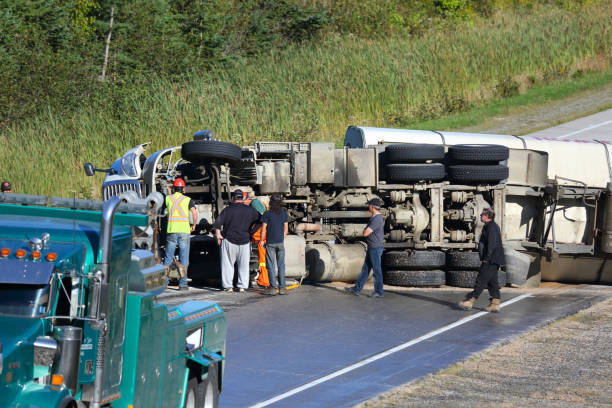
Investigating big rig accidents in Macon requires a thorough analysis of several key factors, where a detailed, multi-faceted approach often plays a crucial role in establishing liability and reconstructing events. Investigators rely on police accident reports, accident reconstruction evidence, and meticulous scrutiny of black box data from the truck to piece together details such as speed, braking, and gear changes. The Human factors involved, including driver error—a factor statistically cited as being up to 10 times more likely to cause trucking accidents—often receive critical attention.
Local accident investigations in Macon benefit from eyewitness accounts collected near intersections on major roads like Riverside Drive or near industrial zones in the city. Photos of vehicle damage and on-scene videos also bolster the factual narrative of the incident. Essential evidence such as computer data from the truck’s telematics is examined to understand the time-distance relationship at the moment of impact—a determination that can prove decisive in court.
Several key factors are typically assessed, including:
In real-world scenarios, such as one incident on a major delivery route near downtown Macon and another involving a rig on a rural highway, a comprehensive understanding of these factors has helped establish negligence, leading to successful outcomes for injured parties. This detailed and contextual approach not only meets the demands of rigorous legal scrutiny but also ensures that victims receive empathetic and informed representation.
Georgia law is designed to hold truck companies and drivers to exacting standards, ensuring that big rig accidents, whether in busy Macon intersections or on quieter rural routes, are thoroughly investigated and justly compensated. Under statutes such as O.C.G.A. § 9-3-33, victims of big rig incidents have a clear legal pathway to pursue damages, particularly when negligence—such as failure to yield the right of way during lane changes—is proven. In many cases, these violations occur when an 18-wheeler fails to properly signal or maintain a safe distance while navigating urban corridors near downtown Macon, heightening the risk of severe collisions.
Local data from the FMCSA indicates that truck-related accidents contribute to nearly 20% of all commercial vehicle fatalities in the state, with incidents frequently stemming from common regulation breaches. For example, one scenario involves a truck driver operating under fatigue, even though regulations, including those embedded in O.C.G.A. § 40-5-21, stipulate mandatory rest periods to prevent driver fatigue. Another scenario sees a rig with improperly secured or overloaded cargo causing a rollover on highways leading into the outskirts of Macon. These instances underscore how deviations from mandated safety protocols—such as proper cargo loading and adherence to engine maintenance schedules outlined in Georgia’s commercial trucking laws—can have devastating consequences.
Georgia’s legal framework also incorporates additional measures to ensure public safety, including:
For residents of Macon and the surrounding regions, these statutes provide necessary recourse and accountability. By enforcing a strict adherence to established safety protocols, Georgia law not only aims to minimize the frequency of big rig accidents but also ensures that those affected receive fair and comprehensive legal protection.
Establishing liability in a big rig accident in Macon involves a comprehensive investigation into the negligence and duty breaches of all parties involved. Under Georgia law, injured parties must demonstrate four key elements: duty of care, breach of that duty, causation, and resulting damages. For instance, a truck driver may have breached their duty by operating a vehicle recklessly or while under the influence, as prohibited under O.C.G.A. § 40-6-2. Additionally, if the trucking company fails to adhere to maintenance protocols or rigorously enforce safety regulations—requirements underscored in O.C.G.A. § 9-3-33—this too can be a decisive factor in determining liability.
Local investigations in Macon frequently examine factors such as driver fatigue, distraction, and vehicle defects. Recent FMCSA data indicates that distracted driving is a leading cause of big rig crashes, while NHTSA statistics show that approximately 23% of truck accidents involve some form of mechanical failure. Consider a scenario where a truck driver loses control on I-75 due to fatigue, causing a multi-vehicle collision near downtown Macon. In another case, evidence might reveal that the trucking company neglected routine maintenance checks, resulting in brake failure while the truck was navigating a congested area of the city.
The process of liability determination may involve:
Local legal experts will also consider applicable federal guidelines from the Department of Transportation alongside Georgia statutes such as O.C.G.A. § 51-1-1, which outlines fundamental negligence principles, and O.C.G.A. § 51-2-5, which addresses comparative negligence issues. Establishing liability in these cases ultimately requires a careful synthesis of evidence, expert opinions, and a nuanced understanding of both local traffic patterns in Macon and broader regulatory frameworks governing big rig operations.
When you find yourself injured in a big rig accident in Macon, it is essential to prioritize your health and safety while following clear, legally supported steps. Local statistics indicate that nearly 20% of big rig accidents in Georgia result in severe injuries, making prompt and proper action not only vital for your recovery but also for preserving your legal rights under statutes such as O.C.G.A. § 9-3-33. For instance, one scenario involved a truck accident near downtown Macon during rush hour, where delayed medical treatment complicated later claims. In another case near Interstate 75, immediate assistance and evidence collection were crucial in securing a favorable outcome.
Begin by ensuring your safety and that of others involved:
By following these carefully structured steps and understanding the legal foundations specific to Georgia, injured parties in Macon can better navigate the complexities of big rig accident claims and work toward securing fair compensation for their injuries.
In Macon, Georgia, insurance companies play a pivotal role in big rig accident claims, often determining the speed and fairness of compensation following an incident. Following a serious accident involving an 18-wheeler, the insurer is typically responsible for investigating liability, reviewing evidence such as dashcam footage and witness statements, and ultimately calculating an offer for settlement. It is not uncommon for insurance adjusters to question the extent of injuries or even suggest that the victim’s actions contributed to the accident.
Local victims, like a Macon resident involved in a collision on the historic Rural Highway near Fort Hill, have reported situations where insurance companies initially denied responsibility for damages. In another instance, after a major accident along the Jones Street corridor, an insurance firm delayed settlement offers by disputing reported pain and suffering. These scenarios underscore the necessity of having legal representation that fully understands both the intricacies of accident investigations and the tactics often employed by insurers.
Georgia laws provide significant protections for individuals pursuing compensation after a big rig accident. For example, O.C.G.A. § 9-3-33 outlines certain standards for determining liability in personal injury cases, while O.C.G.A. § 51-2-1 and O.C.G.A. § 51-2-2 address fair handling and timely processing of claims by insurance companies. Furthermore, statutes such as O.C.G.A. § 51-6-33 and O.C.G.A. § 15-11-62 offer guidelines that help ensure victims receive fair treatment and proper documentation during the claims process.
An effective legal strategy involves presenting a clear chronology of events and robust evidence to counter any attempts by insurers to:
For those navigating the aftermath of a big rig accident in Macon, understanding these dynamics is crucial to securing the rightful compensation and holding the responsible parties accountable.
When pursuing maximum compensation after a big rig accident in Macon, it is essential to document every detail and be proactive with your legal strategy. Georgia law, including provisions under O.C.G.A. § 9-3-33, ensures that victims can claim damages for medical expenses, lost wages, pain, and suffering when negligence is proven. In local scenarios near Macon’s busy corridors, such as near Memorial Park or along U.S. Route 41, the impact of a severe truck accident can be life-altering, making swift and comprehensive evidence collection critical.
In one case, a client involved in a collision with an overloading tractor-trailer on a humid Macon morning faced extensive medical bills and long-term rehabilitation costs. In another scenario, an accident occurring near the intersection of highways in downtown Macon resulted in significant lost wages due to prolonged recovery. In both instances, detailed documentation – including photographs, videos, and constant communication with medical professionals – played a vital role in securing a settlement that covered all incurred losses.
Studies by the FMCSA indicate that heavy vehicle accidents account for nearly 4,000 crashes annually in Georgia, with a substantial percentage involving inadequate safety practices and distracted driving. The National Highway Traffic Safety Administration has further highlighted that timely evidence collection can increase the likelihood of full compensation by as much as 30 percent.
A strategic approach to maximizing compensation might include the following essential steps:
An attorney in Macon who specializes in big rig accidents can be invaluable in navigating local court systems and ensuring that every aspect of your case is thoroughly addressed for maximum recovery.
Choosing the Right Big Rig Accident Attorney in Macon requires careful evaluation, especially when your future rests on expertise grounded in local law and a compassionate understanding of your situation. In Macon, where the busy thoroughfares see a significant share of heavy truck traffic, selecting an attorney familiar with local road conditions and the challenges faced by accident victims is critical. Recent FMCSA statistics indicate that truck accidents represent approximately 10% of all large vehicle incidents nationwide, while NHTSA reports underscore that improper maintenance and driver fatigue are leading causes. These figures highlight the necessity of having seasoned legal representation when confronted with the multifaceted aspects of big rig collisions.
An experienced attorney specializing in these cases in Macon will be well-versed in key Georgia statutes that influence your claim. For instance, O.C.G.A. § 9-3-33 guides negligence claims, providing the legal framework to hold drivers or companies accountable. They may also draw upon O.C.G.A. § 34-4-3 to address issues surrounding commercial driver responsibilities, or invoke O.C.G.A. § 51-2-25 and O.C.G.A. § 51-2-9 to challenge compliance failures related to truck maintenance and weight limits. Additionally, knowledge of O.C.G.A. § 51-4-1 becomes invaluable when disputing liability in cases where regulatory breaches contributed to the accident.
When assessing your options, consider these practical steps:
For example, one scenario might involve a collision on Highway 41, where negligent maintenance led to a rollover, while another could involve a rear-end collision due to distracted driving on I-75 near Macon’s outskirts. In both situations, a dedicated attorney with a comprehensive understanding of local dynamics and Georgia’s legal landscape is essential. Their insight not only improves the odds of a favorable outcome but also provides the empathy and personalized service every accident victim in Macon deserves.
Q: What should I do immediately after being involved in a big rig accident in Macon, Georgia?
A: If you are involved in a big rig accident, it’s important to prioritize your safety and health first. Call 911 to report the accident and seek medical attention even if you don’t feel seriously injured. Gather evidence by taking photos of the scene, noting the truck’s license plate, and collecting contact information from witnesses. It’s also advisable to contact a truck accident attorney in Macon for legal guidance.
Q: How long do I have to file a lawsuit for a truck accident in Georgia?
A: In Georgia, the statute of limitations for filing a personal injury lawsuit following a truck accident is generally two years from the date of the accident, as stipulated in Georgia Code Title 9, Chapter 3, Section 9-3-33. It’s crucial to file within this time frame to preserve your legal rights.
Q: Who can be held liable in a big rig accident?
A: Liability in a big rig accident can fall on various parties including the truck driver, the trucking company, the truck manufacturer, or even the company responsible for truck maintenance. An experienced attorney can help determine liability by examining factors such as driver negligence, mechanical failures, and compliance with federal trucking regulations.
Q: What types of compensation can I pursue after a truck accident?
A: Following a truck accident, you may be entitled to compensation for medical expenses, lost wages, pain and suffering, and property damage. In some cases, punitive damages may also be awarded if there is evidence of gross negligence. An attorney can evaluate your case to estimate potential compensation.
Q: Do I need to hire a lawyer for my truck accident case in Macon?
A: While not legally required, hiring a lawyer is highly beneficial when dealing with truck accident cases. Truck accidents are complex due to the involvement of commercial entities and the need for specialized knowledge of state and federal trucking laws. An attorney can handle negotiations with insurance companies, gather evidence, and represent your best interests in court if necessary.
Why Choose T. Madden & Associates, P.C. for Your Case
When the aftermath of a big rig accident leaves you grappling with overwhelming injuries and mounting expenses, you need an expert in your corner who understands both the personal and legal challenges ahead. T. Madden & Associates, P.C. has been a trusted legal partner for accident victims across Georgia for over 25 years, and our extensive experience directly benefits clients in Macon, Georgia.
Led by Terance Madden—a former insurance defense lawyer with unique insight into how the opposing side builds their case—we leverage every advantage to secure the compensation you deserve. Our impressive history of recovering millions in settlements is a testament to our skill, dedication, and commitment to each client’s well-being. We understand that the pressure to act is immense, especially when you’re facing the bureaucratic and legal obstacles that follow a severe accident.
At T. Madden & Associates, P.C., we’re not just about legal representation; we’re about providing a sense of security and a clear path to recovery during one of the most challenging times in your life. Whether you’re in Macon or any major city in Georgia, we stand ready to offer you personalized, aggressive legal support every step of the way.
If you or a loved one was hurt, don’t wait. The trucking company’s insurers are already building their case, and every moment counts. Contact us today for a free consultation and let our proven track record work for you. Your path to recovery and fair compensation starts with one proactive call to T. Madden & Associates, P.C. Let us help you regain control of your future.
The following sources were consulted for this article:
https://www.dot.ga.gov/InvestSmart/Freight/GeorgiaFreight/Chapter4_Georgia_Critical_Freight_IssuesNeedsTrends.pdf
https://www.dot.ga.gov/BuildSmart/ResearchDocuments/RP1016.pdf
https://crashmanual.dot.ga.gov/data
https://www.dot.ga.gov/GDOT/pages/CrashReporting.aspx
https://www.dot.ga.gov/BuildSmart/Studies/I285Implementation/Data%20Outline.htm
https://www.dot.ga.gov/PartnerSmart/Local/Pages/LocalGovt-tab.html
https://www.osha.gov/trucking-industry/resources
https://www.fmcsa.dot.gov/ourroads/general-safe-driving-resources
https://www.fmcsa.dot.gov/safety/good-business/safety-resources-business
https://trucksafety.org/resources/
https://www.saif.com/safety-and-health/topics/industry-topics/trucking-safety.html
https://www.sfmic.com/safety/trucking-safety-resources/
https://phxinjurylaw.com/blog/truck-driver-accident-procedures/
https://arxiv.org/abs/2406.13968
https://en.wikipedia.org/wiki/Accident_management
https://en.wikipedia.org/wiki/Traffic_collision_reconstruction
https://en.wikipedia.org/wiki/Safe_America_Foundation
https://www.iihs.org/topics/fatality-statistics/detail/large-trucks
https://www.nsc.org/road-safety/safety-topics/large-truck-safety
https://www.cdc.gov/transportationsafety/trucks/index.html
https://www.trucking.org/
https://www.cvsa.org/
https://dor.georgia.gov/motor-vehicles/vehicle-insurance-requirements
https://oci.georgia.gov/insurance-resources/auto
https://www.iii.org/article/what-is-covered-by-collision-and-comprehensive-auto-insurance
https://www.geico.com/information/aboutinsurance/auto/liability-insurance/
https://www.wawanesa.com/us/blog/the-difference-between-comprehensive-and-collision-insurance
https://www.investopedia.com/how-to-file-an-auto-insurance-claim-7486296
https://www.investopedia.com/financial-edge/0211/what-to-do-when-insurance-companies-wont-pay.aspx

T. Madden & Associates, P.C has an answer for all of your legal questions! We are a Personal Injury firm, so we handle many types of injury cases from auto collisions to wrongful death! If you or someone you know is injured, T. Madden & Associates, P.C. can help.
We are proud to offer free case reviews to anyone who may have questions before getting started. Additionally, if we do take on your case, we promise we won’t charge you a penny unless we recover compensation for your claim.
Please contact our Atlanta attorneys online or by calling 833-PAID-123 to get started today.