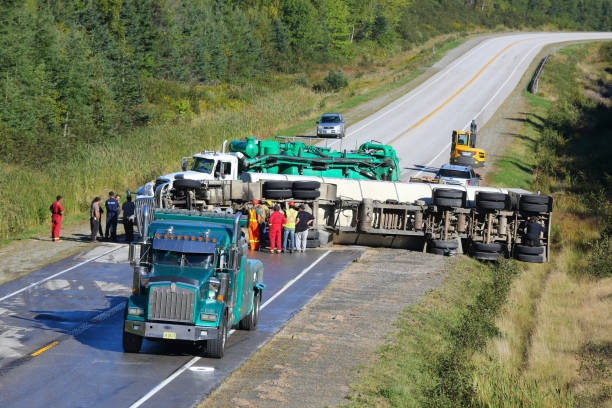
Truck accidents in Georgia have far-reaching consequences—not only disrupting lives but also raising complex legal challenges unique to our state’s roadway system. In Atlanta and throughout Georgia, truck accidents involve significant physical, emotional, and financial burdens.
Local communities, whether along the busy corridors of I-75 and I-85 or smaller arteries in towns like Augusta and Macon, have seen the devastating impacts of large commercial vehicles colliding with private cars.
According to recent Federal Motor Carrier Safety Administration (FMCSA) statistics, truck accidents are responsible for nearly 10% of all roadway fatalities in the United States. The National Highway Traffic Safety Administration (NHTSA) has consistently highlighted the risks posed by incidents involving commercial trucks on high-speed highways.
Georgia law provides a robust framework for holding negligent drivers accountable. For example, under O.C.G.A. § 9-3-33, injured parties have the right to seek compensation when driver negligence leads to serious injuries.
Additionally, when truck drivers fail to adhere to federal guidelines that regulate cab rest and safe driving hours, they may face heightened liability when combined with O.C.G.A. § 40-2-60, which enforces standards of vehicle safety across the state. In another scenario, imagine a truck driver in suburban Atlanta running a red light, resulting in a multi-vehicle collision—the victim in this case might rely on statutes such as O.C.G.A. § 51-1-1 and O.C.G.A. § 51-1-2 to secure legal redress.
Likewise, accidents near logistical hubs in Savannah often prompt detailed investigations where O.C.G.A. § 34-7-3 outlines driver responsibilities and operational protocols.
Common scenarios include collisions caused by driver distraction or fatigue, as well as truck rollovers resulting from improper cargo securement—each requiring specific expertise in personal injury law.
The layered nature of these cases underscores the importance of consulting an experienced attorney who understands both federal regulations and Georgia-specific statutes. By combining detailed legal expertise with a heartfelt commitment to each client’s journey to recovery, Atlanta truck accident attorneys are dedicated to ensuring that every victim’s voice is heard and that appropriate financial and legal measures are pursued in accordance with the law.
Understanding liability in Atlanta truck accidents requires a careful analysis of negligence and responsibility under both Georgia law and federal regulations. In Georgia, liability often hinges on whether a truck driver or trucking company breached their legal duty to operate safely. Local statutes, including O.C.G.A. § 9-3-33, emphasize that negligence, whether due to distracted driving, poor vehicle maintenance, or violating hours-of-service rules, can lead to a breach of duty and subsequent liability.
Recent statistics from the FMCSA indicate that truck-related incidents increase significantly during peak traffic hours, and according to NHTSA, nearly 30% of these accidents involve some form of driver distraction.
These figures underscore the importance of proving negligence, especially in metropolitan areas like Atlanta, where high-speed corridors and complex traffic patterns contribute to accidents.
Georgia courts also recognize that multiple parties can share liability. For instance, if a truck driver on I-285 loses control due to distracted driving, both the individual and the trucking company could be held responsible for failing to enforce safe practices.
Similarly, in Augusta, accidents along busy corridors like the Gordon Highway might involve claims not only against the truck driver but also against a company that ignored maintenance issues, thus breaching its duty under O.C.G.A. § 51-3-3 and related statutes.
Real-world scenarios often illustrate these challenges:
Understanding the statutory framework, including provisions such as O.C.G.A. § 51-7-2, enables accident victims to navigate the complexities of liability claims effectively.
An empathetic but exacting examination by experienced legal professionals is crucial to ensure that each element of negligence is thoroughly established, providing the foundation required to secure just compensation in these challenging cases.
When you’re facing the aftermath of a truck accident in Atlanta or elsewhere in Georgia, retaining a specialized truck accident attorney is crucial. Unlike general personal injury lawyers, these attorneys possess a deep understanding of truck accident dynamics, including how to navigate Georgia’s complex legal landscape, such as compliance with O.C.G.A. § 9-3-33 and other pertinent transportation statutes.
Their expertise extends to identifying violations of federal regulations set forth by the FMCSA and the NHTSA, which is vital in establishing liability.
A specialized attorney brings extensive resources to the table. One area where their knowledge significantly benefits clients is in examining multifactor elements like driver fatigue, mechanical failures, or inadequate maintenance records. In one real-world scenario, a truck driver in Augusta failed to maintain proper logbooks, as mandated by state guidelines, an oversight that heightened the risk of catastrophic outcomes.
In another case in Macon, a truck accident, compounded by failure to adhere to weight restrictions under federal and state regulations, resulted in significant property damage and severe injuries. These examples highlight the difference in legal scrutiny that a seasoned truck accident attorney can bring to your case.
Georgia truck accident attorneys are adept at collaborating with skilled crash reconstruction experts and seasoned medical professionals. Their comprehensive approach ensures every detail, from accident site conditions along busy corridors like those near Gordon Highway, to the subtleties of trucking company compliance with safety standards, is thoroughly investigated.
This multifaceted investigation is crucial in ensuring that all aspects of the case are thoroughly considered, particularly where comparative negligence may be raised under Georgia law.
Key advantages include:
For those injured in truck accidents across Georgia, a specialized truck accident attorney not only simplifies the legal process but also stands as a formidable advocate in both courtroom negotiations and settlement discussions.
After a truck accident in Atlanta, it is crucial to act immediately and follow precise steps to protect your rights under Georgia law. Start by calling 911 to report the incident. Prompt notification not only ensures emergency services are on the scene but also creates an official record of the crash, which can be indispensable for any future legal proceedings. According to the FMCSA, timely reporting is a critical factor in accurately documenting truck-related accidents.
Once help is on the way, seek medical attention—even if injuries are not immediately apparent. Many truck accident victims develop complications later, and obtaining prompt medical care helps build a solid case backed by detailed health records. In Atlanta, where major intersections and highways like I-75 see high traffic volume, unexpected delays can exacerbate injury severity.
Documenting the scene is another key step. If possible, safely take photographs of vehicle damage, skid marks, and surrounding road conditions. This evidence is supported by O.C.G.A. § 9-3-33, which emphasizes the importance of preserving details at the accident scene.
Collect names, contact information, and statements from any witnesses. For example, in situations near Buckhead’s busy commercial districts, bystanders’ accounts can provide crucial, unbiased perspectives on what occurred.
Additionally, exchange insurance information with the truck driver, ensuring you note down the company details and the driver’s license number. It is also advisable to record any unique identifiers, such as the truck’s DOT number.
In some cases, like a collision on Georgia State Route 400 during the busy rush hour, the presence of multiple parties might complicate the investigation, making accurate documentation even more essential.
Immediate action is necessary not only for your personal health but also to comply with legal requirements and secure evidence for any future claims. Taking these steps helps safeguard your rights and lays the foundation for effective representation under relevant statutes, such as O.C.G.A. § 51- and, O.C.G.A. § 51-3, as well asd other local guidelines.

Truck accidents involving large commercial vehicles frequently result in injuries that extend beyond superficial cuts or bruises. In Georgia, where highways like I-85 and I-20 serve as vital transport corridors, victims often face a range of severe, life-altering injuries.
Traumatic brain injuries, for instance, can occur from the violent impact of a truck collision, leaving survivors with long-term cognitive challenges and physical impairments. Spinal cord injuries and back trauma are also common, as the sheer force of a large truck’s momentum can lead to vertebral fractures or even paralysis.
In Atlanta and its surrounding areas, legal professionals have witnessed a wide range of injuries in varying severities. One scenario involved a victim on I-285 who sustained a ruptured disc in the spine resulting from a sudden, forceful impact against the steering wheel.
Another case in Augusta, occurring along the busy Gordon Highway, saw a victim enduring not only severe burns but also internal organ damage following a truck rollover.
Injuries typically seen in such accidents include:
Georgia statutes such as O.C.G.A. § 9-3-33, which delineate vehicular liability, along with O.C.G.A. § 51-2-21 and supplemental transportation safety laws, provide the framework within which injured parties may pursue compensation.
Additional relevant provisions, including O.C.G.A. § 51-3-8 and O.C.G.A. § 51-2-26, further reinforce the state’s commitment to holding negligent parties accountable. Notably, the FMCSA reports that significant percentages of truck accidents lead to these severe injuries, underscoring the importance of legal recourse for affected individuals.
An Atlanta truck accident attorney is uniquely positioned to help you navigate the intricacies of Georgia’s legal system and protect your rights following a traumatic truck accident.
In Georgia, statistics from the NHTSA indicate that while large trucks are involved in less than 5% of total accidents, they are responsible for nearly 10% of all roadway fatalities. Such staggering data underscore the risks and complexities tied to these incidents.
With an experienced attorney by your side, you benefit from comprehensive legal assistance that extends beyond merely filing a claim. Attorneys well-versed in Georgia law can adeptly evaluate your case. Their expertise is particularly critical when determining liability among the multiple parties often involved in truck accident cases.
Consider these real-world scenarios:
By partnering with an Atlanta truck accident attorney, you gain an advocate who not only understands the nuances of truck accident litigation but also the impact on your daily life.
They are committed to maximizing your compensation for medical expenses, lost wages, and pain and suffering, ensuring that your recovery coincides with fair and knowledgeable legal representation.
Gathering evidence is a crucial step in building a strong truck accident case in Georgia. After the incident, collecting detailed documentation not only helps establish liability but also quantifies the extent of your injuries and financial losses.
Key pieces of evidence include photographs of the accident scene, skid marks, vehicle damage, and surrounding conditions. In addition to visual documentation, obtaining police reports, medical records, and statements from witnesses can significantly support your claim.
Consider a scenario in Atlanta where a truck rear-ends a car at an intersection during rush hour. Clear images of the accident scene, paired with dashcam videos, can illustrate the impact angle and sequence of events.
In another situation along Augusta’s busy corridors, like near Gordon Highway, obtaining a truck driver’s logbook and electronic data from the vehicle’s black box can reveal critical information regarding hours of service violations or speeding issues that may have led to the accident.
Under Georgia law, several statutes play a role in how evidence is collected and considered in truck accident cases. For instance, O.C.G.A. § 9-3-33 mandates strict documentation protocols for commercial vehicles, ensuring that motor carriers keep accurate records of inspections and maintenance.
This is complemented by O.C.G.A. § 51-2-1, which addresses the allocation of fault in personal injury cases under the comparative negligence system. Moreover, O.C.G.A. § 33-2-1 underscores the importance of timely reporting, which can significantly influence the admissibility of evidence.
Additional regulatory considerations include O.C.G.A. § 40-6-203, which outlines liability standards for commercial transportation, and O.C.G.A. § 51-3-1, which governs the rules of evidence in personal injury claims.
These statutes collectively ensure that all aspects of the accident, from driver performance to vehicle condition, are thoroughly examined to determine the true cause and liability.
Meticulous evidence collection is essential in presenting a compelling case. By preserving every piece of relevant data, you not only build a robust factual narrative but also ensure you have the necessary legal backing under Georgia law should your case proceed to trial or settlement negotiations.
When navigating insurance claims after a truck accident in Georgia, understanding both your rights and the procedures is crucial. Right after an accident, whether on the busy interstates near Atlanta or along local corridors in Augusta, immediate steps should include obtaining medical attention, contacting law enforcement, and gathering essential evidence.
Georgia law, including statutes such as O.C.G.A. § 9-3-33, outlines the framework for determining liability and guiding how claims should be filed.
For instance, consider a scenario on I-85 where a multi-truck collision results in multiple injuries and significant property damage. In such cases, ensuring that you document every detail of the accident scene can be instrumental when dealing with insurance companies.
Similarly, along corridors like the Gordon Highway in Augusta, where higher traffic density increases the potential for complex claims, every piece of evidence, from witness statements to dashcam footage, can help support your case.
Statistics from the FMCSA indicate that truck-related accidents account for approximately 4 percent of all traffic collisions, yet they often result in more severe injuries.
Additionally, data from the NHTSA has shown that even minor missteps in the insurance claims process can lead to delays or reduced settlements. Insurance adjusters may use these moments to minimize payout amounts, making it essential to comprehend your responsibilities and rights under Georgia law fully.
Key steps to consider include:
By adhering to these guidelines, victims of truck accidents can more effectively navigate the complex insurance claims process. Being proactive and informed not only protects your legal and financial rights but also ensures a smoother path toward proper compensation during an already challenging time.
Federal regulations and Georgia-specific trucking laws intertwine to shape how truck accident cases are handled in our state. Federal motor carrier guidelines, governed by the FMCSA, set strict safety standards for trucking companies, drivers, and maintenance protocols across the nation.
For example, violations such as failure to adhere to electronic logging device (ELD) mandates or inadequate vehicle inspections can serve as critical evidence when establishing negligence.
In Georgia, where busy interstate highways like I-75 and corridors throughout Atlanta see exponential truck traffic, such federal oversights often compound with state-specific statutes to strengthen a victim’s claim.
Georgia law reinforces these federal principles. Statutes like O.C.G.A. § 9-3-33 ensure that all drivers adhere to precise safety protocols, while other local ordinances and regulations, including those affecting cargo securement and routine truck inspections, echo the FMCSA’s strict standards.
In cities like Augusta, heavy-duty trucks navigating busy corridors such as the Gordon Highway must meet both federal and state requirements. Any discrepancies in compliance may not only highlight the trucking company’s negligence but also expose them to harsher penalties under Georgia law.
Consider a scenario where a trucking company fails to perform essential pre-trip inspections, a clear violation of FMCSA guidelines, which in Georgia, compounded by a breach of O.C.G.A. statute, could form a strong basis for a compensation claim. Another situation might involve a driver continuing to operate despite documented hours-of-service violations.
According to recent NHTSA statistics, about 10% of truck-related accidents in the Southeastern United States are linked to such oversights, pointing to a significant trend that can be indicative of both federal and state law violations.
Key aspects to note include:
Understanding and gathering evidence around these legal requirements is essential. The integration of both federal and Georgia trucking laws can provide compelling grounds for proving negligence and ultimately securing a favorable resolution in your truck accident case.
Understanding the strict time limits for filing a truck accident lawsuit in Georgia is crucial for anyone injured in a collision. Under Georgia Code § 9-3-33, you typically have two years from the date of the accident to initiate a personal injury claim.
This deadline is not merely a formality—it is an absolute cut-off that, if missed, may permanently bar your ability to seek compensation.
Local experiences in the Atlanta metropolitan area, as well as in cities like Augusta and Savannah, underscore the rapid pace at which legal deadlines can pass amid the chaos following an accident.
For instance, consider a scenario in which an Atlanta resident is involved in a high-impact collision on Interstate 20. Failing to initiate legal action promptly can result in missed opportunities for recovery, regardless of the severity of the injury sustained.
Similarly, a truck accident on Macon’s busy commercial corridors demands immediate legal consultation to preserve both evidence and your right to compensation.
Furthermore, when governmental entities such as city or county governments are involved, specific filing requirements apply. You must file a timely notice of claim within six months, while actions involving state-level entities require a one-year notice.
This nuance highlights the importance of consulting with a knowledgeable truck accident attorney in Atlanta, who understands the intersections of local context with statutory mandates.
In addition, two noteworthy real-world scenarios include one where a driver suffers severe bodily injuries after a truck overturns along the I-75 corridor, and another where minor injuries occur in a multi-vehicle incident involving a tractor-trailer near the outskirts of Augusta.
Both circumstances demand adherence to the specified time limits and a precise understanding of your legal rights as outlined in Georgia statutes, including but not limited to O.C.G.A. § 9-3-33. Staying vigilant about these deadlines can be the difference between securing rightful compensation and losing legal recourse.
Q: What is the statute of limitations for filing a truck accident lawsuit in Georgia?
A: In Georgia, the statute of limitations for filing a personal injury lawsuit, including those resulting from a truck accident, is generally two years from the date of the accident as per O.C.G.A. § 9-3-33.
This means you have two years to file a lawsuit; otherwise, you may lose your right to seek compensation.
Q: What kind of compensation can I seek if I’ve been involved in a truck accident in Atlanta?
A: Victims of truck accidents in Atlanta may be eligible to seek compensation for a variety of damages, including medical expenses, lost wages, pain and suffering, and in some cases, punitive damages if the at-fault party’s conduct was particularly egregious.
It’s best to consult with a truck accident attorney to determine the specific compensation applicable to your case.
Q: How can an Atlanta truck accident attorney help me with my case?
A: A truck accident attorney can assist by investigating the accident, gathering evidence, identifying all liable parties, negotiating with insurance companies, and representing you in court if necessary.
They can also help ensure that all filing deadlines are met and that you receive the maximum compensation possible for your injuries.
Q: How much does it cost to hire a truck accident lawyer in Georgia?
A: Most truck accident attorneys in Georgia work on a contingency fee basis, meaning they only get paid if you win your case or secure a settlement.
Typically, their fee is a percentage of the compensation you receive, so there are no upfront costs or hourly rates.
Q: What should I do immediately after being involved in a truck accident?
A: After a truck accident, it’s crucial to seek medical attention for any injuries, report the accident to law enforcement, gather contact information from witnesses, and document the scene with photos if possible.
Contacting an experienced truck accident attorney early can also help protect your rights and build a strong case.
When it comes to truck accident cases in Georgia, experience, dedication, and insider expertise are non-negotiable. At T. Madden & Associates, P.C., we have stood as a pillar in the legal community for over 25 years, successfully recovering millions in settlements for our clients.
Our lead attorney, Terance Madden, leverages his unique background as a former insurance defense lawyer to safeguard your interests and secure the compensation you deserve.
Choosing a truck accident attorney in Atlanta is more than just retaining legal representation—it’s about trusting a team that understands every facet of the legal battle ahead.
Our commitment to serving Atlanta and all major Georgia cities means you benefit from hands-on support from professionals who know the ins and outs of local courts and the nuances of state laws.
If you or a loved one has suffered due to a truck accident, do not leave your future in the hands of those who may undervalue your claim. The opposing side’s insurers are already building their case, and every moment you wait can compromise your rightful compensation.
Act now—contact T. Madden & Associates, P.C. for a free consultation and take the first step towards reclaiming your life. Your recovery and peace of mind deserve nothing less.
The following sources were consulted for this article:
The Difference Between Comprehensive And Collision Insurance
General Safe Driving Resources
How To File An Auto Insurance Claim 7486296
Vehicle Insurance Requirements

T. Madden & Associates, P.C has an answer for all of your legal questions! We are a Personal Injury firm, so we handle many types of injury cases from auto collisions to wrongful death! If you or someone you know is injured, T. Madden & Associates, P.C. can help.
We are proud to offer free case reviews to anyone who may have questions before getting started. Additionally, if we do take on your case, we promise we won’t charge you a penny unless we recover compensation for your claim.
Please contact our Atlanta attorneys online or by calling 833-PAID-123 to get started today.