

Truck Accident Lawyer · Jonesboro, Atlanta, Decatur, Macon & Augusta
Hurt in a Georgia Truck Crash? Find Out Who Can Be Held Responsible
T. Madden & Associates, P.C. has represented people injured in Georgia since 1999. Get a free, confidential first consultation with no obligation to continue.
About T. Madden & Associates, P.C.
Since 1999
Representing injured people in Georgia
5 Offices
Jonesboro, Atlanta, Decatur, Macon and Augusta
24/7
Call us anytime to talk about your case
By Terance Madden · Published October 30, 2026
Short Answer: Can You Sue a Truck Driver for Hitting You?
Can I sue a truck driver for hitting me? In most cases, yes. A person hurt in a truck crash can generally bring a negligence claim against the driver whose careless driving caused the collision.
Fault decides the claim, not the size of the truck. Speeding, following too closely, distracted driving, and driving while impaired are common examples of careless conduct.
Georgia also reduces damages by the injured person’s own share of fault. You recover nothing if you are 50 percent or more responsible. O.C.G.A. § 51-12-33 sets out that rule.
A claim may cover medical bills, lost wages, pain and suffering, and property damage. Medical bills and pay records are among the documents that can help show the losses a person has suffered. O.C.G.A. § 51-12-2 states that “General damages are those which the law presumes to flow from any tortious act; they may be recovered without proof of any amount,” and that “Special damages are those which actually flow from a tortious act; they must be proved in order to be recovered.” O.C.G.A. § 51-12-2 draws that line: general damages are those the law presumes to flow from any tortious act and may be recovered without proof of any amount, while special damages actually flow from a tortious act and must be proved.
If a truck driver's carelessness left you hurt, you don't have to figure out who pays on your own. Our team can talk through your options with you. Talk it through with our team — the first consultation is free, confidential, and carries no obligation.

Who Can Be Held Responsible in a Truck Crash
More than one party may be responsible. The answer depends on who acted carelessly and who employed the driver.
- The driver, for careless acts such as speeding, driving while fatigued, or driving impaired.
- The trucking company or employer, when the driver was working. Under O.C.G.A. § 51-2-2, a person is liable for torts committed by a servant within the scope of his business.
- The company’s own decisions, such as how it hired, trained, supervised, or maintained its drivers and equipment.
- Other contributors, such as a maintenance contractor or a company that loaded the cargo, when the facts support it.
Why does this matter? Georgia assigns each person’s share of fault separately. Under O.C.G.A. § 51-12-33, each party’s apportioned share is that party’s own liability, not joint liability. Under O.C.G.A. § 51-12-33(d)(1), the fault of a nonparty is considered only if the plaintiff entered into a settlement agreement with that nonparty, or if a defending party gave notice not later than 120 days before the date of trial that the nonparty was wholly or partially at fault.
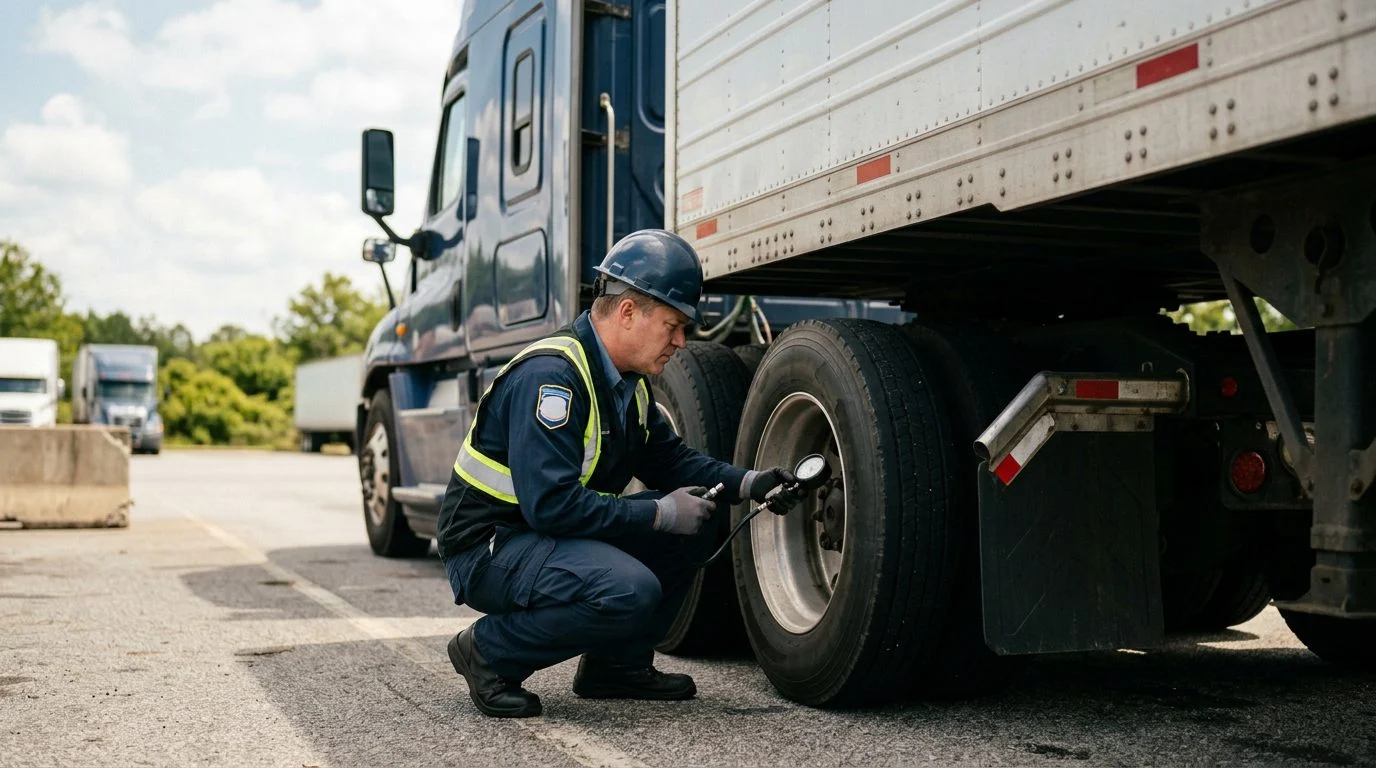
Driver fatigue is a common issue in truck cases. Federal rules bar a commercial driver from operating when fatigue, illness, or another cause makes it unsafe. See 49 CFR 392.3. Under 49 C.F.R. § 395.3, except as otherwise provided in § 395.1, a driver of a property-carrying commercial motor vehicle may not drive without first taking 10 consecutive hours off duty, and may not drive after a period of 14 consecutive hours after coming on-duty following 10 consecutive hours off-duty. Under 49 C.F.R. § 395.3, a driver may drive a total of 11 hours during the period specified in paragraph (a)(2) of that section.
Why the Insurance Company Is Usually Part of the Claim
In most truck crash claims, the at-fault party’s liability insurance is what pays any settlement or judgment. The insurer’s limits set the ceiling for that coverage.
Insurance adjusters often contact injured people early. Anything you say or sign can matter later. Know what a recorded statement or release covers before you agree to one.
If the at-fault coverage isn’t enough, your own policy may help. Under Georgia law, auto liability policies must include uninsured motorist coverage unless an insured named in the policy rejects that coverage in writing (O.C.G.A. § 33-7-11(a)(3)). That coverage pays bodily injury caused by an uninsured vehicle’s owner or operator, within the policy limits. O.C.G.A. § 33-7-11 reads: “(a)(1) No automobile liability policy or motor vehicle liability policy shall be issued or delivered in this state to the owner of such vehicle or shall be issued or delivered by any insurer licensed in this state upon any motor vehicle then principally garaged or principally used in this state unless it contains an endorsement or provisions undertaking to pay the insured damages for bodily injury, loss of consortium or death of an insured, or for injury to or destruction of property of an insured under the named insured’s policy sustained from the owner or operator of an uninsured motor vehicle, within limits exclusive of interests and costs which at the option of the insured shall be.” See O.C.G.A. § 33-7-11.
Under O.C.G.A. § 40-2-140, a claimant whose cause of action arises under that Code section, whether in tort or contract, may join the carrier’s insurer alongside the motor carrier only when one or more related motor carriers are insolvent or bankrupt, or when personal service cannot after reasonable diligence be effected against the driver or the motor carrier. O.C.G.A. § 40-2-140 allows an insurer to be joined only in narrow situations. Examples include when a related carrier is insolvent or bankrupt, or when service cannot be made after reasonable diligence.
Insurance companies generally don’t sue injured people. The claim is usually aimed at the driver or the company and paid through insurance.
What to Do After a Truck Accident to Protect Your Claim
Get medical care quickly and report the crash to police. Both steps create the records a claim depends on.
- See a doctor promptly, even if symptoms seem minor. Keep every record, bill, and prescription receipt.
- Get the police report number. Ask for the truck’s company name, DOT number, and insurance details if they are available at the scene.
- Photograph the scene. Capture both vehicles, skid marks, road conditions, and visible injuries. Collect witness names and phone numbers.
- Report a hit-and-run right away. Write down the truck’s markings, plate, and direction of travel.
- Keep a written log. Record missed work, out-of-pocket costs, and daily tasks the injury makes hard.
- Ask early for records to be preserved. Driver logs, inspection reports, and dispatch data are central evidence in truck cases.
Lost evidence makes a claim harder to prove. Acting early helps protect what is available.
Time Limits: When You Must File
Georgia’s general deadline for a personal injury lawsuit is two years after the right of action accrues. That rule appears in O.C.G.A. § 9-3-33, as quoted in a Georgia Court of Appeals filing.
Some claims follow different rules. If a state government vehicle or entity is involved, a written notice of claim may be required. Under O.C.G.A. § 50-21-26, that notice is generally due within 12 months of when the loss was discovered or should have been discovered.
When a loved one dies, a wrongful death claim has its own timing and rules.
Waiting to see how an injury develops can shorten the time you have to gather evidence. Early review helps you see which deadlines apply to your case.
How a Truck Accident Claim With Our Firm Works
Our process starts with a first consultation, then moves through investigation, damages, negotiation, and, if needed, a lawsuit. Each step builds on the one before it.
- First consultation. Our team reviews the crash facts, your injuries, and the insurance information. You can contact our office to begin.
- Investigation. We look at the police report, scene evidence, medical records, and requests to preserve trucking company records.
- Documenting damages. We gather proof of treatment, future care, lost income, and how the injury affects daily life.
- Demand and negotiation. We present the claim to the insurer. Many claims resolve at this stage, though the result depends on the facts.
- Filing suit. If a fair resolution isn’t reached, we file in the proper court. Timing depends on the case’s complexity and the court’s calendar.
The firm works on a no-fee-unless-we-win basis. The client may still be responsible for court costs and case expenses. The first consultation is free, confidential, and carries no obligation to continue.
Not sure what your next step is?
Talk it through with our team — the first consultation is free, confidential, and carries no obligation.
Why Injured Clients Work With T. Madden & Associates, P.C.
T. Madden & Associates, P.C. is a Georgia personal injury firm that has been in practice since 1999. The firm is led by attorney Terance Madden. Its lawyers include Terance Madden and Shenia Madden.
The firm has offices in Jonesboro (Clayton County), Atlanta, Decatur, Macon, and Augusta. Its practice areas include car and truck accidents, motorcycle and e-bike crashes, slip and falls, nursing home abuse, medical malpractice, negligent security, wrongful death, and catastrophic injury.
Our lawyers handle truck crash claims alongside related matters such as wrongful death and catastrophic injury. Our team can explain each step in plain language. We can also answer questions about what to expect along the way.
Frequently Asked Questions About Suing a Truck Driver
Can I sue the truck driver if the company’s insurance is involved?
Yes. A claim can be made against the driver, the company, or both. The insurer may handle the defense under the policy.
What happens if a company truck hits me?
The claim may name the driver, the company, or both. The answer depends on who was responsible and whether the driver was working.
Do police follow up on a hit-and-run involving a truck?
Report the crash right away and get a report number. How the investigation proceeds depends on the facts and the evidence found.
Is it worth suing an insurance company?
Insurance companies generally don’t sue injured people. Whether a claim is worth pursuing depends on the injuries, the policy limits, and the evidence.
Do I need a lawyer if the other driver admits fault?
Admitted fault doesn’t settle the amount of damages. An insurer’s first offer may not cover all medical and future costs.
If a truck driver’s carelessness left you hurt or took someone you love, you don’t have to sort out the next steps alone. Contact T. Madden & Associates, P.C. to talk through your options.
How We Can Help After a Truck Crash
Review the Crash Facts
Our team looks at the crash report, the trucking company's records and other evidence to understand what happened.
Look at Every Potential Defendant
Truck crashes can involve the driver, the trucking company, and others. We examine each party's role in the collision.
Handle the Insurance Companies
Our lawyers communicate with insurers so you can focus on your recovery instead of their questions.
Fees Only If There Is a Recovery
No fees unless there is a recovery. You may still be responsible for court costs and case expenses, which we will explain up front.
Before You Speak With an Insurance Adjuster
A trucking company's insurer may contact you quickly. Avoid giving a recorded statement or signing documents until you have talked with a lawyer about your rights.
Common Questions About Truck Accident Claims
Can I Sue the Driver?
Claims may be brought against the driver, the company that employed or contracted with the driver, or both. Our lawyers review the facts of your crash to identify the right parties.
What If Company Insurance Is Involved?
Commercial insurance policies can change how a claim is handled. We explain how coverage may apply to your situation.
What Should I Gather Now?
Photos, medical records, witness names and the police report are helpful. Bring what you have to your consultation.
Where Can I Meet With Us?
We have offices in Jonesboro, Atlanta, Decatur, Macon and Augusta, and we can discuss your case by phone.