

Car Accident Lawyer Clayton County: Rain, Ice & Fog Crashes
By Terance Madden · Published October 24, 2026
If rain, ice or fog played a part in your crash, the facts still come down to what each driver did. This guide explains how Georgia law treats weather crashes, what evidence fades fastest, and the deadline that applies in most cases. It’s written for injured drivers, passengers, riders and family members who are looking into a car accident lawyer Clayton County claim and want clear answers first.
Who This Page Is For and What a Weather Crash Claim Covers
A weather crash claim seeks money for injuries and losses from a collision where rain, ice, fog or wet pavement played a role. This page is for people hurt on a wet or icy road. It also helps family members who are checking on someone else’s crash.
Motorcyclists and e-bike riders face the same weather risks. Our team handles motorcycle and e-bike crash claims too.
A claim may seek money for medical bills, lost wages, vehicle repair or a total loss, rental costs and pain and suffering. How much a claim is worth depends on the facts.
General damages are presumed to flow from a wrongful act, so no exact amount must be proved. Special damages, such as bills and lost pay, must be proved (O.C.G.A. § 51-12-2). Necessary expenses from an injury also count toward damages (O.C.G.A. § 51-12-7).
Our lawyers handle car accident, truck accident, motorcycle accident, e-bike accident and wrongful death matters. Weather can matter in each of them.

How Rain, Ice and Fog Affect Fault in Georgia
Georgia divides fault based on what each driver did.
Georgia measures conduct by ordinary diligence. That is the care an ordinarily prudent person takes under the same or similar circumstances (O.C.G.A. § 51-1-2). Rain, ice and fog are circumstances. A driver who keeps the same speed on black ice may be judged against that standard.
Fault also reduces recovery. A judge cuts your damages by your percentage of fault (O.C.G.A. § 51-12-33). If you are 50 percent or more responsible, you are not entitled to receive any damages under that statute.
Georgia’s avoidance rule works differently. If you, by using ordinary care, could have avoided the consequences to yourself caused by the defendant’s negligence, you are not entitled to recover (O.C.G.A. § 51-11-7).
Each liable party pays only its own share, not a joint amount (O.C.G.A. § 51-12-33).
Insurers may argue the weather caused the crash. The real question is usually what each driver did in those conditions.
Common Weather-Related Crash Causes and the Evidence Behind Them
Most weather crashes trace back to a few driver choices. Each choice leaves a different kind of evidence.
- Speed too high for wet or icy pavement: skid marks, vehicle data and the posted limit near the scene.
- Following too close on slick roads: final rest positions, damage patterns and witness accounts.
- Failing to slow for black ice on bridges and shaded curves: photos of the road surface and weather records for that time.
- Poor visibility from fog, heavy rain or frost: lighting, wiper condition and vehicle inspection notes.
- Worn tires, failed wipers or weak brakes: maintenance records and repair receipts.
Weather records from the time of the crash can support what drivers say. They can also show that a account doesn’t match the conditions.
Two gaps can hurt a claim. A delay in medical care gives an insurer room to argue your injuries came from something else. Photos taken after the road is cleared or the car is repaired can’t show the scene as it was. Prompt care matters for your health first.
What to Do After a Clayton County Weather Crash
After a weather crash, safety comes first. A police report and a clear record of the scene come next.
- Move to safety if you can, and call 911.
- Ask for a police report. The Georgia DOT explains its crash reporting process, including how to obtain crash reports.
- Photograph the pavement, weather, lighting, signs and vehicle damage. Do this before anything is moved or repaired.
- Get names and contact details for other drivers and witnesses. Note the exact location and time.
- See a doctor, even if symptoms seem minor. Keep every appointment and bill.
- Be careful with statements. Stick to facts. Don’t guess about speed or how slick the road felt.
Keep a simple journal of pain, missed work and daily limits. It shows how the injury affects your life day to day.
How the Claim Process Works and the Georgia Time Limit
In most Georgia injury cases, you have two years from the date of injury to file a lawsuit. Georgia law says that, except as otherwise provided in this article, actions for injuries to the person must be brought within two years after the right of action accrues (O.C.G.A. § 9-3-33). Some claims follow different timing rules, so an early review helps.
Claims against a city have an extra first step. A written claim must go to the city’s governing authority within six months of the event. Courts cannot hear the case until that claim has been presented (O.C.G.A. § 36-33-5).
A typical claim follows four steps:
- Free consultation. The crash facts, injuries and insurance details are reviewed.
- Investigation. The team requests the police report, weather and road records, vehicle data and medical records.
- Demand and negotiation. The claim goes to the insurer, which can take several months.
- Lawsuit. If a fair settlement isn’t offered, a case may be filed before the deadline.
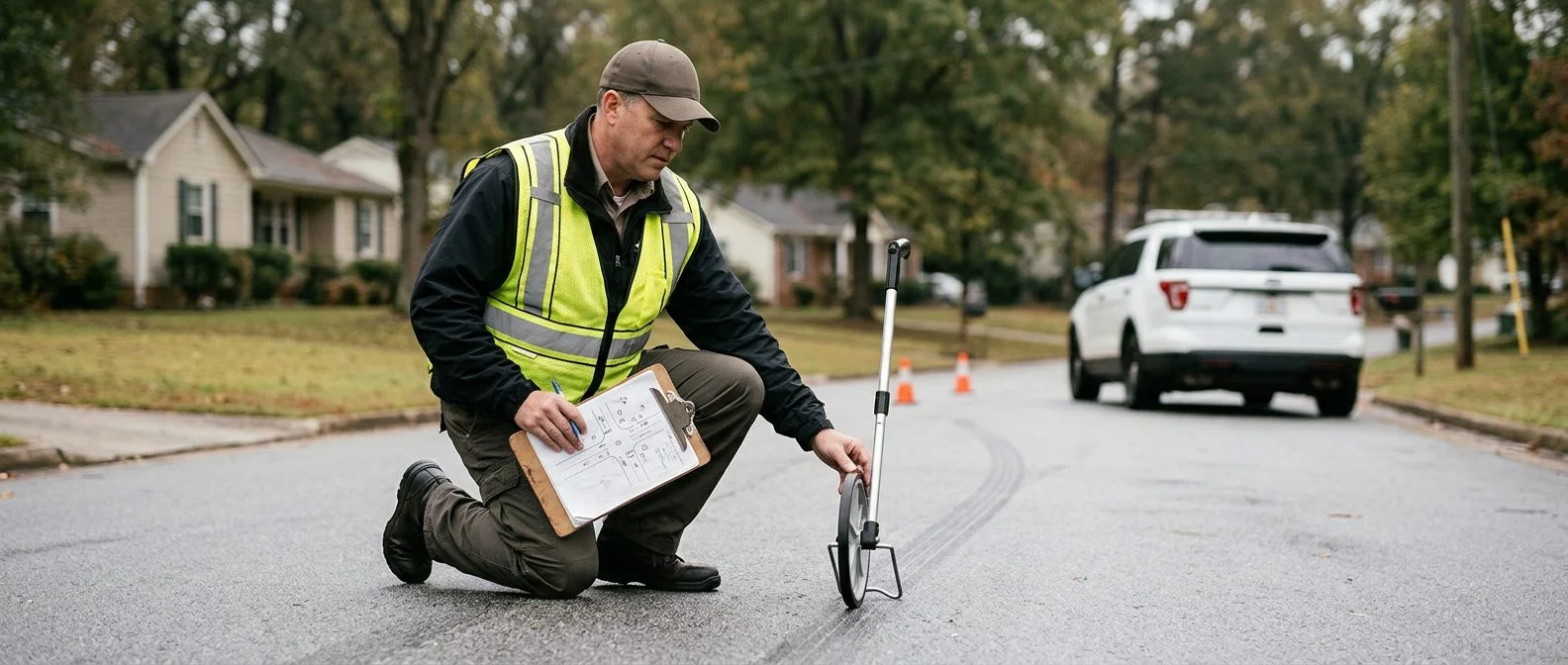
Skid marks and road conditions change quickly. Early action protects the evidence.
Why People Bring Weather Crash Cases to T. Madden & Associates
T. Madden & Associates, P.C. is a Georgia personal injury firm in practice since 1999. Terance Madden leads the firm and is the responsible lawyer for this page.
Our lawyers and support staff handle car, truck, motorcycle and e-bike crash claims. That work runs from the police report through the insurer’s response.
The firm has offices in Jonesboro (Clayton County), Atlanta, Decatur, Macon and Augusta.
Our team explains each step in plain terms. We also explain which records matter and why, so you can decide what to do next.
Frequently Asked Questions About Weather Crash Claims
How much do accident lawyers charge in Georgia?
The firm works on a no-fee-unless-we-win basis. You may still be responsible for court costs and case expenses.
Can I still recover if I was partly at fault?
Possibly. Georgia reduces damages by your share of fault and bars recovery at 50 percent or more (O.C.G.A. § 51-12-33).
Does waiting to see a doctor hurt a claim?
Insurers may use a gap in care to argue your injuries came from something else. Getting checked promptly supports both your health and your records.
What if I already talked to the other driver’s insurer?
Stick to facts and avoid guessing about speed or fault. A consultation can help you decide what to say next.
Do I need a police report?
A report helps document the scene and conditions. You can request crash reports through the state’s reporting process.
If rain, ice or fog played a part in a crash that hurt you or someone close to you, you may have a claim worth discussing. Our team offers a free, confidential consultation with no obligation to continue. Contact T. Madden & Associates to start.
Responsible lawyer: Terance Madden, T. Madden & Associates, P.C. Contact details: tmaddenlaw.com/contact.