


Car crash injuries | Jonesboro, Atlanta, Decatur, Macon and Augusta
Hurt in a Georgia Car Crash? Get Medical Care First, Then Call Us.
T. Madden & Associates, P.C. has helped people hurt in crashes since 1999, and our team is available to talk with you at any hour.
The firm at a glance
1999
In practice since
5
Offices: Jonesboro, Atlanta, Decatur, Macon and Augusta
24/7
Phone line for crash victims
By Terance Madden · Published November 9, 2026
You were just hurt in a crash, and now you need to know where to go. Many people search for ER or urgent care after a car accident in that exact moment, and the choice matters. Go to the emergency room (ER), or have someone call 911, if you have severe symptoms. Urgent care can often evaluate smaller injuries once you are stable.
This guide explains which symptoms call for which choice, why some injuries appear later, and what Georgia law asks of you after a crash.
Where Should You Go First After a Car Crash?
Go to the ER first if you have any severe or possibly life-threatening symptom. Urgent care fits when your injuries look minor and you are stable.
The crash itself does not decide the choice. Your symptoms do. Some people feel shaky or sore at the scene, and others feel fine until hours later. If you have any doubt, get checked.
If you cannot make the call yourself, ask someone nearby to call 911 for you. Do not wait for pain to get worse before you decide.
Georgia also sets a reporting duty. Under O.C.G.A. § 40-6-273, a driver in a crash that causes injury, death, or property damage of $500.00 or more must immediately give notice by the quickest means of communication. Inside a city, that means the local police department. Outside a city, it means the county sheriff or the nearest state patrol office.
Hurt in a crash and still deciding what to do next? Our team is glad to talk it through, and the first consultation is free and confidential. Talk it through with our team — the first consultation is free, confidential, and carries no obligation.
When Is the ER the Right Choice?
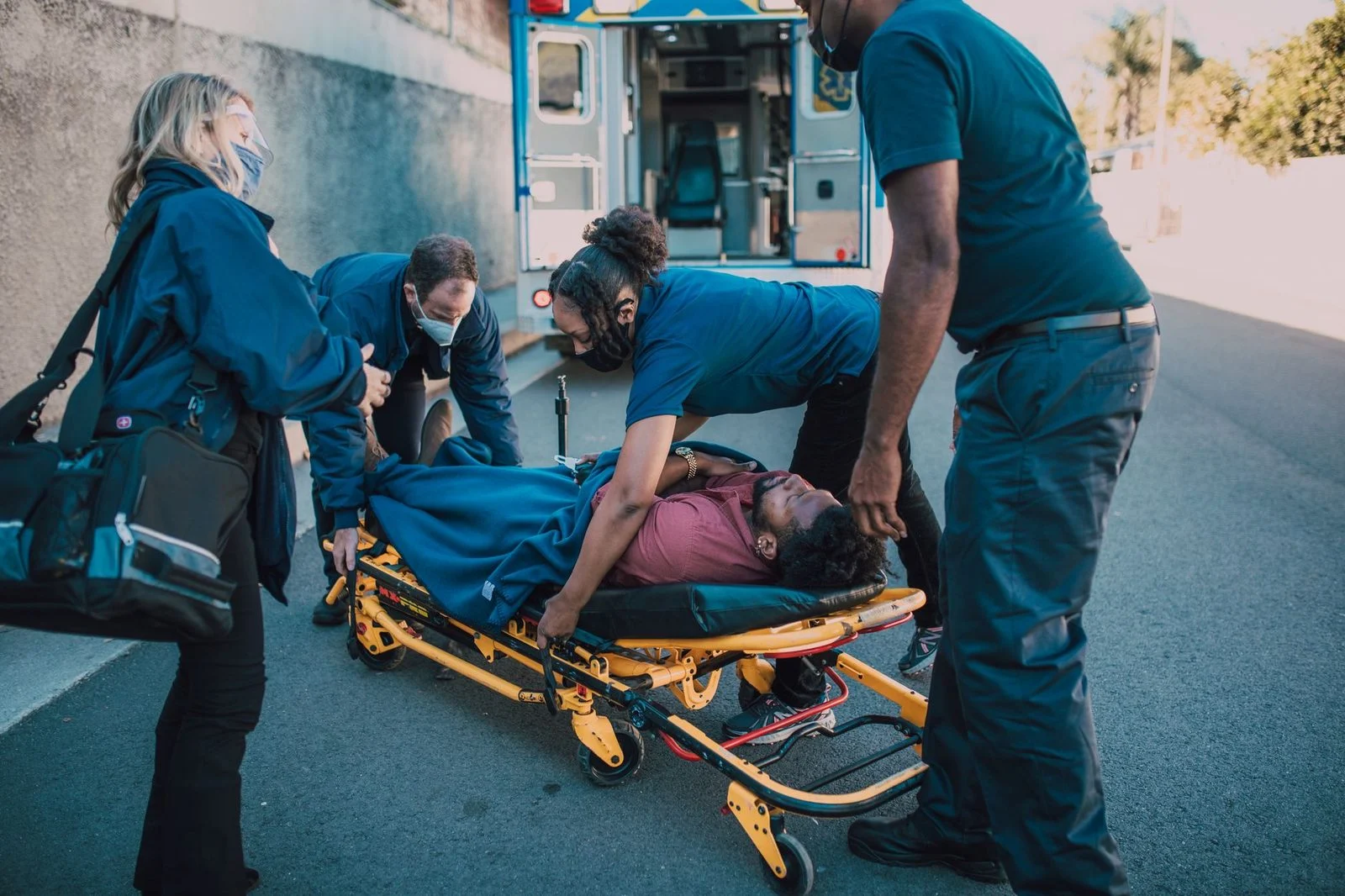
The ER is the right choice when symptoms could point to a serious injury. Do not wait to see whether they fade.
Go now if you have any of these:
- Loss of consciousness or confusion at any point
- A severe headache or repeated vomiting
- A seizure
- Trouble breathing or chest pain
- Numbness or weakness in an arm or leg
- Neck pain after a blow to the head
- Bleeding that will not stop
- A suspected broken bone
Loss of consciousness means you were knocked out, even briefly. Some people wake up and feel fine right away. A brief blackout after a hard impact still needs a medical check. A head injury can worsen over hours, and some symptoms do not show up until later.
Children, older adults, and anyone taking blood thinners should be seen promptly, even when symptoms seem mild. Tell the staff about the crash, when it happened, and whether you hit your head. That detail helps the doctor decide what to check first.
When Does Urgent Care Fit, and What Can’t It Replace?
Urgent care fits when you are stable and your injuries look minor. Common examples include sprains, strains, bruises, minor cuts, and many neck or back complaints.
Whiplash is a neck injury from a sudden back-and-forth motion of the head. Urgent care can check for whiplash and other soft-tissue strains. Ask the provider to note every area that hurts, even the areas that feel only slightly sore.
Urgent care is often a first stop, not the last. Follow-up visits, imaging referrals and ongoing care usually go to your primary care physician or the doctor treating your injury. If the clinic gives you a referral, book that visit before the date it lists.
Keep a simple written record. Write down the clinic name, the date, what the provider told you, and the follow-up they recommended. Bring that list to every visit.
Why Do Some Injuries Show Up Days Later?
Many crash injuries, including neck pain, back pain, headaches and soft-tissue strain, can appear hours or days after the crash. Adrenaline can mask pain at the scene. When it wears off, soreness often sets in.
That delay is common. It does not mean you were not hurt.
Watch for these changes over the next several days:
- A new or worsening headache
- Dizziness or trouble with balance
- Numbness or tingling
- Pain that spreads to new areas
- Trouble sleeping
- Memory or focus problems
- New bruising
Report new or worsening symptoms to a doctor promptly. Write down what you feel, when it started, and what makes it better or worse.
A gap in treatment can be questioned later by insurers or others. A prompt visit and a clear symptom log give your medical picture a timeline from the start.
What Should You Say to the Insurance Company, and When?
Wait to give a recorded statement until you know the extent of your injuries. Keep early calls short and factual.
Big Insurance adjusters often call early and ask for a recorded statement before you know what your injuries are. An early statement can be used later. You may describe symptoms before a doctor has named them, and those first words are hard to walk back.
Georgia’s Office of the Commissioner of Insurance and Fire Safety recommends that you promptly notify police and your insurer, collect crash and witness information, document the scene, and avoid statements about fault. You can read its Georgia auto claim tips for the full list.
You can tell the adjuster you are still getting medical care. You can ask for a call back, and you can share basic facts such as the date, time and location.
Time limits matter too. Under O.C.G.A. § 9-3-33, actions for injuries to the person must be brought within two years after the right of action accrues, except where the law provides otherwise.
What Should a Family Member Do When Helping With Care?
The injured person still makes the medical decisions. A family member can take on the details while that person focuses on healing.
The helper often manages appointments, medications, paperwork and rides. That role matters, and it can be a lot to carry alone. Split the tasks with other relatives if you can.
Keep one folder for everything. Include visit summaries, bills, prescription receipts and records of missed work. Keep a daily symptom log in the same place.
Ask each clinic to send records to the injured person. Bring the folder and the written log to every visit so the doctor sees the full picture.
If the crash involved a fatal or major injury, the Georgia State Patrol may investigate.
Not sure what your next step is?
Talk it through with our team — the first consultation is free, confidential, and carries no obligation.
Getting Help Deciding What to Do Next
You are making decisions about your health and your money while still hurt. That is a lot to handle at once.
Maybe the crash left you with an unclear diagnosis, a stack of bills, and an insurance adjuster who keeps calling. That is a hard place to be, and you do not have to sort it out alone.
T. Madden & Associates, P.C. has been in practice since 1999, with an office in Jonesboro in Clayton County. Terance Madden is the responsible lawyer for this page.
If you want to talk through your situation, our team offers a free first consultation. It is confidential and carries no obligation to continue. When you call, bring your visit list, your folder, and any letters from insurers. You can reach the firm through its contact page.

Frequently Asked Questions
Should I go to the ER or urgent care after a car crash?
Go to the emergency room or call 911 right away if you have a head injury, chest pain, trouble breathing, numbness, confusion, or heavy bleeding. Urgent care can be reasonable for minor pain or cuts, but it may not have the imaging needed to rule out serious injuries.
Can I wait a few days to see a doctor if I feel fine after a crash?
No. Some injuries, including concussions, neck and back soft tissue injuries, and internal bleeding, can cause symptoms hours or days after a crash, so get checked as soon as you can.
Why does it matter where I get checked after a crash?
Your first medical records document your injuries and when they started, which can matter if you later need to show how the crash hurt you. Keep copies of every visit, bill, and prescription, and tell the provider exactly how the crash happened and where you hurt.
What if I can’t afford the ER or urgent care bill?
Get the care you need first and don’t skip treatment because of cost. Medical bills from a crash caused by someone else may be part of your claim, so keep every bill and call T. Madden & Associates, P.C., which offers a free first consultation that is confidential and comes with no obligation to continue.