


Car Accident Lawyer · Clayton County
Hurt in an On-Ramp Merge Crash in Clayton County?
T. Madden & Associates, P.C. has represented injured Georgia residents since 1999. Our Jonesboro office is ready to hear what happened and talk through your options.
Why Clients Contact Our Firm
Since 1999
Representing injured people in Georgia
5
Georgia offices, including Jonesboro in Clayton County
Free
First consultation, confidential and without obligation
By Terance Madden · Published October 22, 2026
If you need an on-ramp merge accident lawyer in Clayton County, the first question is usually who had to yield. In Georgia, fault is split by percentage, and the injured person’s share reduces what they can recover. Fault often turns on who moved, when they moved, and whether the other driver had time to react. This page explains how Georgia law sorts that out, which evidence matters most, and what happens when you call T. Madden & Associates, P.C.
What an on-ramp merge crash is and who it affects
An on-ramp merge crash happens when a vehicle entering a highway from a ramp hits traffic already on the main road. It can also happen when a driver changes lanes to make room for a merging car. Ramps on I-75 and I-285 feed drivers into fast-moving traffic, so there is little time to adjust.
Three patterns come up most often:
- Side impact: the merging car moves over and strikes a vehicle already in the lane.
- Rear-end impact: traffic slows near the ramp, and the driver behind does not stop in time.
- Sideswipe: a car changes lanes after merging and scrapes the vehicle beside it.
Drivers and passengers are not the only people hurt. Motorcyclists and e-bike riders have less protection and less room to react. Pedestrians near ramps can be struck too. For the broader rules on car claims, read our Georgia car accident guide.
If a merge crash on I-75 or I-285 left you with bills and an insurer pointing at you, we can review your claim with you, free. Talk it through with our team — the first consultation is free, confidential, and carries no obligation.
Who is usually at fault in a merge crash
Fault often lands on the driver who moved into another vehicle’s path.
Georgia measures ordinary care by what an ordinarily prudent person would do in similar circumstances (O.C.G.A. § 51-1-2).
Georgia also reduces damages by the injured person’s share of fault. Under O.C.G.A. § 51-12-33, the trier of fact determines the percentage of fault of the injured person. The judge then cuts the award by that percentage. If the injured person is 50 percent or more responsible, they cannot receive any damages.
The decision-maker also considers the fault of everyone who contributed to the crash. That can include a driver who is not a party to the lawsuit. The answer depends on the facts of each crash. Both drivers’ accounts, the vehicle damage, and the lane positions are examined before fault is split. If the other driver blames you, our guide on when the other driver blames you explains the next steps.
Evidence that decides who is at fault
The most useful proof shows where each vehicle was and what each driver did just before impact. Gather these items early:
- Photos: the ramp, the lane markings, the merge lane length, and where both vehicles came to rest.
- Witnesses: names and phone numbers for passengers and drivers who saw the lane change.
- Video: dashcam footage, phone video, and any nearby business or traffic camera recordings. Some systems overwrite old footage quickly.
- Police report: the officer’s notes on each driver’s movements and any citation issued.
- Medical records: records that link your injuries to the crash and show when treatment started.
Timing matters. Footage fades and memories blur. A preservation letter asks the other driver and insurer to keep what they have. Sending one early helps protect that proof.
Truck and commercial vehicle merge crashes
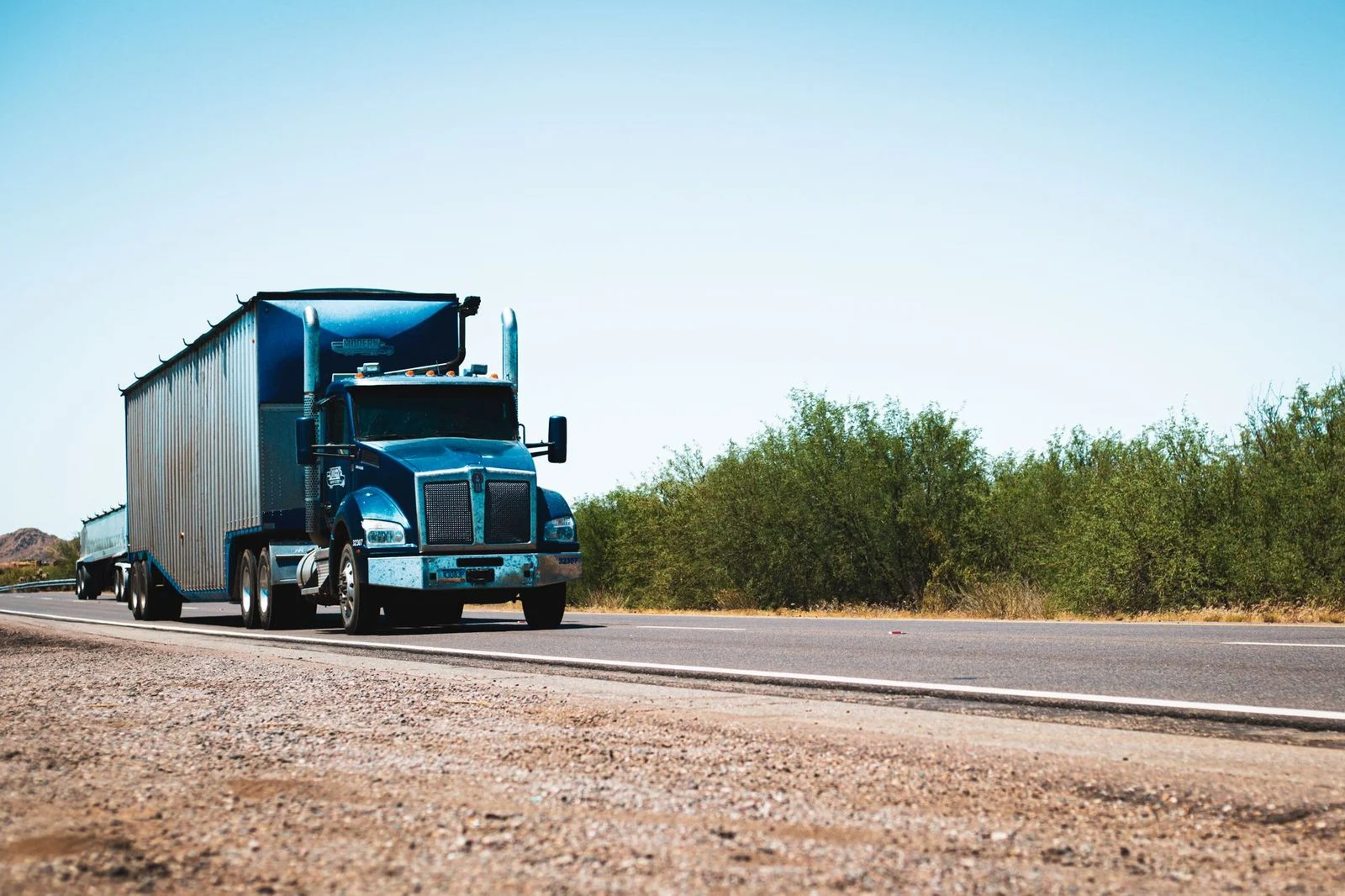
Truck merge crashes follow the same fault rules, but the proof often goes further. Commercial trucks are longer and heavier. They need more room to stop and turn. A merge that looks ordinary in a car can be far more dangerous beside a tractor-trailer.
Truck claims can involve more than one party. The driver, the motor carrier, and the company that leased or dispatched the load may each play a role. Identifying them early shapes the claim.
Federal rules require trucking companies to keep certain records. A motor carrier must keep driver vehicle inspection reports for three months from the date the written report was prepared, unless it is a private nonbusiness passenger carrier, a driveaway-towaway operation, or a carrier operating only one commercial motor vehicle (49 C.F.R. § 396.11). Except for private motor carriers of passengers (nonbusiness), a motor carrier subject to these rules must require each driver it uses to record the driver’s duty status for every 24-hour period (49 C.F.R. § 395.8). After some crashes, federal rules set time limits for alcohol testing of surviving drivers (49 C.F.R. § 382.303).
Those time limits are one reason to act early.
How a Clayton County merge crash claim works with our firm
Our process starts with a free first consultation, which is confidential and carries no obligation to continue. Here is what usually follows.
- First contact. We review the crash, your injuries, and your insurance details. You can request a free case evaluation at any time.
- Investigation. We gather the police report, photos, witness statements, and medical records.
- Insurance handling. Our team speaks with adjusters, so you do not have to manage those calls alone.
- Valuation and demand. Medical bills, lost wages, and daily effects are documented before a demand is made. Georgia limits medical expense damages to the reasonable value of medically necessary care (O.C.G.A. § 51-12-1.1).
- Filing if needed. If a fair resolution is not reached, a lawsuit may be needed. Under O.C.G.A. § 9-3-33, except as otherwise provided in that article of Georgia law, a lawsuit for personal injuries generally must be filed within two years after the claim accrues, though the statute sets different periods for some claims, such as four years for loss of consortium, so acting promptly is important.
Timelines vary with your injuries, the insurer’s position, and whether court action is needed. Our team explains each stage as it comes.
Why people bring this claim to T. Madden & Associates, P.C.
T. Madden & Associates, P.C. has been in practice since 1999. Terance Madden is the responsible lawyer for this page. The firm’s lawyers include Terance Madden and Shenia Madden, supported by assistants and office staff. The firm has offices in Jonesboro (Clayton County), Atlanta, Decatur, Macon, and Augusta.
Our team handles car, truck, motorcycle, e-bike, slip and fall, wrongful death, nursing home abuse, and medical malpractice cases. A merge crash claim is one part of that work.
The firm works on a no fee unless we win basis. You may still be responsible for court costs and case expenses, so ask about those before you sign anything.
Not sure what your next step is?
Talk it through with our team — the first consultation is free, confidential, and carries no obligation.
Questions people ask before they call
Most merge crash questions come down to fault, deadlines, and insurance. Here are the common ones.
Can I still recover if I was partly at fault?
Yes, if your share of fault is under 50 percent. Under Georgia law, the judge reduces the damages otherwise awarded to you in proportion to your percentage of fault (O.C.G.A. § 51-12-33).
What if the other insurer denies my claim or blames me?
A denial is a position, and it can be challenged with evidence. Our team can review the insurer’s position against what you have. Read more about insurer denials in Georgia car claims.
Do I need a police report?
A report helps, but it is not the only proof. Photos, witness accounts, and video can also show how the crash happened.
Should I give a recorded statement to the other insurer?
Be careful. Talk with a lawyer before you give a recorded statement, so your words are not misread.
How long do I have to file?
Georgia’s two-year deadline for actions for injuries to the person is set by O.C.G.A. § 9-3-33. Some claims have other deadlines, so ask early.
Does my own insurance help if the other driver is uninsured?
Uninsured motorist coverage may protect you and your passengers when an uninsured driver causes the crash.
If a car or truck pulled onto I-75 or I-285 from a Clayton County ramp and left you with medical bills and missed work, you do not have to sort out fault alone. Call T. Madden & Associates, P.C., available 24/7, to talk through your merge crash with an on-ramp merge accident lawyer in Clayton County.
How We Can Help After a Merge Crash
Careful Review of the Collision
We look at how the merge unfolded, including traffic patterns, lane changes, signals, and any available records, so your claim is built on the facts.
Insurance Company Communication
We handle contact with insurers so you can focus on recovering. You do not have to answer adjusters' questions on your own.
Attention to Your Whole Situation
Medical bills, lost work, vehicle damage, and everyday limits from your injuries all matter, and we take the time to understand them.
Clear Fee Terms
We charge no fees unless there is a recovery. You may still be responsible for court costs and case expenses, and we explain these before you decide.
Act Carefully Right Away
Seek medical attention even if your injuries seem minor, and avoid giving recorded statements to the other driver's insurer before speaking with a lawyer.
What to Expect When You Contact Us
1. Tell Us What Happened
Reach out by phone or online. Share the basic details of the merge crash, including the date, location, and who was involved.
2. Free Case Evaluation
We review your situation during a free, confidential first consultation. There is no obligation to continue.
3. A Clear Plan
If we move forward, we explain the next steps, what we need from you, and how the case is handled from start to finish.
4. Steady Support
Our team keeps you informed and responds to your questions as your case develops.
Injured in a Merge Crash? Talk to Our Clayton County Team Today
Related practice areas
- Work Zone Car Accident Lawyer Georgia | T. Madden