

Georgia Car Accident Guide | Jonesboro, Atlanta, Decatur, Macon & Augusta
Reporting a Georgia Crash? Know Which Clock Is Running
Police, insurers and courts each follow their own timing. Learn how the steps differ, and why acting early helps protect your options.
T. Madden & Associates, P.C.
1999
Practicing Georgia personal injury law since
5
Georgia offices, including Jonesboro and Atlanta
Free
First consultation, confidential and with no obligation
By Terance Madden · Published October 27, 2026
The short answer: the deadline depends on who you are reporting to
How long after an accident must it be reported? It depends on who you are reporting to. One crash can trigger several separate steps: a call to police, notice to insurers, and a lawsuit. Each step runs on its own clock, and mixing them up is a common mistake.
This page walks through each step in plain language. It is general information, not advice about any one accident. Terance Madden is the responsible lawyer for this page at T. Madden & Associates, P.C., a personal injury firm that has practiced in Georgia since 1999.
If a crash has left you or someone you love facing these deadlines, our team can talk it through with you in a free, confidential first consultation. Talk it through with our team — the first consultation is free, confidential, and carries no obligation.

Reporting to police at the scene in Georgia
Calling police from the scene puts the facts on record while they are still fresh.
Tell the officer what you saw and remember. Share the location, the time, the direction each car was traveling, and where you were hurt. Describe facts rather than guesses about who was at fault.
Be careful about saying you are “fine.” Some injuries are not obvious right away, and a roadside comment can be repeated later. Exchange names, phone numbers, insurance details and license plate numbers with the other driver. Note any witnesses, and photograph the other driver’s documents if you can do it safely.
Keeping track of the police report and your own records
Write down the responding agency, the officer’s name and any report number. Do this at the scene if you can, or as soon as you receive them. Keep these details with your photos and notes.
Your police report is one record of the crash, not the whole story. Write your own account while you still remember it. The most useful notes are plain and specific: the time of day, the lane, the weather, the traffic signal, and the damage to each vehicle. Date every note. Notes written close to the crash are easier to match with the photos and the insurance file later.
Notifying your insurance company and the other driver’s insurer
Notify your own insurer promptly, and check your policy for its notice wording. Policies spell out how and when to report a loss, so read that language rather than guessing at a timeline.
Georgia requires auto liability policies to include uninsured motorist coverage, and an insured can reject that coverage under the statute’s terms. O.C.G.A. § 33-7-11 sets out that rule. Georgia’s uninsured motorist statute, O.C.G.A. § 33-7-11, treats a vehicle as uninsured when its owner or operator is unknown. Recovery then generally requires physical contact between that vehicle and you, unless an eyewitness other than you corroborates your account.
Reporting to your own insurer is different from making a claim against the at-fault driver’s insurer. Keep a log of every call. Record the date, the time, the person you spoke with, the claim number and what was said. Early, factual notice is the safer course.
How long you have to file a lawsuit after a Georgia crash
Georgia generally allows two years to file a lawsuit for injuries to a person. The clock starts when the right of action accrues. O.C.G.A. § 9-3-33 sets this limit. The same statute gives loss of consortium claims four years.
Two other rules can change the count. Under O.C.G.A. § 9-3-90, a person who is under 18 when the claim arises gets the same time after turning 18 as other people, subject to an exception the statute notes. Under O.C.G.A. § 9-3-99, when the crash is a crime, the clock can pause while the prosecution is pending. That pause cannot exceed six years.
Wrongful death claims follow a separate statute. O.C.G.A. § 51-4-2 lets a surviving spouse, or if there is none, a child or children, recover the full value of the decedent’s life, as shown by the evidence. These court timing rules are separate from the reporting steps above.
Why reporting promptly protects your evidence
Prompt reporting helps keep evidence in place. Photos, witness names, dashcam or traffic footage, and vehicle damage are easiest to capture early. Footage can be overwritten over time. A damaged car may be repaired or moved to a yard, and the damage can change.
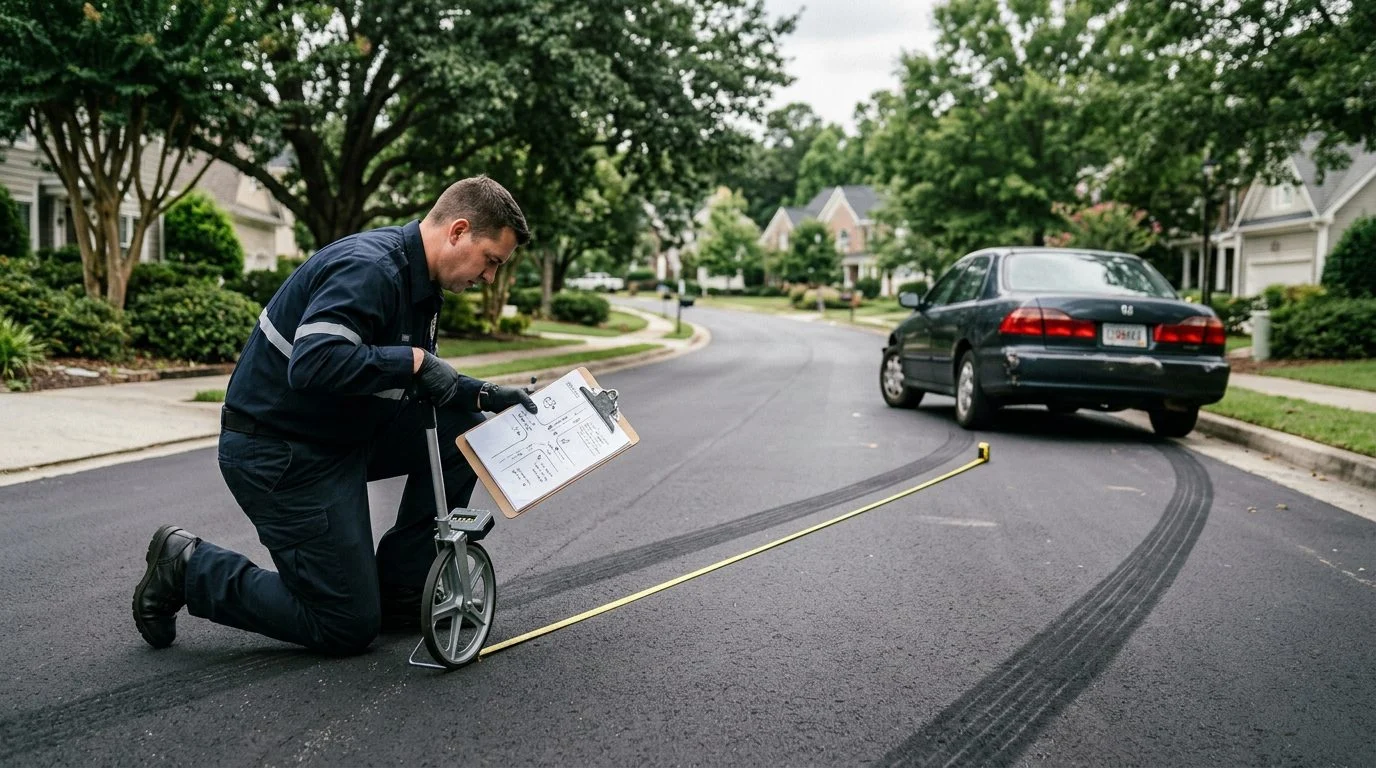
Take wide and close photos of the scene, the vehicle positions, the damage, skid marks, road signs and any visible injuries. Our guide on whether you should take photos after a car accident has a fuller checklist (plain text, no link).
An insurer may ask you for a recorded statement. You can ask to speak with a lawyer before you give one. Giving a recorded statement is your choice, and the timing of that choice is worth thinking through.
Not sure what your next step is?
Talk it through with our team — the first consultation is free, confidential, and carries no obligation.
What can happen when a crash is reported late
A late report can give an insurer a reason to question the timing of injuries or damage. Each claim turns on its own facts, so a delay is one factor among many. It is not a final answer on its own.
Fault matters too. Georgia uses modified comparative fault under O.C.G.A. § 51-12-33. Damages are reduced by the injured person’s share of fault. A plaintiff who is 50 percent or more responsible recovers nothing. Under O.C.G.A. § 51-12-33, when a plaintiff is partly at fault, the judge reduces the damages awarded in proportion to the plaintiff’s percentage of fault, and a plaintiff who is 50 percent or more responsible is not entitled to receive any damages.
Costs like towing and storage can add up while a claim is open. Our guide on whether insurance pays for a tow after an accident covers that question (plain text, no link).
Practical steps to take this week
Use this short checklist:
- Call police if you have not already, and get the report number.
- Notify your own insurer, and write down the claim number.
- Save photos, notes, witness names and documents in one place.
- Write down what you remember while it is fresh.
- Keep medical records and bills organized from the first visit onward.
If a commercial truck is involved, the Federal Motor Carrier Safety Administration says qualifying interstate carriers must register and obtain a USDOT number.
Our guide on what personal injury means explains which losses a claim can cover (plain text, no link).
How long after an accident must it be reported?
Police, insurers and courts each run on separate timing. The answer changes with the step you are on.
How long do you have to sue after a Georgia crash?
Georgia generally allows two years to file an injury lawsuit under O.C.G.A. § 9-3-33.
Can a late report end my claim?
A late report is one factor an insurer may question. It does not decide a claim by itself, because each claim depends on its own facts.

Talk with Terance Madden about your crash
You may be recovering from injuries right now. You may also be helping a family member who was hurt in a crash. Deadlines add pressure when you are already carrying a lot.
Terance Madden and our team at T. Madden & Associates, P.C. offer a free first consultation. It is confidential and carries no obligation to continue. You can start with a free case evaluation. Our lawyers include Terance Madden and Shenia Madden, with offices in Jonesboro, Atlanta, Decatur, Macon and Augusta. You can call us at any hour.
Who Handles What After a Crash
Police reports
A crash report creates an official record of the scene, the parties and the officer's observations.
Insurance notices
Insurers often ask for prompt notice, and the wording of early statements can shape later discussions.
Court filings
Lawsuits follow their own procedural rules, which are separate from the reports and notices that come before them.
Medical records
Documenting injuries from the first visit onward gives a clearer picture of what happened and what followed.
Do Not Assume Timing Can Wait
Each step after a crash runs on its own schedule. Waiting to ask questions can make it harder to gather evidence and records while they are still fresh.
Steps to Take Now
Get medical care
Treatment protects your health and creates the records that document your injuries.
Gather the facts
Note the date, location, weather, and the names and contact details of everyone involved.
Keep your records
Save photos, repair estimates, bills, and any correspondence from insurers.
Speak with a lawyer
Our attorneys can review how the reporting steps apply to your situation at a free first consultation.
Get Clear Answers About Your Crash
Related practice areas
- Car Accident Lawyer in Georgia: What to Do After a Crash and How a Claim Works
- What is the definition of personal injury?
- What Are the Four Proofs of Negligence? Georgia Guide