

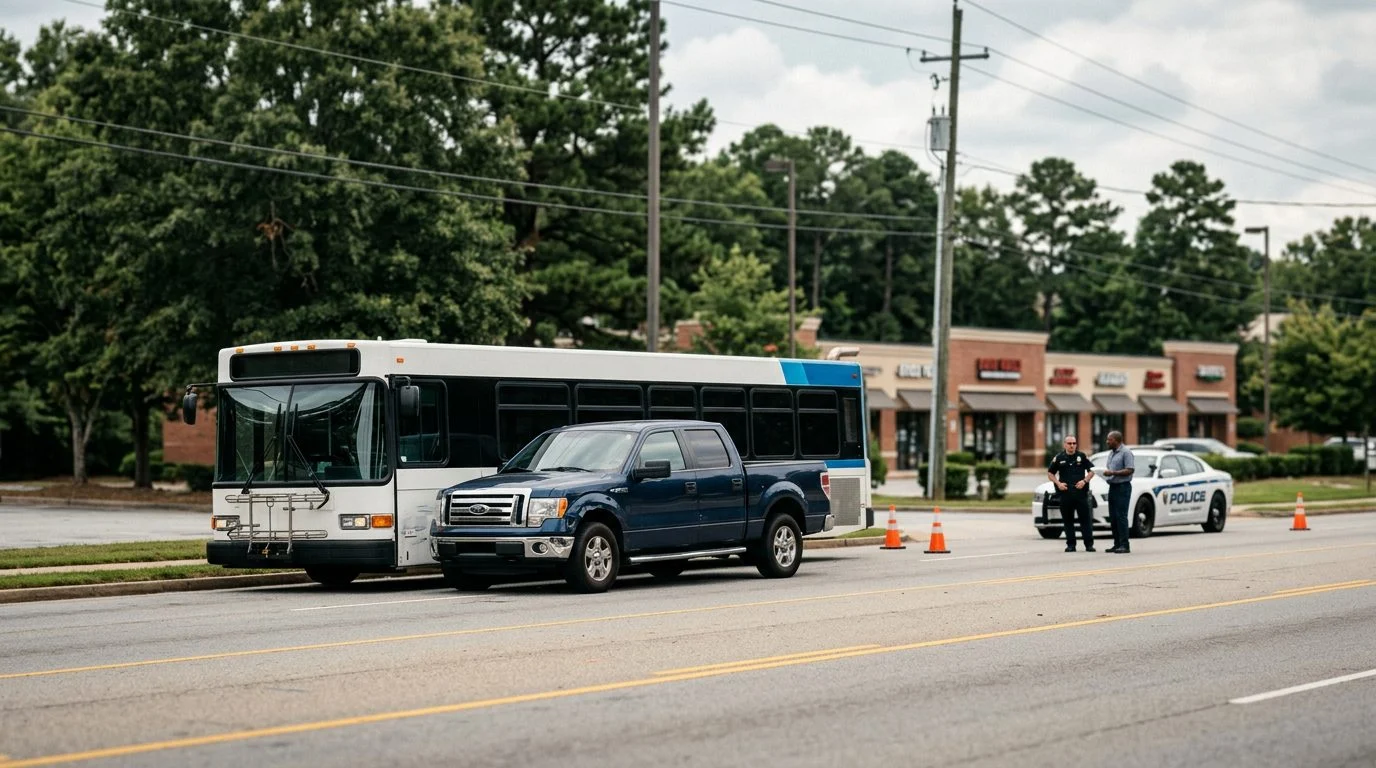
Bus and commercial vehicle crashes in Georgia
Hurt in a Bus Crash? Learn What Your Claim May Cover
Find out which losses a bus crash claim can include, how the evidence shapes the case, and when to bring in a lawyer.
T. Madden & Associates, P.C.
1999
Representing injured Georgians since
5
Offices in Jonesboro, Atlanta, Decatur, Macon and Augusta
Free
First consultation, confidential, with no obligation to continue
By Terance Madden · Published November 17, 2026
How much compensation for a bus accident? There is no single number. The total depends on your injuries, the money you lost, how fault is divided, and how much insurance is available. Georgia law builds a claim from several parts. This page explains each part in plain words, so you know what to ask and why it matters. It is general information, not a prediction for any one case.
What Determines Compensation After a Bus Accident
Compensation is built from the losses the law recognizes, adjusted for fault, and limited by the money available to pay.
Every bus crash is different. Two people with similar injuries can have very different claims, because their jobs, bills, and daily lives differ. Three building blocks matter most. The first is economic loss, meaning costs you can count, like medical bills and lost pay. The second is non-economic damages, which cover the human side of an injury. The third is the money available to pay, which usually comes from insurance.
Georgia law also reduces recovery when the injured person shares some of the blame. That reduction can change the final number a great deal.
Most people searching this topic ask three things. What can be recovered? Who pays? How fast must they act? The sections below answer each question.
If a bus crash has upended your life or a loved one's, you don't have to sort out the claim alone. Our team can talk it through in a free, confidential first consultation. Talk it through with our team — the first consultation is free, confidential, and carries no obligation.
Who Can Be Hurt and Who May Be Responsible
Anyone near a bus can be hurt, and each group faces different questions about who pays.
Passengers are hurt when a driver brakes hard or swerves. Pedestrians can be struck at crosswalks, bus stops, and curbs. Cyclists and e-bike riders can be knocked down or pushed into traffic. Occupants of other vehicles can be hit when a bus changes lanes or turns across their path.
Several parties may answer for the harm. The driver is one. The company or agency that runs the bus is another. Under Georgia law, a person is liable for wrongs committed by a servant, meaning a worker, within the scope of the person’s business, whether by negligence or on purpose (O.C.G.A. § 51-2-2). An employer can also answer for a contractor’s negligence in certain listed situations, such as when it controls how the work is done (O.C.G.A. § 51-2-5). A maintenance contractor or another driver may also share fault.
Liability turns on the facts. Police reports, driver records, maintenance logs, and witness accounts often shape who is responsible.
Economic Damages: Medical Bills, Lost Income, and Future Care
Economic damages are the money losses you can prove, such as medical bills and lost wages.
Georgia calls these losses special damages. They actually flow from the crash, and they must be proved to be recovered (O.C.G.A. § 51-12-2). Medical costs are limited to the reasonable value of care that was medically necessary, and the fact-finder decides that value (O.C.G.A. § 51-12-1.1). If you have any form of public or private health insurance, the evidence must include both the amounts charged and the amounts actually necessary to satisfy those charges, regardless of whether the insurance has been used, is used, or will be used to satisfy them. Necessary expenses that follow an injury are a legitimate part of the damages estimate (O.C.G.A. § 51-12-7).
Common items include:
- Emergency care, surgery, and hospital stays
- Rehabilitation, medication, and assistive equipment
- Lost wages and lost overtime
- Lower future earnings if the injury affects long-term work
- Travel to appointments and in-home help
Keep every bill, receipt, pay stub, and mileage log. Gaps in paperwork make proof harder.
Non-Economic Damages: Pain, Suffering, and Emotional Distress
Non-economic damages cover pain and emotional harm that a bill cannot show.
Georgia calls these general damages. The law presumes they flow from a wrongful act, so they can be recovered without proof of any amount (O.C.G.A. § 51-12-2). That does not make them easy to prove. For injuries that are entirely to feelings, the statute says no fixed measure exists except the enlightened consciences of impartial jurors (O.C.G.A. § 51-12-6). In plain words, there is no formula.
Pain and suffering can include physical discomfort, anxiety, trouble sleeping, and loss of activities you used to enjoy. A rider who now fears every trip on a bus has experienced a real loss, even though no receipt shows it.
Insurers and courts weigh these damages case by case. Medical notes that describe your symptoms, and treatment that follows the doctor’s plan without long gaps, help show the impact. Tell your providers about all of your symptoms, not only the worst one.
How Fault, Comparative Negligence, and Insurance Limits Affect Recovery
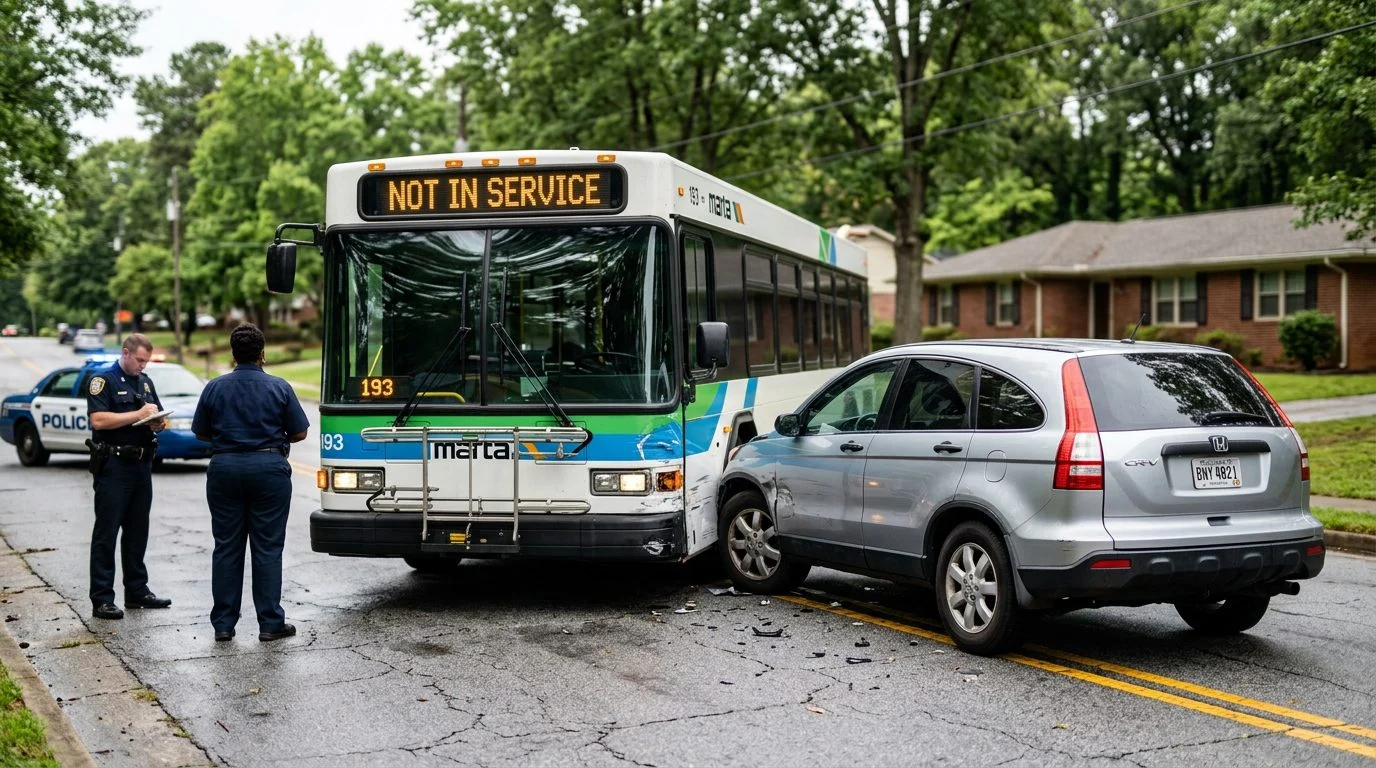
Georgia cuts your award by your share of fault, and it bars recovery entirely at 50 percent or more (O.C.G.A. § 51-12-33; Quynn v. Hulsey (2020)).
Georgia uses modified comparative fault, also called comparative negligence (shared fault) (O.C.G.A. § 51-12-33; Quynn v. Hulsey (2020)). The fact-finder assigns a percentage of fault to each person involved, including the injured person. The judge then reduces the award in proportion to the injured person’s share (O.C.G.A. § 51-12-33). Under O.C.G.A. § 51-12-33, the judge reduces the damages awarded to a plaintiff who is to some degree responsible for the injury or damages claimed in proportion to that plaintiff’s percentage of fault. If you are 50 percent or more responsible, the statute says you cannot receive damages.
Here is a labeled hypothetical. Suppose total damages are $100,000, and the injured rider is found 20 percent at fault. The award would be reduced by 20 percent, leaving $80,000.
When more than one person is liable, each one pays only its own apportioned share. Those shares are not joint, and they are not subject to contribution (O.C.G.A. § 51-12-33).
Insurance sets the practical limit. Georgia requires businesses that operate company motor vehicles to carry liability insurance or qualify as self-insurers (Georgia Office of Commissioner of Insurance). Policies have dollar limits, so the amount an insurer pays can be lower than the total damages.
Severe and Catastrophic Injuries and Wrongful Death Claims
Serious injuries and deaths produce larger claims, with more records and longer timelines.
Some injuries change a life for decades. Spinal cord injuries, traumatic brain injuries, amputations, and severe burns often require lifetime medical care. They can also reduce how much a person can earn. Those future needs add to the economic side of the claim. Proving them usually takes detailed medical opinions from treating doctors and other medical professionals.
When a bus crash causes a death, Georgia law allows certain family members to recover. A surviving spouse, or if there is none, a child or children, may recover for the homicide of a spouse or parent the full value of the decedent’s life, as shown by the evidence (O.C.G.A. § 51-4-2). The personal representative may also recover funeral, medical, and other necessary expenses when death results from criminal or other negligence (O.C.G.A. § 51-4-5).
Not sure what your next step is?
Talk it through with our team — the first consultation is free, confidential, and carries no obligation.
Government-Operated Buses and Shorter Notice Deadlines
A claim against a government-run bus may require written notice within 12 months, far shorter than the general two-year window.
Buses run by counties, cities, or state agencies can follow different rules. For claims against the state, written notice must be given within 12 months of the date the loss was discovered or should have been discovered (O.C.G.A. § 50-21-26). No action can be started until that written notice has been timely presented. No action may be commenced until the Department of Administrative Services has denied the claim or more than 90 days have elapsed after the notice was presented without action by that department, whichever occurs first (O.C.G.A. § 50-21-26). For claims against counties, the statute requires presentation within 12 months after the claim accrues or becomes payable, or the claim is barred, provided that minors or other persons laboring under disabilities are allowed 12 months after the removal of the disability to present their claims (O.C.G.A. § 36-11-1).
Georgia’s general deadline for injury to the person is two years after the right of action accrues (O.C.G.A. § 9-3-33 (Kenneth B. Cameron v. Jmp Pizza, Inc (2026))). Because government notice rules can be much shorter, identify who ran the bus as early as you can.
Steps to Take Now and Talk With Our Team
Start with medical care, careful records, and the details of the crash while they are fresh.
- Get a medical evaluation promptly, and follow the treatment plan.
- Keep every bill, receipt, pay stub, and photo.
- Write down the time, place, and what you saw and heard.
- Learn how to get a crash report.
- Review how reporting a crash to police works in Georgia.
- See how a demand letter fits into a claim.
Frequently asked questions
How much compensation for a bus accident is possible?
There is no set figure. The total depends on your losses, fault, and insurance limits.
How long do I have to file?
Georgia’s general deadline for injury claims is two years (O.C.G.A. § 9-3-33; Kenneth B. Cameron v. Jmp Pizza, Inc (2026)). Notice rules for government-run buses can be much shorter.
Can I recover if I was partly at fault?
Under O.C.G.A. § 51-12-33, a plaintiff who is 50 percent or more responsible for the injury or damages claimed cannot receive any damages. Under the same statute, a plaintiff who is less than 50 percent responsible still has a claim, and the judge reduces the damages by that plaintiff’s percentage of fault. Your award is reduced by that share.
Can a pedestrian have a claim?
A pedestrian may have a claim if a bus caused the harm. Who is responsible depends on the facts.
If a bus crash has upended your life or a relative’s, you don’t have to sort out the claim alone. If you’re reading this for someone you care about, the same offer applies. T. Madden & Associates, P.C., in practice since 1999 with offices in Jonesboro, Atlanta, Decatur, Macon, and Augusta, offers a free, confidential first consultation with no obligation to continue. The firm works on a no-fee-unless-we-win basis, but clients may still be responsible for court costs and case expenses. Terance Madden is the responsible lawyer for this page. Reach out through the contact page to start a free case evaluation.