

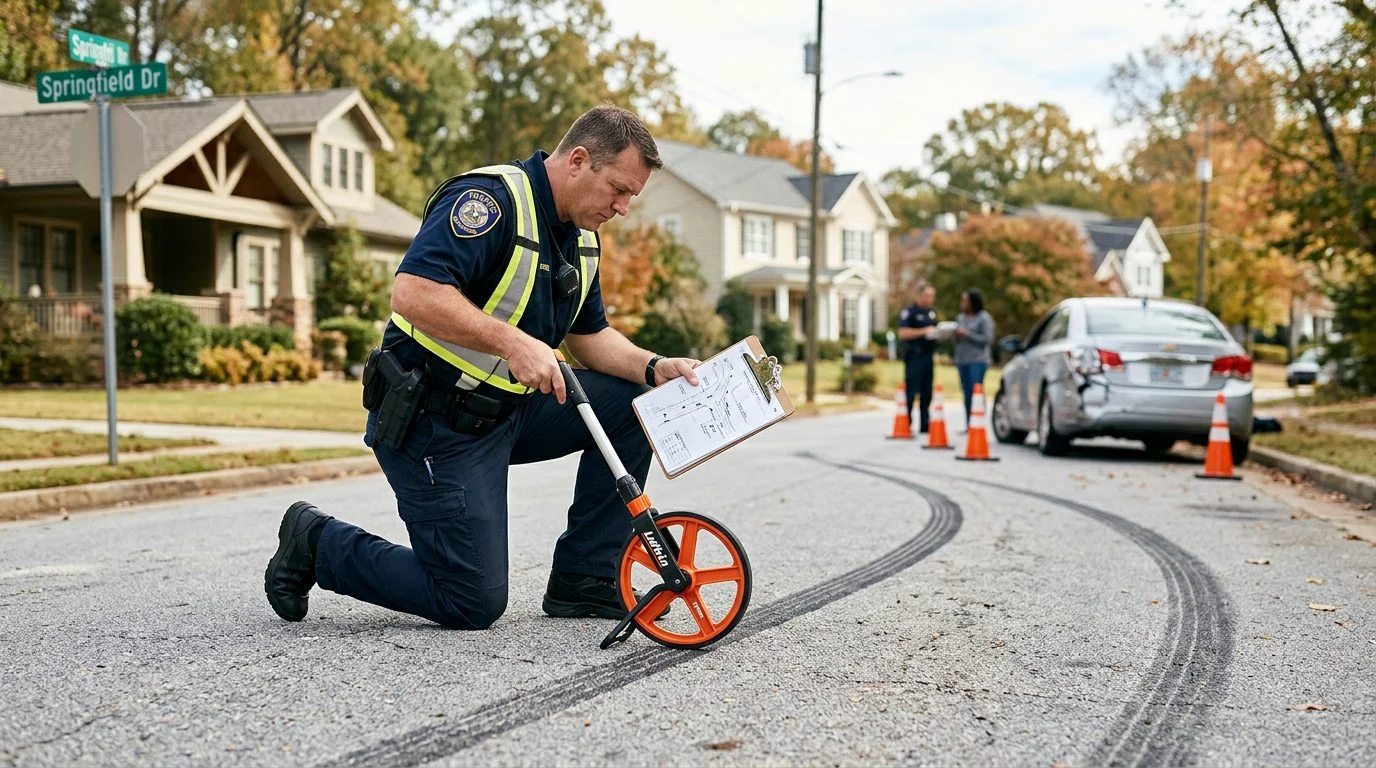
Car Accident Lawyer | Georgia
Partly at Fault in a Georgia Car Accident? Understand the 50 Percent Rule
Terance Madden has led T. Madden & Associates, P.C. since 1999, helping people hurt in Georgia car wrecks. Learn how partial fault works, then start a free, confidential case evaluation.
T. Madden & Associates, P.C. at a glance
1999
In practice since
5
Offices: Jonesboro, Atlanta, Decatur, Macon and Augusta
By Terance Madden · Published October 15, 2026
If you were hurt in a Georgia car accident and the other driver says you share the blame, you may still have a claim. Georgia’s comparative fault rules can affect how a car accident claim is valued, so each crash is worth reviewing on its own facts (O.C.G.A. § 51-12-33; Quynn v. Hulsey, 310 Ga. 473 (2020)). This page explains the rule in plain words, using the state’s own statute language, so you can understand the question before deciding what to do next.
The Short Answer: Partial Fault Does Not Automatically End a Georgia Claim
Partial fault does not automatically end a Georgia claim. Georgia uses a modified comparative fault rule (O.C.G.A. § 51-12-33). Under O.C.G.A. § 51-12-33, where the plaintiff is to some degree responsible for the injury or damages claimed, the judge reduces the damages awarded to the plaintiff in proportion to the plaintiff’s percentage of fault. If you are 50 percent or more at fault, you recover nothing.
The same statute says a plaintiff who is 50 percent or more responsible for the injury or damages claimed is not entitled to receive any damages (O.C.G.A. § 51-12-33; Quynn v. Hulsey, 310 Ga. 473 (2020)).
Two numbers drive every case. One is the total value of your damages. The other is the share of fault assigned to you. Fault reduces the total. Under O.C.G.A. § 51-12-33(g), a claim is barred when the injured person’s share of fault reaches 50 percent. A separate rule, the avoidance-of-consequences doctrine in O.C.G.A. § 51-11-7, discussed in this article, can also bar recovery.
No lawyer can promise how fault will be divided in any case, including yours. The rule sets the framework. The evidence fills it in.

If you were hurt in a Georgia car accident and the other driver says you share the blame, you may still have a claim. Talk it through with our team — the first consultation is free, confidential, and carries no obligation.
How the 50 Percent Rule Works in Practice
The Georgia car accident partial fault 50 percent rule works as a reduction first and a cutoff second. Here is a simple arithmetic example. It is not a prediction about any real claim.
Say the total damages in a case are $100,000. If the fact-finder assigns 20 percent fault to the injured driver, the award is reduced by $20,000. That leaves $80,000. The reduction follows the percentage set under the statute.
Now change only the fault share to 50 percent. Under the same statute, the injured person receives no damages. The same $100,000 claim becomes $0. That is why the exact percentage matters so much. A small shift near the 50 percent line can change the outcome completely.
Fault is often disputed in small steps. Two accounts of the same intersection can lead to different numbers. Details like lane position, signal use, or following distance can move the percentage. Precise facts matter from the first day.
Is Georgia an At-Fault State for Car Accidents?
Georgia assigns responsibility by percentage of fault. Each person who contributed to the harm gets a share, and the statute frames the question that way.
Under O.C.G.A. § 51-12-33, each at-fault person’s share is that person’s own liability. The statute says it is not a joint liability among the persons liable, and it is not subject to any right of contribution. In plain terms, each driver answers for the percentage assigned to that driver.
That split matters in crashes with more than one driver. The fact-finder must consider the fault of all persons who contributed to the injury, under § 51-12-33(c). That includes people who were never named as parties to the lawsuit.
For a broader look at how these claims are handled, read our car accident lawyer guide.
What It Means to Be Partially at Fault
Being partially at fault means your own actions added to the crash, even if the other driver did more. Common examples in Georgia collisions include speeding in a rear-end crash, changing lanes without checking a blind spot, failing to yield at an intersection, or following too closely.
Two drivers can each contribute to one crash. A fact-finder can assign a percentage to each. That is why one crash can produce two different fault numbers.
Adjusters often raise shared blame early. An adjuster’s position is not a final determination. The percentage set in the case itself controls the split.
A separate rule also applies. O.C.G.A. § 51-11-7 provides that if the plaintiff by ordinary care could have avoided the consequences to himself caused by the defendant’s negligence, he is not entitled to recover. In other cases the defendant is not relieved, although the plaintiff may have contributed to the injury.
Truck and motorcycle crashes raise the same questions, though each one turns on its own facts.
If you are still sorting out who was at fault, you don't have to work through it alone. Talk it through with our team — the first consultation is free, confidential, and carries no obligation.
What Must Be Proven Before Fault Is Divided
A claim usually depends on proof.
Medical records are a central part of that proof. They help connect injuries to the collision, even when fault itself is contested. Gaps or delays in treatment can make that connection harder to show.
Medical bills are one category of damages that a personal injury claim may include.
That means a bill alone does not settle the question.
How Fault Is Proven and Divided
Fault is proven with evidence, and the fact-finder sets the percentage from that evidence. Useful proof often includes police reports, photographs, vehicle damage patterns, dash camera or traffic camera footage, witness statements, and phone records obtained lawfully.
Evidence can disappear. Video may be overwritten, and vehicles are often repaired or sold. Early steps to keep records can matter a great deal.
When more than one party contributed, the fact-finder assesses each share. Under O.C.G.A. § 51-12-33, the fault of nonparties is also considered. A defending party can give notice not later than 120 days before trial that a nonparty was wholly or partially at fault.
Under the same statute, a finding of fault against a nonparty does not subject that nonparty to liability in any action. Those findings only affect the percentages of the named parties.
Mistakes That Can Shrink a Claim Even When the Other Driver Was Mostly at Fault
The costly mistakes often happen in the first days, when calls are frequent and pressure is high.
- Giving a recorded statement without understanding how it may be used. Words said in a hurry can later be read as a fault admission.
- Admitting fault at the scene or in a text, even out of politeness.
- Leaving gaps in treatment. Missed appointments make injuries harder to tie to the crash.
- Posting on social media about the crash or your activities. Posts can be used to dispute claims.
Timing is the last major trap. Under O.C.G.A. § 9-3-33, actions for injuries to the person must be brought within two years after the right of action accrues. The statute notes that other provisions can change the period, so timing questions deserve early review.
Frequently Asked Questions
Can I recover after a Georgia car accident if I was partly at fault?
Yes, if your share of fault is less than 50 percent, under O.C.G.A. § 51-12-33. Your award is reduced by your percentage.
What percentage of fault bars recovery in Georgia?
Fifty percent or more bars recovery under the statute. The statute provides that the trier of fact determines the plaintiff’s percentage of fault, and the judge then reduces the damages awarded to the plaintiff in proportion to that percentage (O.C.G.A. § 51-12-33).
How does Georgia’s comparative fault statute affect a claim?
Subsection (a) of O.C.G.A. § 51-12-33 ties the reduction of damages to the plaintiff’s percentage of fault, and subsection (b) addresses how the award is apportioned among the persons who are liable. Each case turns on its own evidence.
How long do I have to sue for a Georgia injury?
For injuries to the person, the general period is two years under O.C.G.A. § 9-3-33.
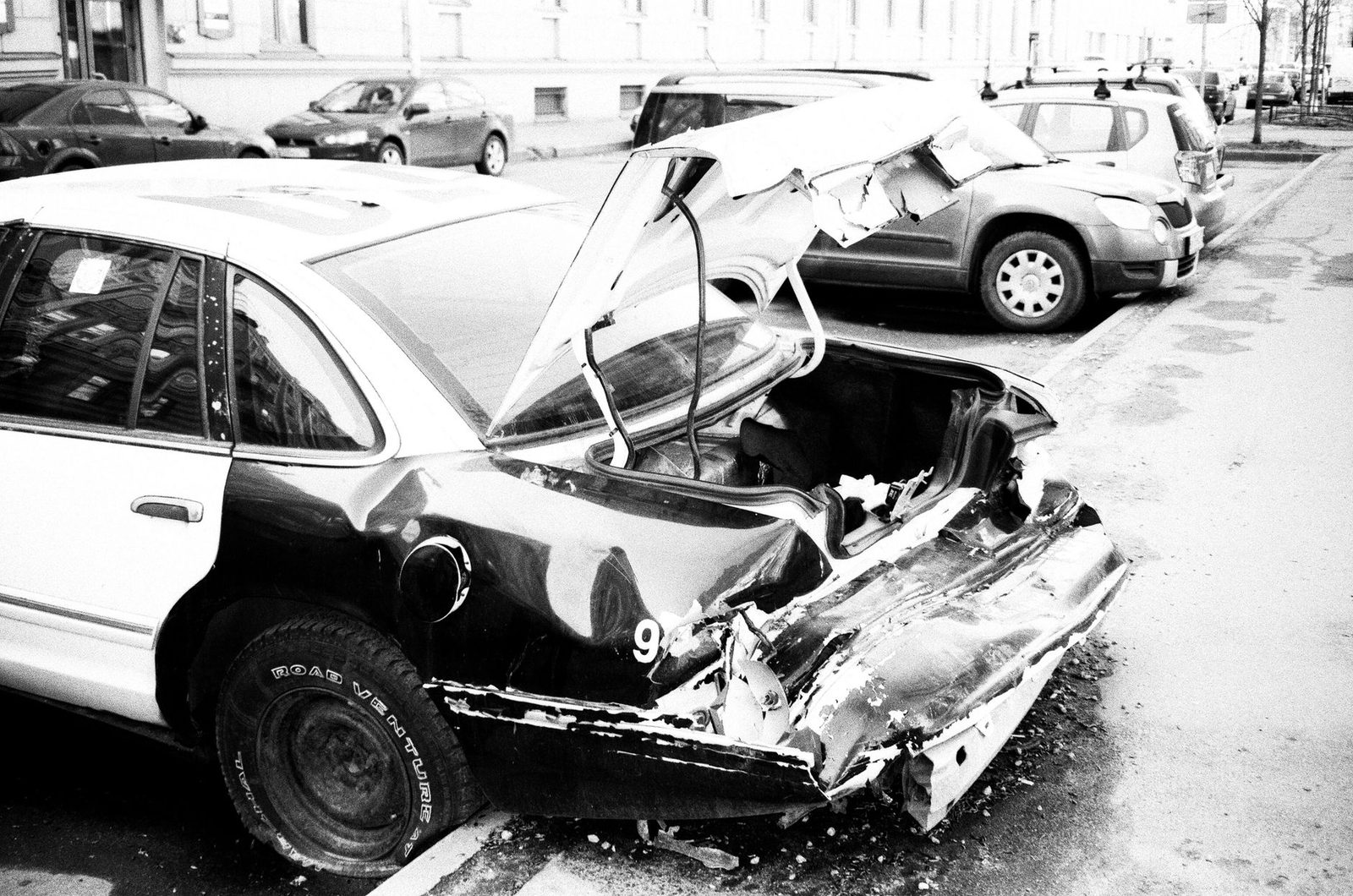
Talk With Terance Madden About Your Fault Question
If you are still sorting out who was at fault, you don’t have to work through it alone. You may be dealing with pain, time off work, and an adjuster who says you share the blame. Some readers are researching for a spouse, parent, or adult child who is still recovering and can’t yet handle insurance calls.
T. Madden & Associates, P.C. has been in practice since 1999, with offices in Jonesboro, Atlanta, Decatur, Macon, and Augusta. Terance Madden is the responsible lawyer. The firm handles car and truck wrecks, motorcycle and e-bike crashes, slip and falls, and other injury matters.
Your first consultation is free, confidential, and carries no obligation to continue. The firm works on a no-fee-unless-we-win basis, but you may still be responsible for court costs and case expenses.
Request your free case evaluation and bring the facts of your collision.
Disclaimer: This page is general information, not legal advice, and reading it does not create an attorney-client relationship. No result can be predicted or promised in any case. Terance Madden is the responsible lawyer for T. Madden & Associates, P.C. Contact: tmaddenlaw.com/contact.
Not sure what your next step is?
Talk it through with our team — the first consultation is free, confidential, and carries no obligation.
How we work with clients
Plain-language answers
We explain how partial fault questions apply to your crash in terms you can follow, without pressure to decide on the spot.
Costs explained up front
Our fee is contingent: no fees unless there is a recovery. You may still be responsible for court costs and case expenses, and we will tell you what to expect.
Reach us 24/7
Call any time to start a free case evaluation. Your first consultation is confidential and comes with no obligation to continue.
Our team supports every case
Our team of assistants and office staff keeps your file organized while Terance Madden handles your matter directly.
Be careful with the insurance adjuster
Recorded statements and quick comments about how a crash happened can be used to assign fault. Speak with a lawyer before you give a statement or sign anything.
Steps that help protect your claim after a crash
Document the scene
Photograph vehicles, road conditions, traffic signals and visible injuries, and note the names and contact details of witnesses.
Get medical care
See a doctor promptly, even if you feel only sore at first. Follow the treatment plan and keep every record.
Keep your records
Save repair estimates, medical bills, pay stubs and any messages with the insurance company in one place.
Ask before you accept
Talk with Terance Madden before you accept an offer or agree to a settlement, so you understand how partial fault may affect the value of your claim.