

Car Accident Lawyer | Georgia
Took Photos at the Scene? Here's What Matters Most
Clear photos can preserve evidence after a crash. Learn what to capture, what to skip, and how T. Madden & Associates, P.C. can help you start your case.
About T. Madden & Associates, P.C.
1999
Year the firm began practicing law
5
Georgia offices: Jonesboro, Atlanta, Decatur, Macon and Augusta
Free
Confidential first consultation with no obligation to continue
By Terance Madden · Published October 27, 2026
Short Answer: Yes, When It Is Safe to Do So
Yes. You should take photos after a car crash once everyone is safe and out of traffic. Photos capture the scene as it looked right after the collision, before cars are moved and conditions change.
This guide explains what to photograph, why each type of photo matters under Georgia law, and what to do if you took none. A phone is enough for most of these shots. If you’re reading this after a wreck, you may be hurting, dealing with a damaged car, and facing many decisions at once. That’s a lot to carry. Take it one step at a time.
For the broader picture of car accident claims in Georgia, read our Georgia car accident guide.
If you're still sorting out what happened, you don't have to do it alone, and our team can talk through your photos and the facts of your crash with you. Talk it through with our team — the first consultation is free, confidential, and carries no obligation.
Why Photos Matter as Evidence After a Crash
Photos are strong evidence because they freeze the scene at one moment. A written description can’t show where each car came to rest or how the damage lines up.
Georgia law focuses heavily on fault. Under the Georgia fault apportionment statute, the trier of fact decides each person’s share of fault. The judge then reduces the damages in proportion to the injured person’s percentage. Photos of the road, signals, and vehicle positions can help show how the crash happened.
The stakes are high. Under Georgia’s 50 percent rule, a plaintiff who is 50 percent or more responsible may not receive any damages. Photos are one way to show the facts that shape those percentages.
Photos also support the police report and help keep memories accurate. Keep the original files with their time and date data intact. Don’t crop or edit them.
Without photos, the account depends more on memory and on what each driver says. Those accounts can differ later.
Safety Comes First, Then Wide Shots of the Scene
Move to a safe spot, turn on your hazard lights, and call 911 if anyone is hurt. Take photos only when it is safe to do so. Handle those duties first, then take pictures.
Start with wide shots. Stand back far enough to fit both vehicles, the lanes, and the intersection in one frame. Shoot from several directions. Keep the camera level so the road looks as it really is.
Next, capture the surrounding area. Get street signs, crosswalks, business entrances, and mile markers if they’re visible. These details show where the crash happened.
Include traffic signals and stop signs with the vehicles in view. If a light is visible, photograph it while the cars are still there.
Document Vehicle Damage, Documents, and Identifiers
Photograph each vehicle from all four sides. Then take close-ups of dents, scrapes, broken glass, and damaged lights. Step back and capture the damage from a few feet away too. That shows the size and location of the impact.
Photograph each license plate. Take a picture of the other driver’s insurance card and driver’s license, but only with their permission. If they refuse, write down their name, phone number, and insurer instead.
If your car is towed, photograph it at the tow yard as well. Damage can look different once the car is moved or repaired.
Photograph Injuries and Track Symptoms Over Time
Photograph visible injuries such as cuts, bruises, swelling, and seat belt marks. Note the date and time for each photo.
Pain and stiffness can appear after the crash, not only at the scene. Keep a simple written log of new symptoms, such as neck pain, headaches, sleep trouble, or numbness. Date every entry.
Keep your medical visit records with your photos. Under Georgia’s special damages rule, damages that actually flow from an act must be proved. Photos show how an injury looked. Records show the diagnosis and treatment. Together they tell a fuller story.
Seat belts matter too. Georgia’s seat belt statute, O.C.G.A. § 40-8-76.1, provides that a vehicle occupant’s failure to wear a seat belt may be considered in a civil action as evidence on issues such as negligence, comparative negligence, causation, assumption of risk and apportionment of fault, and may be used to diminish a recovery for damages, though a court can still rule on whether that evidence is admissible under Code Section 24-4-403 or other rules of evidence. Photos of seat belt marks or the belt’s position may help show what happened.
Road Conditions, Signals, and Other Details to Capture
Photograph the road surface. Wet pavement, potholes, gravel, debris, and construction zones can all matter. Capture weather and lighting too, including glare, fog, or darkness, and note the time of day.
Show traffic control devices such as yield signs, lane markings, and traffic lights. Photograph any obstruction that blocked a view, like overgrown brush or a parked vehicle.
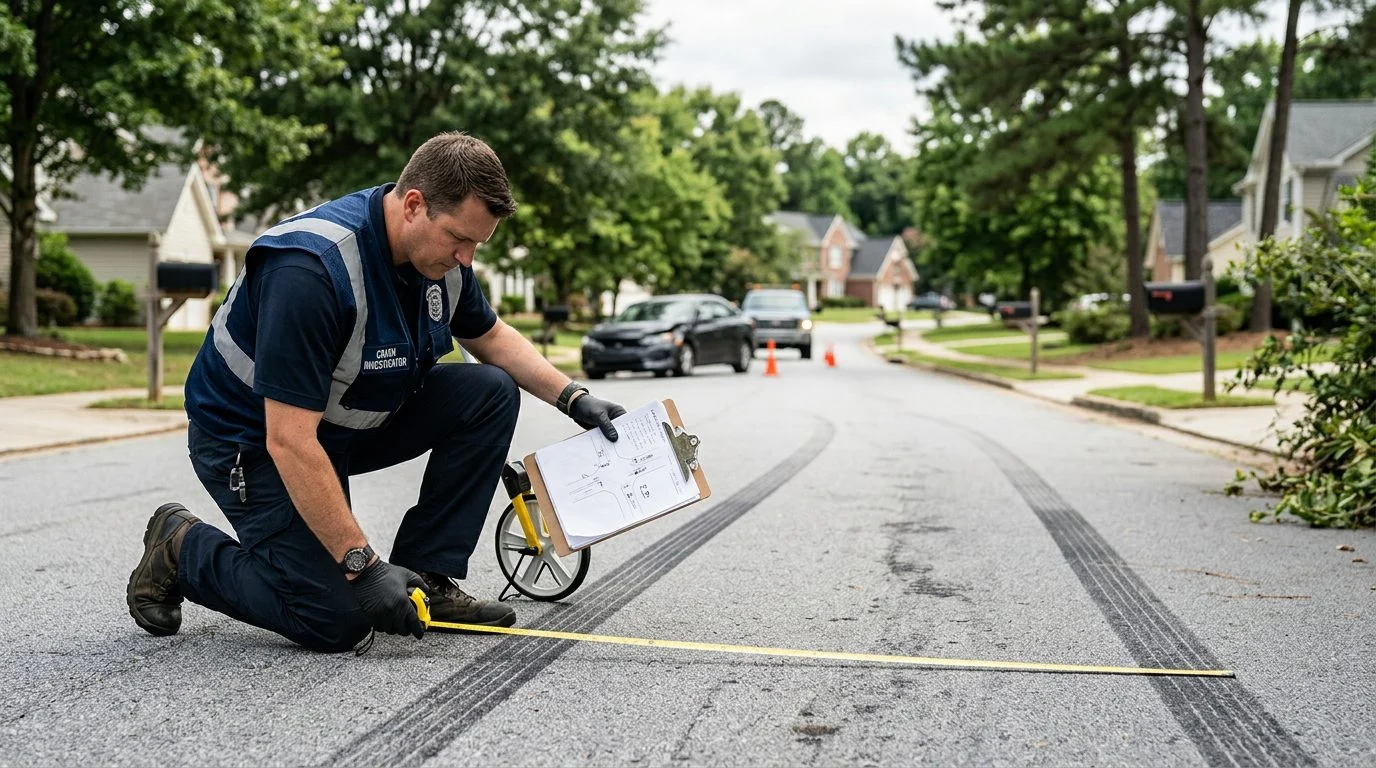
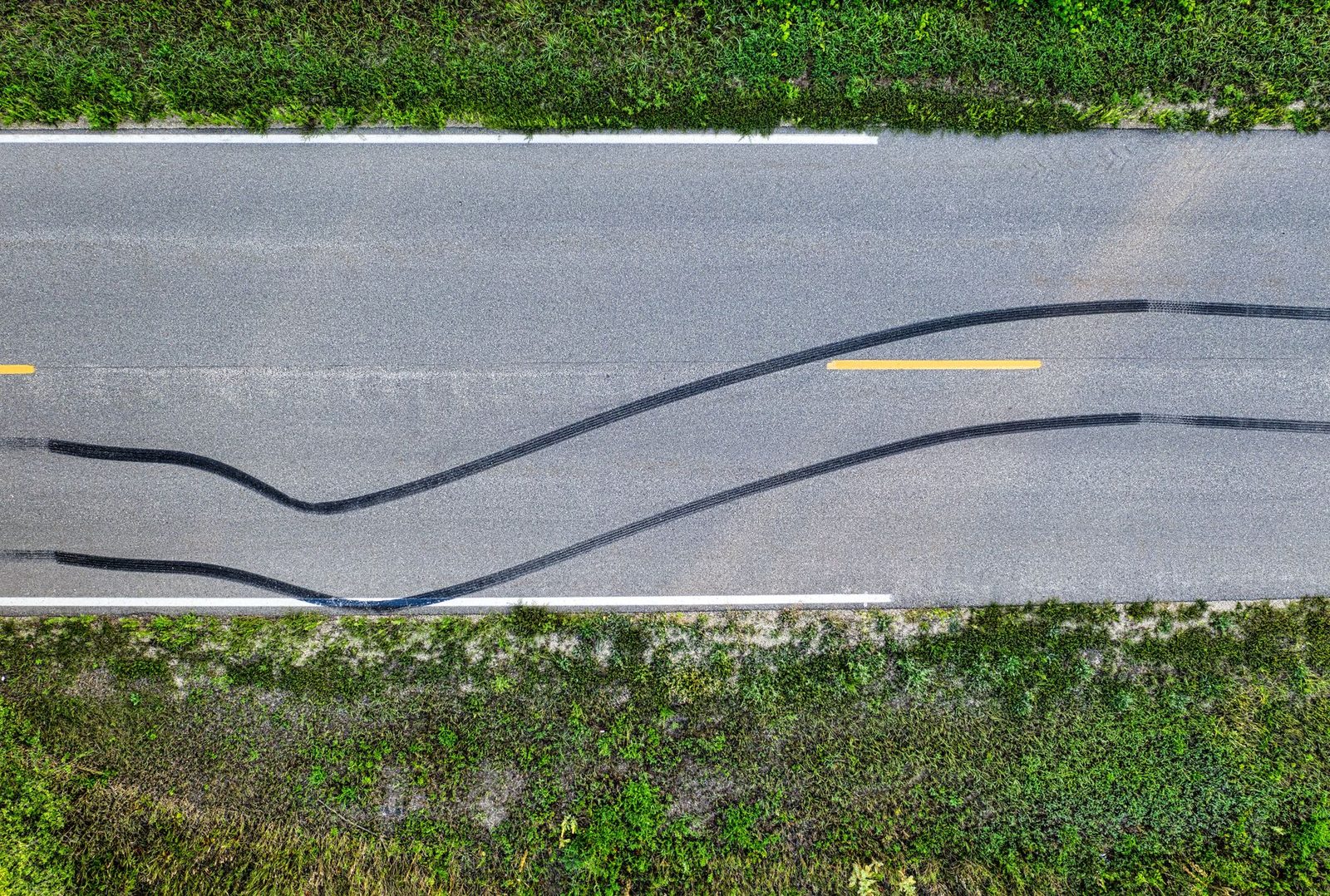
Take photos of skid marks, fluid spots, and debris before they are cleaned up or washed away. Shoot these early, since they can disappear quickly.
Motorcycle and e-bike crashes need extra detail. Photograph the bike’s position, its damage, and any gear you wore. For motorcycle riders, Georgia law requires protective headgear that meets state standards, so photograph your helmet and any eye protection.
Not sure what your next step is?
Talk it through with our team — the first consultation is free, confidential, and carries no obligation.
Photos Taken by Others and the Insurance Adjuster
An insurance adjuster may photograph your vehicle during the claim. Keep your own copies anyway. Ask for copies of any photos the adjuster takes, and write down when and where the inspection happened.
Bystanders may have taken photos or video. Police reports may include diagrams or photos. Your pictures add detail to those records and show what you saw from where you stood.
Store everything in one folder. Name each file with the date, location, and a short description. Make a backup copy in a second place.
Talk With Our Team About Your Accident
Photos help most when they’re reviewed alongside the facts of your crash. Our team can help you do that.
Terance Madden has practiced law in Georgia since 1999. T. Madden & Associates, P.C. has offices in Jonesboro, Atlanta, Decatur, Macon, and Augusta. The firm represents people hurt in car and truck wrecks, motorcycle and e-bike crashes, and other injury cases.
Quick Answers to Common Questions
How long do I have to file a lawsuit in Georgia?
Georgia generally requires a personal injury lawsuit within two years after the right of action accrues.
What if I forgot to take photos?
Other proof still counts. Gather the police report, witness names, and medical records. Write down what you remember while it’s fresh.
Do I need photos of my injuries after a motorcycle crash?
Yes, if it is safe. Photograph your injuries and your riding gear.
Contact T. Madden & Associates, P.C. for a free first consultation, which is confidential and carries no obligation to continue. Bring your photos and your notes. The firm’s phone line is available 24/7.
Attorney advertising. Responsible lawyer: Terance Madden, T. Madden & Associates, P.C. Contact information is at tmaddenlaw.com/contact.
What to Photograph at the Scene
Vehicles and damage
Take wide shots of each vehicle from several angles, plus close-ups of dents, broken glass and other visible damage.
Location and conditions
Capture the intersection, lane markings, traffic signals, skid marks, weather and road surface.
Injuries and details
If you can do so safely, photograph visible injuries and any hazards that contributed to the crash, such as debris or a missing sign.
Documents and information
Photograph the other driver's license, insurance card and plate number, and the police report number if one is provided.
Missing Photos Are Not the End of Your Claim
If you could not take photos, other evidence still matters. Keep your medical records, the police report, witness contact information and notes about what you remember while it is fresh.
How Our Firm Can Help
Attorneys who listen
Our lawyers, Terance Madden and Shenia Madden, and our team review the facts of your crash and explain your options in plain language.
Evidence preservation
We help gather and organize photos, reports and records so your account of the crash is documented.
Fee structure
Our fees are paid only from a recovery. Clients may still be responsible for court costs and case expenses, which we will explain before you decide.
Reachable when you need us
Call us 24/7 to talk about your situation. Your first consultation is free, confidential and carries no obligation to continue.
Had a Car Wreck in Georgia? Talk to Us Before You Decide Anything
Related practice areas
- What is the definition of personal injury?