

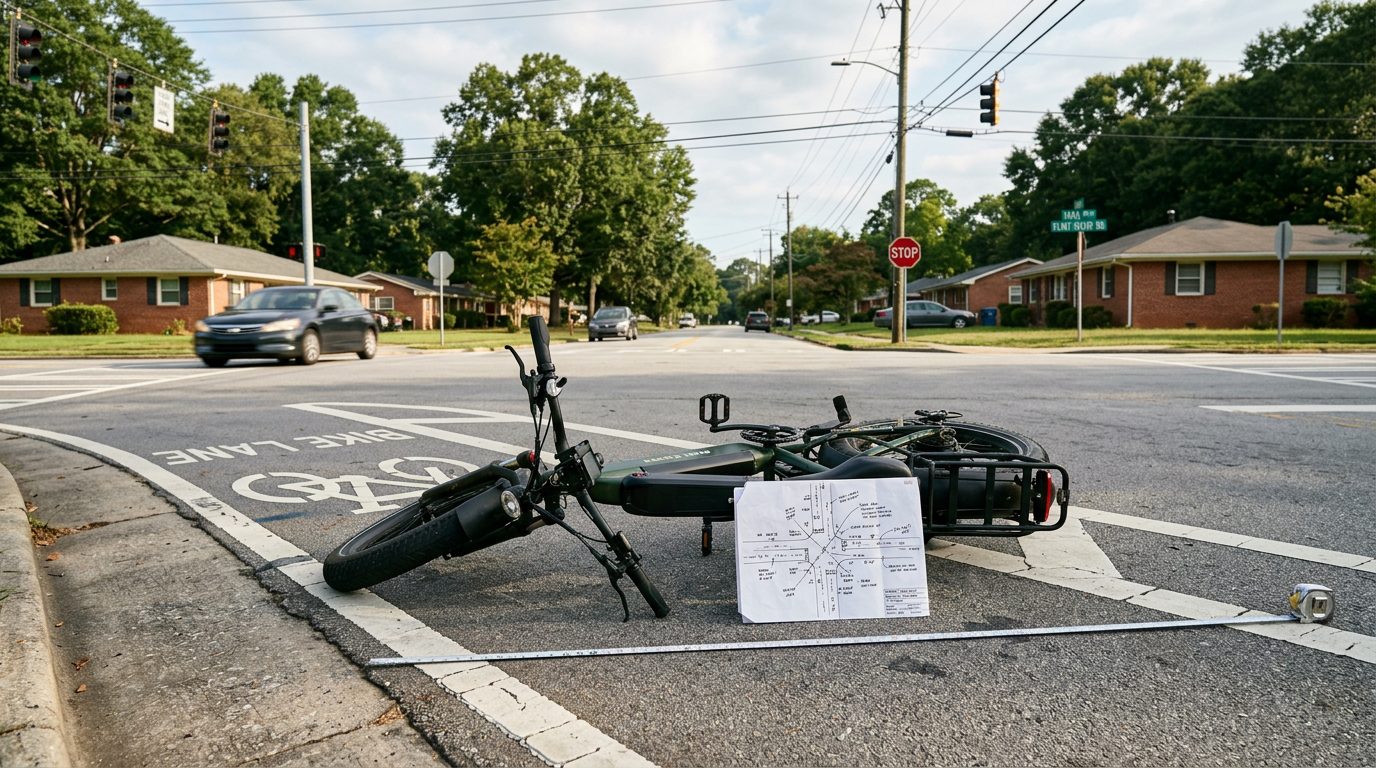
E-Bike Crashes | Clayton County, Georgia
Hit on your e-bike and the driver drove off? Talk to a Clayton County lawyer.
T. Madden & Associates, P.C. has represented Georgia families since 1999, with an office in Jonesboro.
The firm at a glance
1999
Year the firm began practicing law
5
Offices, including Jonesboro in Clayton County
24/7
Phone line for calls about a crash
By Terance Madden · Published November 18, 2026
Your e-bike was hit, you’re hurt, and the driver kept going. That leaves pain, bills and a lot of questions.
If the driver who hit you left the scene, your claim does not end there. Your first steps matter, and this page walks through them.
What an E-Bike Hit-and-Run Means for You
A hit-and-run is a crash where the driver leaves without stopping to exchange information or give help. For an e-bike rider, that can mean broken bones, a wrecked bike and a driver nobody can name yet.
The person managing the recovery often carries the most weight. It might be a spouse, a mother or an adult daughter, sorting out the bills, the phone calls and the medical appointments.
Stress is normal. Missing answers make it harder. But the driver’s choice to leave changes your steps. Your rights are worth protecting. Write down what you remember now, while it’s fresh.
Our Jonesboro office serves riders and families across Clayton County. Terance Madden has practiced personal injury law in Georgia since 1999.
Hurt on your e-bike when the driver drove away in Clayton County? You may have a claim, and our team can help you start with a free consultation. Talk it through with our team — the first consultation is free, confidential, and carries no obligation.
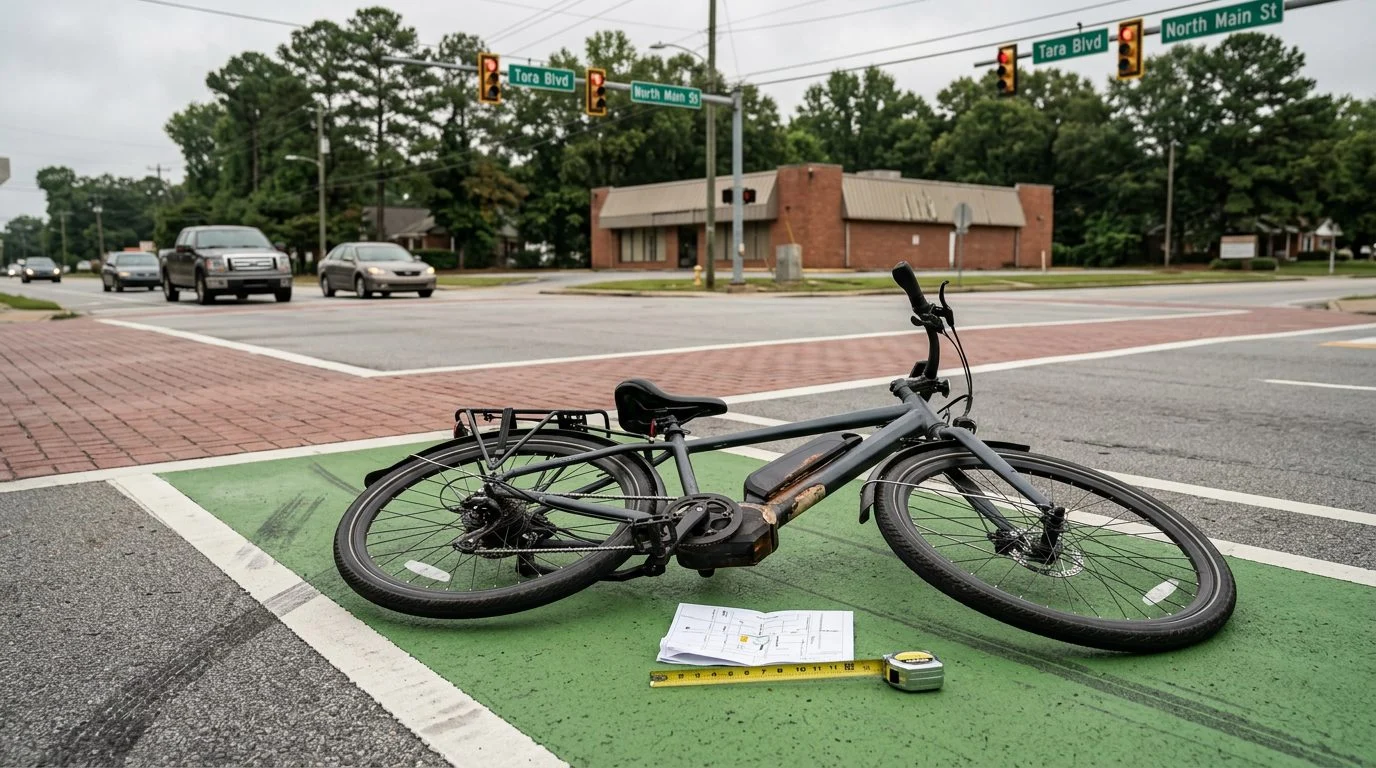
Is Leaving the Scene of a Crash a Felony in Georgia?
Georgia law requires a driver in a crash that injures someone to stop, and a knowing violation can be a felony (a serious crime with prison time).
The driver must stay until those duties are met.
A knowing violation with a lesser injury, or with vehicle damage, is a misdemeanor.
Whether a charge applies depends on the facts.
Your Claim When the Driver Cannot Be Found
You can bring a claim against the at-fault driver once they are identified. If they are never found, your own coverage may still respond.
O.C.G.A. § 33-7-11 sets that rule. Underinsured motorist (UIM) coverage is a related coverage for a driver whose insurance is not enough to cover your injuries. Check your own policy for both.
If the driver is never identified, Georgia law lets you sue a “John Doe” defendant, a placeholder name for an unknown driver.
Medical payments coverage, if your policy has it, can help with early bills. Keep every receipt.
The Evidence That Decides a Hit-and-Run Case
The evidence that decides these cases is often the evidence that disappears first. Move fast on these items:
- Witness names and phone numbers
- Video from nearby homes, shops and traffic cameras
- Scene photos and the crash report from the police or sheriff
- Damage to the e-bike, helmet and clothing
- Phone photos and location records from the time of the crash
Mistakes that hurt these cases are simple. Riders repair the bike before anyone photographs it, or let a neighbor’s video get overwritten before anyone asks for it.
Terance Madden trained as an electrical engineer before he went to law school. In practice, he starts by asking what the evidence shows and how the crash happened. Some e-bikes and companion apps store speed and power data, and that data can be overwritten. Brakes, tires and battery parts can also point to other parties who may share liability, which can mean more insurance.
How Big Insurance Handles a Hit-and-Run Claim
Big Insurance is not on your side, and its first offer is rarely what your claim is worth.
Expect a low first offer. Expect a request for a recorded statement (an interview the insurer records) before you know the full extent of your injuries. Expect slow payments, arguments that your treatment was not needed, and “low impact” claims that try to shrink a serious injury. Expect the argument that you were partly to blame.
Fault matters under Georgia law. Under O.C.G.A. § 51-12-33, damages are reduced by your percentage of fault. An injured person 50 percent or more responsible recovers no damages.
The response is to pursue every coverage layer. That includes your UM and UIM coverage, liability coverage (insurance that pays for harm the at-fault party causes), umbrella or excess coverage (extra layers above a base policy), and corporate coverage where it applies. Pain and suffering are general damages, which Georgia law presumes flow from the crash. Your bills are special damages, and you must prove them. O.C.G.A. § 51-12-2 draws that line. The firm values the full lifetime cost of an injury and prepares each case as if it will go to trial.
What to Expect, Step by Step
The process starts with a free talk and moves through evidence, coverage and medical records.
- Free consultation. Tell the firm what happened, when, and where in Clayton County.
- Preserve evidence. Request the crash report, video and e-bike data before it is overwritten.
- Identify coverage. Review your UM, UIM and medical payments coverage, plus any driver or party found later.
- Document the bills. Keep every record. If you have Medicare, CMS Medicare secondary payer rules say liability insurance pays first in an accident case, and Medicare pays second. If the plaintiff has any form of public or private health insurance, Georgia law requires the evidence to include both what providers charged and the amounts actually necessary to satisfy those charges under the insurance. O.C.G.A. § 51-12-1.1 covers that evidence.
- Negotiation or lawsuit. Settlement talks come first. The firm prepares every case as if it may go to trial.
Expect questions along the way. You’ll be asked for dates, names and details about your daily pain. The timeline turns on your injuries, the evidence and your coverage.
Not sure what your next step is?
Talk it through with our team — the first consultation is free, confidential, and carries no obligation.
Why This Firm and How the Fee Works
T. Madden & Associates, P.C. is a Georgia personal injury firm that has practiced since 1999. It has offices in Jonesboro (Clayton County), Atlanta, Decatur, Macon and Augusta. It represents people hurt in e-bike, car, truck and motorcycle crashes, and families in wrongful death cases.
The first consultation is free, confidential and comes with no obligation to continue.
The firm also supports community work through the Terance Madden Foundation.
Frequently Asked Questions
Is leaving the scene of a crash a felony in Georgia?
A driver who knowingly leaves a crash that causes death or serious injury can face a felony under Georgia law.
Can I sue someone for hitting me on my bike?
Yes, once the driver is identified. If the driver is never found, a claim can still go forward against your coverage and a “John Doe” defendant.
How long do I have to file?
Georgia generally gives injured people two years to file a personal injury lawsuit under O.C.G.A. § 9-3-33. Don’t wait on the calendar.
What should I do first after a hit-and-run?
Get medical care, write down what you remember, and call the firm before you give any recorded statement.
Will my own auto insurance pay?
It may. Georgia auto policies must include uninsured motorist coverage, and your policy’s terms decide what it pays.
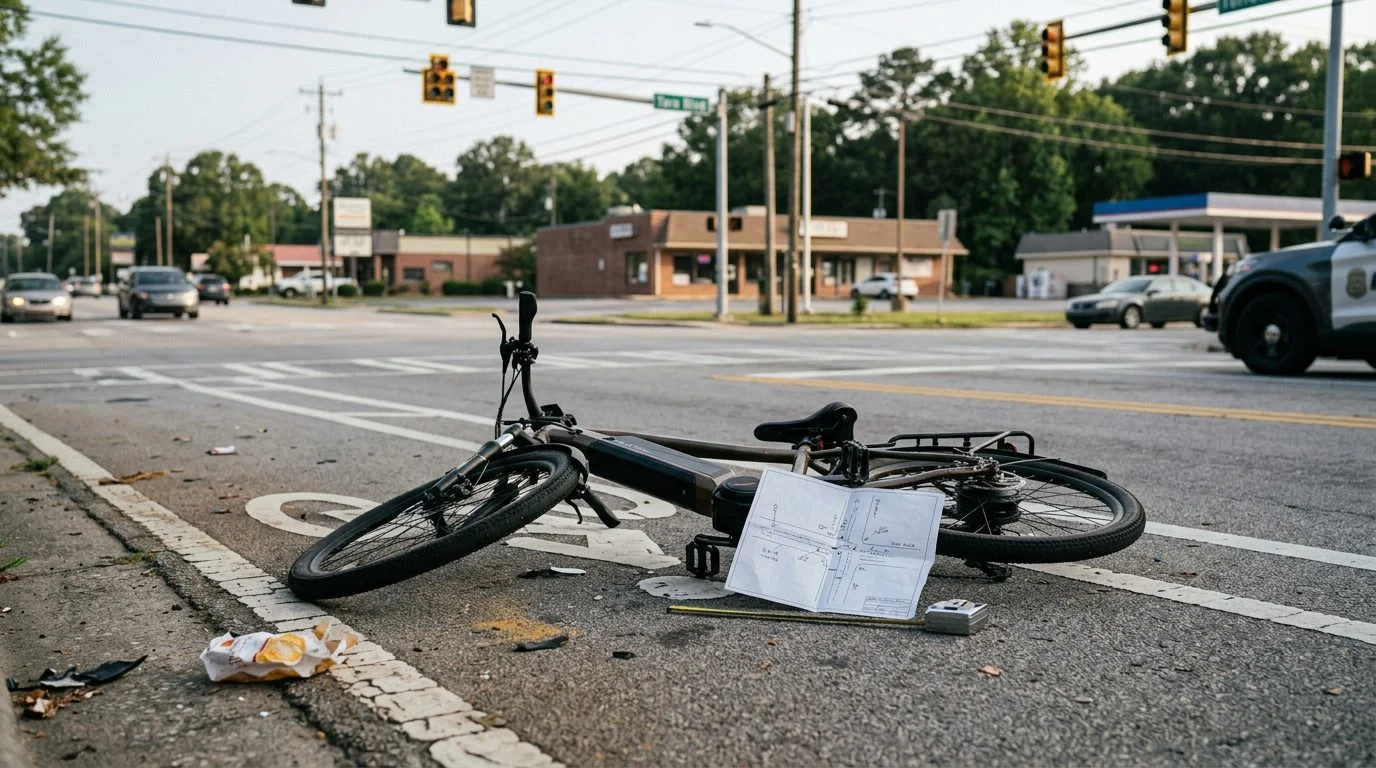
Hurt and the Driver Drove Away? Talk to Us
If you’re hurt on your e-bike in Clayton County and the driver left, you don’t have to face Big Insurance alone. The firm can review the crash, the evidence and your coverage with you, so you know your next move. The firm’s phone line is available 24/7.
Start your free case evaluation today.