

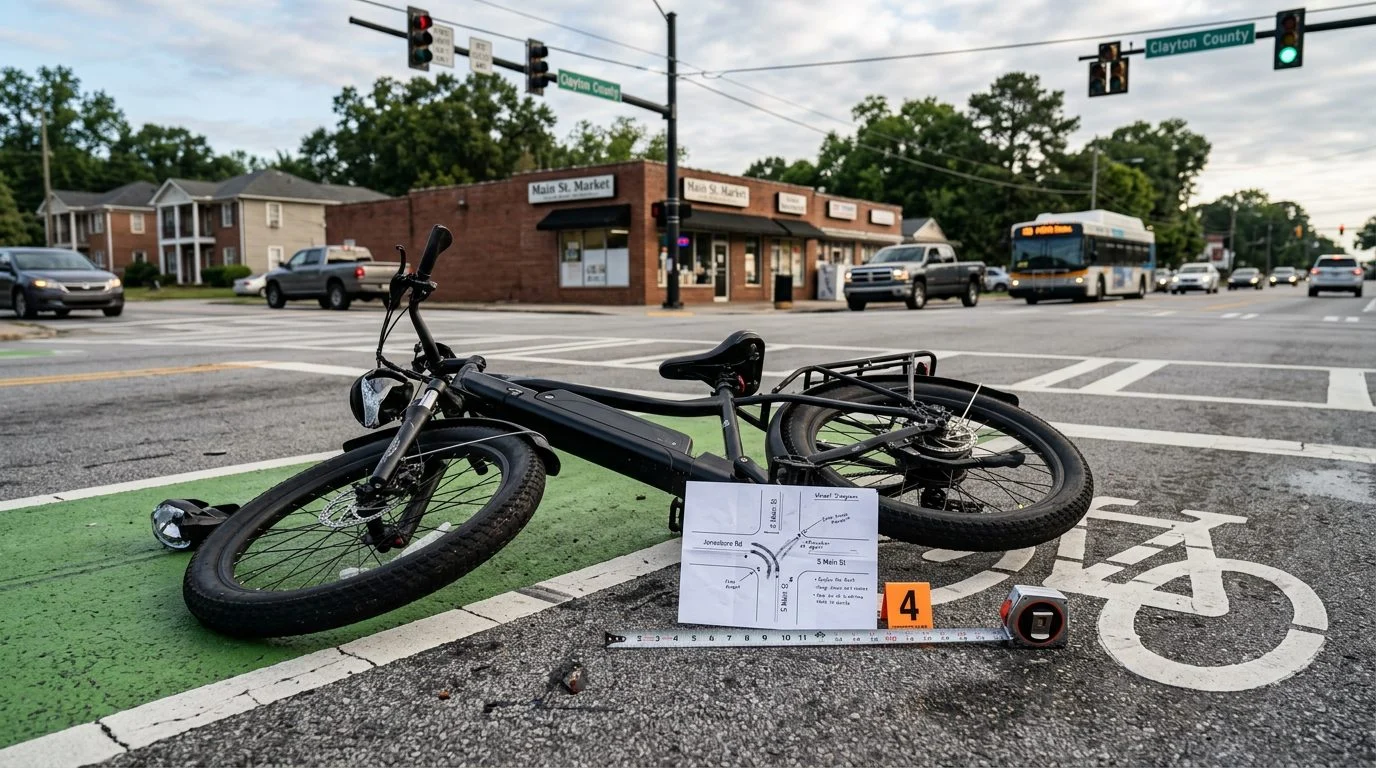
E-Bike Crash Lawyer · Georgia
Hit by a Drunk Driver on Your E-Bike? You Don't Have to Handle It Alone.
An impaired driver's choices can leave you with serious injuries and bills you never planned for. Here is how the firm approaches these cases, step by step.
The firm at a glance
1999
Year the firm began practicing law
Free
First consultation, confidential and with no obligation
24/7
Call anytime to reach the firm
By Terance Madden · Published November 12, 2026
Someone you love was hit by a drunk driver while riding an e-bike in Georgia. Now you’re handling doctor visits, bills, and calls from insurance adjusters. This page explains the civil claim, the part of the case that seeks money for the harm.
If a Drunk Driver Hit You on an E-Bike, You May Have a Claim
If an impaired driver caused the crash, the rider may have a claim against that driver for the harm that followed. A civil claim is a request for money damages from the person whose conduct caused the injury. It is separate from any criminal case.
The legal idea behind it is negligence, which means failing to use the care a reasonable person would use. Georgia law says that when a person breaks a legal duty owed to another and causes damage, the injured party may recover (O.C.G.A. § 51-1-6). Georgia impaired driving facts show how common this breach is. Under this rule, a person may recover for breach of a legal duty to refrain from doing an act which may injure another, if they suffer damage; impaired driving breaches such a duty only where a separate law, such as Georgia’s DUI statute, requires refraining from it.
Losses come in two kinds. Special damages, like medical bills and lost pay, must be proven with records. General damages, like pain and suffering, are presumed by law to flow from the crash. The bills often arrive before the rider can work again.
If an impaired driver hit you or someone you love on an e-bike, you may have a claim, and our team can talk it through with you. Talk it through with our team — the first consultation is free, confidential, and carries no obligation.
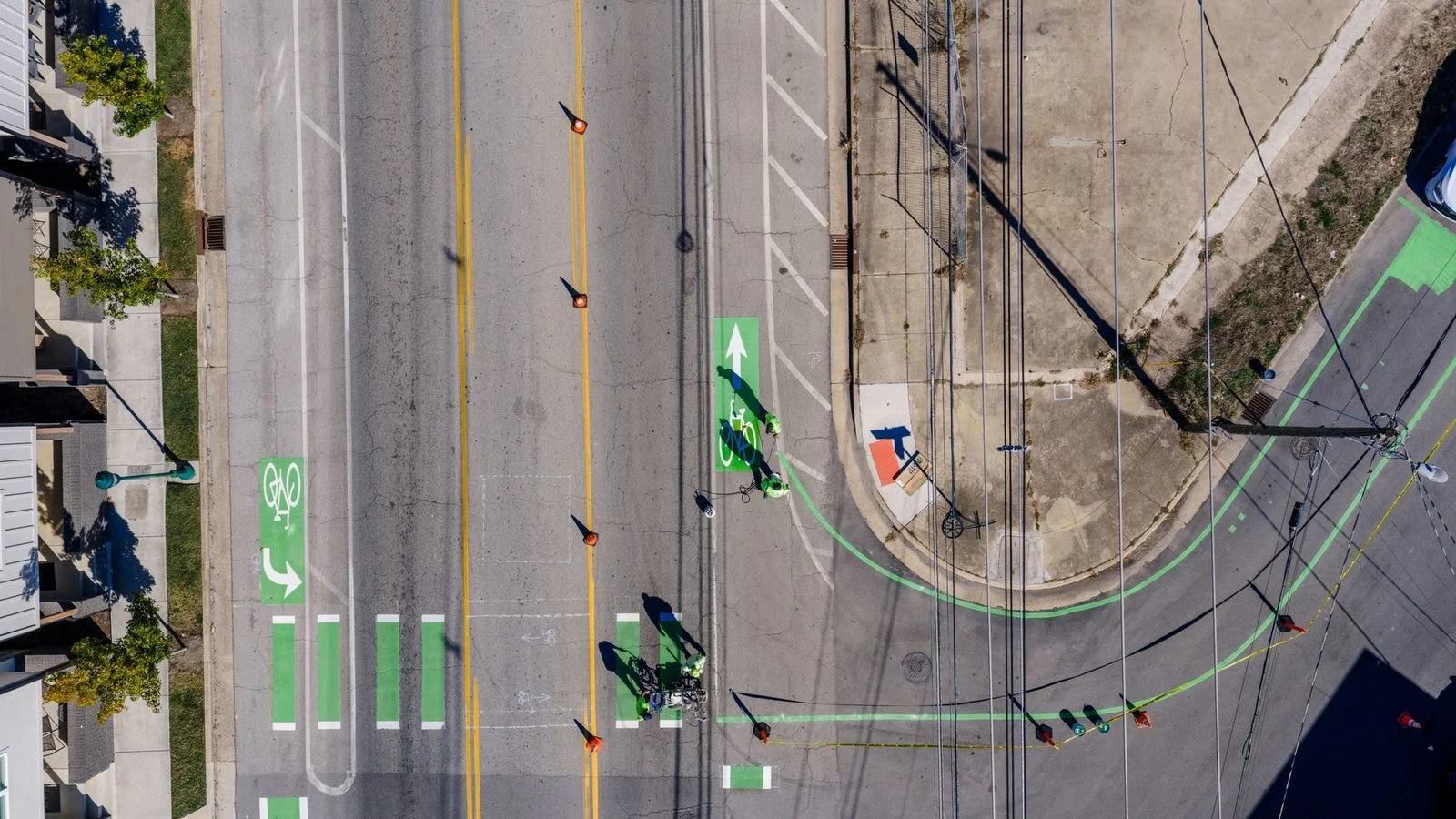
What Georgia Law Says About E-Bikes on the Road
Georgia defines ordinary negligence as the absence of ordinary diligence, meaning the care ordinarily prudent people use in similar circumstances (O.C.G.A. § 51-1-2). A driver who ignores a rider at a crossing or in the lane may have failed that standard.
The other side will also look at the rider. Where the rider was, how fast, and whether the rider was watching the road all become evidence. The firm looks at that evidence early, because the other side will. Keep notes on the route, the time, and the lighting, because those details matter later.
Careful, lawful riding helps show the crash was not the rider’s choice. The driver’s impairment is usually the bigger question, and the evidence in the next section answers it.
How Impairment Gets Proven After an E-Bike Crash
Impairment is proven with evidence, not with the driver’s word. Georgia’s DUI statute says a person shall not drive or be in actual physical control of a moving vehicle while under the influence of alcohol or drugs to the extent that it is less safe for the person to drive (O.C.G.A. § 40-6-391).
Evidence usually comes from several places:
- Police reports and officer notes on the driver’s speech, balance, and behavior.
- Field test notes and chemical test results.
- Witness statements from people at the scene.
- Receipts or records from a bar or restaurant where the driver had been.
- Video from businesses, traffic cameras, or phones.
Before law school, Terance Madden trained as an electrical engineer and holds a B.S. in Electrical Engineering. He starts a case by asking what the evidence shows and how the crash happened. Phone and camera timestamps, a bike’s controller data, and speed and impact physics can show how much time the driver had to see and stop. Records like these must be preserved early, before they are lost.
A vehicle owner or a maintenance vendor can also share responsibility, which can mean more insurance. The evidence shows who else had a role.
Comparative Fault: How the Other Side Argues the Rider Was to Blame
Georgia reduces your recovery by your share of fault, and bars it entirely at 50 percent or more. This rule is called comparative fault, meaning responsibility is split among everyone involved. The judge cuts damages in proportion to the injured person’s fault, and a plaintiff who is 50 percent or more responsible receives no damages (O.C.G.A. § 51-12-33).
Each liable person pays only its own share under the same statute. Under O.C.G.A. § 51-12-33, in assessing percentages of fault, the trier of fact (the jury, or the judge when there is no jury) shall consider the fault of all persons or entities who contributed to the alleged injury or damages, regardless of whether the person or entity was, or could have been, named as a party to the suit.
Expect four arguments. The rider lost control. The rider was in the wrong place. The rider was not visible enough. The crash was the rider’s own choice. Each one tries to move the fault from the driver to the rider.
The response is the evidence. The driver’s impairment, speed, and choice to drive usually decide how fault is divided.
Big Insurance Will Not Treat Your Claim as Urgent
Big Insurance is not on your family’s side. A first offer is rarely what the claim is worth, and the firm knows how to pursue what is owed.
Watch for these tactics: a fast, low offer before the full injuries are known; a request for a recorded statement while the rider is still on pain medicine; slow payment on bills; disputes over whether treatment was needed; and “low impact” arguments that shrink the injury. Each one can result in a settlement offer lower than the claim may be worth.
The response is to pursue every layer of coverage. That can include the at-fault driver’s liability policy, the rider’s own uninsured or underinsured motorist coverage (coverage that pays when the at-fault driver has none or too little), any umbrella or excess policy, and corporate coverage where it applies.
Georgia requires auto policies to include uninsured motorist coverage unless the named insured rejects it in writing (O.C.G.A. § 33-7-11). That same statute says the coverage excludes umbrella or excess policies unless they affirmatively provide for it, so every policy needs checking.
The firm values the claim by the full cost of the injury, including lifetime damages where the injury requires it, and prepares every case as if it may go to trial.
Punitive Damages and the Time Limit to File
Georgia’s general deadline to file a personal injury lawsuit is two years after the right of action accrues, generally when the crash happened (O.C.G.A. § 9-3-33). Loss of consortium claims must be brought within four years. Talking with an insurer does not replace the filing deadline, so don’t let the calendar slide.
Punitive damages are extra damages meant to punish and deter, not to pay your losses (O.C.G.A. § 51-12-5.1). They are allowed only in tort actions where it is proven by clear and convincing evidence that the defendant’s actions showed willful misconduct, malice, fraud, wantonness, oppression, or that entire want of care which would raise the presumption of conscious indifference to consequences, a high proof standard. If, in a tort case that does not arise from product liability, the defendant acted or failed to act under the influence of alcohol or drugs other than lawfully prescribed drugs to a degree that substantially impaired judgment, the statute sets no limit on the amount against the active tortfeasor, meaning the person who actively caused the harm.
Every case turns on its facts, so the details of yours matter. Someone who sells or serves alcohol may become liable if they willfully, knowingly and unlawfully serve a person under the lawful drinking age, or knowingly serve a person in a state of noticeable intoxication, and in either case know that person will soon be driving a motor vehicle, when that serving is the proximate cause, meaning the direct legal cause, of the injury (O.C.G.A. § 51-1-40).
Not sure what your next step is?
Talk it through with our team — the first consultation is free, confidential, and carries no obligation.
What the Person Managing the Recovery Should Keep and Do
Keep one file, and start it today. If you’re the spouse, mother, or adult daughter running this, you’re the one who keeps the record straight.
Put every medical bill, prescription receipt, mileage log, and record of missed work in one place. Write down the date, the name, and what was said on every call with an insurer.
Before any recorded statement, know what you’re agreeing to say. Ask for time to prepare, and do not guess about dates or speed.
Ask the doctor to write injuries and limits in plain terms, and keep every follow-up visit. Gaps in treatment give the other side an opening.
The firm’s promise to you is plain English, no silent gaps in communication, and dignity and respect for your family.
Talk to Our Team About the Crash and Your Options
You don’t have to decide anything today, but you can start the conversation now. Your loved one is hurt, the insurer’s calls are already coming, and the deadlines keep moving. You don’t have to sort out the claim alone.
Reach out for a free first consultation, which is confidential and carries no obligation to continue (consulta inicial gratuita, confidencial y sin compromiso). You can start through our free case evaluation form.
Our Jonesboro office serves Clayton County families, and our Atlanta office handles crashes in the city. The firm works on a no-fee-unless-we-win basis, but you may still be responsible for court costs and case expenses.
Frequently Asked Questions
Can I file a claim if a drunk driver hit me on my e-bike in Georgia?
Yes, you may have a claim against the impaired driver for your injuries and losses. Whether your claim is strong depends on the facts, so a free first consultation with T. Madden & Associates, P.C. is a good place to start.
How long do I have to file a personal injury lawsuit in Georgia?
In most cases, Georgia gives you two years from the date of the crash to file a personal injury lawsuit, under O.C.G.A. § 9-3-33. Some exceptions apply, so do not wait to get the facts reviewed.
Does the drunk driver’s criminal case decide my injury claim?
No. A criminal DUI case is brought by the state, not by you. Your injury claim is separate, and you must show what happened and what it cost you.
What if the drunk driver’s insurance is not enough to cover my injuries?
Your own uninsured or underinsured motorist (UM/UIM) coverage may apply, along with other policies that may be available. Big Insurance often makes a low first offer, and that offer is rarely what your claim is worth, so do not accept any offer until every layer of coverage has been reviewed.