

Fuel Tanker Accidents | Georgia
Hurt in a Fuel Tanker Crash? Talk to a Georgia Injury Lawyer Today
T. Madden & Associates, P.C. represents people injured in fuel tanker and other commercial truck collisions across Georgia. Terance Madden is the responsible lawyer for this page. Your first consultation is free, confidential and without obligation.
About T. Madden & Associates, P.C.
1999
Year the firm began practice
5
Georgia offices: Jonesboro, Atlanta, Decatur, Macon and Augusta
24/7
Call us anytime
By Terance Madden · Published October 29, 2026
Looking for a fuel tanker accident lawyer in Georgia? A fuel tanker accident claim is a personal injury or wrongful death claim against the people whose actions helped cause the crash. Georgia generally gives two years to file a personal injury lawsuit, so early action matters (O.C.G.A. § 9-3-33; Kenneth B. Cameron v. Jmp Pizza, Inc (2026)). T. Madden & Associates, P.C. has practiced law since 1999 and has offices in Jonesboro (Clayton County), Atlanta, Decatur, Macon and Augusta. This page explains how tanker cases differ, who may be responsible and what to do next.
What a Fuel Tanker Accident Case Covers and Who It Is For
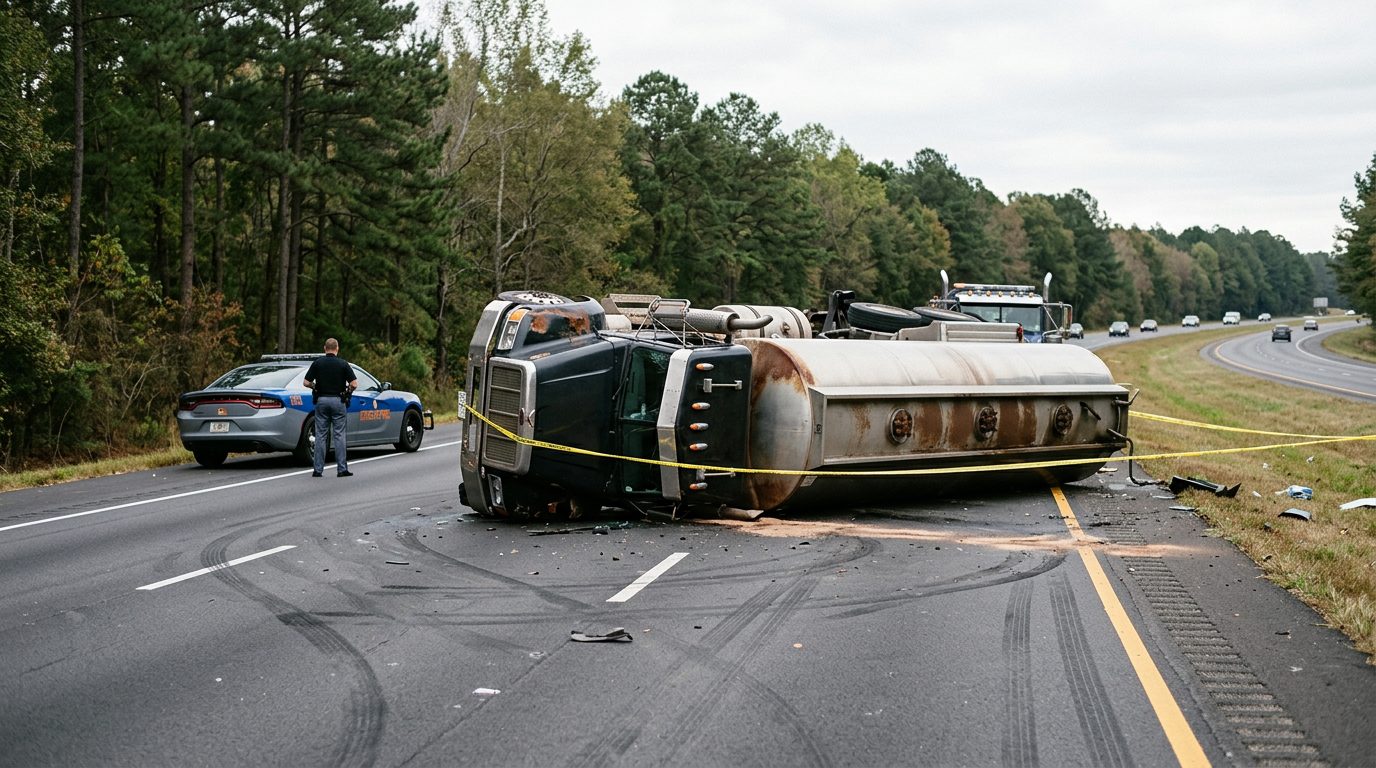
A fuel tanker accident case is a claim for injuries or death caused by a commercial truck hauling gasoline, diesel, propane or another fuel. These crashes include rollovers, jackknifes, rear-end collisions and wrecks that start a fire or spill fuel onto the road.
This kind of claim fits people who were hurt or who lost someone. That includes drivers and passengers in cars, motorcyclists, e-bike riders and pedestrians. It also includes the occupants of the tanker and families in a wrongful death case.
T. Madden & Associates, P.C. handles truck accident, car accident, motorcycle accident, e-bike accident, wrongful death and catastrophic injury claims. A tanker crash can fall under one or more of these practice areas.
If a fuel tanker crash left you or someone you love hurt, our team can review the facts with you in a free case evaluation. Talk it through with our team — the first consultation is free, confidential, and carries no obligation.
Why Fuel Tanker Crashes Differ From Other Truck Wrecks
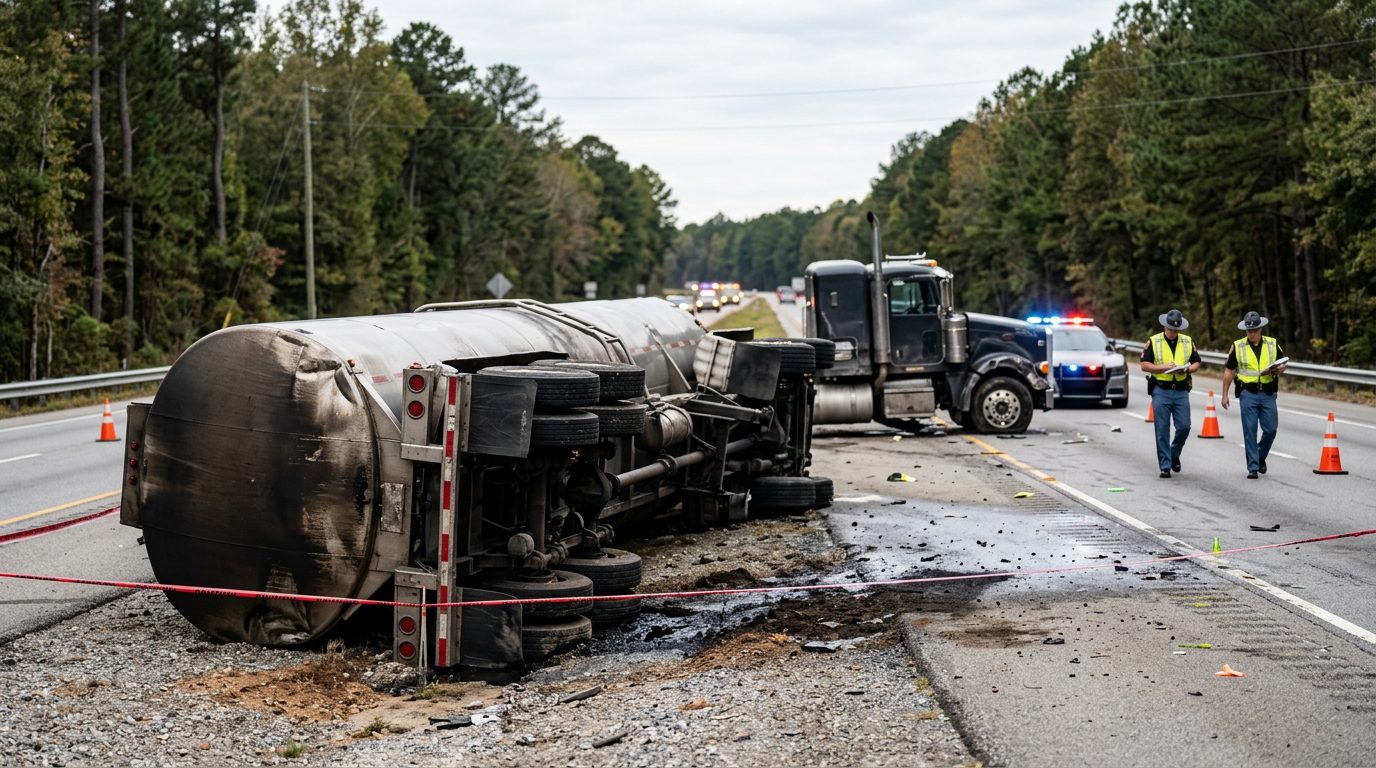
Fuel tanker crashes differ because fuel can burn, explode and release vapors. The harm can reach well past the people in the crash itself.
Road closures, evacuations and cleanup can affect neighbors, first responders and drivers who were never in the wreck. Burns and breathing injuries often need long treatment, and some complications show up later.
Federal rules also set baseline requirements for drivers. Under 49 C.F.R. § 391.11, a driver must be at least 21 years old, must be able to read and speak English sufficiently to converse with the general public, understand highway traffic signs and signals, respond to official inquiries, and make entries on reports and records, must be physically qualified to drive a commercial motor vehicle, and must hold a currently valid commercial motor vehicle operator’s license issued by only one State or jurisdiction, among other requirements. Records about who was allowed to drive can matter when building a claim.
Who May Be Held Responsible
More than one party can share responsibility in a tanker crash. Potential defendants may include:
- The truck driver.
- The motor carrier that employs or leases the driver.
- The company that loaded or shipped the fuel.
- A maintenance contractor that serviced the tanker.
- A maker of a tank or brake part, if a defect played a role.
Georgia’s fault rule shapes these claims. Under O.C.G.A. § 51-12-33, a judge reduces damages in proportion to the injured person’s own percentage of fault. A person who is 50 percent or more responsible cannot recover damages.
The same statute says each liable person pays only its own apportioned share. Those damages are not joint liability among the liable parties. That is why identifying every responsible company early matters.
Evidence That Can Disappear After a Tanker Crash
Key evidence can be overwritten or discarded, so act early. Records that often matter include:
- Engine and vehicle control module data, plus GPS and telematics.
- Driver logs. Carriers must keep duty-status records and supporting documents for at least six months under 49 C.F.R. § 395.8.
- Post-accident alcohol and drug testing records. Federal rules require an employer to test drivers after certain crashes, including those involving a death, under 49 C.F.R. § 382.303.
- Maintenance and inspection files, bills of lading and driver training records.
- Police, fire, 911 and hazmat response reports.
If you can, photograph the scene and vehicles. Keep every medical record and receipt, and write down witness names. Talk with a lawyer before giving a recorded statement to the trucking company’s insurer. A preservation letter sent early asks the other side to keep this material.
Injuries and Losses a Claim May Address
A claim can seek payment for losses the crash caused. Common injuries in tanker crashes include severe burns, traumatic brain injury, spinal cord injury, broken bones, smoke or chemical inhalation injuries and crush injuries.
Economic losses can include medical bills, future care, lost wages, reduced earning ability and property damage. Non-economic losses include pain, scarring and emotional distress. Under O.C.G.A. § 51-12-6, when the whole injury is to a person’s peace, happiness or feelings, no formula sets the amount. Impartial jurors decide it.
In a wrongful death case, a surviving spouse or, if there is no spouse, children may recover the full value of the life of the person who died. O.C.G.A. § 51-4-2 states this, as shown by the evidence. Catastrophic injuries often need long-term care planning, which adds work to a claim.
Georgia Deadlines and Rules That Shape Your Case
Georgia generally gives two years to sue for injuries to a person. Under O.C.G.A. § 9-3-33, those actions must be brought within two years after the right of action accrues, with some exceptions. Loss of consortium claims, which involve a spouse’s injury, have four years under the same statute.
Claims against a city work differently. Under O.C.G.A. § 36-33-5, a claim against a municipal corporation must be presented in writing to its governing authority within six months of the event. The claim must also state the specific amount of money damages sought.
Missing a deadline can end a claim. Don’t wait to have your facts reviewed.
Not sure what your next step is?
Talk it through with our team — the first consultation is free, confidential, and carries no obligation.
What to Expect: Step-by-Step Process
Most tanker cases move through five stages. Timing depends on the facts.
- Free case evaluation. You share the date, place, injuries and any reports or photos. We explain possible next steps.
- Investigation and preservation. We send preservation letters and work to collect crash, maintenance, driver and cargo records.
- Medical and damages records. Treatment notes, bills and wage records are gathered.
- Claim and negotiation. A demand goes to the insurers and responsible parties, and talks follow.
- Lawsuit if needed. If a fair resolution is not reached, a lawsuit may be filed within the Georgia deadline. Discovery and trial preparation follow.
Our team explains each stage as it arrives.
Why Injured People Contact T. Madden & Associates, P.C.
T. Madden & Associates, P.C. has practiced personal injury law in Georgia since 1999. The firm has offices in Jonesboro (Clayton County), Atlanta, Decatur, Macon and Augusta. Terance Madden is the responsible lawyer for this page. Shenia Madden is also one of the firm’s lawyers.
Tanker cases often overlap with truck accident, wrongful death, catastrophic injury, car accident and motorcycle accident work. Our lawyers can review which of these fits your facts.
Our first consultation is free, confidential and carries no obligation to continue. We take cases on a no fee unless we win basis, but the client may still be responsible for court costs and case expenses. You can call at any hour, day or night.
Questions About Fuel Tanker Accident Claims
Do I need a lawyer if the tanker company’s insurer calls me?
Insurers often ask for recorded statements early. Talking with a lawyer first can help you decide how to respond.
How long do I have to file a claim?
Georgia generally gives two years for injury lawsuits under O.C.G.A. § 9-3-33, with some exceptions. O.C.G.A. § 9-3-33 provides that “[e]xcept as otherwise provided in this article, actions for injuries to the person shall be brought within two years after the right of action accrues, except for injuries to the reputation, which shall be brought within one year after the right of action accrues, and except for actions for injuries to the person involving loss of consortium, which shall be brought within four years after the right of action accrues.”
Can my family bring a claim if a loved one died?
Yes. A surviving spouse or, if there is none, children may recover the full value of the life of the person who died, as shown by the evidence.
What if I was partly at fault?
Your damages are reduced by your share of fault (O.C.G.A. § 51-12-33; Quynn v. Hulsey (2020)). If you are 50 percent or more at fault, you cannot recover damages.
Hurt in a fuel tanker crash, or grieving someone lost in one? Contact T. Madden & Associates, P.C. today for a free case evaluation at tmaddenlaw.com/contact.
This page gives general information, not legal advice. Each case turns on its own facts. Responsible lawyer: Terance Madden, T. Madden & Associates, P.C., with offices in Jonesboro (Clayton County), Atlanta, Decatur, Macon and Augusta, Georgia.
How We Can Help After a Fuel Tanker Crash
Protecting your claim early
Insurers and companies involved in a tanker wreck often move quickly. Our team can handle communication with them so you can focus on recovering.
Investigating the crash
Fuel tanker cases can involve driver logs, maintenance records, cargo documents and vehicle data. We work to identify the evidence that matters to your case.
Accountability for every party
Depending on the facts, responsibility may involve the driver, the carrier, the cargo owner or a maintenance contractor. Our lawyers look at all possible sources of recovery.
Compassionate, direct service
Our lawyers focus on clear answers and steady communication. Fees are contingent: there are no fees unless there is a recovery, although you may still be responsible for court costs and case expenses.
Before You Speak With the Tanker Company's Insurer
Insurance adjusters may ask for a recorded statement soon after a crash. Speaking with a lawyer first can help you decide what to say and what to avoid.
Common Fuel Tanker Accident Injuries and Situations
Fires and explosions
Crashes involving flammable cargo can cause burns, smoke inhalation and serious trauma.
Fuel spills and hazardous exposure
Leaking fuel or chemicals can lead to respiratory injury, skin damage and long-term health concerns.
Rollovers and jackknifes
Heavy, unbalanced loads can tip or fold, creating dangerous multi-vehicle collisions.
Wrongful death
When a family member dies in a tanker crash, our firm can review the claim and discuss options with the family.