

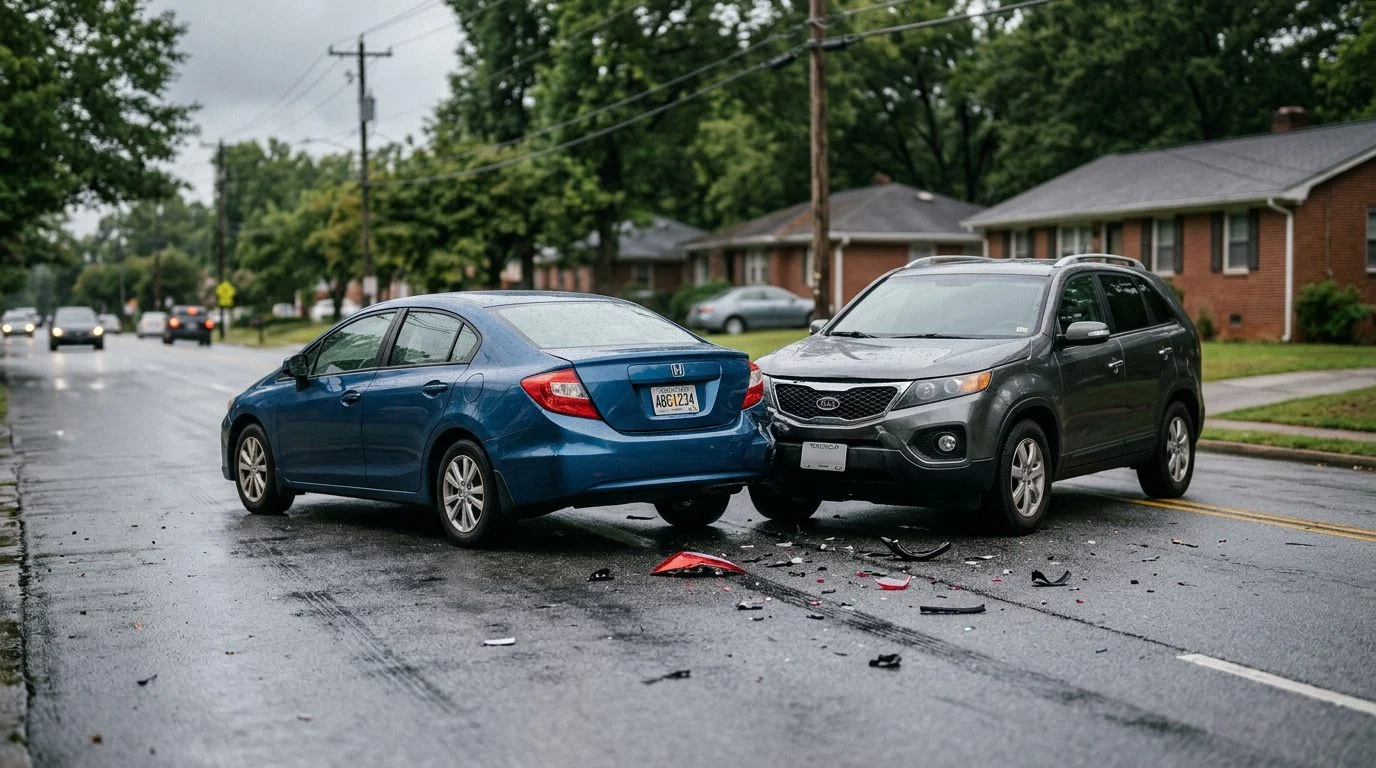
Car Accident Lawyer | Jonesboro, Atlanta, Decatur, Macon and Augusta
Hurt by an Uninsured Driver in Georgia? Let's Talk About Your Options
T. Madden & Associates, P.C. has represented people hurt in Georgia crashes since 1999. Your first consultation is free, confidential and comes with no obligation to continue.
The Firm at a Glance
1999
Practicing in Georgia since
5
Offices: Jonesboro, Atlanta, Decatur, Macon, Augusta
24/7
Call us anytime
By Terance Madden · Published November 5, 2026
Is it worth suing an uninsured motorist? In Georgia, the answer often turns on whether the driver can pay a court award. For many injured people, the most direct path to payment is their own uninsured motorist (UM) coverage, so that’s where the review should begin. T. Madden & Associates, P.C. has been in practice since 1999, with offices in Jonesboro, Atlanta, Decatur, Macon and Augusta.
What Suing an Uninsured Driver Actually Means
Suing an uninsured driver means filing a personal injury claim against the at-fault driver personally. It is separate from any claim you make with your own insurer.
An uninsured driver has no liability insurance that would pay for the crash. Georgia’s uninsured motorist statute, O.C.G.A. § 33-7-11 defines several related terms. Under subsection (iii) of the statute, one example is bodily injury liability insurance that is in existence but for which the insurance company writing the insurance has legally denied coverage under its policy. O.C.G.A. § 33-7-11 reads: “(iv) Bodily injury liability and property damage liability insurance in existence but the insurance company writing the insurance is unable, because of being insolvent, to make either full or partial payment with respect to the legal liability of its insured, provided that in the event that a partial payment is made by or on behalf of the insolvent insurer with respect to the legal liability of its insured, then the motor vehicle shall only be considered to be uninsured for the amount of the difference between the partial payment and the limits of the uninsured motorist coverage provided under the insured’s motor vehicle insurance policy; or.”
People hurt in these crashes include drivers, passengers, pedestrians and cyclists. If the driver flees and cannot be identified, Georgia law allows a suit against an unknown “John Doe” driver. The insurer that issued the policy is then served as though it were a named defendant.
A suit can seek more than one type of loss. Special damages are actual losses, such as medical bills, and you must prove them. O.C.G.A. § 51-12-2 explains that difference. Necessary expenses from the injury also count, under O.C.G.A. § 51-12-7.
If an uninsured driver hurt you or damaged your car, you may have a claim, and our team can review your coverage with you at no cost. Talk it through with our team — the first consultation is free, confidential, and carries no obligation.
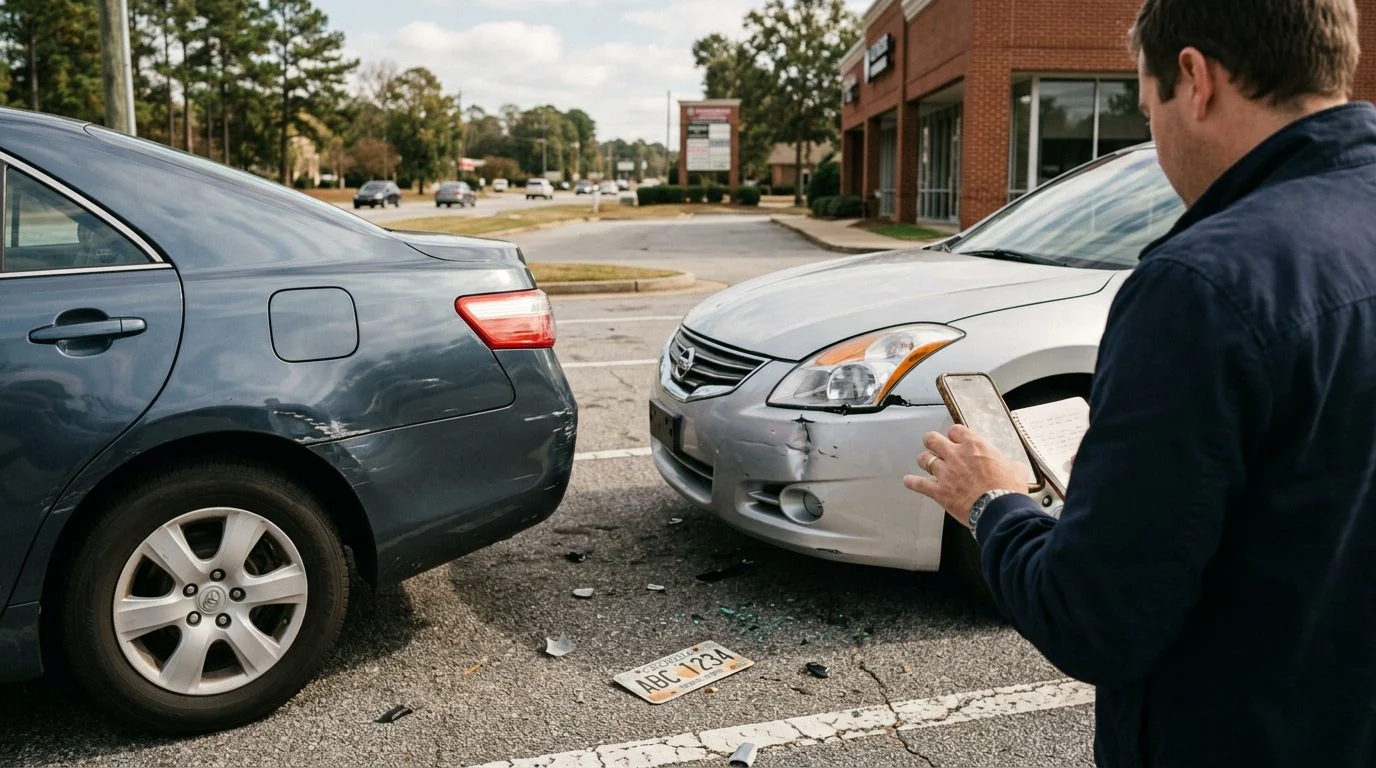
When Is It Worth Suing an Uninsured Driver?
Is it worth suing an uninsured motorist? It is most useful when the driver has money or assets a court can reach. Lawyers call a driver with nothing to collect from “judgment-proof.” A court award on paper does not put money in your hands.
Check these factors early:
- The driver’s assets, income and job
- Any other insurance that may apply, such as a household or employer policy
- Whether the driver can be identified and served with a lawsuit
- How much fault each driver may share
Fault matters too. Georgia uses modified comparative fault, which means your own share of fault reduces what you can recover. At 50 percent or more, you recover nothing. Under O.C.G.A. § 51-12-33, the judge reduces the damages awarded to the plaintiff in proportion to the plaintiff’s percentage of fault. See the Georgia Supreme Court decision in Quynn v. Hulsey.
A lawsuit still has a purpose. It puts the facts of fault and damages into a formal court record. Whether a suit makes sense depends on the facts of your case. Our team reviews the driver’s situation during the free consultation.
Your Own Uninsured Motorist Coverage Comes First
Your own UM coverage is often the first place to look for payment when the at-fault driver has no insurance. Under O.C.G.A. § 33-7-11(a)(1), auto liability policies must include uninsured motorist provisions unless the insured declines them, and the insured may choose the uninsured motorist limits at its option.
The Georgia insurance regulator states that uninsured motorist coverage may protect you and your passengers against vehicle damage or injuries when an uninsured driver causes the crash.
Underinsured motorist (UIM) coverage works differently. It applies when the at-fault driver has some insurance, but not enough to cover your losses.
Pull your declarations page and gather these items:
- Your insurer’s name and policy number
- Your UM and UIM limits
- The date, time and place of the crash
- The police report number
- Any notice you have already sent to your insurer
Filing with your own insurer and deciding whether to sue the driver are separate steps. Coordinate them so each step fits the other.
Costs, Fees and What You May Still Owe
The firm works on a no-fee-unless-we-win basis, but you may still be responsible for court costs and case expenses.
A contingency fee is a share of what is recovered. It comes from a recovery, not from hourly billing.
Some injured people treat under a provider lien, where payment waits until the claim is resolved. Georgia law limits medical expenses to the reasonable value of medically necessary care. Under O.C.G.A. § 51-12-1.1, a letter of protection, itemized charges and any referral for that treatment can be discoverable in the case.
Not every case justifies the cost of a lawsuit. We will walk through that math with you during the consultation. Your first consultation is free, confidential, and carries no obligation to continue.
Georgia Deadlines and Steps to Take After the Wreck
Most lawsuits for injuries to a person must be filed within two years after the claim arises. O.C.G.A. § 9-3-33 sets that general rule, and the statute sets different periods for some other claims.
Property damage to your vehicle has its own filing period, so confirm that deadline separately.
Right after the crash:
- Get medical care and keep every record.
- Report the crash to police and get the report number.
- Photograph the scene, the vehicles and your injuries.
- Collect witness names and contact details.
- Notify your own insurer promptly.
To protect your claim:
- Don’t give a recorded statement to the other driver’s contacts without advice.
- Keep receipts for out-of-pocket costs.
- Keep a daily log of pain, missed work and activities you can’t do.
A claim usually moves through investigation, a demand to the insurer, negotiation and, if needed, a filed suit.
Common Questions About Suing an Uninsured Driver
Is UM/UIM coverage worth having?
UM and UIM coverage can pay when the other driver cannot. Its value turns on your policy limits and the losses you have.
What if someone hits my car and I have no insurance?
You may still have a claim against the at-fault driver. Recovery can be harder without a policy to pay, so the driver’s ability to pay becomes central.
Do insurance companies sue uninsured drivers?
That question turns on the insurer’s own policy terms. Your injury claim is a separate matter, and we can review how the two fit together.
Why would someone reject uninsured motorist coverage?
Some drivers weigh the premium against the coverage. If you signed a rejection form, review it, since coverage choices matter after a crash.
Not sure what your next step is?
Talk it through with our team — the first consultation is free, confidential, and carries no obligation.

Talk With T. Madden & Associates About Your Crash
Terance Madden is the responsible lawyer for T. Madden & Associates, P.C. The firm has been in practice since 1999 and has offices in Jonesboro, Atlanta, Decatur, Macon and Augusta. It handles car and truck wrecks, motorcycle and e-bike crashes, and other injury cases.
In a consultation, the firm reviews the crash, your UM and UIM limits, the driver’s known coverage and the Georgia deadlines that apply.
If an uninsured driver hurt you or damaged your car, contact our office through the contact page for a free, confidential consultation. You can reach out at any hour.
This page is general information, not legal advice. Responsible lawyer: Terance Madden, T. Madden & Associates, P.C. Contact information is on the contact page.
How We Can Help
Free First Consultation
Your first consultation is confidential and free, with no obligation to continue. We will review the facts of your crash and explain the coverage questions in plain terms.
Focused on Injured People
Our lawyers, Terance Madden and Shenia Madden, represent people hurt in car and truck wrecks, motorcycle and e-bike crashes, and other injury cases throughout Georgia.
Reach Us Day or Night
Call us 24/7 to start your case evaluation. Our team will answer your questions and tell you what to expect next.
No Fees Unless There Is a Recovery
We handle cases on a no-fee-unless-there-is-a-recovery basis. You may still be responsible for court costs and case expenses, and we will explain those before you decide to move forward.
Check Your Own Policy Now
Review your auto policy for uninsured and underinsured motorist coverage. Knowing what your policy includes before a crash can make the next steps much clearer.
Common Questions After a Crash With an Uninsured Driver
Can I still bring a claim?
Often yes. You may still have a claim against the at-fault driver, though recovery can be harder without an insurance policy to pay.
What does my own coverage do?
UM and UIM coverage can pay when the other driver cannot. Its value depends on your policy limits and the losses you have.
Why does the driver's assets matter?
When the at-fault driver has no insurance, their ability to pay becomes central to the case. We look at the options with you during your consultation.
What should I do next?
Get medical care, keep records of your injuries and expenses, and contact us for a free, confidential consultation.