

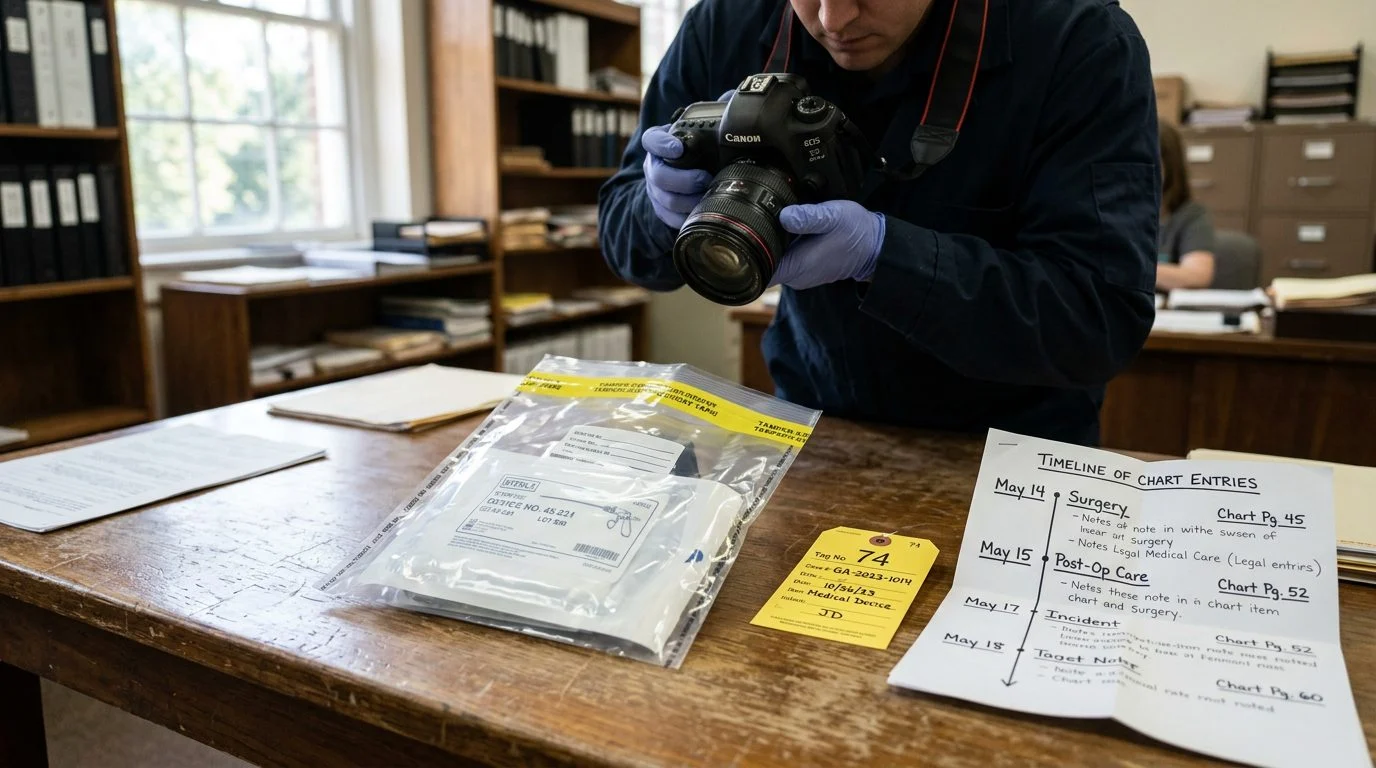
Medical Malpractice | Georgia
Georgia Medical Malpractice Lawyers Focused on Injured Patients
T. Madden & Associates, P.C. has represented people in Georgia since 1999. Your first consultation is free, confidential and comes with no obligation to continue. We work on a no fees unless there is a recovery basis, though you may still be responsible for court costs and case expenses.
Firm at a glance
1999
Year the firm began practice
5
Offices in Georgia: Jonesboro, Atlanta, Decatur, Macon and Augusta
24/7
Phone line available to call
By Terance Madden · Published November 1, 2026
A Georgia medical malpractice lawyer looks at whether a health care provider’s care fell below accepted medical standards and whether that failure caused harm. This guide explains how these claims work in Georgia, including filing deadlines, the sworn affidavit rule and limits on certain damages. It also explains what happens at the first step with T. Madden & Associates, P.C.
What a Georgia Medical Malpractice Lawyer Does and How to Start
A Georgia medical malpractice lawyer investigates whether medical care fell short and whether that care caused the injury. The lawyer gathers records, speaks with medical reviewers and builds the claim under Georgia law.
T. Madden & Associates, P.C. has been in practice since 1999. The firm has offices in Jonesboro (Clayton County), Atlanta, Decatur, Macon and Augusta. Terance Madden is the responsible lawyer for this page. The firm’s lawyers include Terance Madden and Shenia Madden, and our team includes assistants and office staff.
The first step is a free first consultation. It is confidential and carries no obligation to continue. Bring whatever you have: dates of care, medical records, bills, discharge papers and notes about what providers told you. Missing pieces are fine. The consultation is where those gaps get sorted out.
This guide covers the basics in order. It explains what counts as malpractice, the deadlines, the affidavit, damages, who may be responsible, death claims and how to protect your claim.
If a hospital stay, surgery or prescription left you or someone you love seriously hurt, we can talk through what Georgia law may mean for your situation at no cost. Talk it through with our team — the first consultation is free, confidential, and carries no obligation.

What Makes Medical Care Malpractice Under Georgia Law
Georgia defines a medical malpractice action broadly. It covers claims for injury or death arising from health, medical, dental or surgical service rendered by a person authorized by law to perform such service (or by someone acting under that person’s supervision and control), and from care at a hospital, nursing home, clinic or similar facility, under O.C.G.A. § 9-3-70.
That failure caused harm. The patient suffered real losses because of it.
The standard of care is usually shown through medical records and reviewers who can explain what should have happened. Consider a patient who reports chest pain, is sent home without tests the situation called for, and later suffers heart damage. Whether that is malpractice turns on what the records show and what the reviewers say was the accepted approach.
Types of Medical Negligence That Lead to Claims
Medical negligence claims take many forms. Common patterns include:
- Missed or delayed diagnosis, when a condition is not tested for after clear warning signs.
- Surgical errors, such as operating on the wrong site or injuring a nearby organ.
- Medication errors, such as the wrong drug, the wrong dose or a failure to check dangerous interactions.
- Anesthesia errors.
- Birth injuries, when a mother or baby is harmed during labor or delivery.
- Monitoring and follow-up failures, when warning signs after discharge go unanswered.
The category matters. A surgical case needs operative records and a surgical reviewer. A medication case needs pharmacy records and dosing history. Knowing the type early helps a lawyer request the right records from the right places.
Negligence can happen in hospitals, outpatient clinics and private practices alike. Care in nursing homes and other long-term facilities raises its own questions, covered below.
Many claims involve more than one provider. A single hospital stay can involve an emergency doctor, a surgeon, nurses, a pharmacy and a discharge process. Each step can matter, and the records from each one need to be gathered and reviewed together.
Georgia Filing Deadlines and the Sworn Medical Affidavit
In most cases, Georgia gives two years from the date of the injury or death to file a medical malpractice action. A separate outer limit of five years runs from the negligent act itself.
Under O.C.G.A. § 9-3-71, the two-year period starts when the injury or death arising from the negligent act occurred. The statute also says no action may be brought more than five years after the negligent act or omission. The law calls the two-year rule a statute of limitations and the five-year rule a statute of ultimate repose. The five-year limit applies even if the injury was not found until later.
The statute begins with the words “except as otherwise provided,” so exceptions exist. Don’t assume a deadline is still open or has already passed. Have the dates checked against your facts.
Georgia also requires a sworn affidavit in these cases. Under O.C.G.A. § 9-11-9.1, in any action for damages alleging professional malpractice against a professional licensed by Georgia and listed in subsection (g), a legal entity (such as a partnership, corporation, or limited liability company) alleged liable based on that professional’s action or inaction, or a licensed health care facility alleged liable based on a listed health care professional’s action or inaction, the plaintiff must file an affidavit with the complaint. The affidavit comes from a qualified professional who can testify. It must set out at least one negligent act or omission and the factual basis for that claim. O.C.G.A. § 9-11-9.1 reads, in part: “(b) The contemporaneous affidavit filing requirement pursuant to subsection (a) of this Code section shall not apply to any case in which the period of limitation will expire or there is a good faith basis to believe it will expire on any claim stated in the complaint within ten days of the date of filing the complaint and, because of time constraints, the plaintiff has alleged that an affidavit of a [qualified professional] could not be prepared.”
The statute has a narrow exception. Under O.C.G.A. § 9-11-9.1, the contemporaneous affidavit filing requirement does not apply to a case in which the period of limitation will expire, or there is a good faith basis to believe it will expire, within ten days of the date of filing the complaint, and the plaintiff alleges that, because of time constraints, a qualified professional’s affidavit could not be prepared. In that case, the plaintiff has 45 days after the filing of the complaint to supplement the pleadings with the affidavit, provided the attorney files with the complaint an affidavit in which the attorney swears or affirms that his or her law firm was not retained by the plaintiff more than 90 days prior to the expiration of the period of limitation. The exception has strict conditions. If either affidavit is not filed within the required periods, or it is determined that any attorney who appears on the pleadings was retained by the plaintiff more than 90 days prior to the expiration of the period of limitation, the complaint shall be dismissed for failure to state a claim.
How Much Do You Get From a Medical Malpractice Lawsuit?
A claim can include economic losses and noneconomic losses, but Georgia caps certain noneconomic damages. No lawyer can predict the amount of a specific claim, because the value depends on the injury, the records and the evidence.
General damages are those the law presumes flow from a wrongful act. Special damages are actual losses, such as bills and lost pay, and they must be proved. Under O.C.G.A. § 51-12-2, general damages may be recovered without proof of an amount, while special damages must be proved.
Noneconomic damages cover pain, suffering, mental anguish, loss of enjoyment of life and similar losses. They do not include medical expenses, wages or funeral costs. Under O.C.G.A. § 51-13-1, in a medical malpractice action, total noneconomic damages against one or more health care providers are limited to $350,000. The statute also sets higher limits for multiple facilities, with an overall ceiling of $1,050,000.
Future damages of $350,000 or more may be paid over time. In a medical malpractice action, if a party asks and an award of future damages of $350,000 or more is made, the court must order periodic payments funded through an annuity.
Medical bills follow their own rules. Under O.C.G.A. § 51-12-1.1, medical expense damages are limited to the reasonable value of medically necessary care. Care given under a letter of protection, where the provider waits for payment from a settlement or judgment, can also be examined in court. Itemized charges and the referral source may be discoverable.
For background on how damage caps affect these claims, see research on noneconomic damage caps, which describes noneconomic losses and how caps may limit awards.
Hospitals, Clinics and Nursing Facilities: Who May Be Responsible
Responsibility can reach the doctor or nurse who gave the care, the hospital or clinic, and other entities involved. The answer depends on how the care was delivered and who controlled it.
Georgia’s definition of a health care provider includes licensed individuals and the corporations, partnerships and limited liability companies they form, under O.C.G.A. § 51-13-1.
Georgia also divides fault among responsible parties. Under O.C.G.A. § 51-12-33, each liable person pays only its own share of the award. The fact finder must consider the fault of everyone who contributed to the injury, even a party who was not named in the suit.
Nursing home care follows its own state rules. Under O.C.G.A. § 31-8-108, each resident must receive care with reasonable care and skill, and with respect for personal dignity and privacy. Residents also have access to their medical records and may receive a copy. O.C.G.A. § 31-8-108 reads: “Each resident shall have access to all information in the medical records of the resident and shall be permitted to inspect and receive a copy of such records unless medically contraindicated.” The facility may charge a fee, but not more than actual cost.
Common nursing home problems include bedsores, falls, dehydration, medication errors and a failure to supervise residents. When a facility fails to provide a right granted under the statute, O.C.G.A. § 31-8-126 gives the injured person a cause of action for damages.
Not sure what your next step is?
Talk it through with our team — the first consultation is free, confidential, and carries no obligation.
Wrongful Death and Catastrophic Injury After a Medical Error
When a medical error causes a death, a surviving spouse, or the children if there is no spouse, may bring a wrongful death claim. Georgia law calls the recovery the full value of the life of the decedent, as shown by the evidence, under O.C.G.A. § 51-4-2.
When death results from criminal or other negligence, the personal representative may recover funeral, medical and other necessary expenses, under O.C.G.A. § 51-4-5.
Catastrophic injury is a different kind of case. It often means permanent disability, a brain or spinal cord injury, loss of a limb, or injuries that need lifelong care. These claims usually take more time. They require complete records, careful review of the medical evidence, and planning for future care costs.
What Not to Say and How to Protect Your Claim
Keep your records, write down the timeline and be careful about what you say about fault while the claim is open. Small details often matter later.
Georgia reduces damages when the injured person shares some fault. Under O.C.G.A. § 51-12-33, damages are reduced in proportion to the plaintiff’s percentage of fault. A plaintiff who is 50 percent or more responsible for the injury cannot receive any damages.
Statements to insurers, providers and online audiences can be repeated later. A casual comment about symptoms or a post about your recovery may be read by the other side. Speak with care and keep copies of anything you sign.
Practical steps help. Keep copies of records, bills, discharge papers and pharmacy receipts. Keep a dated list of symptoms, calls and conversations with providers, including the names of the people you spoke with. If a provider treated you under a letter of protection, keep that paperwork too.
How Our Firm Handles Medical Malpractice Cases
T. Madden & Associates, P.C. handles medical malpractice claims, along with wrongful death, nursing home abuse and catastrophic injury cases. The firm has practiced since 1999.
The firm works on a no-fee-unless-we-win basis. You may still be responsible for court costs and case expenses.
The first consultation is free, confidential and carries no obligation to continue. The firm has offices in Jonesboro (Clayton County), Atlanta, Decatur, Macon and Augusta. Terance Madden is the responsible lawyer for this page, and the firm’s lawyers include Shenia Madden.
Talk With a Georgia Medical Malpractice Lawyer About Your Situation
If a hospital stay, surgery, prescription or nursing home care left you or a family member harmed, the next step is a conversation about which Georgia rules may apply. Maybe you were discharged after surgery and the infection got worse. Maybe a parent died after a missed diagnosis, or a filing date is already on your calendar. Reach out through our contact page for a free case evaluation, and bring your dates and records with you.
Responsible lawyer: Terance Madden, T. Madden & Associates, P.C. Contact: tmaddenlaw.com/contact. Offices: Jonesboro (Clayton County), Atlanta, Decatur, Macon and Augusta.
Frequently Asked Questions
How long do I have to file a medical malpractice lawsuit in Georgia?
In most cases, the two-year period runs from the injury or death. An outer five-year limit runs from the negligent act, and exceptions exist.
The $350,000 cap on noneconomic damages against one or more health care providers is in O.C.G.A. § 51-13-1.
Can a family bring a wrongful death claim after a medical error?
Yes. A surviving spouse, or the children if there is no spouse, may bring the claim under Georgia law.
How our team approaches medical malpractice cases
Careful review of your records
We look closely at the treatment you received and the medical records that document it, so our questions are grounded in the facts.
Lawyers who explain your options
Terance Madden and Shenia Madden meet with you directly and explain your options in plain language.
Confidential from the first call
Your free initial consultation is confidential and comes with no obligation to continue.
Support for families
When a medical error causes a death, we work with surviving family members through each step of the process.
Available when you need us
Call us 24/7 to speak with our team about what happened to you or your loved one.
Important: fees and costs
The firm works on a no fees unless there is a recovery basis. You may still be responsible for court costs and case expenses, so ask us about these before you make any decision.
Common medical malpractice situations we handle
Surgical errors
Mistakes during an operation, including wrong-site procedures and injuries to organs or nerves.
Misdiagnosis and delayed diagnosis
A missed or late diagnosis that allowed a condition to get worse.
Medication errors
Wrong medications, incorrect doses or dangerous drug interactions.
Birth injuries
Harm to a baby or mother during labor and delivery.
Talk with a Georgia medical malpractice lawyer today
Related practice areas
- Georgia Slip and Fall Lawyer: Key Rules and First Steps