

Medical Malpractice | Clayton County and Georgia
Medical Malpractice Lawyer in Clayton County
Terance Madden has represented injured Georgia patients since 1999. If you think your medical care fell short, a free, confidential consultation is the place to start, with no obligation to continue.
Why patients contact our office
1999
Year the practice began
5
Georgia offices
24/7
Call availability
By Terance Madden · Published October 16, 2026
Medical Malpractice Lawyer Clayton County | T. Madden
Medical malpractice is harm to a patient caused by medical care that fell below the accepted standard. Georgia sets firm deadlines for these claims, so early action matters. T. Madden & Associates, P.C. represents patients and families as a medical malpractice lawyer in Clayton County, with a Jonesboro office. This guide explains how these claims work, what to expect, and what it costs to talk with a lawyer.
If a doctor's, nurse's, or hospital's care left you or a loved one with new harm, our team can review your options in a free, confidential consultation. Talk it through with our team — the first consultation is free, confidential, and carries no obligation.
What Medical Malpractice Means and Who It Affects
Medical malpractice happens when a healthcare provider’s care falls below the accepted standard and that failure injures a patient. Georgia law defines an action for medical malpractice as a claim for injury or death arising from health, medical, dental, or surgical care. That covers doctors, nurses, hospitals, nursing homes, and clinics, plus the people who work under their supervision (O.C.G.A. § 9-3-70).
Patients can bring these claims. When a patient dies, the surviving family may have a claim under Georgia’s wrongful death rules.
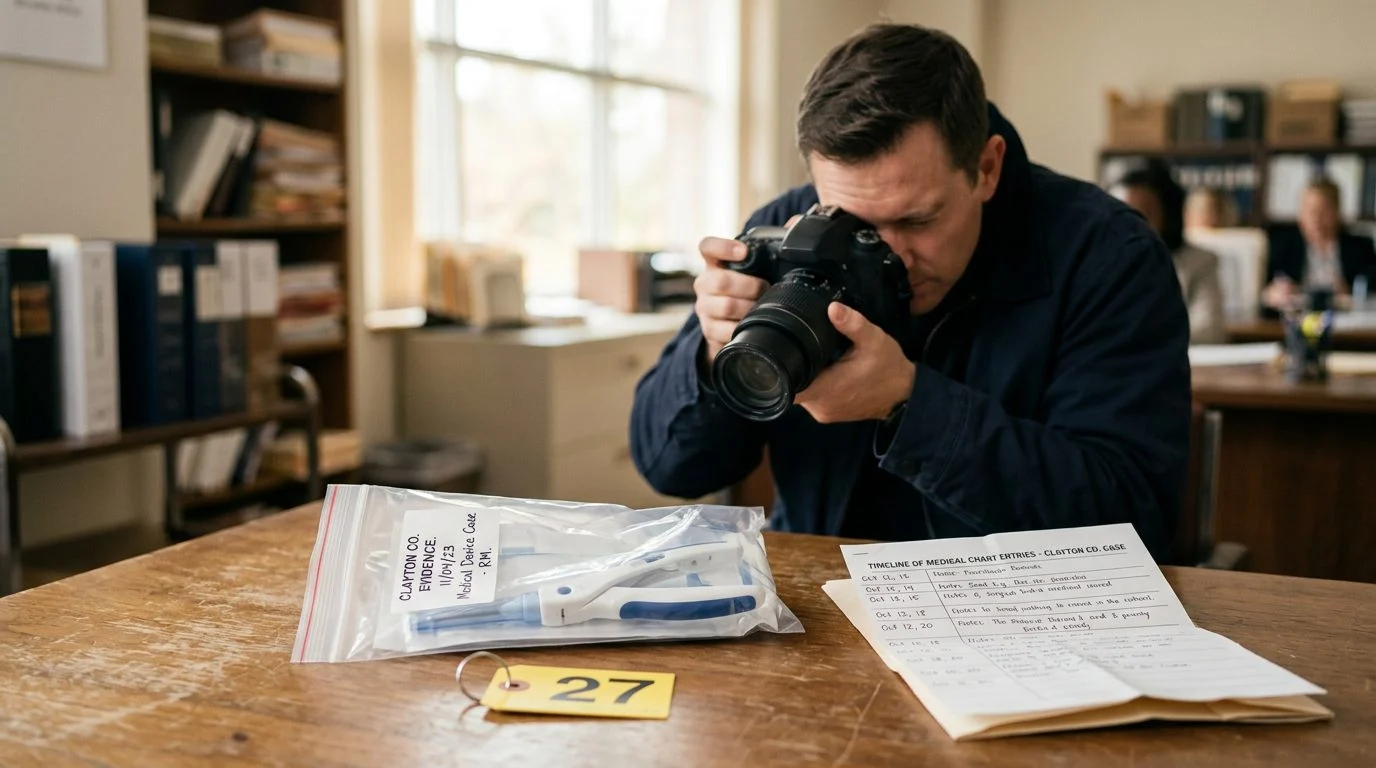
A bad outcome is not the same as malpractice. Complications can happen even when care is proper. That is why the medical chart, the treatment timeline, and a medical review come first.
Caregivers often notice the warning signs first. A missed diagnosis, a new symptom after a procedure, or a medication that doesn’t match the chart can all be clues.
This page is for Clayton County and Jonesboro patients, caregivers, and families who believe a treatment error caused lasting harm or death.
Injuries and Errors We Handle in Clayton County Cases
Most medical malpractice claims involve a diagnosis error, a surgical mistake, a medication error, or a failure in hospital care. Common examples include:
- Missed or delayed diagnosis of cancer, heart attack, stroke, or infection.
- Surgical errors, such as wrong-site procedures, retained surgical items, or injury to nearby organs or nerves.
- Medication errors, including the wrong drug or dose, dangerous interactions, or a missed known side effect.
- Anesthesia errors and failed handoffs at discharge or between providers.
- Failure to act on test results, and negligent nursing care during a hospital stay.
- Birth injuries caused by delayed or mishandled delivery care.
Some harms are severe. Brain damage, paralysis, or amputation often calls for a larger investigation and a full review of the records. Wrongful death from medical error follows the same careful path, with close attention to the family’s losses. A sponge or other foreign object left in the body is handled under a different deadline, covered below.
How a Medical Malpractice Claim Moves Forward
A claim usually moves from a free consultation to records review, investigation, and then either settlement talks or a lawsuit. Here is the typical path:
- Free consultation. You share what happened, which providers were involved, and any records or bills you have.
- Records gathering. The full chart, imaging, lab results, and billing are collected.
- Medical review. A qualified medical professional reviews the care against accepted standards.
- Damages assessment. Medical costs, lost income, future care needs, and daily-life effects are documented.
- Negotiation or filing. Some claims resolve with insurers or hospital defense counsel before a lawsuit. This depends on the facts of each case. If a fair resolution is not reached, the case is filed in court, followed by discovery and depositions.
Medical malpractice cases often take many months, and sometimes more than a year. Records access, medical review, and court schedules set the pace.

Georgia Deadlines and Filing Requirements
In most Georgia medical malpractice cases, a lawsuit must be brought within two years after the injury or death occurred (Georgia medical malpractice deadlines). Several other rules can change the timing, so dates matter early.
- Two-year deadline. O.C.G.A. § 9-3-71 sets two years from the date the injury or death occurred.
- Five-year outer limit. The same statute says no action may be brought more than five years after the negligent act or omission. The statute calls this a statute of ultimate repose. It can bar a claim even if the harm was found later.
- Foreign objects. If a foreign object was left in the body, the general limit does not apply. The case must be brought within one year after the negligent act is discovered (O.C.G.A. § 9-3-72).
- Young children. For a child under five when the care happened, O.C.G.A. § 9-3-73 bars a claim after the child’s tenth birthday.
- Sworn affidavit. O.C.G.A. § 9-11-9.1 requires a sworn affidavit filed with the complaint (affidavit requirement). It must come from a qualified medical reviewer competent to testify and set out at least one negligent act and its factual basis. In a professional malpractice action under O.C.G.A. § 9-11-9.1, the plaintiff must file an affidavit from a person competent to testify along with the complaint. Under O.C.G.A. § 9-11-9.1(b), a 45-day period after filing to supplement the complaint with that affidavit applies only when the limitation period expires within 10 days of filing and the complaint alleges that the affidavit could not be prepared in time.
Keeping careful records of medical bills and lost wages matters. Records and medical review take time, so an early call leaves more room to prepare.
Fees, Costs, and the Free Consultation
The first consultation is free, confidential, and carries no obligation to continue. You can share your situation and ask questions without committing to representation.
We work on a no-fee-unless-we-win basis, but you may still be responsible for court costs and case expenses, such as record fees, filing fees, and medical review charges, whether or not the case is won. The written fee agreement explains how fees, costs, and any expense reimbursement work before the firm begins.
To make the first meeting useful, bring bills, discharge papers, imaging results, and letters from the provider. If a provider treated you under a letter of protection, bring that letter too. Georgia law makes such arrangements relevant and discoverable evidence (O.C.G.A. § 51-12-1.1).
Not sure what your next step is?
Talk it through with our team — the first consultation is free, confidential, and carries no obligation.
Why Clients in Clayton County Contact T. Madden & Associates
T. Madden & Associates, P.C. is a Georgia personal injury firm led by attorney Terance Madden, who has practiced since 1999. Terance Madden is the responsible lawyer for every matter the firm handles.
The firm’s Jonesboro office is in Clayton County, so local clients can meet in person there. The firm also has offices in Atlanta, Decatur, Macon, and Augusta.
Our team, which includes assistants and office staff, helps with scheduling, records requests, and keeping you updated from the first call forward.
The practice handles car and truck wrecks, motorcycle and e-bike crashes, slip and falls, nursing home abuse, medical malpractice, negligent security, and wrongful death. For Clayton County families, the Jonesboro office is the place to start.
Frequently Asked Questions and Your Next Step
How do I know if my situation is malpractice?
A review of your records and care timeline answers that question. The free consultation is where that review starts.
How long do I have to file?
Is the first consultation free?
Yes. The first consultation is free and confidential, with no obligation to continue.
Can a family bring a claim after a death?
Under O.C.G.A. § 51-4-2, a surviving spouse or children may recover the full value of the decedent’s life, as shown by the evidence. Under O.C.G.A. § 51-4-5, a personal representative may recover funeral, medical, and other necessary expenses when death results from criminal or other negligence.
What if a surgical sponge was left in my body?
Georgia’s one-year rule after discovery applies under O.C.G.A. § 9-3-72.
If a doctor’s, nurse’s, or hospital’s care left you or someone you love with new harm, or led to a death, start a free case evaluation with T. Madden & Associates, P.C. The first conversation is free and confidential.
Responsible lawyer: Terance Madden, T. Madden & Associates, P.C., Jonesboro office, Clayton County, Georgia. This information is general and does not predict any result in a specific case.
Situations we review
Surgical errors
Injuries from procedures performed incorrectly, or on the wrong site, can raise questions about the standard of care.
Misdiagnosis or delayed diagnosis
A condition missed or caught too late can change treatment options and outcomes. We review the timeline of care to understand what happened.
Medication and anesthesia errors
Wrong doses, dangerous drug interactions and anesthesia complications are reviewed against the records and the care provided.
Birth and delivery injuries
Injuries to a mother or baby during labor and delivery are reviewed with careful attention to the medical chart and monitoring.
How our firm approaches your case
Attorney-led
Terance Madden leads every case personally. Our team of assistants and office staff handles scheduling, records requests and day-to-day communication.
Records-focused review
We start with your medical records, bills and care timeline so the questions we ask are grounded in what actually happened.
No fees unless there is a recovery
You pay no attorney fees unless there is a recovery. You may still be responsible for court costs and case expenses, which we explain before you decide.
Clear, direct communication
We explain each step in plain language so you know where your case stands and what comes next.
Keep your records and notes
Gather discharge papers, test results, bills and appointment notes, and write down what you remember while it is fresh. Bring these to your free consultation so the review can start right away.