

Car Accident Law | Georgia
Uninsured Motorist Coverage Under O.C.G.A. 33-7-11
If a driver with no insurance or not enough insurance hurts you, Georgia's uninsured motorist statute may affect what coverage is available. T. Madden & Associates, P.C. has helped injured people with car accident claims since 1999.
Serving Georgia Since 1999
1999
Year the firm began practice
5
Offices: Jonesboro, Atlanta, Decatur, Macon and Augusta
Free
First consultation, confidential and with no obligation to continue
By Terance Madden · Published November 3, 2026
O.C.G.A. 33-7-11 is the Georgia law that governs uninsured motorist (UM) coverage in car insurance. That coverage can help pay your losses when the other driver has no insurance or not enough. This page offers general information about Georgia law. T. Madden & Associates, P.C. is a Georgia personal injury firm in practice since 1999, led by attorney Terance Madden.
What O.C.G.A. 33-7-11 Is
O.C.G.A. 33-7-11 is the part of Georgia’s insurance code that sets the rules for uninsured and underinsured motorist coverage. Its purpose is simple. If a driver hurts you and cannot pay, your own policy may step in.
Courts quote it often. A Isaac Woods v. Allstate opinion from the Georgia Court of Appeals quotes this statute. Many people first meet the law in an insurance dispute or an injury claim. The plain-English version is what most drivers need.
If the driver who hit you had no insurance or too little, you may have a claim, and our team can review it with you in a free, confidential first consultation. Talk it through with our team — the first consultation is free, confidential, and carries no obligation.

What the Statute Requires Insurers to Offer
Georgia law requires car insurers to include uninsured motorist coverage in most motor vehicle liability policies. The statute says a policy must contain an endorsement or provisions that pay the insured for bodily injury or death. O.C.G.A. § 33-7-11 reads: “(a)(1) No automobile liability policy or motor vehicle liability policy shall be issued or delivered in this state to the owner of such vehicle or shall be issued or delivered by any insurer licensed in this state upon any motor vehicle then principally garaged or principally used in this state unless it contains an endorsement or provisions undertaking to pay the insured damages for bodily injury, loss of consortium or death of an insured, or for injury to or destruction of property of an insured under the named insured’s policy sustained from the owner or operator of an uninsured motor vehicle, within limits exclusive of interests and costs which at the option of the insured shall be.” The source of that harm is an uninsured motor vehicle’s owner or operator. The official statute text sets out these rules.
You can turn down the full-limits option. The statute says you may reject it, but you must select the other option in writing. Your offered coverage and the coverage you chose can differ. Look at your declarations page, the summary of your policy, to see the UM limits you actually carry.
Uninsured vs. Underinsured Motorist Coverage
Under O.C.G.A. § 33-7-11, the limits of this uninsured motorist coverage are set at the option of the insured.
Under the first option, the other vehicle counts as uninsured to the full extent of your UM limits. Your UM coverage then pays in addition to the other driver’s liability coverage. It is extra coverage above that amount, not a duplicate payment.
Under the second option, the vehicle counts as uninsured only for the difference. The difference between the available liability coverages and your UM limits is what your UM coverage would pay under option (II) of O.C.G.A. § 33-7-11(a)(1). O.C.G.A. § 33-7-11(a)(1)(iv) addresses an insurer that is insolvent and unable to make either full or partial payment on its insured’s legal liability. If a partial payment is made, the motor vehicle is considered uninsured only for the amount of the difference between that partial payment and the limits of the uninsured motorist coverage under the insured’s policy. In everyday terms, this option fills the gap and nothing more.
Stacking UM Coverage Under 33-7-11
Stacking means adding UM limits from more than one policy or more than one vehicle. It can raise the total coverage available to you. Whether stacking applies depends on the policy language and the facts of the crash.
The statute also has a renewal rule.
Gather every auto policy in your household. Include any policy that may cover you as a passenger or pedestrian. A common mistake is assuming one policy’s limit is the only limit that applies.
How a UM Claim Typically Proceeds After a Crash
Usually, you report the crash to your own insurer quickly. Keep a copy of that report and every letter the insurer sends. Then collect the proof your claim needs. That includes the police report, medical records and bills, photos, witness names, and records of lost wages.
Fault matters too. Georgia reduces your damages in proportion to your share of fault. You recover nothing if you are 50 percent or more responsible. The O.C.G.A. § 51-12-33 text sets out this rule. The Quynn v. Hulsey opinion quotes the same fault language.
Medical bills face a limit too. Recoverable medical expenses are limited to the reasonable value of medically necessary care, under O.C.G.A. § 51-12-1.1. Georgia generally gives two years to file a personal injury lawsuit under O.C.G.A. § 9-3-33.
The insurer reviews the claim under your policy terms. Disputes over coverage or the value of an injury can require legal review.

Talk With Us About Your Uninsured Motorist Claim
If the driver who hit you had no insurance or too little, you may have a claim. You do not have to sort out your options alone.
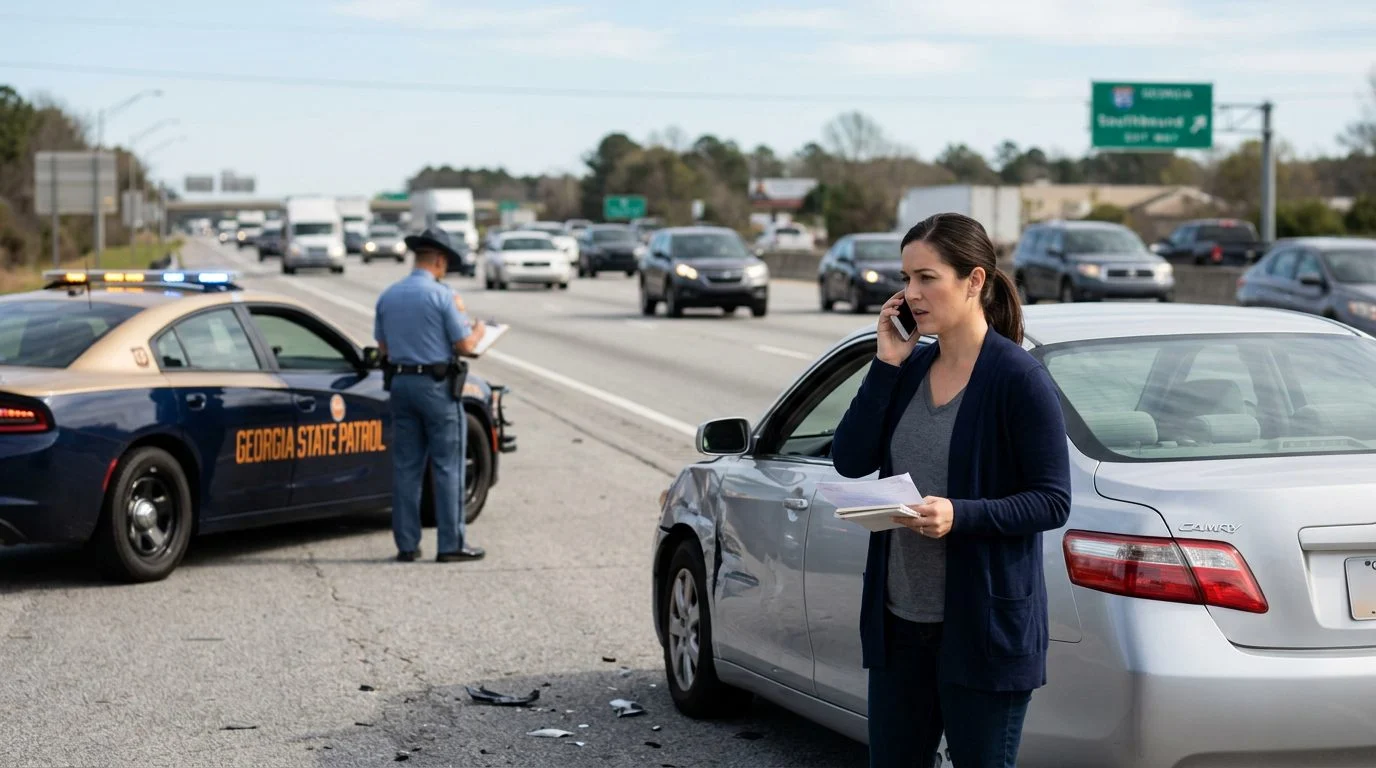
Picture this. A crash happens on a Georgia road. The other driver’s coverage is missing or shows low limits. Medical bills keep arriving. Your own insurer has just made an offer. That is when many people start asking hard questions.
T. Madden & Associates, P.C. can review your policy limits, your records, and the insurer’s offer with you. You can request a free case evaluation with the firm. The first consultation is free, confidential, and comes with no obligation to continue. The firm works on a no-fee-unless-we-win basis, but you may still be responsible for court costs and case expenses.
What is ocga 33-7-11?
It is the Georgia statute that governs uninsured and underinsured motorist coverage in car insurance policies.
Does Georgia require uninsured motorist coverage?
Georgia law requires most policies to include it, unless the insured rejects it as the statute allows.
Can I reject UM coverage in Georgia?
The statute lets you reject the full-limits coverage in writing and choose the difference option instead.
What is UM stacking?
Stacking adds UM limits from more than one policy or vehicle. Whether it applies to your claim turns on your policy wording.
How long do I have to sue in Georgia?
Georgia generally allows two years to file a personal injury lawsuit (O.C.G.A. § 9-3-33; Kenneth B. Cameron v. Jmp Pizza, Inc (2026)).
Responsible lawyer: Terance Madden, T. Madden & Associates, P.C. Offices: Jonesboro (Clayton County), Atlanta, Decatur, Macon and Augusta. Contact:
How Our Team Can Help
Review Your Coverage
We look at the policy language and the facts of your crash to help you understand which coverage may apply.
Work With the Insurer
Our lawyers handle communication with insurance companies so you can focus on recovering.
Focus on Your Claim
Our team builds a clear account of your injuries, losses and the circumstances of the collision.
No Fees Unless There Is a Recovery
You pay no attorney fees unless there is a recovery. You may still be responsible for court costs and case expenses.
Check Your Policy Before You Assume
Read the declarations page and uninsured motorist section of your own auto policy. Do not assume your coverage works the same way as someone else's, and speak with a lawyer before you give a recorded statement to any insurance company.
Questions We Hear Most Often
What does O.C.G.A. 33-7-11 cover?
It is the Georgia statute that governs uninsured and underinsured motorist coverage in car insurance policies.
Can I reject UM coverage?
Georgia law allows certain rejection and selection choices under the statute. Your written policy documents and your lawyer can explain what applies to you.
Does this apply after a truck or motorcycle crash?
Uninsured motorist issues can arise in many kinds of collisions. Our team reviews the facts of your crash and the policies involved.