

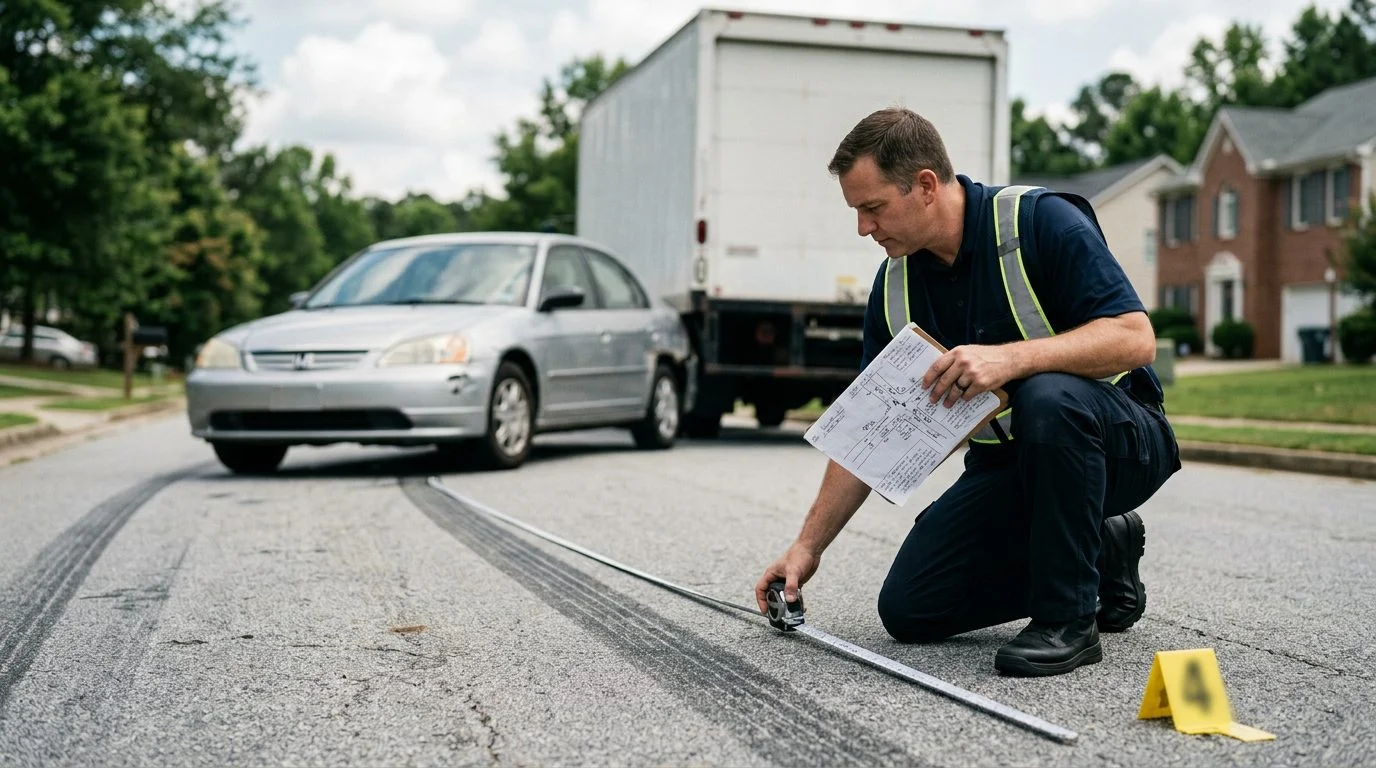
Stalled Car Hit by Truck | Georgia
Hit While Stopped by a Truck? Talk to a Georgia Lawyer Today
T. Madden & Associates, P.C. has represented people hurt in Georgia truck and car wrecks since 1999. Start with a free, confidential consultation with no obligation to continue.
Why Georgia Clients Call Our Firm
Since 1999
Serving injured Georgians
5 Offices
Jonesboro, Atlanta, Decatur, Macon and Augusta
Free
First consultation, confidential and without obligation
By Terance Madden · Published October 22, 2026
If a truck hit your car while it was stopped or stalled, you may be asking whether the crash was your fault. Whether a stopped vehicle contributed to a crash depends on the facts of that particular crash. Georgia looks at what each driver did before and during the crash. A stalled car hit by truck lawyer in Georgia can explain how that works. This page covers the rules, the truck records that often matter most, and what a claim can include. T. Madden & Associates, P.C. has practiced personal injury law since 1999. The first consultation is free and confidential, with no obligation to continue.
When a Stopped or Stalled Car Is Hit by a Truck
A truck crash involving a stopped or stalled car is usually a rear-end or side impact. The truck driver’s ability to stop or change lanes is central to the case.
This page covers four common situations:
- A car stopped on the shoulder
- A car broken down at the roadside
- A car stalled in a travel lane
- A car halted in slowed or stopped traffic when a truck strikes it
Trucks are heavy. An impact can push a car into other lanes, a guardrail or a ditch.
This page is written for the injured driver or passenger. It also speaks to a family member after a fatal crash. If you want to talk through what happened, start a free case evaluation.
If a truck hit your car while it sat stopped, stalled or in traffic, you may have a claim, and our team can review the facts with you for free. Talk it through with our team — the first consultation is free, confidential, and carries no obligation.
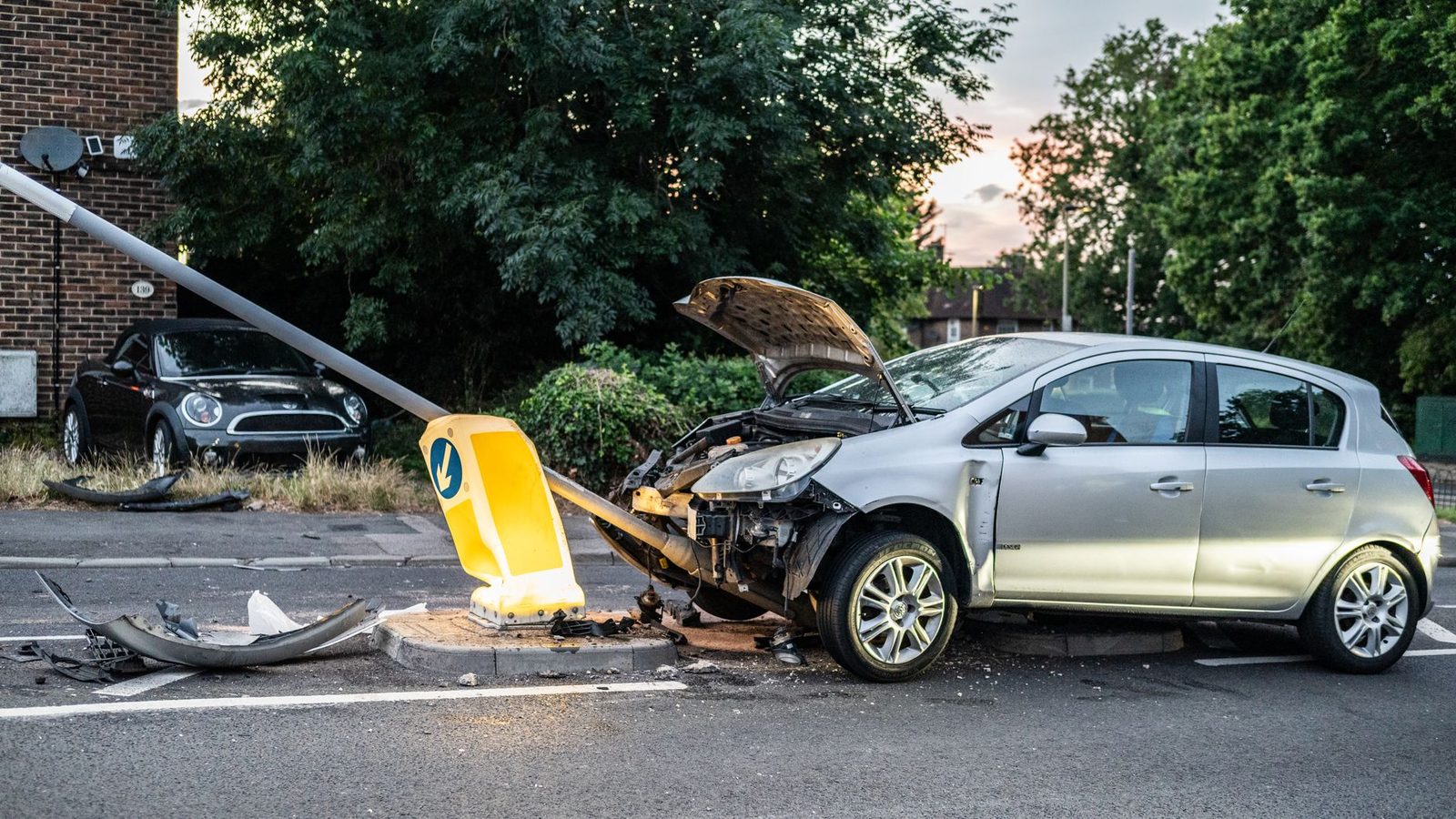
Does Georgia Law Blame You for Being Stopped?
Stopping or stalling on the road can have many causes, and each situation is different. The question is what each driver did before and during the crash.
Georgia uses a modified comparative fault rule (O.C.G.A. § 51-12-33; Quynn v. Hulsey, 310 Ga. 473 (2020)). Under O.C.G.A. § 51-12-33, the judge reduces damages in proportion to the injured person’s share of fault. If that person is 50 percent or more responsible, the law bars any recovery (O.C.G.A. § 51-12-33; Quynn v. Hulsey, 310 Ga. 473 (2020)).
Put simply, a share of fault lowers a recovery. Fault of 50 percent or more ends it (O.C.G.A. § 51-12-33; Quynn v. Hulsey, 310 Ga. 473 (2020)). The law also requires the jury or judge to consider everyone who contributed to the injury, not only the driver who was hit.
Insurers and trucking companies may argue the stopped driver was partly responsible. Common points include where the car was parked, whether hazard lights were on, and whether warning triangles were placed. Those are arguments, not automatic answers. A stalled car hit by truck lawyer can help you see which facts matter in your crash. Each crash turns on its own facts, including traffic, visibility and warning devices.
The Truck Evidence That Often Decides These Cases
The truck’s own records often carry the most weight. Some of them have short keep periods, so timing matters.
Key records include:
- Electronic control module data, which stores engine and braking information
- Dashcam or onboard video
- Driver logs, called records of duty status
- Maintenance and inspection records, including brake work
- Driver cellphone records
- The police crash report
Federal rules require a motor carrier to keep driver duty-status records and supporting documents for at least 6 months from the date of receipt (49 C.F.R. § 395.8). Companies must also keep records for minimum periods set by 49 C.F.R. § 379.3. After those periods, the company may destroy them at its discretion, unless another governmental body’s lawful requirements prescribe longer retention periods for them.
Under 49 C.F.R. § 382.303, after certain truck crashes the employer must test the driver for alcohol and drugs as soon as practicable, but only in the circumstances the regulation lists, such as a fatality, or a citation issued to the driver together with injury requiring immediate medical treatment away from the scene or a vehicle towed away, and subject to the regulation’s exceptions. If an alcohol test is not given within two hours, the employer must keep a record of why. Testing rules also say they cannot delay necessary medical care.
Early action matters. A lawyer can send a preservation demand to the trucking company and gather scene and vehicle evidence before it is lost.
What a Claim for a Stopped-Vehicle Truck Crash May Cover
A claim may cover medical bills, lost pay, vehicle damage and pain and suffering. How much is recovered depends on proof.
Georgia separates two kinds of damages. General damages, such as pain and suffering, are ones the law presumes flow from a wrongful act; that rule is in O.C.G.A. § 51-12-2, not in 49 C.F.R. § 382.303, which requires employers to test surviving drivers for alcohol and controlled substances after certain crashes. O.C.G.A. § 51-12-2 says they can be recovered without proof of any amount. Special damages, such as medical bills and lost wages, must be proved.
Medical expenses have limits. Under O.C.G.A. § 51-12-1.1, medical damages are limited to the reasonable value of medically necessary care. Either side can challenge whether treatment was reasonable or necessary.
Other items on a typical claim include:
- Medical care, from emergency treatment to imaging, surgery, rehabilitation and future care a doctor documents
- Lost wages and lower future earning ability
- Repair or total loss of the car, and personal property inside it
- Permanent impairment in serious cases, which is often called a catastrophic injury
When a crash is fatal, the family’s claim follows different rules. Under O.C.G.A. § 51-12-1.1, special damages for medical and healthcare expenses are recoverable only as provided in that section; the section does not address who may sue when no one else can, which is governed by O.C.G.A. § 51-4-5. Under O.C.G.A. § 51-4-5, when no one is entitled to sue under O.C.G.A. § 51-4-2 or § 51-4-4 and the administrator or executor brings the action, the recovery is the full value of the decedent’s life. Other wrongful death claims by family members follow different rules, depending on who is entitled to sue. Under O.C.G.A. § 51-4-5, when death results from a crime or from criminal or other negligence, the personal representative can also recover funeral, medical, and other necessary expenses.
How the Process Works, Step by Step
A claim usually moves from a free evaluation to evidence gathering, medical records, a settlement demand and, if needed, a lawsuit.
- Free evaluation. You share the crash details, your injuries, and any police or insurance papers. The first consultation is free and confidential.
- Evidence and investigation. Requests go out for truck, carrier and scene records. Preservation demands go out early.
- Medical documentation. Treatment is recorded, and bills are collected. This step takes time because recovery and records take time.
- Settlement demand. The claim is presented to the insurers involved, and negotiation follows.
- Lawsuit, if needed. Under O.C.G.A. § 9-3-33, actions for injuries to the person generally must be brought within two years after the right of action accrues. Discovery, mediation and possibly trial can follow.
Timelines vary with the injuries, the insurers and whether the case resolves without trial. To begin, contact our team.
Why Work With T. Madden & Associates, P.C.
T. Madden & Associates, P.C. is a Georgia personal injury firm led by attorney Terance Madden.
- Time in practice. The firm has practiced since 1999. Its lawyers include Terance Madden and Shenia Madden, and the firm has assistants and office staff.
- Local offices. The firm has offices in Jonesboro (Clayton County), Atlanta, Decatur, Macon and Augusta.
- Free first step. The first consultation is free and confidential, with no obligation to continue.
- Fees. Cases are handled on a no-fee-unless-we-win basis. You may still be responsible for court costs and case expenses.
- Phone access. You can call the firm 24 hours a day, 7 days a week, with urgent questions after a crash.
Not sure what your next step is?
Talk it through with our team — the first consultation is free, confidential, and carries no obligation.
Common Questions About a Truck Hitting a Stopped Car
Most questions come down to fault, deadlines and the truck’s records. Here are short answers.
Am I automatically at fault if I was stopped?
No. Fault depends on what each driver did, and Georgia’s comparative fault rule applies (O.C.G.A. § 51-12-33; Quynn v. Hulsey, 310 Ga. 473 (2020)).
What if I was partly at fault?
Under O.C.G.A. § 51-12-33, your recovery is reduced by your share of fault (O.C.G.A. § 51-12-33; Quynn v. Hulsey, 310 Ga. 473 (2020)). At 50 percent or more, you recover nothing (O.C.G.A. § 51-12-33; Quynn v. Hulsey, 310 Ga. 473 (2020)).
How long do I have to file?
Generally two years from the injury, under O.C.G.A. § 9-3-33. The statute has some exceptions.
Will the truck driver be tested?
After certain truck crashes, federal rules require alcohol and drug testing as soon as practicable (49 C.F.R. § 382.303).
Do I have to go to court?
Some claims resolve without a trial. The team explains your options at each stage.

Talk to a Georgia Lawyer About Your Stopped-Vehicle Crash
If a truck struck your car while it was stopped, stalled or in slowed traffic, you may be wondering who is responsible and what comes next. Questions about your car, your bills and your deadlines can feel urgent. Reach out to T. Madden & Associates, P.C. for a free, confidential consultation, and a stalled car hit by truck lawyer on our team can walk through the facts with you.
Responsible lawyer: Terance Madden, T. Madden & Associates, P.C. Offices in Jonesboro (Clayton County), Atlanta, Decatur, Macon and Augusta. Contact: firm contact page. No result can be promised.
How We Approach Your Stalled Car Crash Case
Available 24/7
Call any time, day or night, to tell us what happened after a truck struck your stopped vehicle.
Careful Case Review
We look at the crash report, photos, medical records and the facts surrounding the collision.
Attorneys Who Answer Your Questions
Our lawyers and support staff keep you informed and explain each step in plain English.
Focus on Your Recovery
We handle the insurance companies and the paperwork so you can concentrate on getting better.
Before You Talk to an Insurance Adjuster
Insurance companies may contact you quickly after a crash. Write down what you remember, keep your medical and repair records, and speak with a lawyer before giving a recorded statement or signing any release.
What to Expect When You Contact Us
1. Tell Us What Happened
Call or submit our online form to start your free, confidential case evaluation.
2. Get Clear Answers
Our team reviews your situation and explains your options at no cost and without obligation.
3. Fees Only If There Is a Recovery
We handle personal injury cases on a no-fee-unless-there-is-a-recovery basis. You may still be responsible for court costs and case expenses, which we will explain before you decide.
Your Stalled Car Crash Case Deserves a Careful Look
Related practice areas
- Truck Accident Lawyer in Georgia: Who Pays, Your Deadline, and What to Do Now