

Wrongful Death | Lithium Battery Fires | Georgia
Lost someone to a lithium battery fire? Get answers from a Georgia wrongful death lawyer.
Families who lose a loved one to a defective battery or off-brand product can take the first step today, at no cost.
T. Madden & Associates, P.C.
1999
Year the firm began practicing law
5
Offices: Jonesboro, Atlanta, Decatur, Macon, Augusta
24/7
Call line available any time
By Terance Madden · Published November 18, 2026
A family member died in a fire, and now you’re the one making the calls, answering investigators and finding the paperwork. If a defective or off-brand lithium-ion battery started that fire, the family may have a wrongful death lawsuit in Georgia.
A wrongful death lawsuit is a civil claim. It is brought because a person died from another party’s wrongful act, and it asks for money to cover the family’s losses.
This page gives general information about these cases.
When a Lithium Battery Fire Takes a Life, the Family Has Legal Rights
A death from a battery fire can support a claim when the battery was defective or the product was unsafe. Lithium-ion batteries power phones, power tools, scooters and e-bikes. When a cell fails, it can overheat and burn fast, and the people closest to the fire often have the least time to get out.
A wrongful death case is not a criminal case. The state decides whether to bring criminal charges. The family’s claim is a civil case that asks who caused the harm and what the loss is worth.
Many families depend on one person to keep records, talk with investigators and track deadlines. If that’s you, your first job is protecting the evidence and the calendar.
Not sure what your next step is?
Talk it through with our team — the first consultation is free, confidential, and carries no obligation.

Who Can File a Wrongful Death Lawsuit in Georgia and How Much Time They Have
Georgia gives the first right to sue to the surviving spouse. If there is no surviving spouse, the children may bring the claim, under O.C.G.A. § 51-4-2.
When a spouse and children both survive, the spouse’s share is never less than one-third of the recovery, under the same section.
A personal representative is the person legally appointed to handle the deceased person’s estate. If no one under that section can bring the claim, the administrator or executor may sue for the next of kin, under O.C.G.A. § 51-4-5.
On time, Georgia’s general deadline for injury claims is two years, under O.C.G.A. § 9-3-33. Other deadlines can apply. Claims against a city can require much faster steps. The City of Atlanta asks for written notice of claims within six months, according to its claim information.
Waiting is a mistake many families want to avoid. Batteries get thrown out and fire scenes get cleared. Early letters asking that evidence be kept can make the difference.
What a Georgia Wrongful Death Claim Can Recover
Georgia law lets the family pursue the full value of the life of the person who died, as shown by the evidence. That value is not a fixed number. It turns on the person’s age, earnings, role in the family and the proof offered.
When death of a human being results from a crime or from criminal or other negligence, the personal representative can recover funeral, medical and other necessary expenses resulting from the injury and death, under O.C.G.A. § 51-4-5. Keep every bill, including the ones that arrive after the funeral.
Georgia also separates two kinds of damages. General damages are losses the law presumes come from the wrong, and they need no proof of an exact amount. Special damages are losses that actually flow from the wrong, and they must be proved.
Under O.C.G.A. § 9-2-41, a claim for homicide or injury to the person does not end when a party dies. If the plaintiff dies and there is no right of survivorship in any other person, the claim passes to the plaintiff’s personal representative.
Who May Be Liable When a Defective Battery Causes a Fatal Fire
Often, more than one company can be held responsible. Under O.C.G.A. § 51-1-11, a manufacturer of a product sold as new can be liable to a natural person who may use, consume, or reasonably be affected by it, even without a direct contract, if the product was not merchantable and reasonably suited to its intended use and its condition when sold is the proximate cause of the injury sustained. That claim has a ten-year limit from the first sale.
Sellers are treated differently. Under O.C.G.A. § 51-1-11.1, a product seller is not liable as a manufacturer for strict liability. A company that only puts its own name on a product, with no input into its design or assembly, is a product seller, as held in Alltrade, Inc. v. McDonald.
Possible defendants in a battery case include the cell or pack maker, the brand, the importer or distributor, the charger or device maker, and the retailer or online seller. The questions to ask are practical. Does the battery carry real certification markings? Was the pack damaged or modified? Was the warning adequate?
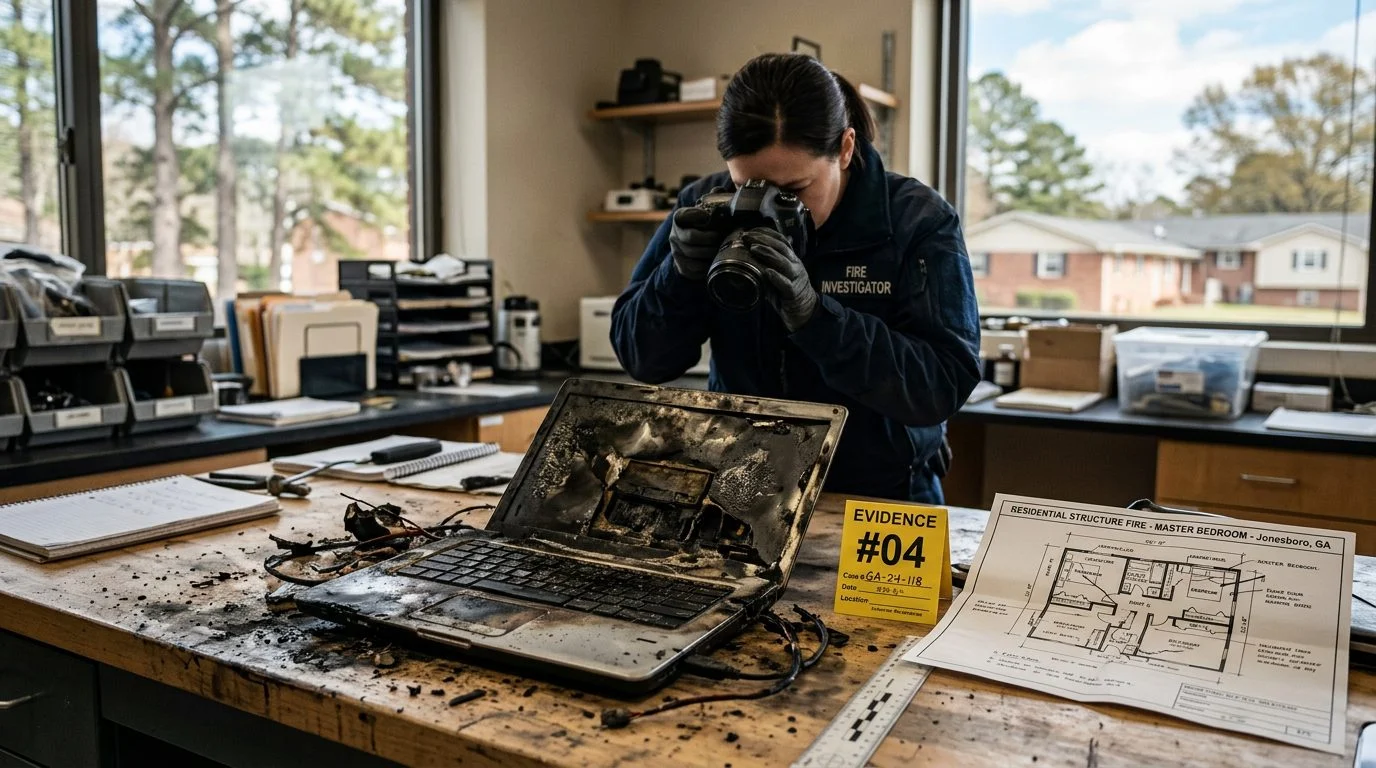
Terance Madden trained as an electrical engineer before law school, and he holds a B.S. in Electrical Engineering. In a battery case, he reads the cells, the charging circuit, the markings and the fire scene the way an engineer reads a failed circuit: what broke, in what order, and why. That helps trace where the fire started and what it shows about the product.
Fault is split under O.C.G.A. § 51-12-33. Each liable party pays its own share, and under O.C.G.A. § 51-12-33 the damages are reduced in proportion to the injured person’s own fault. If the person who died is 50 percent or more responsible, the family can recover nothing.
How the Firm Builds a Fatal Battery Fire Case, Step by Step
The process starts with a free, confidential consultation. Then the work moves quickly to protecting the evidence.
- Consultation. The firm answers the family’s questions in plain English and explains the options.
- Evidence preservation. The firm sends letters asking that the battery, device, charger, packaging and fire reports be kept.
- Technical review. The battery markings, cell condition, charger and fire scene records are reviewed and explained in plain words.
- Every liable party and coverage layer. The firm identifies each responsible company and each insurance source, including liability, UM/UIM where it applies, umbrella, excess and corporate coverage.
- Suit and trial readiness. If needed, the firm files suit within the deadline, uses discovery, brings in outside technical reviewers, and talks settlement while preparing for trial from the start.
How long each step takes varies with the parties and the proof.
How Big Insurance Responds to a Death Claim and How the Firm Pushes Back
Big Insurance is not on your family’s side. A first offer is rarely what the claim is worth.
Expect these tactics:
- A fast, low offer, sometimes made while the family is still planning the funeral.
- Recorded statements taken while the family is grieving.
- Arguments that the battery was not the cause of the fire.
- Efforts to shrink the value of the life lost.
The response is to pursue every coverage layer: liability, UM/UIM, umbrella, excess and corporate. It means asking for full records, using the technical evidence to answer the cause arguments, and counting the full lifetime cost of the loss. It also means preparing the case for trial from day one, so the offer can be measured against a real trial.
Before the family gives a recorded statement or signs a release, talk with a lawyer first.
Not sure what your next step is?
Talk it through with our team — the first consultation is free, confidential, and carries no obligation.
Why Families Bring These Cases to T. Madden & Associates, P.C.
T. Madden & Associates, P.C. has been in practice since 1999. The firm represents people hurt by defective products and families who have lost someone in fires and explosions caused by defective lithium-ion batteries and other products.
The firm has offices in Jonesboro (Clayton County), Atlanta, Decatur, Macon and Augusta. Terance Madden is the responsible lawyer for this page. Shenia Madden is also one of the firm’s lawyers.
The firm’s team works to keep families updated in plain English and to treat them with dignity.
The Terance Madden Foundation supports community work, but this page is about your family’s claim.
The firm handles cases on a no-fee-unless-we-win basis. The client may still be responsible for court costs and case expenses.
Common Questions About Wrongful Death Lawsuits After a Battery Fire
What is a wrongful death lawsuit?
It is a civil claim brought when a person dies because of another party’s wrongful act. It seeks money for the family’s losses.
Is a wrongful death lawsuit worth it?
That answer turns on the evidence and the insurance available. A free consultation lets the family find out.
Who pays in a wrongful death lawsuit?
Payment usually comes from the insurance held by the liable parties, through every coverage layer.
What does it take to win?
No result can be promised. The work is building proof, identifying every liable party and preparing for trial.
What if the battery was off-brand and bought online?
The seller, importer and brand can still be investigated.
What does the first consultation cost?
The first consultation is free, confidential and carries no obligation to continue.
Talking With a Lawyer While the Family Is Still Deciding
You don’t have to settle every question this week. A few choices can’t wait, though. Keep the battery and charger safe, watch the deadlines and think before speaking to an insurer.
If your family lost someone in a battery fire and you’re still weighing your options, start a free case evaluation. The firm is available 24/7 by phone.