
At T. Madden & Associates, P.C., our catastrophic injury attorneys recently secured a $5 million settlement for a woman who suffered catastrophic injuries when a commercial 18-wheeler struck her vehicle on Interstate 75 and the driver fled the scene. The case was resolved during active litigation. Below, we explain what happened, why truck accidents cause such severe injuries, and what Georgia accident victims can do to protect their rights.
Key takeaways:
The truck driver began a lane change on I-75, abandoned it mid-maneuver, and struck our client’s vehicle, forcing it into a ravine. Rather than stopping to render aid, the driver fled. A sheriff’s deputy located and stopped the truck miles away after a high-speed intercept, and the driver was arrested and charged with hit-and-run and failure to maintain a single lane. Video evidence captured the collision itself, corroborating our client’s account.

Yes. Under O.C.G.A. § 40-6-270, Georgia law requires any driver involved in a crash that causes injury to stop, exchange information, and render reasonable aid. Leaving the scene of a crash that causes serious injury can be charged as a felony. Those criminal charges are separate from the victim’s civil claim, but an arrest and the evidence gathered by law enforcement can strongly support the civil case.
Catastrophic injuries are severe, often permanent injuries that change a person’s ability to work and live independently. Our client was left unconscious at the scene. Her injuries included a moderate traumatic brain injury with a subdural hematoma, a ruptured diaphragm, multiple rib fractures with a collapsed lung, multiple pelvic fractures requiring external fixation, a lacerated spleen, and post-traumatic stress disorder. She underwent multiple surgeries, months of immobility, and extensive rehabilitation.
According to the Centers for Disease Control and Prevention, traumatic brain injuries can affect memory, thinking, movement, and emotional health, sometimes for years. Injuries like these, along with multi-organ trauma and fractures requiring surgical fixation, typically carry substantially higher damages than a routine injury claim.
“This was not a case with a single injury to evaluate, it was a full-body catastrophic trauma case touching the brain, chest, abdomen, and pelvis all at once,” said Attorney Terance Madden. “Cases like this require a legal team that understands traumatic brain injury litigation, orthopedic trauma, and internal organ injury all at the same time, because the long-term consequences of each one compound the others.”
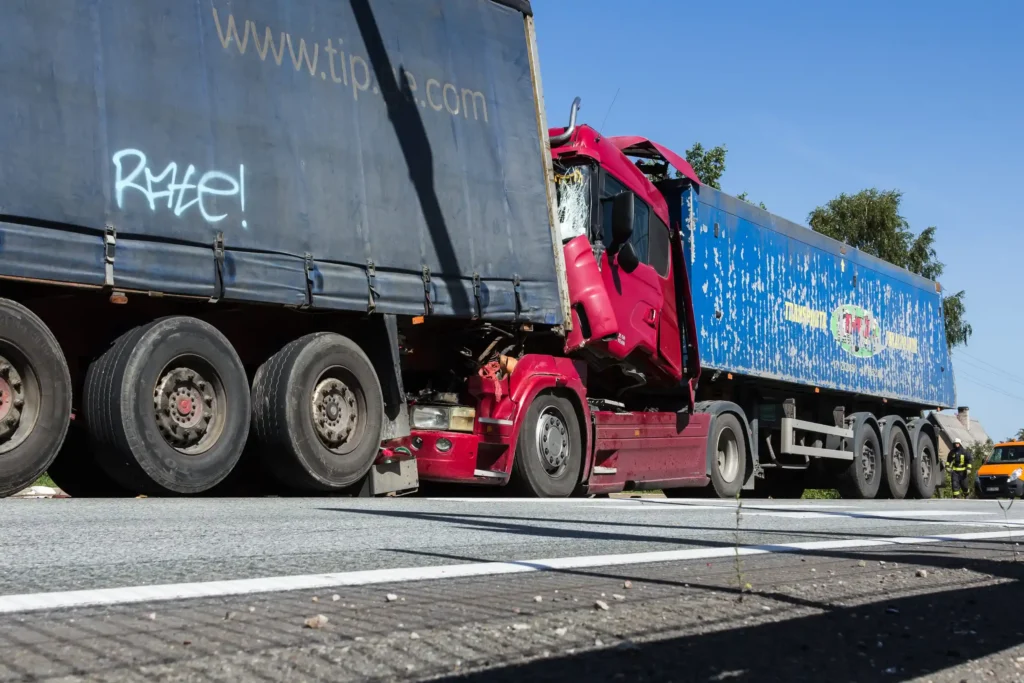
A fully loaded tractor-trailer can weigh up to 80,000 pounds on the interstate, many times more than a passenger car. That difference in size and weight is why truck crashes so often cause catastrophic or fatal injuries. Large trucks also have wide blind spots on every side, which makes unsafe lane changes especially dangerous. The Federal Motor Carrier Safety Administration tracks these risks in its commercial motor vehicle traffic safety facts.
Attorney Madden credits the firm’s litigation strategy for the outcome, not just the facts of the crash. Our team built a comprehensive damages case around the client’s full injury profile, coordinating detailed medical documentation of her past treatment and projected future care. We then leveraged that preparation, along with the liability evidence, to negotiate from a position of strength once litigation was underway.
As an experienced truck accident lawyer, Attorney Madden notes that a settlement reached during active litigation, rather than before a lawsuit is filed, often reflects exactly that kind of groundwork: a well-documented case presented with enough force to shift the pressure onto the other side.
Victims of catastrophic truck accidents may be able to recover past and future medical expenses, lost wages and lost earning capacity, rehabilitation and long-term care costs, and pain and suffering. Fully documenting these losses often requires coordinating with neurologists, orthopedic surgeons, and life-care planners who can project a client’s future needs over a lifetime.
Get medical care first, even if you feel fine. Then take these steps to protect your claim:
In most cases, Georgia gives injured people two years to file a personal injury lawsuit, though some deadlines can be shorter depending on the circumstances. Trucking companies often begin building their defense immediately, so it is important to speak with an attorney as soon as possible.
Yes, you can sue a trucking company after a hit-and-run if the driver is identified and was working for the company at the time. In Georgia, both the driver and the trucking company may be responsible for your injuries, and evidence like video, police reports, and criminal charges can support your claim.
An injury is considered catastrophic when it is severe, often permanent, and significantly limits a person’s ability to work or live independently. Common examples include traumatic brain injuries, spinal cord injuries, multiple fractures requiring surgery, and serious internal organ damage that require long-term treatment and care.
Yes, it is strongly recommended to get a lawyer for a truck accident claim because trucking companies and their insurers typically respond quickly with their own investigators and attorneys. A truck accident lawyer can preserve evidence, document your full damages, and handle negotiations so you can focus on recovery.
If the driver who hit you is never identified, you may still be able to recover compensation through your own uninsured motorist coverage. Georgia insurers generally require prompt reporting of a hit-and-run, so call the police right away and notify your insurer as soon as possible.
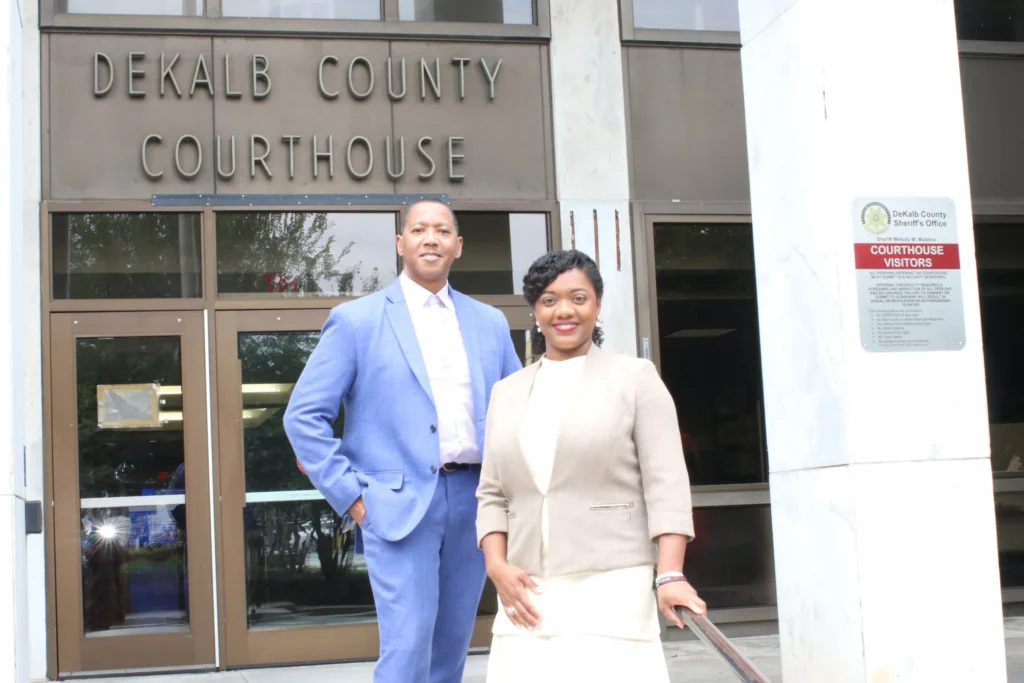
A truck driver’s negligence should never cost you your health, your independence, or your livelihood. For nearly 25 years, T. Madden & Associates, P.C. has represented Georgia families in truck accident, catastrophic injury, traumatic brain injury, and wrongful death cases. As this case shows, we build every case with the medical documentation and preparation needed to recover full compensation.
If you or a loved one was seriously injured in a truck accident, don’t wait. Georgia’s filing deadlines are strict. Call (833) PAID-123 or contact us online for a free consultation. We serve clients statewide from offices in Atlanta, Decatur, Jonesboro, Macon, and Augusta.
Prior results do not guarantee a similar outcome. Every case is different, and results depend on the specific facts and law involved.

T. Madden & Associates, P.C has an answer for all of your legal questions! We are a Personal Injury firm, so we handle many types of injury cases from auto collisions to wrongful death! If you or someone you know is injured, T. Madden & Associates, P.C. can help.
We are proud to offer free case reviews to anyone who may have questions before getting started. Additionally, if we do take on your case, we promise we won’t charge you a penny unless we recover compensation for your claim.
Please contact our Atlanta attorneys online or by calling 833-PAID-123 to get started today.