In the heart of Georgia, the city of Dublin serves as a vital hub for commerce, culture, and community. Its roads and highways are the arteries through which the lifeblood of the region flows, connecting residents to work, school, and the various destinations that define their daily lives. While these thoroughfares are essential, they also present inherent risks.
For drivers in Dublin and Laurens County, a keen awareness of the area’s traffic patterns and potential hazards is not just a matter of convenience; it’s a critical component of personal safety.
This article offers an in-depth look at the challenges drivers face on the roadways of Dublin and the surrounding areas. By examining specific locations where accidents have occurred and discussing the factors that contribute to these incidents, we aim to provide residents with the knowledge they need to protect themselves and their families. While no one can predict when or where an accident will happen, understanding the risks is the first step toward mitigating them.
This guide is intended to be a valuable resource for anyone who gets behind the wheel in Dublin, GA, offering insights that can help foster a culture of safety and preparedness.
As we delve into the specifics of local roadways, we will also explore broader safety principles and the legal landscape that governs traffic accidents in Georgia, providing a full spectrum of information for the conscientious driver.
Two of the most significant roadways in the Dublin area are U.S. Highway 441 and Interstate 16. These routes are indispensable for commuters, commercial truckers, and travelers passing through the region. However, their high traffic volume and design can also make them settings for serious accidents.
U.S. Highway 441, a major north-south artery that runs through Dublin, has been the scene of multiple tragic accidents. A recurring and particularly dangerous issue on this highway is wrong-way driving, which often leads to devastating head-on collisions. In one recent incident, a man was killed in a head-on crash with a vehicle traveling the wrong way on U.S. 441 north of Dublin.
The collision, which occurred in the early morning hours, highlights the deadly consequences of a driver entering the wrong lanes of a divided highway. Another fatal accident on U.S. 441 involved a wrong-way driver, causing a collision that claimed the lives of a father and daughter.
These incidents underscore the importance of vigilance, especially when driving at night or in low-light conditions, when it may be more difficult to spot a vehicle traveling in the wrong direction. The section of U.S. 441 near Lamplighter Lane has been specifically identified as the location of one of these fatal head-on crashes, making it an area where drivers should exercise extreme caution.
The repeated instances of wrong-way driving on this highway suggest a need for enhanced signage, lighting, and other traffic control measures to prevent such tragedies in the future.
Interstate 16, which connects Macon to Savannah, is another major thoroughfare that passes through Laurens County and the Dublin area. As a high-speed interstate, it presents a different set of challenges for drivers.
The high speeds at which vehicles travel on I-16 mean that any mistake or moment of inattention can have catastrophic consequences. Like U.S. 441, I-16 has also been the site of a fatal head-on collision caused by a wrong-way driver.
The interchange between I-16 and State Route 19 is a particularly noteworthy area. Interchanges are, by their nature, points of increased traffic conflict, with vehicles merging, exiting, and changing lanes.
The combination of high speeds and complex traffic movements at the I-16 and SR 19 interchange makes it a location where the risk of accidents is elevated. Drivers should be especially alert when navigating this and other interchanges, paying close attention to other vehicles and maintaining a safe following distance.
While major highways like U.S. 441 and I-16 are often the focus of traffic safety discussions, local roads and intersections in and around Dublin also present their own unique hazards. These are the streets that residents use for their daily errands, commutes to work, and trips to school, and they deserve just as much attention when it comes to safety.
Central Drive in Dublin was the scene of a tragic head-on collision that resulted in one fatality and two injuries. This incident serves as a stark reminder that even on local, non-highway roads, the risk of a serious accident is ever-present.
Head-on collisions can occur for a variety of reasons, including distracted driving, impairment, or a medical emergency that causes a driver to lose control of their vehicle. On two-lane roads like many of those in and around Dublin, the margin for error is slim, and a car crossing the centerline can have devastating consequences.
The tragic death of a pedestrian in a hit-and-run accident on Georgia 19 in Laurens County highlights the vulnerability of those who are not in a vehicle. Pedestrians are at a significant disadvantage in any collision with a motor vehicle, and the consequences are often severe. This incident underscores the importance of drivers being aware of their surroundings and watching for pedestrians, especially in areas where there may not be sidewalks or dedicated pedestrian crossings.
For pedestrians, it is crucial to wear bright or reflective clothing, especially at night, and to walk facing traffic whenever possible. The fact that this was a hit-and-run accident also speaks to the importance of taking responsibility for one’s actions on the road. Fleeing the scene of an accident is not only a callous act but also a serious crime.
Laurens County, like many counties in Georgia, has a significant number of rural roads. While these roads may have lower traffic volumes than major highways, they can be deceptively dangerous. A study of traffic fatalities in Georgia found that rural counties have a higher fatality rate per vehicle mile traveled than urban counties. This is due to a combination of factors, including higher speeds, less forgiving road designs, and longer emergency response times.
One of the specific hazards of rural roads in Laurens County is the prevalence of stop sign intersections. While a stop sign may seem like a simple and straightforward traffic control device, it is only effective if drivers obey it. Running a stop sign, whether intentionally or unintentionally, can lead to a serious T-bone or right-angle collision.
These types of accidents can be particularly severe because the point of impact is often the side of the vehicle, where there is less protection for the occupants. Drivers on rural roads in Laurens County should approach all intersections with caution, even those where they do not have a stop sign. It is always wise to be prepared for the possibility that another driver may fail to yield the right-of-way.
Understanding the most dangerous roads and intersections in Dublin, GA, is only part of the equation. To truly be a safe and responsible driver, it is also necessary to understand the common causes of accidents and to take steps to avoid them.
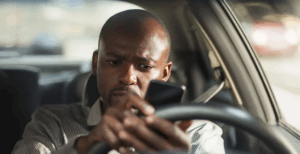
In the age of the smartphone, distracted driving has become one of the most significant threats to roadway safety. Whether it’s texting, talking on the phone, adjusting a GPS, or any other activity that takes a driver’s attention away from the road, the consequences can be deadly.
In Georgia, it is illegal for any driver to have a phone in their hand or to support it with any part of their body while driving. While this law is a step in the right direction, it is ultimately up to individual drivers to make the conscious decision to put their phones away and focus on the task of driving.
Driving under the influence of alcohol or drugs remains a major cause of traffic fatalities and injuries in Georgia and across the country. Impaired driving slows reaction times, impairs judgment, and reduces coordination, making it impossible to operate a vehicle safely. The legal blood alcohol concentration (BAC) limit in Georgia is .08 for most drivers, but even a small amount of alcohol can impair driving ability.
The only safe choice is to never drive after consuming alcohol or any other intoxicating substance. With the availability of ridesharing services and the simple option of designating a sober driver, there is no excuse for getting behind the wheel while impaired.
Speeding is a factor in a significant percentage of fatal accidents in Georgia. Many drivers may not see the harm in driving a few miles per hour over the speed limit, but the reality is that even a small increase in speed can have a big impact on the outcome of a crash.
Higher speeds mean a longer stopping distance, less time to react to unexpected hazards, and more severe impacts in the event of a collision. It is essential for drivers to obey posted speed limits and to reduce their speed in adverse weather conditions or in areas with heavy traffic or pedestrian activity.
Drowsy driving is another significant, yet often overlooked, cause of accidents. When a driver is fatigued, their reaction time and awareness are similar to those of a drunk driver. The Georgia Governor’s Office of Highway Safety has found that a large percentage of drowsy driving accidents occur in the early morning hours, but they can happen at any time of day.
It is crucial for drivers to be well-rested before getting behind the wheel and to take breaks on long trips. If you feel tired, the only safe solution is to pull over and rest.
Even the most careful and conscientious drivers can find themselves involved in an accident. If you are in a collision, it is important to know what to do in the immediate aftermath to protect your safety and your legal rights.
After an accident, you may be facing a host of challenges, from dealing with insurance companies to recovering from your injuries. In this difficult time, it is important to have a strong advocate on your side. An experienced accident attorney can help you in a number of ways.
To make sure you get everything that you need and deserve for your situation, it’s important to work with an experienced accident lawyer.
At T. Madden & Associates, P.C., we have years of experience in helping the people of Atlanta recover the compensation they deserve after being injured.
Contact us today: we serve Atlanta and most major cities and counties of Georgia.

T. Madden & Associates, P.C has an answer for all of your legal questions! We are a Personal Injury firm, so we handle many types of injury cases from auto collisions to wrongful death! If you or someone you know is injured, T. Madden & Associates, P.C. can help.
We are proud to offer free case reviews to anyone who may have questions before getting started. Additionally, if we do take on your case, we promise we won’t charge you a penny unless we recover compensation for your claim.
Please contact our Atlanta attorneys online or by calling 833-PAID-123 to get started today.