

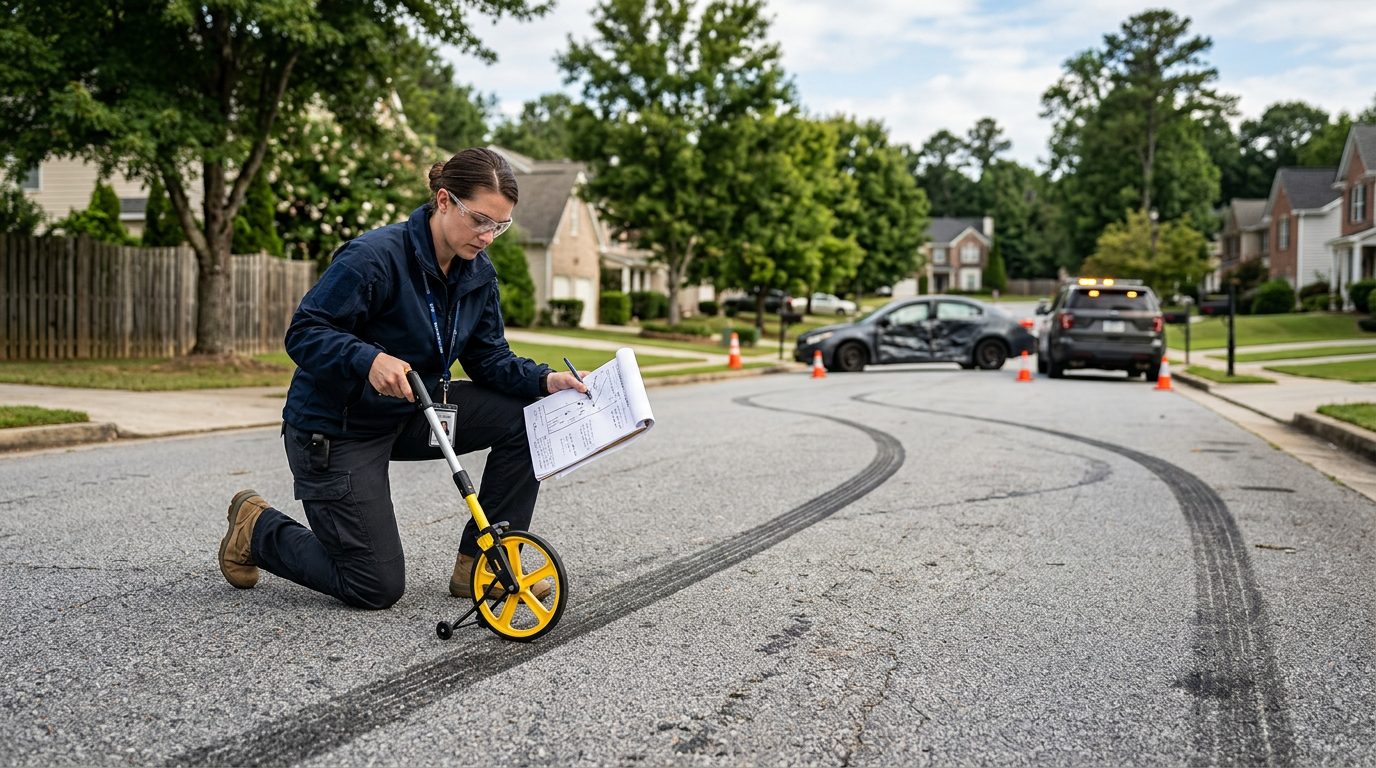
Clayton County Catastrophic Car Accident Guide
Seriously Hurt in a Clayton County Car Crash? Talk to Our Team Today
T. Madden & Associates, P.C. has helped people hurt in Georgia wrecks since 1999. Your first consultation is free, confidential, and without obligation.
About T. Madden & Associates, P.C.
1999
In practice since
5
Offices, including Jonesboro and Atlanta
24/7
Phone line available around the clock
By Terance Madden · Published November 5, 2026
A serious car accident lawsuit in Clayton County is generally filed in a Georgia state trial court. The two courts most often involved are Clayton County Superior Court and State Court. The right choice turns on the facts. This guide explains how that choice works, what Georgia’s filing deadline means, and why timing varies from case to case.
The Short Answer: Where a Serious Car Accident Lawsuit Is Usually Filed
Serious car accident lawsuits are usually filed in a state trial court. In Clayton County, that usually means Superior Court or State Court.
The court you choose changes the steps and the paperwork. It does not change the core claim. Someone was at fault, and you were hurt because of it.
Where a case is filed is a fact-specific question that our team can review with you during a free initial consultation, which is confidential and carries no obligation to continue. A crash in Clayton County does not automatically mean a Clayton County filing. Some crashes involve drivers, companies and insurers from several places.
Before filing, the team reviews your injuries, the damages you claim, and everyone who may share responsibility. Asking the court question early helps avoid delay later.
If a crash has left you in ongoing treatment, unsure which court applies, and watching the calendar, our team can talk those questions through with you in a free, confidential consultation. Talk it through with our team — the first consultation is free, confidential, and carries no obligation.

What Clayton County Superior Court Does in These Cases
Superior Court is a broad trial court. It hears many kinds of civil cases, including serious injury and wrongful death claims.
A case starts when a complaint is filed. The other side then responds. Next comes discovery, when both sides exchange records such as medical charts, police reports and witness information. Many cases settle during or after discovery. Others go to trial.
Catastrophic claims carry more weight. They often involve long medical records, a plan for future care, and doctors who explain the injury to a jury. Georgia limits medical expenses to the reasonable value of medically necessary care (O.C.G.A. § 51-12-1.1).
Fault matters too. Georgia reduces damages by the injured person’s share of fault. Under O.C.G.A. § 51-12-33, a person who is 50 percent or more responsible for the injury cannot receive any damages.
If a crash is fatal, Georgia law lets a surviving spouse recover, or children if there is no surviving spouse. The recovery is the full value of the life of the decedent, as shown by the evidence (O.C.G.A. § 51-4-2).
How State Court and Magistrate Court Differ
State Court is also a trial court in Clayton County. It can hear civil injury claims. The choice between it and Superior Court turns on the case itself.
Magistrate Court is designed for smaller claims. A catastrophic injury claim is generally not filed there.
The law presumes general damages flow from a wrongful act (O.C.G.A. § 51-12-2), so they need no proof of amount. Special damages, such as medical bills and lost wages, must be proved.
Claims with large, complex damages need careful review. That is one reason the court question is looked at case by case.
Venue: Where the Crash Happened Versus Where the Defendant Is
Venue is the county where a lawsuit may be filed. The crash location is one factor, but not the only one.
Companies and individual drivers can be treated differently, so the type of defendant matters.
Truck cases add more layers. A commercial truck crash can involve a driver, a trucking company, a broker and an insurer. Each may have a different location and may share part of the fault.
Georgia also limits when a person can join a motor carrier’s insurer in the same action. Under O.C.G.A. § 40-1-112, joinder is allowed only in narrow situations, such as when a related carrier is insolvent or bankrupt.
Those limits affect how a truck case is set up. That is one more reason to review every party early.
The Two-Year Deadline Under O.C.G.A. § 9-3-33
Georgia generally gives two years to file a personal injury lawsuit. The statute says these actions must be brought within two years after the right of action accrues (O.C.G.A. § 9-3-33).
Two other timing rules matter. Loss of consortium claims have four years under the same section. A criminal case can also pause the clock. Under O.C.G.A. § 9-3-99, the running of the limitation period for a tort claim by the victim of an alleged crime that arises from a crime committed in this state is tolled from the date of the commission of the alleged crime until the prosecution has become final or otherwise terminated, but not for more than six years, except as otherwise provided in Code Section 9-3-33.1.
The clock starts when the right of action accrues. That start date should be checked early. Missing the window can end the claim.
Treatment and insurance talks can take months. It helps to know the deadline before those months pass.
How Long a Catastrophic Car Accident Case Can Take
Timing depends on the court, the number of parties, how long treatment lasts, and whether the case settles before trial.
A catastrophic case usually moves through several stages. Investigation gathers crash reports, photos and witness details. Medical treatment should reach a stable point before anyone can judge long-term costs. Discovery and negotiation follow. If the case does not settle, trial scheduling comes last.
A common mistake is settling before the medical picture is clear. Once a settlement is final, future medical needs may go uncovered.
No timeline can be promised for any particular case.
Not sure what your next step is?
Talk it through with our team — the first consultation is free, confidential, and carries no obligation.

Talk With T. Madden & Associates About Your Clayton County Case
Your first consultation with T. Madden & Associates, P.C. is free, confidential, and carries no obligation to continue.
Is a Clayton County car accident lawsuit filed in Superior Court or State Court?
Serious claims are generally filed in one of these two trial courts. The facts of the case decide which one fits.
How long do I have to sue after a serious car accident in Georgia?
Georgia generally allows two years for personal injury claims under O.C.G.A. § 9-3-33. Loss of consortium claims have four years.
What if I was partly at fault for the crash?
Georgia reduces your damages by your share of fault. You cannot recover if you are 50 percent or more responsible.
The firm handles these cases on a no-fee-unless-we-win basis. The client may still be responsible for court costs and case expenses.
Terance Madden is the responsible lawyer for this page. Attorney Terance Madden, of T. Madden & Associates, P.C., has been in practice since 1999. It has offices in Jonesboro, Atlanta, Decatur, Macon and Augusta.
If a crash has left you in treatment, unsure which court applies, and aware the deadline is running, our team can review those questions with you. Contact the firm using the contact details in the disclaimer below.
Steps to Take After a Serious Car Crash
Get Medical Care
Seek prompt evaluation for every injury, even ones that seem minor at first. Keep copies of all records, bills, and test results.
Record What You Can
Write down the date, time, and location, and note weather, road conditions, and the names of anyone who saw the crash. Photos of vehicles and the scene help.
Be Careful With Insurers
Adjusters may ask for recorded statements soon after a crash. Speak with a lawyer before giving one or signing any document.
Call Our Team
Our lawyers and staff can review the facts of your crash and explain your options during a free, confidential first consultation.
Important: Do Not Wait to Get Advice
Serious injuries can change your life quickly, and evidence from a crash scene can be lost. Talk with our team early so the facts are preserved while you focus on recovery.
Why Clients Turn to T. Madden & Associates, P.C.
Focused Injury Representation
The firm focuses on car and truck wrecks, motorcycle and e-bike crashes, and other serious injury claims for people across Georgia.
Fees Only if There Is a Recovery
You pay no attorney fees unless there is a recovery. You may still be responsible for court costs and case expenses, which we will explain before you decide.
Clear Communication
We explain each step of your case in plain language so you know what to expect.
Compassion for Your Family
We understand that a serious crash affects the whole household, and we treat every client with respect.