

E-bike crashes | Georgia families
Your loved one was hurt on an e-bike. Start writing down what happened today.
A battery, a charger and a crash scene can change within hours. Knowing what to keep and what to photograph now can make the next steps clearer for your family.
T. Madden & Associates, P.C.
1999
Year the firm began practice
5
Offices: Jonesboro, Atlanta, Decatur, Macon and Augusta
Free
First consultation, confidential, with no obligation to continue
By Terance Madden · Published November 21, 2026
If your loved one was hurt in an e-bike crash, you’re probably the one keeping track of everything. So what should you track in Georgia? Keep one running log of medical visits, bills, missed work and daily limits. Keep the e-bike and its battery exactly as they were after the crash. That paperwork is how a claim for damages (money owed for medical bills, lost pay and pain) gets proven later.
Why a Written Log Matters After an E-Bike Crash
A written log turns memory into proof, so start it the first week. O.C.G.A. § 51-12-2 says special damages, like bills and lost wages, must be proved. General damages, like pain, are presumed to flow from the injury.
Memory fades fast after a hospital stay. Set up one binder or one phone folder for everything, even if the injuries look minor.
Log your loved one’s own words too. What they say about pain, sleep and balance belongs in the file, not only what the doctor writes. The person keeping the log often notices change first: the stairs taken one at a time, the nap that stretched into the afternoon. Write it down that day.
If your loved one was hurt in an e-bike crash that someone else caused, you don't have to face the bills and battery paperwork alone, so reach out to our team. Talk it through with our team — the first consultation is free, confidential, and carries no obligation.

Track Every Medical Visit and Treatment Step
Log each medical visit the day it happens: the date, the provider, the reason, the tests ordered and the next appointment.
Keep discharge papers, imaging results, prescription lists and referrals. Together with the provider’s chart, they form the medical record, the written history of your loved one’s care.
Write down new symptoms, sleep trouble and changes in mobility the day they start. A dated note is far easier to prove than a memory from months later.
Getting copies takes the right paperwork. Under O.C.G.A. § 31-33-2, a patient can request a full copy in writing. So can a person named in an advance directive or a durable power of attorney for health care (a document naming someone to make health decisions). If the patient has died, the estate’s executor, administrator, or temporary administrator may ask, if one has been appointed. Without one, the surviving spouse may ask, then a child, then a parent.
The provider must furnish the record within 30 days of receiving the request. The request must include a HIPAA authorization (the federal health privacy form) and a signed written authorization. Check whose name is on the papers first.
Keep Every Bill, Receipt and Out-of-Pocket Cost
Georgia limits medical costs to what is reasonable and medically necessary, so keep every bill and statement. Under O.C.G.A. § 51-12-1.1, the trier of fact (the judge or jury) decides that reasonable value.
If your loved one has health insurance, the record must show both the amount charged and the amount needed to satisfy the charge under the insurance contract. Save every explanation of benefits (EOB), the statement that shows what the plan paid.
Watch for a letter of protection (a promise by a provider to wait for payment from a settlement or judgment). Keep the letter, the itemized charges and any record of who made the referral.
If your loved one has Medicare, track those claims too. CMS secondary payer rules say Medicare pays second when a liability insurer should pay first. Medicare may also pay bills it expects to be repaid from a settlement. Federal law takes precedence over state laws and private contracts.
Track mileage, rides to appointments, home equipment and paid help. O.C.G.A. § 51-12-7 says necessary expenses from an injury are a legitimate item in the damages estimate.
Log Missed Work, Daily Limits and Everyday Help
Record every day of missed work and every limit the injury puts on daily life.
Keep pay stubs from before and after the crash. Save any letter from the employer about leave or reduced hours. Note each date missed.
Describe limits in plain terms. Write what your loved one can’t lift, climb, drive or cook, and what they can’t do with a grandchild or at a family dinner. Note how long each limit lasts.
Track your own hours too. Every week you drive, cook, lift or sit up at night is help the injury made necessary, and it belongs in the log.
When the entire injury is to a person’s peace, happiness or feelings, Georgia law says no measure can be set except “the enlightened consciences of impartial jurors” (O.C.G.A. § 51-12-6). Specific entries give jurors something real to weigh.
Give your loved one a voice in the log. Their words about a good day and a bad day belong in the record. Keep the tone steady, and write what happened, what it cost and how long it lasted.
Protect the E-Bike, the Battery and the Crash Scene
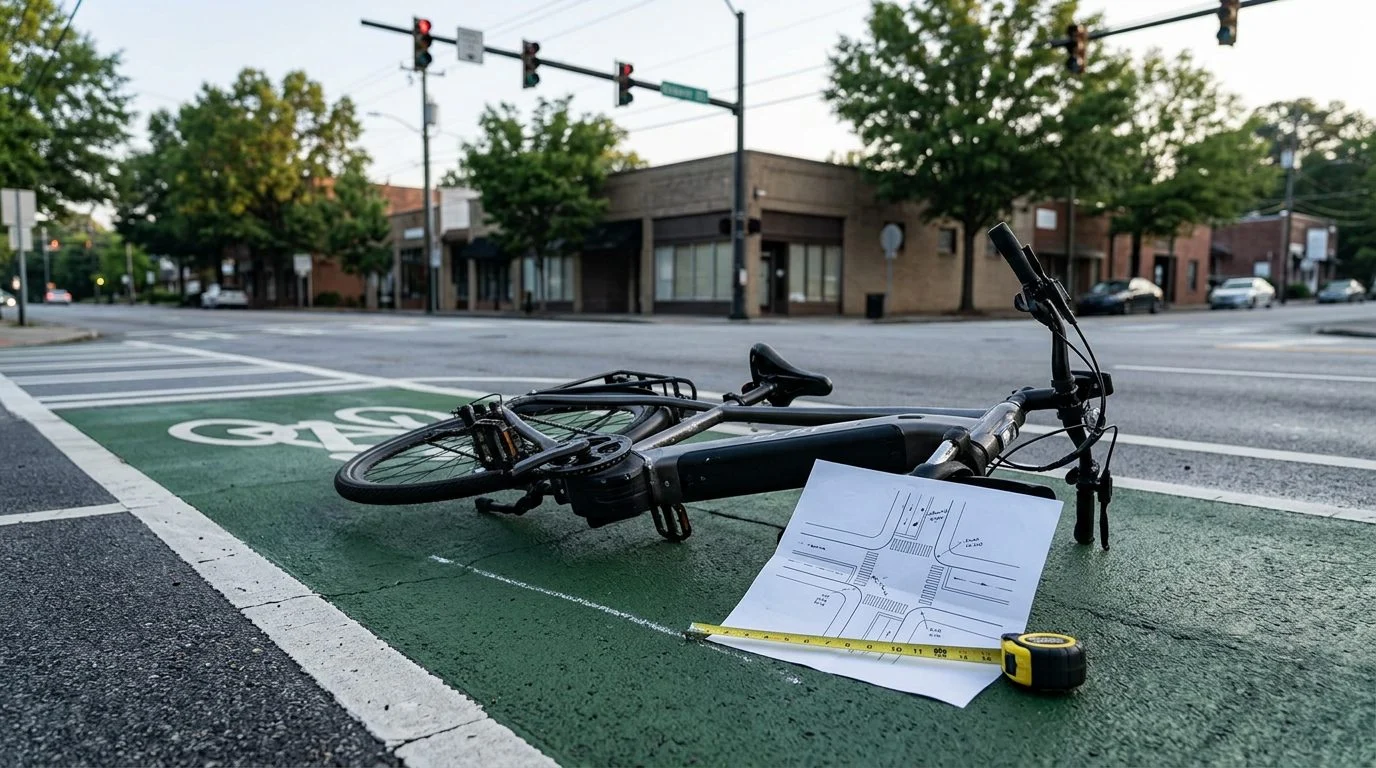
Keep the e-bike, battery, charger and clothing as they were, because they are evidence.
Don’t repair, sell or throw away the bike or battery. Don’t charge or open a battery that smoked, swelled or got hot. Keep the helmet and clothing worn during the crash.
Take dated photos of the bike, battery, frame, brakes, wiring and the scene from several angles. Get the crash report number from the investigating agency. Write down witnesses’ names and phone numbers while memory is fresh.
Georgia also compares fault. Under O.C.G.A. § 51-12-33, damages drop by the injured person’s share of fault. Someone 50 percent or more responsible may not recover any damages. Lighting, speed and gear can shift that share.
Attorney Terance Madden holds a B.S. in Electrical Engineering, so he reads a battery fire the way an engineer would. He asks which cells failed, how the charging circuit behaved, whether the certification marks hold up, and where the fire started. A battery or charger can carry proof of a defect, but only if someone saved it. Other parties, like a maker, seller or repair shop, may share responsibility, which can mean more insurance to pursue.
Handling Insurance Calls and Keeping the Family Informed
Big Insurance is not on your loved one’s side, and its first offer is rarely what the claim is worth.
Big Insurance adjusters often open with a low number. They may ask for a recorded statement (an audio-recorded interview) early. They may delay payment, dispute whether treatment was needed, or call the crash “low impact” to argue no real harm was done.
Before anyone gives a recorded statement or signs a broad medical release, talk with a lawyer.
The response is to pursue every coverage layer that may apply. That includes the at-fault party’s liability coverage, uninsured and underinsured motorist coverage (protection when the other driver has too little or no insurance), umbrella and excess policies, and corporate coverage. Georgia law requires auto liability policies to include uninsured motorist coverage, and the insured may choose those limits, including limits lower than the policy’s liability limits (O.C.G.A. § 33-7-11).
Some injuries bring costs that last for years, including ongoing medical care and lost income. Under Georgia law, actions for injuries to the person generally must be brought within two years after the right of action accrues, meaning when the right to sue begins, unless another provision in the article sets a different rule; injuries to reputation must be brought within one year, and actions for injuries to the person involving loss of consortium within four years (O.C.G.A. § 9-3-33).
If your loved one was hurt in an e-bike crash that someone else caused, you don’t have to sort through the bills and battery paperwork alone. Contact T. Madden & Associates, P.C. for a free, confidential first consultation, with no obligation to continue.
Not sure what your next step is?
Talk it through with our team — the first consultation is free, confidential, and carries no obligation.

Frequently Asked Questions
What should the family track first after an e-bike crash in Georgia?
Write down the date, time, and location, and the names of anyone who saw the crash. Photograph the bike, the battery, the charger, the scene, and your loved one’s injuries before anything is moved or repaired.
Why do the battery and charger matter in an e-bike crash?
Batteries and chargers can be defective, damaged, or off-brand, and those problems can cause a crash or a fire. Keep the battery, charger, and any packaging, and do not charge or repair them. Terance Madden trained as an electrical engineer before law school, so he looks at what the battery and charger show about how the crash happened.
How long does a family have to file a claim after a fatal e-bike crash in Georgia?
A wrongful death lawsuit is brought by the family after a loved one dies. The firm offers a free first consultation, which is confidential and comes with no obligation to continue.
What should the family do if an insurance company calls asking for a recorded statement?
Do not give a recorded statement or sign any papers until you have talked with a lawyer. Big Insurance often asks for early statements and opens with a low offer, and a first offer is rarely what a claim is worth.