

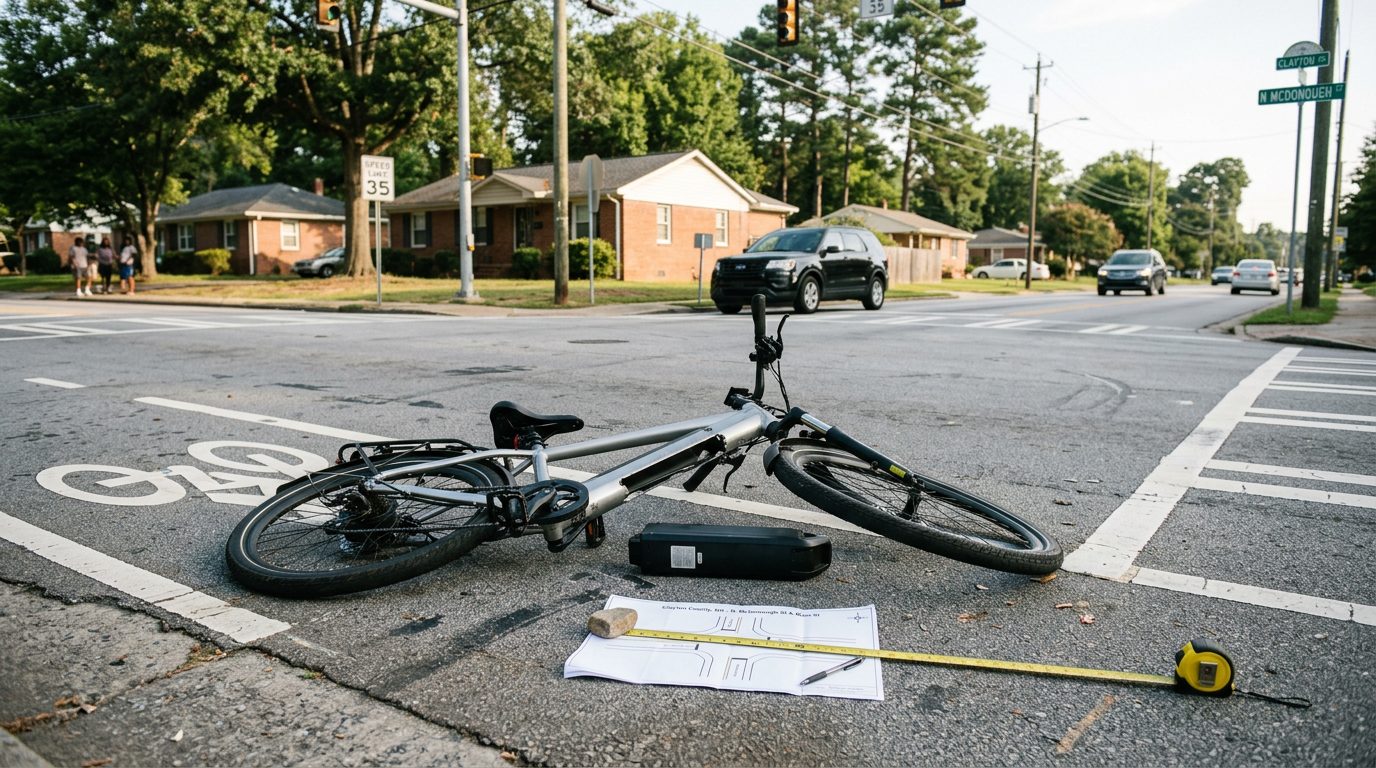
E-Bike Product Liability · Georgia
Hurt When Your E-Bike Frame or Fork Failed? Talk to a Georgia Lawyer Today.
A cracked frame or a snapped fork can throw a rider with no warning. The parts, the paperwork, and the maker's role all matter, and the firm can help sort them out.
About T. Madden & Associates, P.C.
1999
Years in practice
5
Georgia offices
24/7
Call availability
By Terance Madden · Published November 18, 2026
Your e-bike frame cracked, or your front fork snapped, and now you’re hurt. Maybe you’re the rider. Maybe you’re the spouse, parent or adult daughter handling the calls and the bills.
A defect that caused the failure can make more than the rider responsible. The maker, the seller and others in the chain of sale may answer for it. A defective e-bike frame lawyer in Georgia can trace who made, imported and sold the bike, then look at every insurance layer that may apply.
What a Defective E-Bike Frame or Fork Claim Is
A defective e-bike frame or fork claim says the part was not safe for normal use when it left the maker’s hands, and that defect caused the injury. Lawyers call this a product liability claim (a claim that a product’s defect caused harm).
The frame is the main body of the bike. The fork is the front assembly that holds the wheel and connects to the steering. When either one fails, the rider can lose control at speed. A cracked weld, metal worn down by repeated stress, or a fork crown (the piece where the fork meets the steering tube) that separates can throw a rider over the handlebars.
A defect is not the same as wear, neglect or misuse. A worn part or a skipped maintenance step points somewhere else. The facts decide which one it is, so the firm looks at the part before drawing any conclusion.
This claim is for riders hurt when a frame or fork broke, bent or separated, and for the families who carry the recovery afterward.
If a frame or fork failed under you or someone you love, our team can talk through the facts with you and help you see who may be responsible. Talk it through with our team — the first consultation is free, confidential, and carries no obligation.
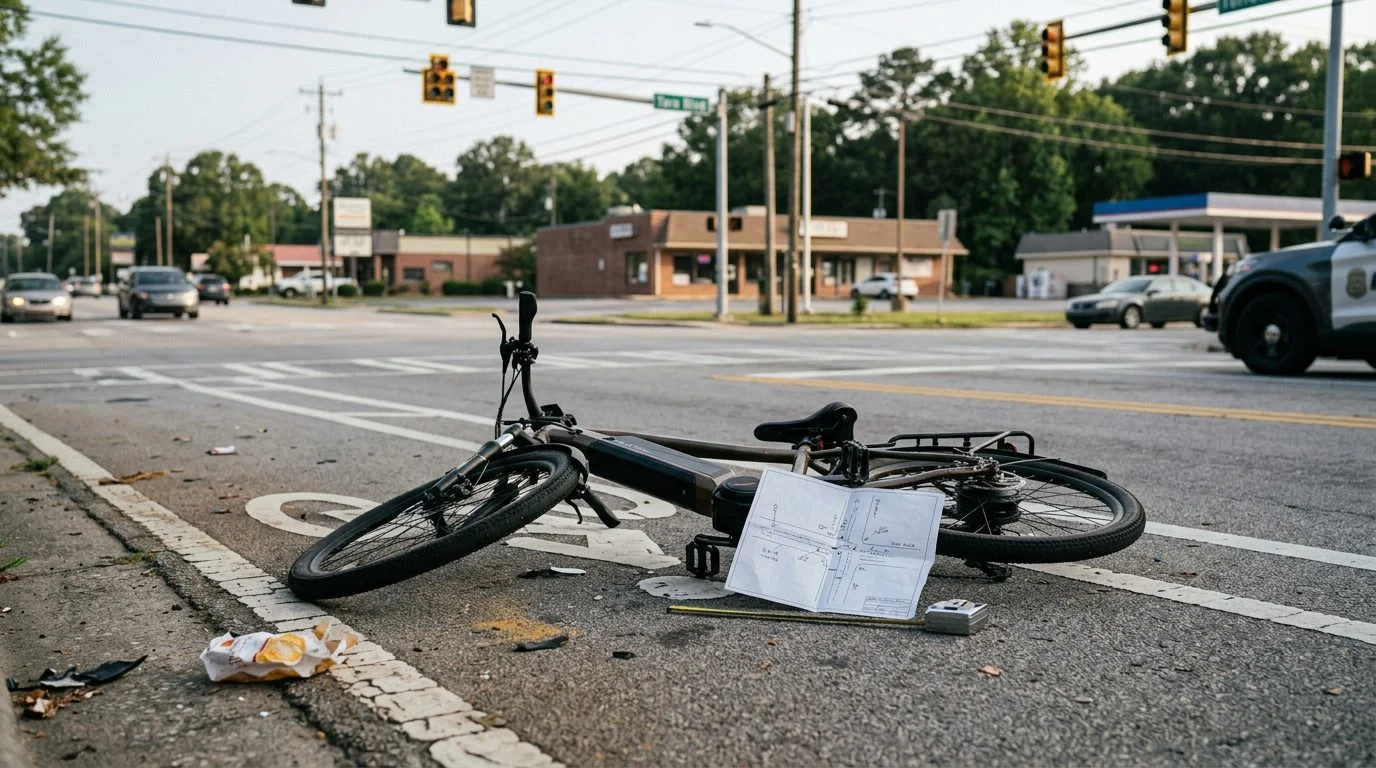
Who Can Be Held Responsible
More than the rider can be responsible. The list can include the manufacturer, the brand that sold the bike, the importer and the parts makers. Each one gets examined, not assumed.
Georgia’s product liability statute says a manufacturer of personal property sold as new can be liable to an injured person. That applies when the product was not reasonably suited to its intended use and that condition caused the injury (Georgia product liability statute).
Sellers are treated differently. A product seller is not treated as a manufacturer for strict liability (liability without proof of carelessness) under the same statute. In the Alltrade v. McDonald decision, the court held that a company that only put its own name on a product, with no input into its design or making, was a product seller, not a manufacturer.
A defective e-bike frame lawyer in Georgia looks at the chain of sale first (the path the bike took from maker to rider). Who made the frame? Who imported it? Who sold it and put a brand on it? Listing pages, receipts, serial numbers and messages with the seller help answer those questions.
Georgia also implies a warranty that goods sold by a merchant are fit for their ordinary use (Georgia sales warranty statute).
Fault works differently. The trier of fact (the jury or judge deciding the case) weighs the fault of everyone who contributed to the injury, even people never sued (Georgia fault apportionment statute). If the rider is 50 percent or more responsible, the rider recovers nothing. Otherwise, damages drop by the rider’s share. More parties can also mean more insurance to pursue.
How the Firm Reads a Failed Frame or Fork
The firm starts by asking what the failed part shows and how the crash happened.
Terance Madden trained as an electrical engineer before he went to law school. Before law school, he trained as an electrical engineer. So he approaches a case by asking what the evidence shows, how the failure happened, and which records must be kept.
A broken part tells a story. A fatigue crack (a crack that grows slowly from repeated stress) leaves a worn, smooth area on the break. A sudden overload looks different. Reading the fracture surface, the weld and the path of the load helps show whether the part failed on its own. Crash physics adds more. Speed, rider weight and the moment of failure show how much force the bike was carrying when the part gave way.
The first days matter most. People often repair the bike, throw away the broken piece, or delete messages with the seller. Keep these:
- The bike and every broken piece, unrepaired
- Photos from every angle, plus the scene
- Receipts, listing pages and serial numbers
- Every message with the seller or store
How the Claim Works, Step by Step
A frame or fork claim moves through five steps, and a lawsuit is only one of them.
- Free first consultation. The first consultation is free and confidential, with no obligation to continue.
- Evidence hold. The firm asks that the broken part be kept so it can be examined.
- Every responsible party. The firm names each maker, seller and parts maker, plus each insurance layer that may apply.
- The full damages picture. Medical bills, future care, lost income, pain and lifetime impact all count. If Medicare paid for treatment, the rules change. If you are entitled to Medicare and were in a crash where no-fault or liability insurance is involved, that insurance pays first for crash-related health care services (CMS Medicare payer overview). Medicare may also make a conditional payment (money it expects to be repaid from a settlement).
- Demand, negotiation, and suit if needed. Claims can take months or longer, and the facts set the timeline.
Georgia generally gives two years to bring an injury lawsuit (Georgia injury deadline statute). The statute has exceptions, so don’t count on the full two years. Some product claims also face a ten-year limit from the first sale for use (Georgia product liability statute). Georgia’s Supreme Court has said failure-to-warn claims sit outside that limit, in Chrysler Corp. v. Batten. A bike’s age alone doesn’t decide every claim.
How Big Insurance Handles a Frame or Fork Claim
Big Insurance is not on the injured rider’s side, and its first offer is rarely what a claim is worth.
Expect a quick, low offer before anyone knows the full injury. Expect a request for a recorded statement, often early, while the rider is still healing. Expect the argument that the bike was modified, that the rider was going too fast, or that the break was normal wear. Expect disputes over bills and treatment, and long delays while the broken part sits in storage.
The response is to pursue every coverage layer. That includes liability policies, umbrella and excess coverage (extra layers above a main policy), corporate coverage, and, where it applies, underinsured motorist coverage (the rider’s own coverage for a at-fault party with too little insurance). The firm prepares each case as if it will go to trial.
Georgia treats some losses as presumed to flow from the wrong. Others, such as actual bills, must be proved (Georgia damages definitions statute). Medical expenses are limited to the reasonable value of medically necessary care (Georgia medical expense statute). Future care and lost earning ability belong in the number, not just the bills already paid.
How Fees and Costs Work
The firm works on a no-fee-unless-we-win basis. The client may still be responsible for court costs and case expenses.
The first consultation is free, confidential, and comes with no obligation to continue. Before you decide whether to continue, the firm will explain which costs may apply.
T. Madden & Associates, P.C. has practiced since 1999, with offices in Jonesboro, Atlanta, Decatur, Macon and Augusta. The Terance Madden Foundation also supports community work.
Not sure what your next step is?
Talk it through with our team — the first consultation is free, confidential, and carries no obligation.
Frequently Asked Questions
Can I sue the rider who hit me, or the seller of the bike?
A defect claim can run against the maker and the seller. Whether anyone else is at fault depends on the facts.
What does the first consultation cost?
Nothing. It is free, confidential, and comes with no obligation to continue.
Does my car insurance cover an e-bike crash?
Coverage turns on the wording of each policy. The firm reviews each coverage layer that may apply, including the rider’s own policies.
What should I do right now if the frame or fork broke?
Keep the broken parts unrepaired, take photos, and write down the timeline. Save receipts and messages, and talk with the firm before giving any recorded statement.
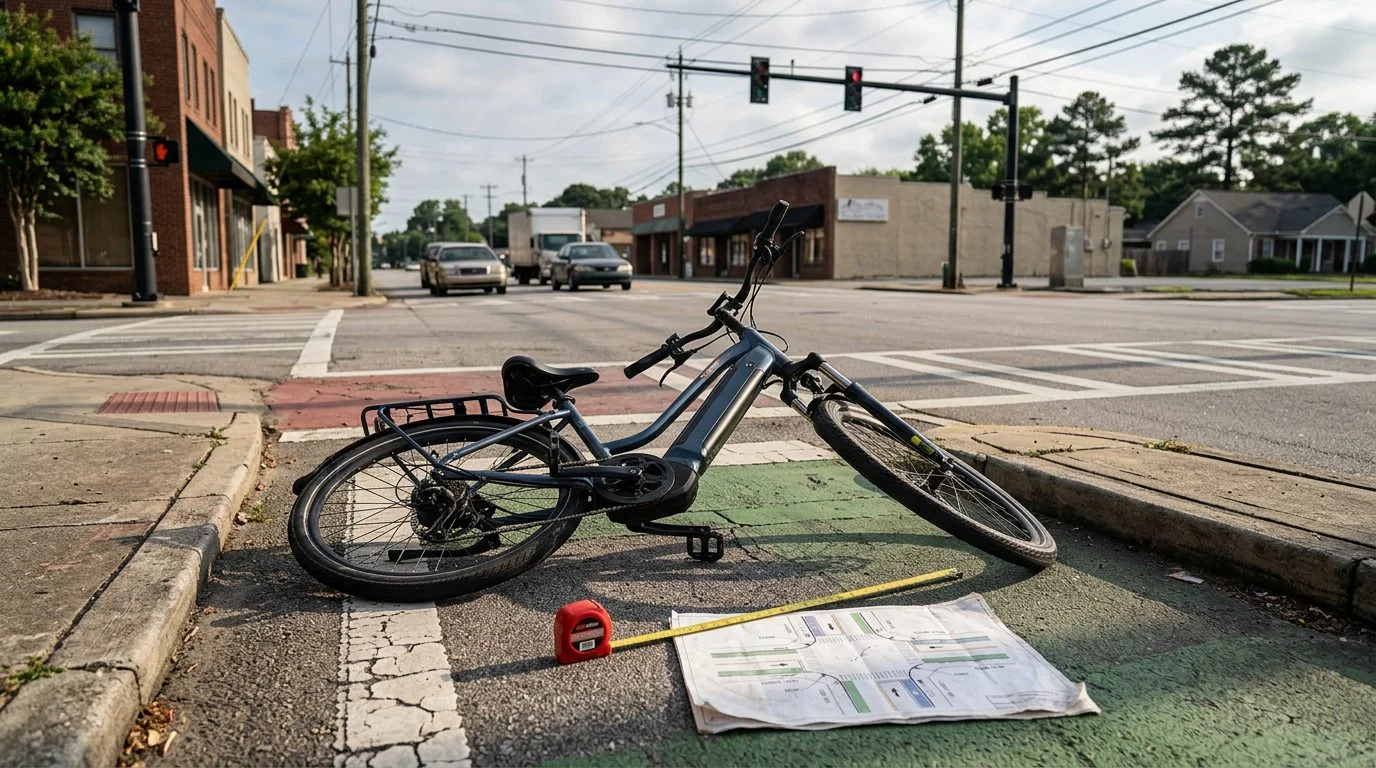
If Your Bike Failed Under You
The first step is to keep the bike and the broken part. The next step is to talk the situation through.
Maybe you’re still hurting. Maybe you’re the one answering the phone, lining up appointments and reading bills for someone you love. Either way, a decision landed on you that you didn’t pick. A frame or fork failure can change the next year, and you shouldn’t have to sort out the product, insurance and medical questions alone.
Our team is available 24/7. Start a free case evaluation when you’re ready to walk through what happened.