

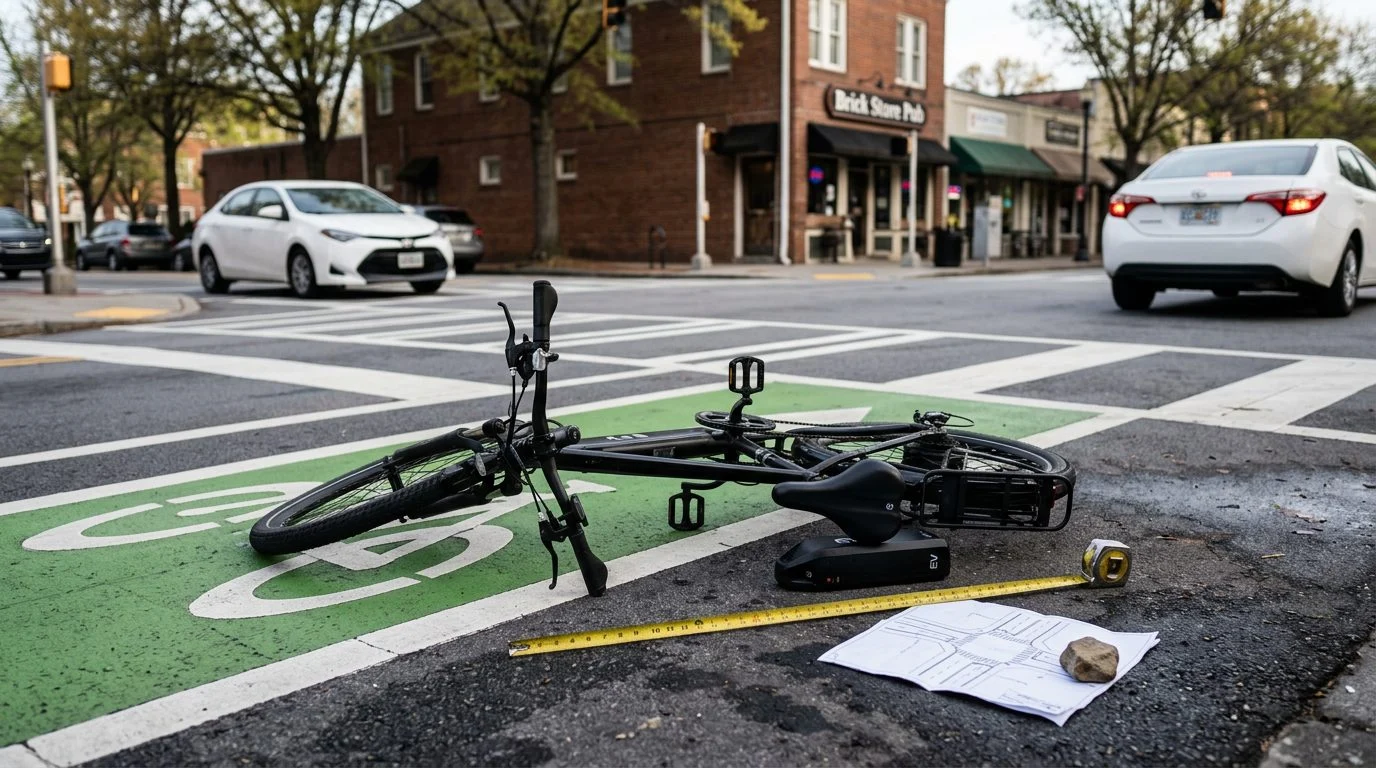
E-Bike Crashes · Georgia
Hurt on an E-Bike Without a Helmet? Know the Facts First
Here is how a missing helmet fits into an injury claim, what the other side may argue, and what to gather now.
T. Madden & Associates, P.C.
1999
In practice since
5
Georgia offices: Jonesboro, Atlanta, Decatur, Macon and Augusta
By Terance Madden · Published November 15, 2026
Your loved one was hurt on an e-bike, and now someone keeps asking about the helmet. Does not wearing a helmet hurt an e-bike claim in Georgia? Not automatically. A helmet is a fact an insurer may raise, but it does not decide who caused the crash or which injuries followed.
Skipping a Helmet Does Not Automatically End Your Claim
Big Insurance may still use it, so you need to know how.
Two questions do most of the work. The first is who caused the crash. The second is which injuries the crash actually caused. A helmet question touches the second one, and it rarely settles the first.
The outcome depends on the facts of your crash. This page walks through each question in plain words, so you can see where the helmet fits and where it doesn’t.
If someone you love was hurt in an e-bike crash and the helmet question is already on the table, you don't have to sort it out alone. Call T. Madden & Associates, P.C. to talk it through. Talk it through with our team — the first consultation is free, confidential, and carries no obligation.
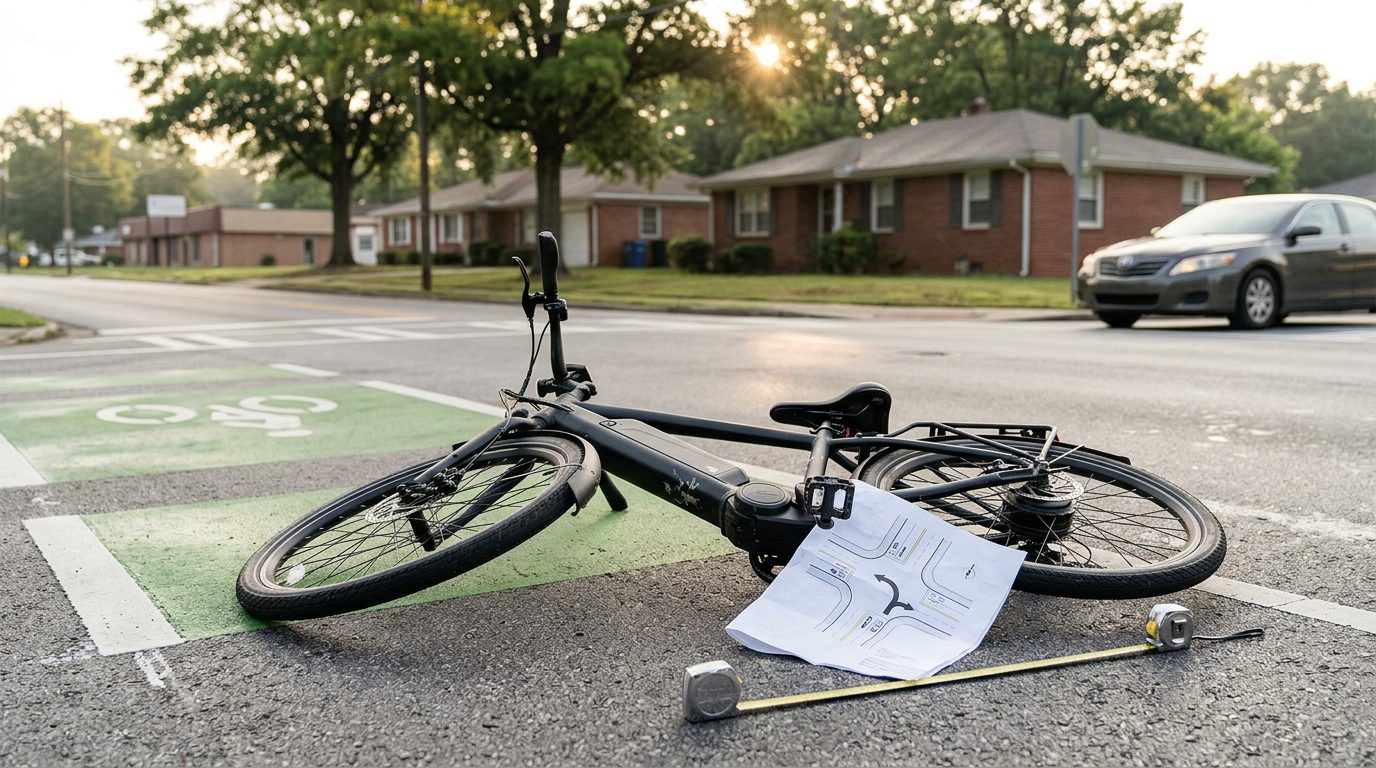
Helmet Rules and Injury Claims Are Separate Questions
A helmet rule is a traffic question. An injury claim is a liability question.
Liability means legal responsibility for harm. In a crash, it asks who acted carelessly and whether that carelessness caused the injury.
Georgia’s motorcycle headgear statute requires riders to wear protective headgear that meets state standards (O.C.G.A. § 40-6-315). That law speaks to motorcycle riders. An e-bike is a different vehicle, so whether a helmet rule applied to your bike is its own check. That check does not decide who caused the crash.
Most e-bike crashes start with a driver. A driver turns across a bike lane, pulls out from a driveway or opens a door without looking. Those are reckless choices and system failures. They are the core of the liability question, and a helmet does not change them.
How Georgia’s Fault Rules Work in an E-Bike Crash
Georgia reduces your damages by your share of fault. If you are 50 percent or more at fault, you recover nothing (O.C.G.A. § 51-12-33; Quynn v. Hulsey (2020)).
Lawyers call this comparative negligence (shared fault) (O.C.G.A. § 51-12-33; Quynn v. Hulsey (2020)). The jury assigns a percentage of fault to each person who contributed to the harm. Your award drops by your own percentage.
The judge reduces the damages “in proportion to his or her percentage of fault,” and a plaintiff who is “50 percent or more responsible” receives no damages (O.C.G.A. § 51-12-33). Under 50 percent, you still recover, reduced by your share.
The statute also says the jury considers the fault of everyone who contributed to the injury. That includes people who were not named in the suit, but a nonparty’s fault is considered only if the plaintiff settled with that nonparty or a defending party gave notice not later than 120 days prior to the date of trial that the nonparty was wholly or partially at fault. Damages are apportioned among the liable parties by each one’s percentage of fault, and each is liable only for its own share, not jointly, with no right of contribution.
Not wearing a helmet is a different question from causing the crash. Many helmet arguments aim at how serious the injuries are, not at who was at fault.
Causation: Which Injuries Would a Helmet Have Changed?
Causation is the link between what happened and the harm you now have. A helmet can matter for some injuries and not for others.
Head injuries are the ones a helmet may affect. Broken bones, road rash, spinal injuries and internal injuries are often not addressed by a helmet at all. Each injury needs its own answer.
Before law school, Terance Madden trained as an electrical engineer. He starts a case by asking what the evidence shows and how the crash happened. For an e-bike crash, that means looking at the scene, the bike, the speeds, the impact points and any video or phone records that exist. It also means making sure those records are preserved before they disappear.
Impact physics can help separate the force of the crash from the force of a head strike. That question gets answered with evidence, not assumptions. The Insurance Institute for Highway Safety publishes crash data on helmet use, which helps explain the research behind these questions, though it does not replace your own medical records.
Medical records and treating doctors’ notes are the starting point. They tie each injury to the crash, not to a helmet choice.
How Big Insurance Uses the Helmet Argument
Big Insurance uses the helmet question to lower what it pays. It is not on the injured person’s side.
The tactics are familiar. An early, low offer arrives before the medical picture is clear. A recorded statement asks questions about the helmet, the speed and the route. A “low impact” argument claims the crash was too minor to cause real harm. Treatment gets disputed, and payments slow down while the family waits.
Here is the plain truth. An insurer’s first offer is rarely what a claim is worth. Do not accept it because it arrives fast or sounds final.
The response starts with every layer of coverage. That can include the at-fault driver’s liability coverage, your own uninsured or underinsured motorist coverage where it applies (O.C.G.A. § 33-7-11 requires that such coverage be included in auto policies unless a named insured rejects it in writing; the required coverage excludes umbrella or excess policies unless they affirmatively provide it or an endorsement does), umbrella or excess coverage, and corporate coverage when a business is responsible.
Other liable parties matter too. A battery, brake or tire maker, or a repair or maintenance vendor, may share responsibility. For product liability actions based on strict liability in tort, Georgia treats a product seller as not a manufacturer and not liable as one (O.C.G.A. § 51-1-11.1). That can mean more insurance, not less.
The claim is valued on lifetime damages, including future care and lost earning ability. Terance Madden has been in practice since 1999.
Medical Bills and Lost Pay Still Count
The helmet argument can reach medical bills and lost pay too. Track both from the first day.
Georgia limits medical expenses to the reasonable value of medically necessary care (O.C.G.A. § 51-12-1.1). That makes the itemized bill, the records and the reason for each treatment important. Keep every statement and explanation of benefits.
Medical payments coverage can pay some bills while a claim is pending. The policy wording controls what it covers, so read it closely and save a copy.
Lost wages are one of the losses an injured person may seek to recover after a crash. Keep pay stubs, schedules, time-off records and a letter from the employer that states the days missed and the reason. Every missed shift counts, even the short ones.
Not sure what your next step is?
Talk it through with our team — the first consultation is free, confidential, and carries no obligation.
What the Person Managing the Recovery Should Do Now
If you are the spouse, parent or adult daughter handling calls and paperwork, you are carrying a lot. Start with a folder, a log and one clear rule: no recorded statement until you have talked with a lawyer.
Keep the helmet, the bike, the battery and any damaged parts. Do not repair, sell or throw them away without a plan for the evidence. A part that looks like scrap may be the proof.
Keep a simple daily log. Write down pain, sleep, appointments, medicine and what your loved one can and cannot do. These notes show the full cost of the injury over time, not just the day of the crash.
Mind the deadline. Georgia generally requires a lawsuit for injuries to the person to be filed within two years after the right of action accrues; claims for injuries to the reputation must be brought within one year, and actions for injuries to the person involving loss of consortium have four years (O.C.G.A. § 9-3-33). Waiting does not help the case.
Talk Through Your Situation With the Firm
If your loved one is recovering from an e-bike crash and an insurer has raised the helmet question, you are probably tired and worried. You may be wondering whether the claim is still worth pursuing.
Talk it through with T. Madden & Associates, P.C. We can review the crash, the helmet question and the coverage that may apply. You can start a free case evaluation here.
The first consultation is free, confidential and comes with no obligation to continue. The firm answers calls 24/7.
Terance Madden is the responsible lawyer. The firm has offices in Jonesboro, Atlanta, Decatur, Macon and Augusta.
Frequently Asked Questions
Does not wearing a helmet on an e-bike mean I can’t file a claim in Georgia?
No. Not wearing a helmet does not automatically block a claim in Georgia. The key questions are who caused the crash and whether the crash caused your injuries.
Can the other side blame my injuries on not wearing a helmet?
They can try. Under Georgia’s comparative fault law, if a court or jury assigns part of the blame to the rider, the award is reduced by that percentage, and a rider found 50 percent or more at fault cannot recover. That is why the crash evidence and medical records matter so much.
Does Georgia require adults to wear helmets on e-bikes?
Whether a helmet was legally required for your ride depends on the type of vehicle, your age and current Georgia law.
What should I do if I was hurt on an e-bike and was not wearing a helmet?
Get medical care right away and keep records of the crash, your injuries and your e-bike. Talk to T. Madden & Associates, P.C. before giving a recorded statement to any insurer; the first consultation is free, confidential and carries no obligation to continue.