

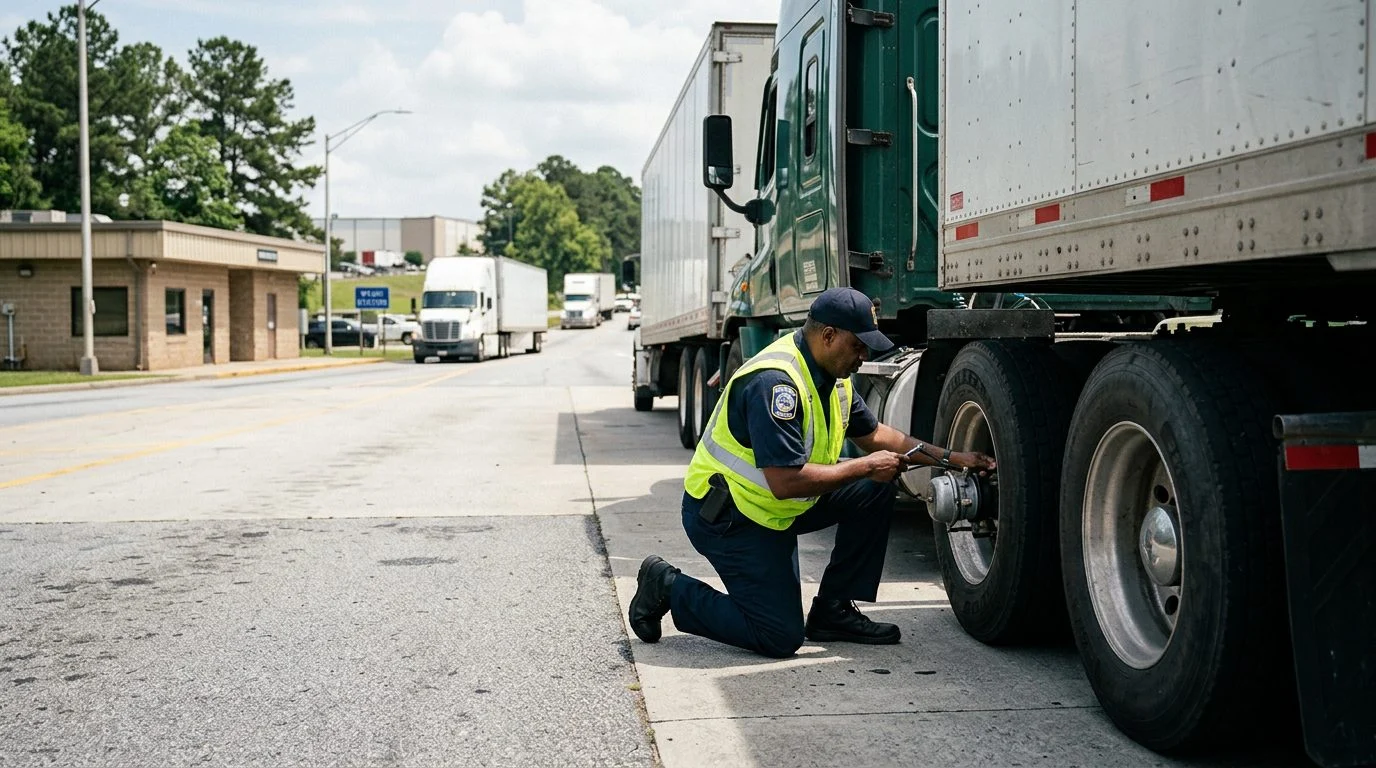
Clayton County truck crashes
Hurt in a truck crash? The driver may not be the only one responsible.
Carriers, cargo loaders, repair shops and parts makers can each play a part. Here is how the firm looks at who else may be involved.
T. Madden & Associates, P.C.
1999
Serving injured Georgians since
24/7
Call us any time
5
Georgia offices, including Jonesboro
By Terance Madden · Published November 18, 2026
So who else is liable in a truck crash in Clayton County? The trucking company, a repair shop, a parts maker or the company that loaded the cargo can each share responsibility for the harm a crash causes.
Your family’s crash may involve more than one responsible party. The driver is one of them, and Georgia law can reach several others. This page explains who they are, how fault gets divided, and why it matters for your family’s claim.
Why the Driver Is Rarely the Only Name on the Claim
The driver is rarely the only name on a truck crash claim, because several parties can contribute to the same wreck. In legal terms, “liable” means legally answerable for harm a person or company caused. If a careless choice helped cause your injury, that party may owe you money.
Georgia law looks at everyone involved. Under O.C.G.A. § 51-12-33, the jury must weigh the fault of every person or entity that contributed to the injury.
Clayton County families have a local place to start. T. Madden & Associates, P.C. serves Clayton County from its Jonesboro office. This page covers each possible party, how fault is split, and where the insurance comes from. It is general information, so the facts of your crash will shape the answer.
If a truck crash in Clayton County left you hurt, or left someone you love hurt, more than one party may owe you. Reach out, and we'll walk through who may share responsibility. Talk it through with our team — the first consultation is free, confidential, and carries no obligation.
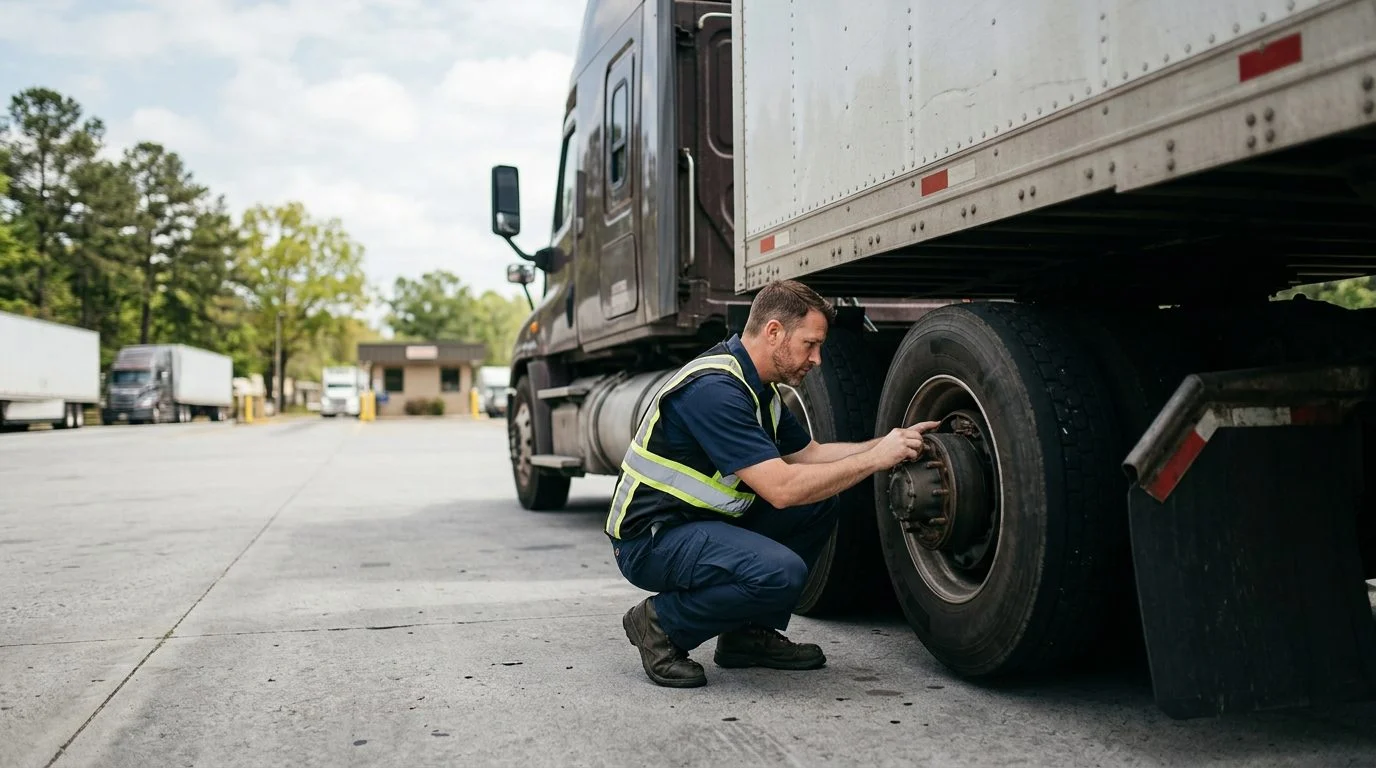
When the Trucking Company Answers for Its Driver
Yes, a trucking company can answer for its driver’s careless driving when the driver was working for it. The Georgia Supreme Court explains in Quynn v. Hulsey, 310 Ga. 473 (2020) that claims for negligent hiring, training, supervision, and retention are based on the alleged negligent acts of the employer.
Georgia’s rule is in O.C.G.A. § 51-2-2. It says every person is liable for torts committed by a servant “in the prosecution and within the scope of his business.” Scope of employment is the key test. Was the driver doing the company’s work? Was he on the company’s route, on the company’s clock, hauling the company’s load?
Those questions matter. A driver on a personal errand may put the company in a different position. Dispatch records, electronic logs and delivery paperwork often help answer them.
Owners are a separate question. Federal law, 49 U.S.C. § 30106, says a vehicle owner that rents or leases the truck is not liable just for owning it. That protection applies when the owner is in the renting or leasing business, has no negligence or criminal wrongdoing of its own, and the harm arises during the period of the rental or lease.
The Negligent Five: The Company’s Own Mistakes
A trucking company can be at fault for its own decisions, apart from what the driver did. The firm calls these five points The Negligent Five.
Hiring. Did the company check the driver’s background before putting him on the road? Georgia requires an employer to use ordinary care in selecting employees, under O.C.G.A. § 34-7-20.
Training. Did the company train the driver on the rules and equipment the job requires?
Entrustment. Did the company hand over a truck while knowing the driver was incompetent or habitually reckless? Those claims focus on the employer’s own alleged negligent acts in hiring, training, supervising, and retaining the worker, as Quynn v. Hulsey, 310 Ga. 473 (2020) explains.
Retention. Did the company keep a driver after warning signs like repeated crashes or violations? Under Munroe v. Universal Health Services, an employer must use ordinary care not to keep an employee it knew or should have known posed a risk of harm.
Supervision. Did the company track hours, logs and driving conduct, or ignore red flags?
In Quynn v. Hulsey, the Georgia Supreme Court treated these claims as the employer’s own negligence. Under Quynn v. Hulsey, 310 Ga. 473 (2020), the company’s own alleged negligent acts are what the claim against it is based on.
Other Parties That Can Share the Blame
Maintenance shops, parts makers and cargo loaders can each share fault when their work or product played a role. The key question is what that party did, or failed to do, and whether it contributed to the crash.
Maintenance. Federal rules require a motor carrier to inspect, repair and maintain its trucks so parts stay “in safe and proper operating condition at all times” (49 C.F.R. § 396.3). If brakes, steering, tires or suspension failed after shoddy work, the vendor that did that work may be another party to examine.
Cargo. Cargo must be “firmly immobilized or secured” on the truck, except bulk commodities that lack structure or fixed shape, such as liquids and gases carried in a tank or hopper (49 C.F.R. § 393.106). 49 C.F.R. § 393.106 reads: “The rules in this section are applicable to the transportation of all types of articles of cargo, except commodities in bulk that lack structure or fixed shape (e.g., liquids, gases, grain, liquid concrete, sand, gravel, aggregates) and are transported in a tank, hopper, box, or similar device that forms part of the structure of a commercial motor vehicle.” A load that shifts can cause a loss of control. The loader or shipper who secured it may share fault.
Parts and products. Georgia’s product liability statute, O.C.G.A. § 51-1-11.1, treats a product seller differently from a manufacturer in certain claims. Who designed, made and sold a defective part matters.
Each added party may carry its own insurance. That is why identifying them early matters.
What the Truck’s Black Box, ECM and Driver Logs Show
Truck data can show how fast the truck was moving, when the brakes were used and how long the driver had been working. The engine control module (ECM) is the truck’s main computer. An event data recorder, often called a black box, saves data around a sudden stop or impact.
Driver logs, called records of duty status, show when the driver was driving, resting or on duty. Federal rules require a carrier to keep these records and supporting documents for at least six months from the date of receipt (49 C.F.R. § 395.8).
Before law school, Terance Madden trained as an electrical engineer. He trained as an electrical engineer before he became a lawyer. He reads truck data the way an engineer reads a signal. He asks what the data shows, when it was recorded and what it cannot show. That helps him decide which records to request first.
Data only helps if it survives. The firm works to identify and preserve truck data early, because companies do not always keep everything. The data also does not answer every question. It has to be read next to the police report, maintenance records and the hiring file.
How Georgia Splits Fault Among Several Parties
Georgia reduces an award by the injured person’s share of fault, then divides the rest among the liable parties. Under the apportionment statute, the jury assigns a percentage of fault to each party, including the injured person.
Under subsection (g) of that statute, a plaintiff who is 50 percent or more responsible for the injury may not receive any damages (O.C.G.A. § 51-12-33; Quynn v. Hulsey (2020)).
Each liable party’s share is its own. Under subsection (b), damages apportioned to a party are that party’s own liability. They are not joint liability, and they are not subject to contribution among the parties.
Every party’s role counts, and missing one can change the picture. How fault gets divided turns on the facts of each crash.
Not sure what your next step is?
Talk it through with our team — the first consultation is free, confidential, and carries no obligation.
More Liable Parties Can Mean More Insurance
More liable parties can mean more insurance, because many parties carry their own policies. Big Insurance is the insurance industry as a whole, and it is not on your side. A first offer is rarely what a claim is worth.
Big Insurance often opens with a low offer. It may ask for a recorded statement soon after the crash, when you are hurting and tired. Claims can stall with delays. Treatment may be disputed. Someone may argue the crash was “low impact,” so the injury must be minor. Each tactic aims to shrink the claim before its full cost is known.
The response is to pursue every coverage layer. That includes liability policies, uninsured and underinsured motorist (UM/UIM) coverage, umbrella and excess policies, and corporate coverage. Georgia’s joinder statute, O.C.G.A. § 40-1-112, limits when a motor carrier’s insurer can be added to the same lawsuit.
Serious injuries can carry costs for years. A claim should count the full lifetime cost, not just the first bills. The firm may prepare a claim as if it could go to trial, so the case is ready if a trial becomes necessary.
Settle or Sue: Deciding With the Facts in Front of You
A settlement is an agreed payment that ends the claim. A lawsuit asks a judge or jury to decide it. Each path has trade-offs, and the choice turns on the facts.
The facts include which parties are identified, how much coverage exists, how serious the injuries are and what the medical records show. A settlement may come sooner, but it closes the claim for good. A lawsuit takes longer, but it keeps the case in front of a decision-maker.
If you are the spouse, parent or adult daughter keeping the bills, calls and appointments in order, you are part of this decision. You are often the one who knows what the family has lost. Bring what you have: the police report, medical records, photos and every letter from an insurer.
The firm may prepare a case as if it will go to trial. No outcome is promised, because each claim stands on its own facts.
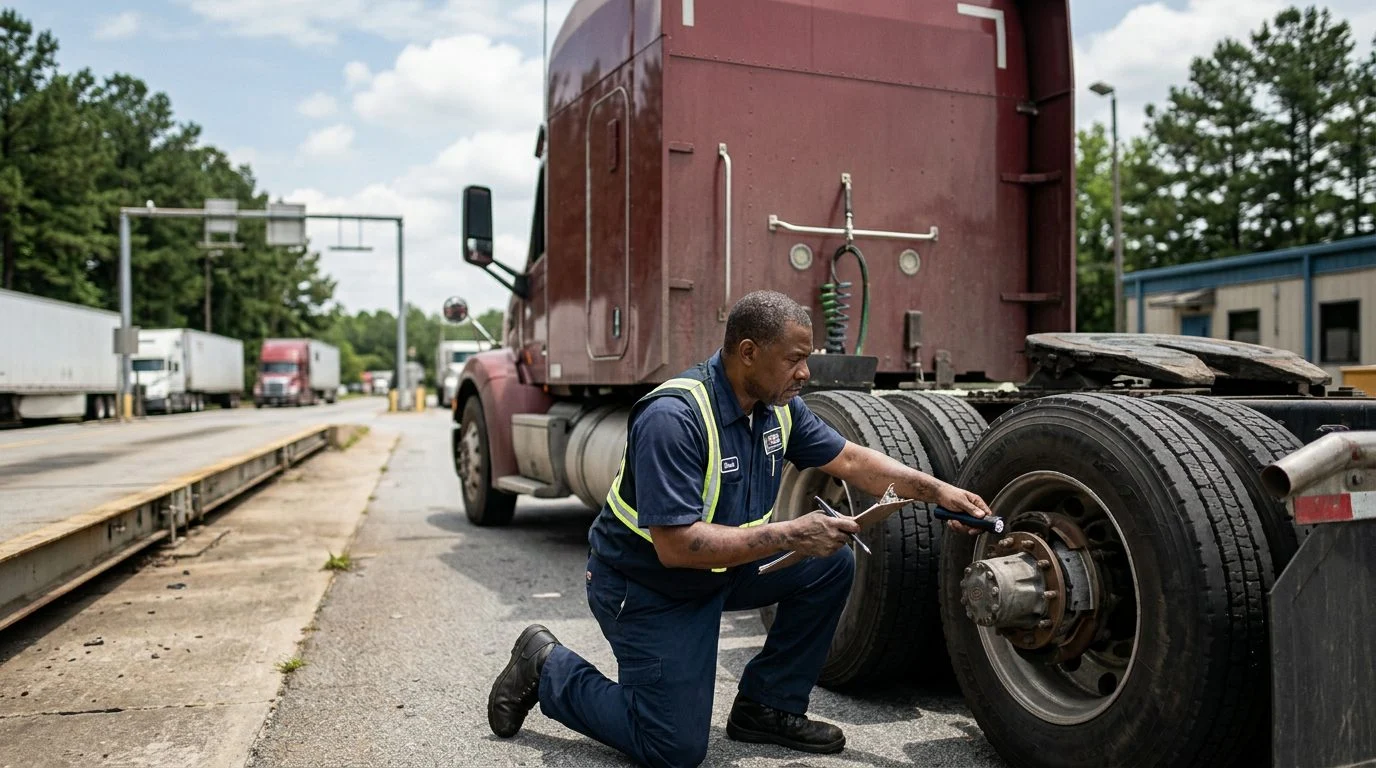
Common Questions About Truck Crash Fault
Who is at fault in a parking lot crash involving a truck?
Fault in a lot or yard crash turns on who was moving, who had the right of way and what cameras or witnesses show.
Can fault be split among several parties?
Yes. A jury can assign a percentage to each party, and each liable party pays only its own share.
What evidence shows each party’s role?
The police report, driver logs, hiring and training files, maintenance records, cargo paperwork and the truck’s data each point to a different party.
Can the owner of a truck be sued if someone else was driving?
It depends on who owns it and what the owner did.
Hurt in a Clayton County truck crash? You may have a claim against more than the driver. Terance Madden is the responsible lawyer for this page, and T. Madden & Associates, P.C. serves Clayton County from its Jonesboro office. The first consultation is free, confidential and comes with no obligation to continue. If a crash that was someone else’s fault left you hurt, reach out to the firm here and the team will go through who may share responsibility with you.