

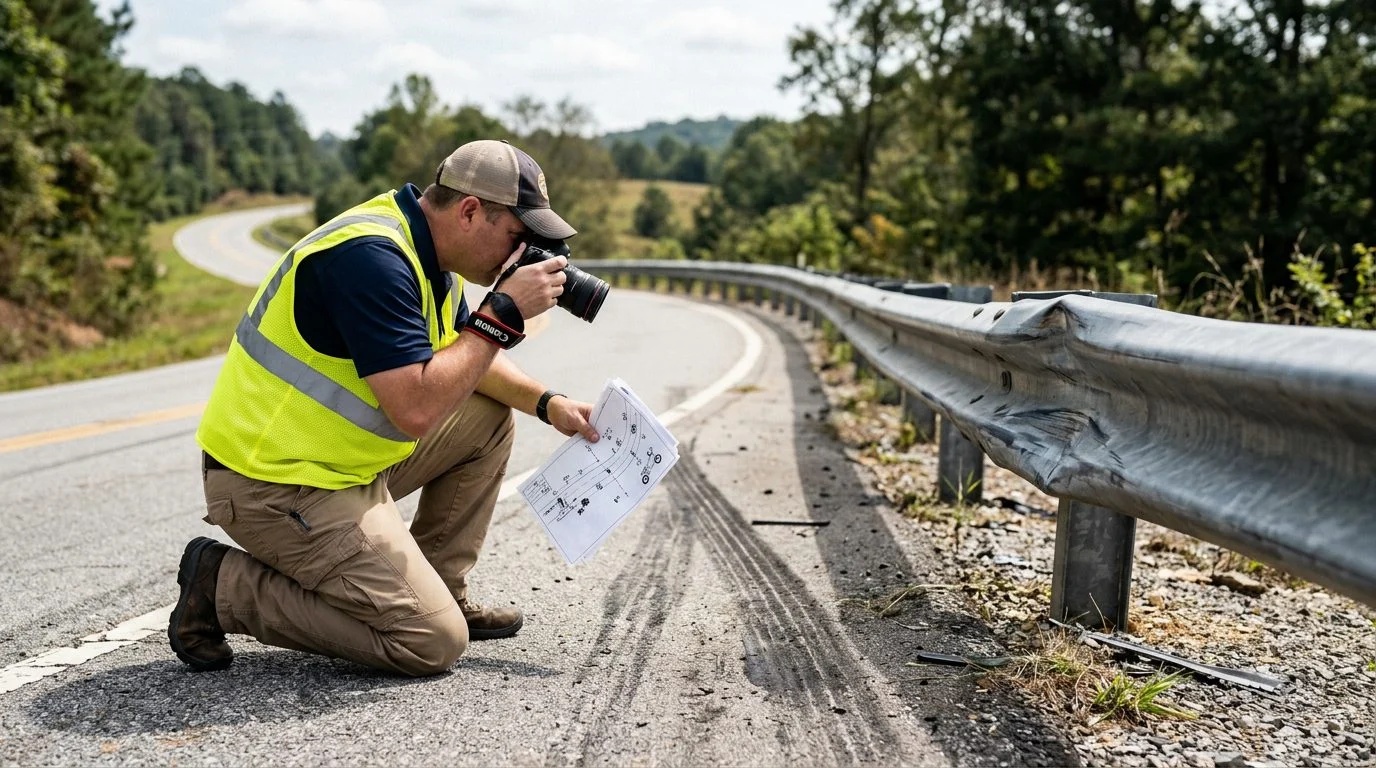
Motorcycle crashes | Georgia
How Crash Reconstruction Shows How Fast a Motorcycle Was Going
Speed is often the question that decides a rider's claim. Here is how the physical evidence is read and why it matters early.
T. Madden & Associates, P.C.
1999
Practicing law since
5
Georgia offices
By Terance Madden · Published November 9, 2026
A rider hurt in a motorcycle crash often asks one question first: how fast was the bike going? Speed is estimated from the physical evidence left behind, such as skid marks, rest positions, crush damage, and any data the bike stores. Crash reconstruction, which means working backward from that evidence to estimate how a crash happened, is how the answer gets built.
Why Speed Is the First Question After a Motorcycle Crash
Speed often decides who had time to stop, so the other side attacks it first. If the other driver says you were speeding, the claim changes. Georgia cuts the damages of the injured person who sues (the plaintiff) by their share of fault. Under O.C.G.A. § 51-12-33, a plaintiff who is 50 percent or more responsible recovers no damages.
Most riders can’t recall every second before impact. Physics gives answers that do not depend on memory. Skid marks, rest positions, debris, crush damage, and bike data each answer a different part of the speed question. None of them settles it alone, so they get read together.
Speed also ties to timing. Under O.C.G.A. § 51-11-7, an injured person who could have avoided the harm with ordinary care cannot recover for it. That is why the speed and timing numbers matter.
Hurt on a motorcycle and hearing that you were going too fast? The bike and the scene evidence are worth protecting now, so reach out for a free, confidential first consultation. Talk it through with our team — the first consultation is free, confidential, and carries no obligation.
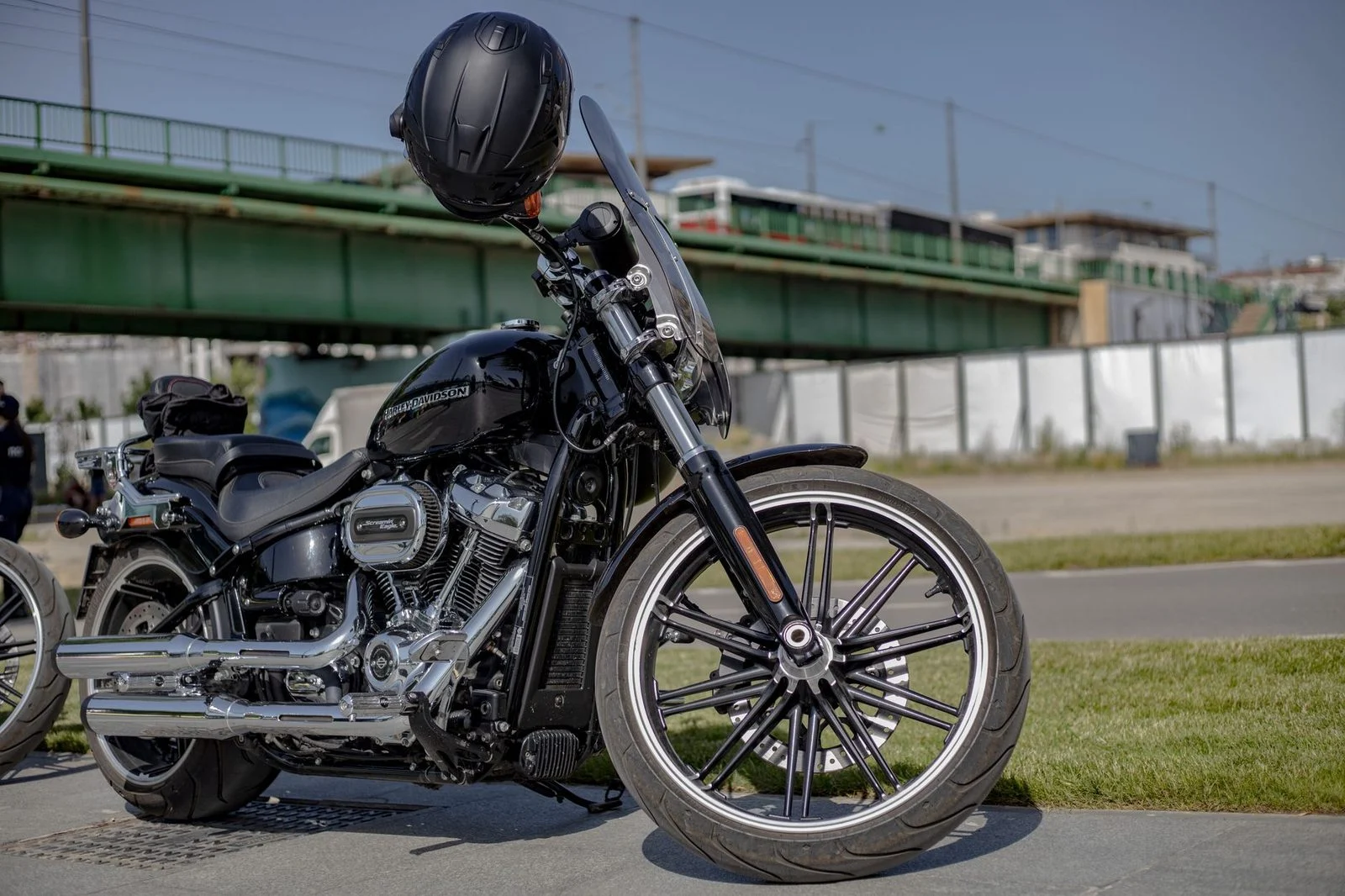
How Skid Marks and Friction Limit a Speed Estimate
Skid marks can point toward speed, but only after the road surface is measured and read with the other evidence.
Friction is the grip between two surfaces, like a tire and the pavement. The coefficient of friction (a number that describes how much grip a surface gives) is the key input. Engineers use it to estimate how far a vehicle slides before it stops. A longer slide usually points to a higher starting speed.
That only works when the grip is known. Wet pavement, gravel, oil, and a rough patch all change it. An engineer measures the surface and the road conditions, not just the marks. A wrong guess about the surface makes the speed number wrong too.
Motorcycles add a problem. Many bikes, especially those with anti-lock brakes, leave faint marks or none at all. No marks does not prove the bike was slow. It means the marks can’t answer the question alone, and the rest of the scene has to fill the gap.
What Rest Positions and Debris Show About Speed and Impact
Where the bike, the rider, and the debris come to rest shows the path the crash took and how much energy it carried.
Investigators map each piece. Throw distance, meaning how far a rider or parts travel after impact, relates to the energy and angle of the hit. A rider thrown far from the bike usually took more force than one who slid a short way. Injury patterns on the body can help too, a point a systematic review of motorcycle injuries makes for forensic work. Plain physics links these distances to speed and direction, but only when the map is accurate.
Scene photos, tape measurements, and witness positions have to match. If a witness stood in one spot and the debris field sits somewhere else, the reconstruction has a gap to close before it says anything about speed.
Terance Madden holds a B.S. in Electrical Engineering, and he reads physical scene evidence with that training. He checks the measurements against the photos and the rest of the record. Engineering helps him read the layout. It does not replace the photos, the measurements, or the medical records.
What Vehicle Damage Shows: Crush, Delta-V, and Energy
Damage shows how much energy went into the impact, and delta-V is one way engineers state the change in speed.
Delta-V means the change in speed during the impact. Crush means the permanent bending or folding of a vehicle’s structure. The depth and shape of crush on the bike and on the other vehicle help engineers estimate the energy absorbed and the change in speed. Small outside damage does not settle the forces inside the crash.
Big Insurance often calls a crash “low impact” when the photos look light. That label is a position the other side takes. It is not a measured fact. The physics of the impact is what gets tested: what forces the rider’s body and the frame took, and what the numbers show.
The firm reads those numbers and tells you what they support. It does not promise what they will show.
Which Bike and Vehicle Data Matters, and What to Keep
Some vehicles store braking and speed data, and whether a given motorcycle does depends on its make, model, and year.
The device is called an event data recorder (a unit that stores speed and braking data around a crash). Find out early whether the bike has one. If it does, that record may answer the speed question better than any estimate.
Bikes get repaired, sold, or scrapped quickly. Once that happens, the marks, parts, and any stored data can go with them. Evidence from a crash can disappear quickly, so acting early helps protect it.
Keep the bike as it is, along with the helmet, gear, photos, and any notes from the scene. Georgia requires riders to wear protective headgear that meets state standards under O.C.G.A. § 40-6-315, so the helmet is evidence too.
Big Insurance may ask for a recorded statement early, and speed arguments often start there. Talk with the firm before you give one.

How Big Insurance Uses Speed Arguments, and How the Firm Responds
Big Insurance uses speed arguments to shrink what it pays, and an insurer’s first offer is rarely what a claim is worth. Big Insurance is not on your side.
Expect a few tactics: an early speed-blame argument, a low first offer, a request for a recorded statement, slow replies, and disputes over whether treatment was needed. Georgia limits medical bills to the reasonable value of medically necessary care under O.C.G.A. § 51-12-1.1, so the treatment record matters as much as the bill.
The firm answers each layer of coverage. It pursues the at-fault driver’s liability coverage, uninsured and underinsured motorist coverage (UM/UIM, which can apply when the other driver has too little insurance), umbrella and excess policies, and corporate coverage when a company is involved. Georgia treats necessary expenses from an injury as part of the damages under O.C.G.A. § 51-12-7. Lost pay, paid time off, and hospital liens (claims a hospital may place against a settlement to cover its bill) belong in that picture too.
The firm prepares every case as if it will go to trial. It does not promise an outcome, and each claim turns on its own facts.
Quick Answers
Can skid marks prove how fast a motorcycle was going?
They can help, but only when the road surface is measured and the marks are read with the rest of the scene.
Does Georgia’s fault rule cut a rider’s recovery?
Yes. Damages drop by the rider’s share of fault, and a rider 50 percent or more at fault recovers nothing (O.C.G.A. § 51-12-33; Quynn v. Hulsey (2020)).
Do motorcycles record speed data?
Some do. Whether a given bike does depends on its make, model, and year.
If you were hurt on a motorcycle and the other driver is blaming your speed, the bike and the scene evidence are worth protecting now. Reach out to the firm for a free, confidential first consultation with no obligation to continue.
Related practice areas
- Motorcycle Accident Lawyer in Georgia
- E-Bike Crash Insurance Coverage in Georgia: What Pays
- Georgia E-Bike Crash Evidence: What to Protect Now