

Negligent Security Lawyer · Georgia
Hurt in a Crime on Someone Else's Property? Find Out Whether Security Failed You.
T. Madden & Associates, P.C. has represented Georgia residents since 1999 in negligent security cases. We are based in Jonesboro, Atlanta, Decatur, Macon and Augusta, and our consultations are free and confidential.
Why Clients Contact Our Firm
1999
In practice since
5
Georgia offices
24/7
Call us anytime
By Terance Madden · Published November 1, 2026
A property owner can be held responsible when a crime it should have expected hurts someone on its land. That is the core of a negligent security claim in Georgia. This page explains how these cases work, who can be responsible, and which deadlines matter. T. Madden & Associates, P.C. has practiced since 1999 and represents people hurt in these incidents, as well as families of people who were killed.
What a Negligent Security Case Is
A negligent security case is a claim that a property owner failed to protect people from a crime it could reasonably foresee. The injured person sues over the owner’s own failure. The attacker’s act is part of the story, but it isn’t the only question.
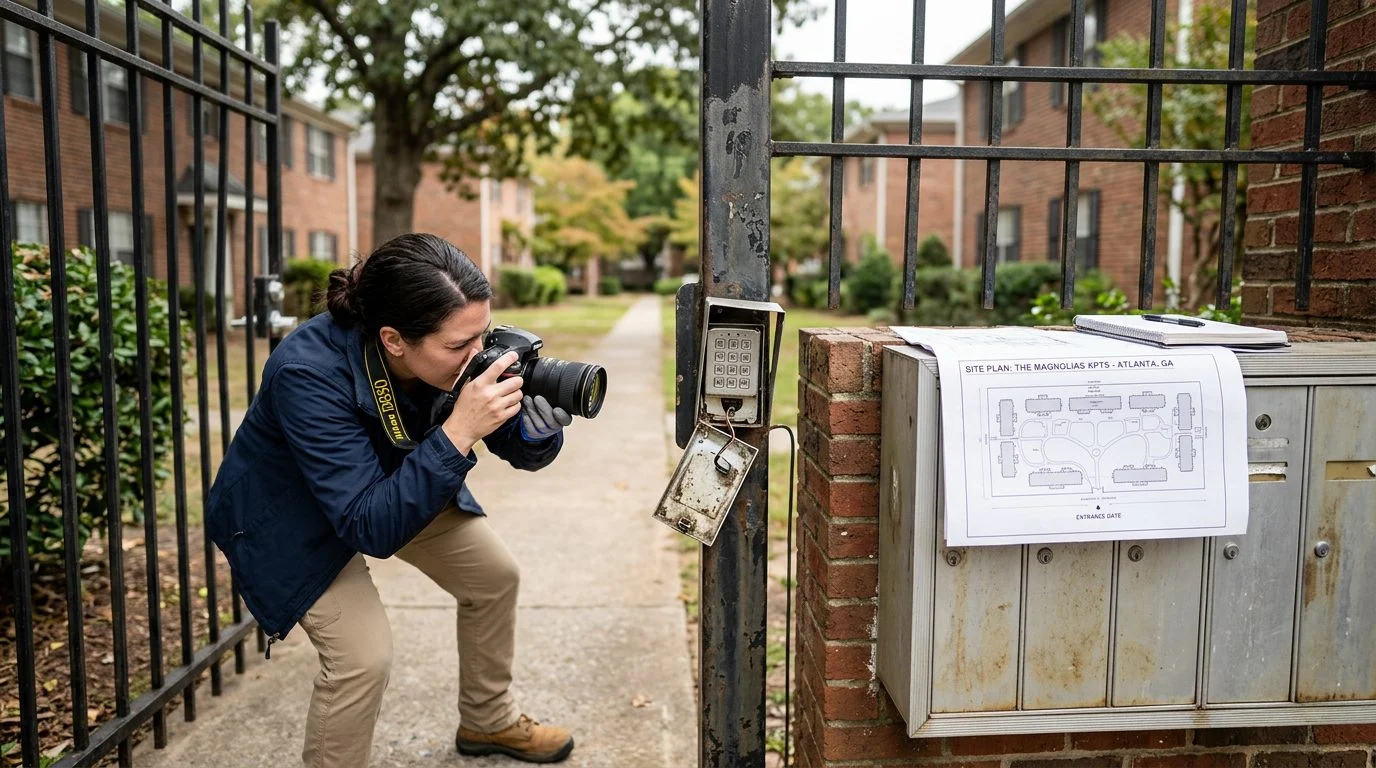
These cases often start at apartment complexes, hotels, parking lots, shopping centers, bars and nightclubs. In each place, the owner controls things like locks, lighting, gates and staffing. Those controls are what the claim examines.
Many victims assume the criminal is the only one to blame. Georgia law asks a different question. Did the owner take reasonable steps, given what it knew? When a crime kills someone, the family may bring a claim too.
If someone you love was attacked or killed in an apartment lot, parking lot or business, you may have a claim, and our team can review it with you. Talk it through with our team — the first consultation is free, confidential, and carries no obligation.
Who Can Be Held Responsible
The property owner or occupier is the main party in most of these claims. Other parties can be involved, depending on who controlled the area and who hired the security.
A landlord that has fully given up possession is generally not responsible to third persons for a tenant’s negligence or illegal use of the premises, under O.C.G.A. § 44-7-14. That landlord stays responsible for defective construction and for failing to keep the premises in repair.
A security contractor is treated differently. If it takes on a duty to keep part of a property safe from criminal acts, it can be liable only in the same manner and to the same extent as an owner. Under O.C.G.A. § 51-3-57, it can never face greater liability than an owner.
The person who committed the crime is also part of the case.
The Duty a Property Owner Owes Under Georgia Law
An owner must use ordinary care to keep its premises safe for people invited there. Under O.C.G.A. § 51-3-1, an owner or occupier who invites people onto its land for a lawful purpose can be liable for injuries caused by its failure to use ordinary care.
An invitee is someone the owner or occupier, by express or implied invitation, induces or leads to come upon the premises for any lawful purpose, such as a customer or a paying guest. The duty covers invitees in the way the statute describes.
The owner is not an insurer of safety. The duty is ordinary care, not perfect protection.
The owner also doesn’t take on the role of police. Under O.C.G.A. § 51-3-55, an owner doesn’t have to use extraordinary care against crime by third persons. It also doesn’t have to take over law enforcement duties.
Ordinary care asks what a careful owner would do in similar conditions. A jury weighs what the owner did, what more it could have done, and whether those steps would have helped.
Foreseeability: Why Prior Crimes Matter
Foreseeability is the central question in most negligent security cases. The injured person must show the third person’s crime was reasonably foreseeable. Under O.C.G.A. § 51-3-51, that can rest on a particularized warning of imminent wrongful conduct. It can also rest on prior, substantially similar crimes the owner actually knew about.
Those prior crimes can have happened on the property, on adjoining property, or within 500 yards of the premises. Police calls, incident reports, complaints and prior security reports are the kinds of records that show what the owner knew.
Earlier events are compared with the crime that hurt the plaintiff. The question is whether they were substantially similar. The law also looks at what the owner knew before the injury, not only what it did afterward.
Public data can add context. The Georgia Bureau of Investigation publishes Georgia crime statistics by jurisdiction. The Bureau of Justice Statistics runs a national survey that collects data on where and when violent crimes occur.
The Four Elements of Negligence in These Cases
Each one must be proven with evidence, not assumed.
Duty means the owner owed the injured person reasonable care as an invitee. Breach means the owner failed to take reasonable security steps. Causation means that failure was a proximate cause of the injury, and the injury was a foreseeable result of the crime. Damages means the person or family suffered real, measurable losses.
Proof comes from records, video, incident reports, witness statements and testimony from people who understand security practices. Under O.C.G.A. § 51-3-55, the jury weighs the security measures in place, the need for more, whether more was practical, whether it would have prevented the injury, the respective responsibilities of owners or occupiers with respect to the premises and government with respect to law enforcement and public safety, and any other relevant circumstances. Whether a given claim meets each element depends on the facts.
Apportionment of Fault Between the Owner and the Criminal
A Georgia jury can divide fault among everyone who contributed to the harm.
If the injured person shares some fault, the award shrinks by that share. The judge reduces damages in proportion to the plaintiff’s percentage of fault (O.C.G.A. § 51-12-33; Quynn v. Hulsey (2020)). A plaintiff who is 50 percent or more responsible recovers no damages.
Each liable person pays only its own share. Those damages are not a joint liability, and they are not subject to contribution.
This shapes the defense. An owner may argue that the attacker caused most of the harm. The injured person’s own conduct can also be examined. Each party’s conduct is reviewed under these rules.
Not sure what your next step is?
Talk it through with our team — the first consultation is free, confidential, and carries no obligation.
Damages and What a Claim May Include
A claim can seek compensation for losses the injury caused. Under O.C.G.A. § 51-12-4, damages compensate for injury that can be estimated in money. If an injury is small or the mitigating circumstances are strong, only nominal damages may be given.
Typical losses include medical bills, lost wages and other costs of the injury. Pain and emotional harm also count. Under O.C.G.A. § 51-12-6, when the whole injury is to a person’s peace, happiness or feelings, the jurors’ enlightened consciences set the measure.
Wrongful death law works differently. Under O.C.G.A. § 51-4-2, a surviving spouse, or if none, the children, may recover the full value of the decedent’s life, as shown by the evidence. Under O.C.G.A. § 51-4-5, when death results from a crime or from criminal or other negligence, the personal representative may recover funeral, medical and other necessary expenses.
Catastrophic injuries, such as brain injury, paralysis or permanent disfigurement, need careful records of future care. Case value is a separate question, which we cover in our article on how much a negligence lawsuit is worth.
Deadlines and Evidence to Preserve Early
Georgia generally gives two years to file an injury claim. Under O.C.G.A. § 9-3-33, injury actions must generally be brought within two years after the claim arises. The same section gives four years for loss of consortium claims.
A criminal case can pause the clock. Under O.C.G.A. § 9-3-99, the time limit for a tort claim by a crime victim is tolled from the date of the commission of the alleged crime or the act giving rise to such action in tort until the prosecution of such crime or act has become final or otherwise terminated. That pause is capped at six years, so don’t count on it.
Ask for evidence early. Useful items include video footage, incident and police reports, leases and management agreements, security contracts, staffing logs and prior complaints. Video can be erased on a routine schedule, so the sooner it is requested, the better.
Keep your medical records, receipts, photos and a dated list of symptoms and missed work.
How T. Madden & Associates, P.C. Handles These Cases
T. Madden & Associates, P.C. represents injured people and families in negligent security claims. Terance Madden leads the firm, which has practiced since 1999. Our lawyers include Terance Madden and Shenia Madden, supported by assistants and office staff.
Intake begins with a review of the incident, the documents you have and the next steps. Our team asks about the location, the crime, any earlier incidents you know of, and what records exist.
The first consultation is free, confidential and carries no obligation to continue. The firm works on a no-fee-unless-we-win basis, but you may still be responsible for court costs and case expenses.
Where We Handle Negligent Security Cases in Georgia
T. Madden & Associates, P.C. has offices in Jonesboro (Clayton County), Atlanta, Decatur, Macon and Augusta. The offices are listed on the contact page.
Clayton County and Jonesboro residents, metro Atlanta and Decatur residents, and people in Macon and Augusta can all start a conversation with the firm. The same Georgia statutes discussed above apply to incidents in each of these places.
The 500-yard rule in § 51-3-51 looks at nearby property. A crime next door can matter if the owner knew about it.
Frequently Asked Questions About Negligent Security Claims
What is a negligent security case?
It is a claim that a property owner failed to protect people from a crime it could reasonably foresee. The crime caused the injury or death.
Who can be sued after a crime on someone else’s property?
The property owner or occupier can be a party. A security contractor that assumes and undertakes a duty to invitees and licensees to keep all or part of a premises safe from the wrongful conduct of a third person may be liable for negligent security only in the same manner, to the same extent, and subject to the same limitations and provisions applicable to an owner or occupier.
How much is a negligence lawsuit worth?
Case value varies from case to case. We cover that question in a separate article.
Do I have to file within two years?
Georgia generally requires actions for injuries to the person to be brought within two years after the right of action accrues (O.C.G.A. § 9-3-33). Acting early protects your options.
If someone you love was attacked or killed in an apartment lot, parking lot or business, you may have a claim, and our team can review it with you. Talk it through with our team — the first consultation is free, confidential, and carries no obligation.

Talk With Our Team About Your Situation
If a family member was hurt or killed in an assault at an apartment complex, parking lot or business, you may have a claim worth reviewing. You may also be the person who was attacked, wondering whether the owner had security problems before. Our team can look at what happened and which records exist. Use the contact page to request a free case evaluation. Calls are available 24/7.
Responsible lawyer: Terance Madden, T. Madden & Associates, P.C. Contact: contact page.
How Our Firm Approaches Negligent Security Cases
Careful Case Review
We look at the incident, the property's security measures and the records that show what the owner knew or should have known.
Focus on Protection Duties
Our attorneys focus on whether a property owner or security provider failed to take reasonable steps against a crime that could have been foreseen.
Attention for Families
When a crime leads to a death, our team works with surviving family members on wrongful death claims under Georgia law.
Clear Fee Terms
Many cases are handled with no fees unless there is a recovery. Clients may still be responsible for court costs and case expenses, and we explain these before you decide.
Get Medical Care and Report the Crime
Your health comes first. Seek medical attention right away, even if injuries seem minor, and make sure the incident is reported to police. Keep any records, photos and receipts, and write down what you remember while it is fresh.
Common Settings for Negligent Security Claims
Apartment Complexes
Assaults, robberies and break-ins in common areas, parking lots and stairwells can raise questions about lighting, locks, gates and patrols.
Parking Lots and Garages
Many attacks occur where people park, especially after dark. Our attorneys review whether the property was reasonably monitored and maintained.
Hotels and Motels
Guests rely on owners to keep entrances controlled and staff responsive. Inadequate security can contribute to serious harm.
Bars, Restaurants and Venues
Crowds, alcohol and late hours can increase risk. Our team examines whether adequate staffing and security measures were in place.