

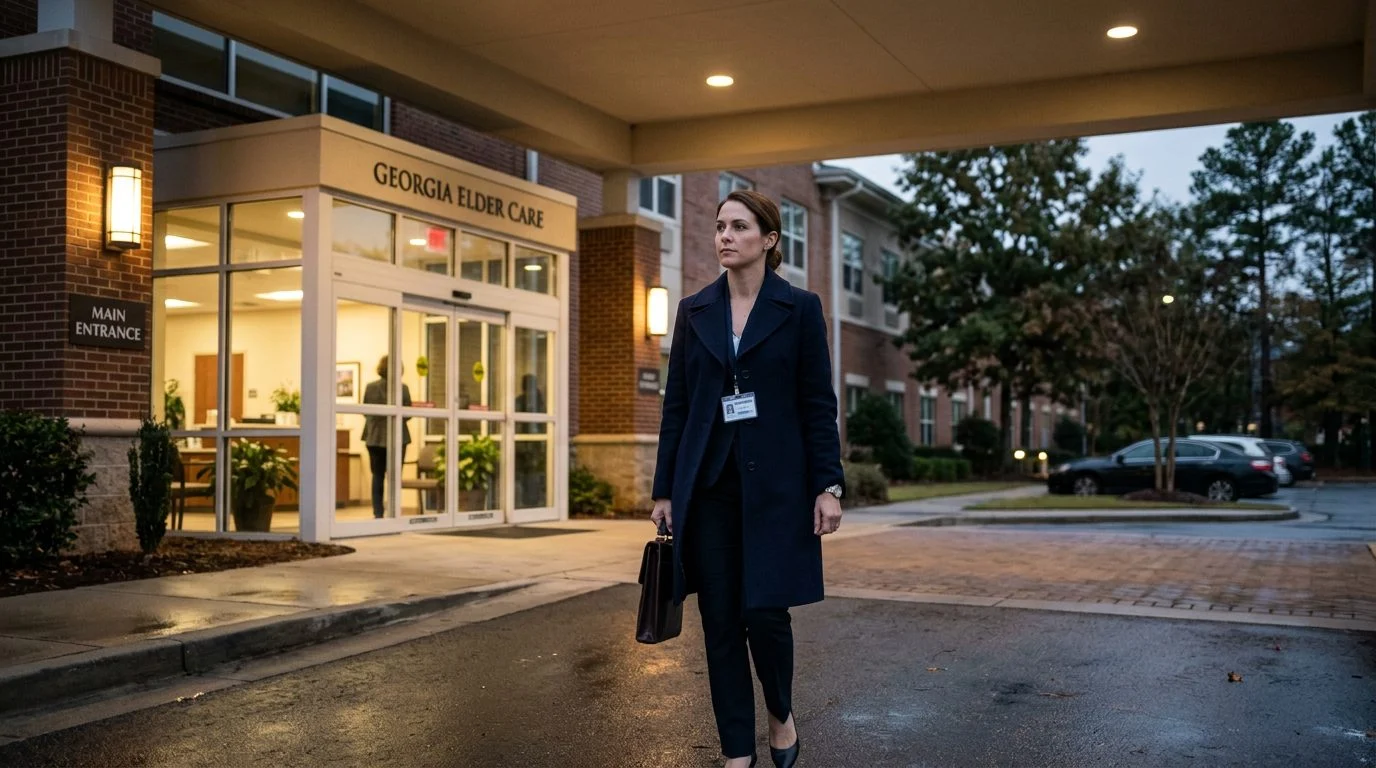
Nursing Home Abuse | Georgia
Hurt in a Georgia Nursing Home? Know Where to Report and Who to Call.
Your first priority is your loved one's safety. Reporting the abuse and protecting your family's legal options are separate steps, and you can take both.
Our Background
1999
Year Terance Madden began practicing law
5
Offices: Jonesboro, Atlanta, Decatur, Macon and Augusta
24/7
Call us any time, day or night
By Terance Madden · Published November 9, 2026
Maybe a parent in a nursing home has new bruises, has lost weight, or suddenly seems afraid of her caregivers. You want to act, but Georgia has several agencies, and it’s not clear which one to call. Here is how nursing home abuse reporting agencies in Georgia divide the work.
Which agencies in Georgia must be notified or can take reports of nursing home abuse, such as Adult Protective Services or the Georgia Department of Community Health?
For a resident of a licensed nursing home, the Georgia Department of Community Health (DCH) oversees the facility. It takes concerns about the resident’s health, safety and care. Georgia’s Division of Aging Services handles reports of elder abuse, neglect or exploitation. It tells reporters to call 911 for immediate danger.
Here is the list, in the order most families need it:
- 911 or local police: for anyone in immediate danger.
- Department of Community Health: regulates licensed nursing homes through its Division of Healthcare Facility Regulation.
- Division of Aging Services: takes reports of elder abuse and points reporters to the right contact.
- Adult Protective Services: a state program that handles abuse of elderly or disabled adults, mostly in homes and communities.
- Long-term Care Ombudsman: an advocate for residents who helps families raise concerns.
Which office fits depends on where the resident lives and whether the facility is licensed.
If a loved one's nursing home care has changed and you're weighing what to do next, our team can talk it through in a free, confidential consultation. Talk it through with our team — the first consultation is free, confidential, and carries no obligation.
How Do I Report Nursing Home Abuse in Georgia?
If the resident is in immediate danger or hurt, call 911 first. Then make the reports described below.
Work through these steps in order:
- Protect the resident. Get medical care if it’s needed. Move them away from anyone who hurt them, if you can do so safely.
- Write it down. Record what you saw and heard, with dates, times and the names of staff involved.
- Keep the evidence. Save photos, texts, emails, and copies of any bills or medical notes.
- Make the report. Use the contact for the right agency, and ask for a case or complaint number.
Ask the intake worker, the person who takes your report, how your name and details will be handled. A clear written record matters even more when you report for someone else. Keep notes of every call, including the date and the name of the person you spoke with. Your record can help the agency follow up.
What Does Adult Protective Services Do With a Report of Abuse?
Adult Protective Services takes reports of abuse, neglect or exploitation of elderly or disabled adults. Most of these cases involve people living in homes and communities.
Once a report comes in, the agency screens it to see whether it fits its criteria. If it does, the agency may investigate. It may also refer the matter to another office. Its job is investigation and protection, not deciding a legal claim.
A complaint about care inside a licensed nursing home is different. The Department of Community Health regulates those facilities, so that complaint belongs with the department. If the concern involves a person living in a home rather than a facility, Adult Protective Services is the agency to call. Bring the dates and names you wrote down. They help the screener understand the report.
Which Georgia Agency Licenses and Inspects Nursing Homes?
The Georgia Department of Community Health licenses and oversees nursing homes. Its Division of Healthcare Facility Regulation handles concerns about residents’ care.
Georgia law defines a long-term care facility as any intermediate care home, skilled nursing home or intermingled home that the department regulates and licenses. O.C.G.A. § 31-8-102 Each resident must receive care with reasonable care and skill. O.C.G.A. § 31-8-108 Residents or guardians may also take part in planning care and treatment.
If a violation occurs, the department shall order the facility to correct it. For violations repeated under the same license within 12 months, the department may also assess a civil penalty, which is a fine. The penalty can reach $75 per violation for each day the violation continues. The maximum is $2,500 per violation. O.C.G.A. § 31-8-126
How Does the Long-Term Care Ombudsman Help Residents and Families?
The Long-term Care Ombudsman advocates for residents of long-term care facilities. Families can ask the ombudsman for help raising concerns with a facility.
Consumer Voice residents’ rights
Residents also have the right to choose their own physician. They may ask to have their diagnosis and treatment explained in language they understand. O.C.G.A. § 31-8-108
The ombudsman is a separate role from the regulating agency and from police. It works on the resident’s concerns and can help the family speak up. Telling one agency does not replace telling another. When someone is in danger, call 911 first, then add the ombudsman to your list.

What Should I Do if I Think a Nursing Home Resident Was Hurt?
The person managing a resident’s care often juggles visits, medical questions and a facility that may be slow to respond. Keep everything in one place from the start.
- Reports: keep a copy of every report and each case or complaint number.
- Names and dates: note who you spoke with and when.
- Medical records: request them in writing. A provider must furnish the record within 30 days of a proper request. The request must include a HIPAA authorization, a federal privacy release form, and a signed written authorization. O.C.G.A. § 31-33-2
- After a death: an appointed executor or administrator may request records first. If none is appointed, the surviving spouse comes next, then a surviving child, then a parent. O.C.G.A. § 31-33-2
If a resident was seriously hurt, a legal claim may be possible. Residents may bring a claim against a facility for violating their rights. O.C.G.A. § 31-8-126
Does reporting to the state have to come before a lawsuit?
No. Georgia law says a person does not have to use administrative relief, such as a state complaint process, before bringing that claim. O.C.G.A. § 31-8-126
How long do I have to file a claim?
Georgia generally allows two years for actions for injuries to the person. O.C.G.A. § 9-3-33 Some exceptions can extend that time. One example is a person who was legally incompetent when the claim arose. O.C.G.A. § 9-3-90
If a loved one’s care has changed and you’re weighing your next step, T. Madden & Associates, P.C. offers a free, confidential initial consultation with no obligation to continue. The firm is led by attorney Terance Madden and has been in practice since 1999. Contact the firm The firm works on a no-fee-unless-we-win basis, but you may still be responsible for court costs and case expenses.