

Burn injury product liability · Georgia
Georgia Burn Injury Product Liability Lawyer: Who Is Liable?
Lithium-ion battery fires and other defective products often involve more than one company. Tell us what happened and we will help you see the whole picture.
T. Madden & Associates, P.C.
1999
Practicing law since
5
Georgia offices: Jonesboro, Atlanta, Decatur, Macon and Augusta
Free
First consultation, confidential, with no obligation to continue
By Terance Madden · Published November 21, 2026
A product burned you, or someone you love, and now the bills and the questions keep piling up. Who pays for that? The maker of a defective product can be held liable for the burns the defect causes, and other companies in the product’s chain may share responsibility, depending on the facts.
This guide explains how a burn injury product liability lawyer looks at that question, step by step.
What a Burn Injury Product Liability Claim Is
A product liability claim says a product was defective and the defect caused the injury. Product liability means legal responsibility for harm caused by an unsafe product. Three defect types come up most often:
- Design defect: the design itself is unsafe, even if every unit is built correctly.
- Manufacturing defect: one unit came out wrong and differs from the rest of the line.
- Warning defect: safety instructions or warnings are missing or unclear.
This page is for adults burned by a battery, charger, heater, appliance or e-bike part. It is also for families who lost someone in a fire. Burns are often serious and long-lasting. That’s why these cases often fall under catastrophic injury claims, which need careful medical proof and planning.
If a defective battery or charger burned you or someone you love, you may have a claim, and our team can review it with you for free. Talk it through with our team — the first consultation is free, confidential, and carries no obligation.

Who Can Be Held Liable When a Product Burns You
The maker is the first place to look, but it is rarely the only one. The product must not have been merchantable (fit to sell and do its job) when sold, and that condition must be the proximate cause (the direct cause) of the injury.
Off-brand and resold products add a twist. The name on the label does not always show who made the part that failed. A company that only puts its own name on a product made by someone else may be treated as a seller, not a manufacturer. See Alltrade, Inc. v. McDonald. Georgia law defines a product seller broadly, under O.C.G.A. § 51-1-11.1.
Time limits matter too.
What the Claim Can Cover
Typical losses include:
- Emergency care, hospital stays and burn treatment
- Skin grafts, reconstructive surgery, scar revision and future surgeries
- Lost wages and lost ability to earn, including time off for therapy
- Pain, disfigurement, and the effect on sleep, daily life and family
Georgia separates general damages, which the law presumes from the injury, from special damages, which must be proved (O.C.G.A. § 51-12-2). Medical costs are limited to the reasonable value of medically necessary care (O.C.G.A. § 51-12-1.1).
For a family that lost someone, Georgia law lets a surviving spouse, or a child if there is no spouse, recover the full value of the decedent’s life, as shown by the evidence (O.C.G.A. § 51-4-2).
Keep the appointment notes, the bills, and the wound-care log. Those records show what the injury really costs. The firm’s community work through the Terance Madden Foundation is part of how it gives back.
What the Evidence Shows in a Lithium-Ion or Off-Brand Product Fire
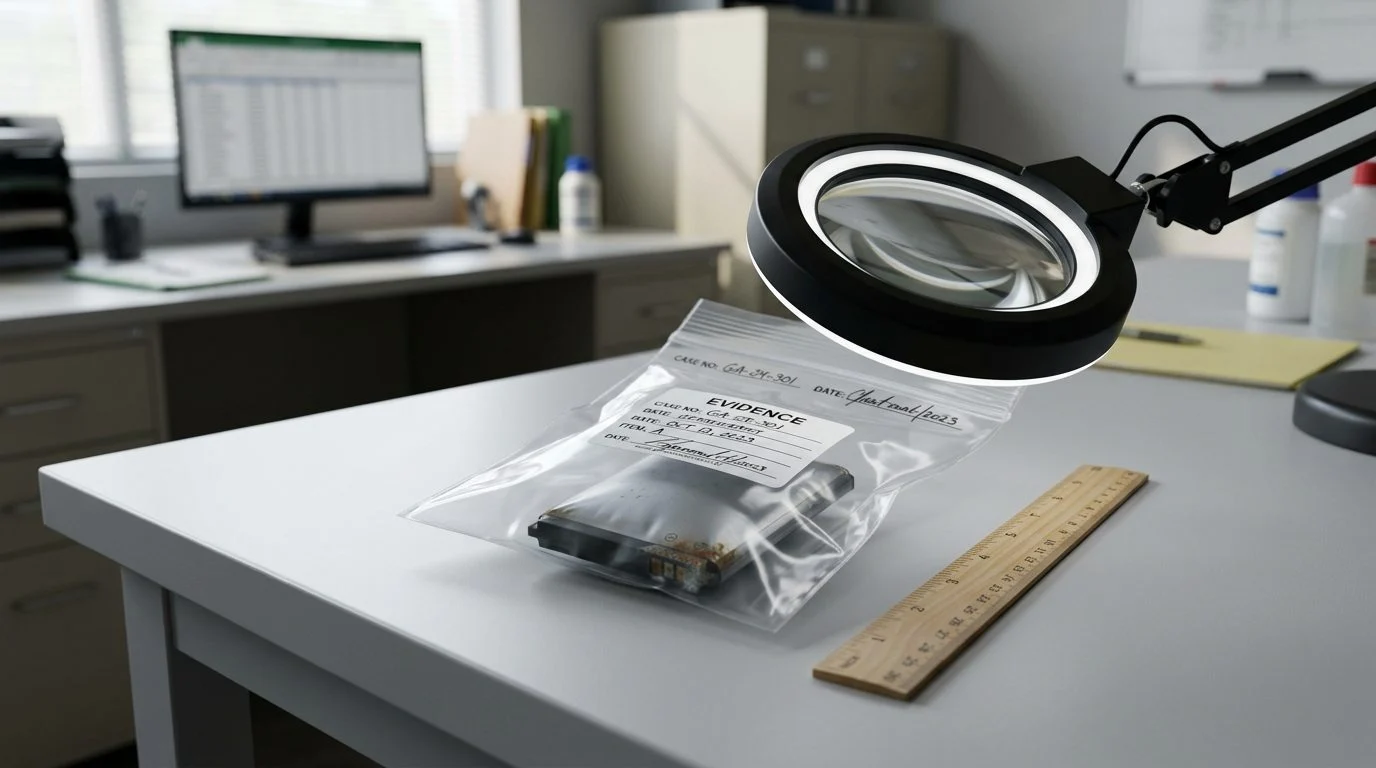
The product itself is the most important evidence, so keep it safe. Investigators read the burn pattern to find where a fire started. They check the battery pack, the cells, the charger, the cords and the casing. Melted, swollen or scorched parts can point to a failure.
Before law school, Terance Madden trained as an electrical engineer. He starts by asking what failed first and why. For a battery fire, that means looking at the cells, the charging circuit and any safety certification marks, and tracing the origin and cause. That training helps him read the evidence and decide what needs testing.
Keep the device, battery, charger, packaging, receipts, order emails and photos. Don’t repair it, charge it again or throw it away. Product history matters too: where it was bought, how old it is, how it was charged, any changes made to it, and any recall notices. The firm can arrange independent testing so the physical evidence is examined and documented.
How a Burn Product Case Moves, Step by Step
A burn product case moves in clear steps, and it starts with a conversation.
- Consultation. You share the facts, the product and the medical timeline. The first consultation is free, confidential, and carries no obligation to continue. The firm has been in practice since 1999, with offices in Jonesboro, Atlanta, Decatur, Macon and Augusta.
- Evidence. The firm sends preservation letters (formal requests that evidence be kept) and collects the product, records and photos.
- Investigation. The firm traces the defect, the chain of sellers, and every party and insurance layer that may pay.
- Medical records. Bills and records are gathered. If Medicare paid first, it may have a conditional payment that must be repaid from a settlement (CMS guidance).
- Demand or suit. The firm negotiates, or files suit if needed. Georgia’s general deadline for personal injury lawsuits is two years after the right of action accrues (O.C.G.A. § 9-3-33). The firm checks the exact deadline in each case.
The firm works on a no-fee-unless-we-win basis. You may still be responsible for court costs and case expenses.
How Big Insurance Responds to Burn Claims
Big Insurance is not on your side, and a first offer is rarely what a claim is worth. Expect these tactics:
- A quick call asking for a recorded statement
- A low first offer, made before the full bills are known
- Claims that the burn came from misuse, or that the product did not cause it
- Delays in paying, and disputes over whether treatment was needed
- Arguments that you share the fault.
The response is to pursue every coverage layer: liability, corporate, distributor, umbrella and excess policies, and uninsured or underinsured motorist coverage where it applies. The firm values the full lifetime cost of the injury and prepares each case as if it may go to trial.
Before you talk to an adjuster, don’t give a recorded statement or sign a release. Talk with the firm first.
Not sure what your next step is?
Talk it through with our team — the first consultation is free, confidential, and carries no obligation.
Frequently Asked Questions
What kind of lawyer do I need to sue a manufacturer or seller?
You need a product liability lawyer, who handles injury claims against companies that made or sold a defective product.
Does it matter if I used the product the wrong way?
Yes, the facts decide it. A maker can still be responsible for a design or warning problem.
What if the battery was off-brand or bought secondhand?
That can change who is liable. The firm traces the full product chain.
What should I say to an insurance adjuster?
Keep it brief, avoid recorded statements, and talk to the firm first.
What if I can’t manage the paperwork?
The firm works with the family member who manages the recovery.
What to Know About a Burn Injury Claim
You may be reading this in a burn clinic waiting room, or at a kitchen table while someone you love changes dressings. That’s a lot to carry. If a defective product burned you or your family, you may have a claim, and you don’t have to sort it out alone. Start a free case evaluation with T. Madden & Associates, P.C.