

Product Liability Lawyer | Georgia
Hurt by a defective product? Tell us what happened.
Batteries, devices and products that fail or catch fire can cause serious harm. Our team looks at the product, the evidence and who put it on the market.
The firm at a glance
1999
Year the firm has been in practice
5
Georgia offices: Jonesboro, Atlanta, Decatur, Macon, Augusta
24/7
Call us anytime
By Terance Madden · Published November 15, 2026
No Fee Unless We Win, but Court Costs and Case Expenses May Apply
If a product failed and someone you love got hurt, you probably want one answer first: can the companies behind it be made to pay? In Georgia, they may be. A product liability claim says a product was defective and the defect caused the harm.
This page covers what makes a product defective, who can be sued, how the case moves, and how insurance comes into play.
If a defective product hurt someone you love, you may have a claim, and you don't have to sort out the next steps alone. Talk with our team. Talk it through with our team — the first consultation is free, confidential, and carries no obligation.
What a Product Liability Claim Is and Who It Is For
A product liability claim says a product was defective and the defect caused injury, death or property loss. The focus is the product’s design, how it was made and what it warned. It is not about the person who used it.
This kind of claim fits:
- An adult hurt by a product that failed during normal use.
- A spouse, mother or adult daughter managing the recovery of someone badly hurt.
- A family that lost someone in a product-caused fire, explosion or injury.
If a product failed and someone was hurt, the claim may belong to the person hurt or to the family. A product lawyer can help sort that out. Early action matters, because Georgia sets filing deadlines.
Defects That Support a Product Injury Claim
A product is defective when its design, its manufacture or its warnings make it unsafe. Three main types matter here.
- Design defect: The product was made exactly as designed, but the design itself was unsafe.
- Manufacturing defect: One unit came off the line different from the design, with a flaw that caused the failure.
- Warning defect (failure to warn): The maker knew or should have known of a danger and did not give adequate warnings.
Lithium-ion battery fires show how this works. A pack can overheat, vent or burst into flame because of defective cells, a failed separator (the thin layer that keeps the battery’s two sides apart), bad charging circuitry, or a pack with no recognized safety testing marks.
Price and brand don’t decide the claim. The question is whether the product was defective and caused harm.
Who Can Be Sued in a Product Liability Case
More than one company can be responsible. A liable party is any company or person the law says must pay for harm it caused.
The maker. Georgia law makes a manufacturer of new personal property liable, even without a direct contract, to any natural person who may use, consume, or reasonably be affected by the property and suffers injury to his person or property because the property was not merchantable and reasonably suited to the use intended when sold, and its condition when sold is the proximate cause of the injury sustained. O.C.G.A. § 51-1-11 Claims against a manufacturer also face a ten-year limit from the first sale, with exceptions. Georgia’s ten-year limit does not relieve a manufacturer from the duty to warn of a danger arising from use of a product once that danger becomes known to the manufacturer. Chrysler Corp. v. Batten Chrysler Corp. v. Batten
Sellers. Stores, distributors and importers can be “product sellers” under O.C.G.A. § 51-1-11.1. A product seller is not treated as a manufacturer for strict liability. A company that only puts its own name on a product made by someone else is also a product seller. Alltrade, Inc. v. McDonald Georgia also implies a promise that goods sold by a merchant are merchantable. O.C.G.A. § 11-2-314
O.C.G.A. § 51-12-33 Each company may carry its own insurance, so finding every one matters.
How the Firm Handles a Product Injury Case, Step by Step
A product case moves in six steps, from the first call to a settlement or a trial.
- The first call. You describe what happened. The firm asks what product was involved and where it is now.
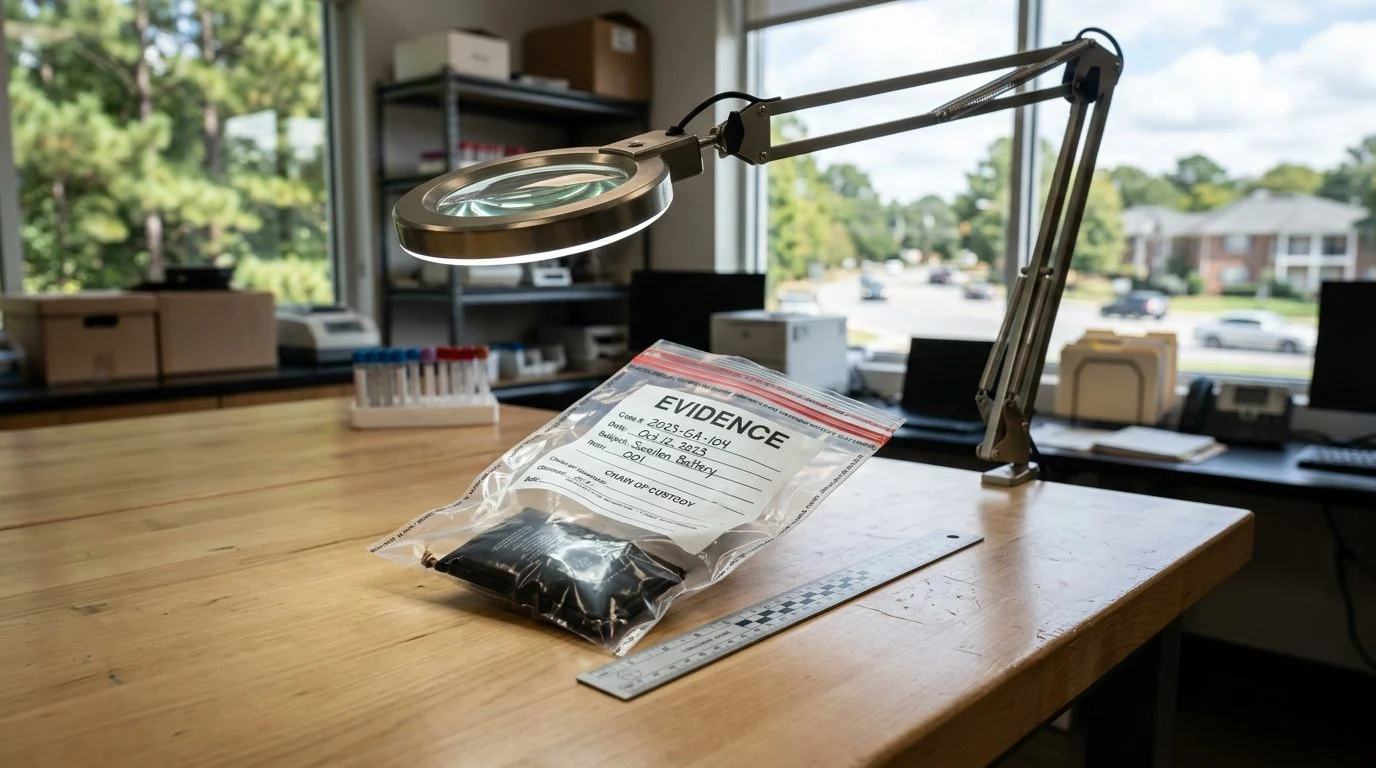
- Preserve the product. Keep the item, packaging, receipts, photos, and any charger or accessories. Don’t repair, throw away or test it yourself.
- Investigate. Request records, identify the maker and every seller, and send preservation demands so evidence is not lost.
- Present the claim. The firm presents it to the responsible companies and their insurers.
- File suit when needed. Georgia generally gives two years after the right of action accrues to bring a claim for injuries to the person, though claims for injuries involving loss of consortium have four years. O.C.G.A. § 9-3-33 The firm tracks that date from the start.
- Resolve the case. That means a settlement or a trial.
If Medicare paid for the care, those payments may have to be repaid from a settlement. CMS explains that a conditional payment must be repaid when a settlement, judgment or other payment is made. CMS Medicare Secondary Payer
Why Terance Madden’s Engineering Training Matters for Product Evidence
Terance Madden’s engineering training shapes how he reads product evidence. He asks what the evidence shows before he decides what the claim is.
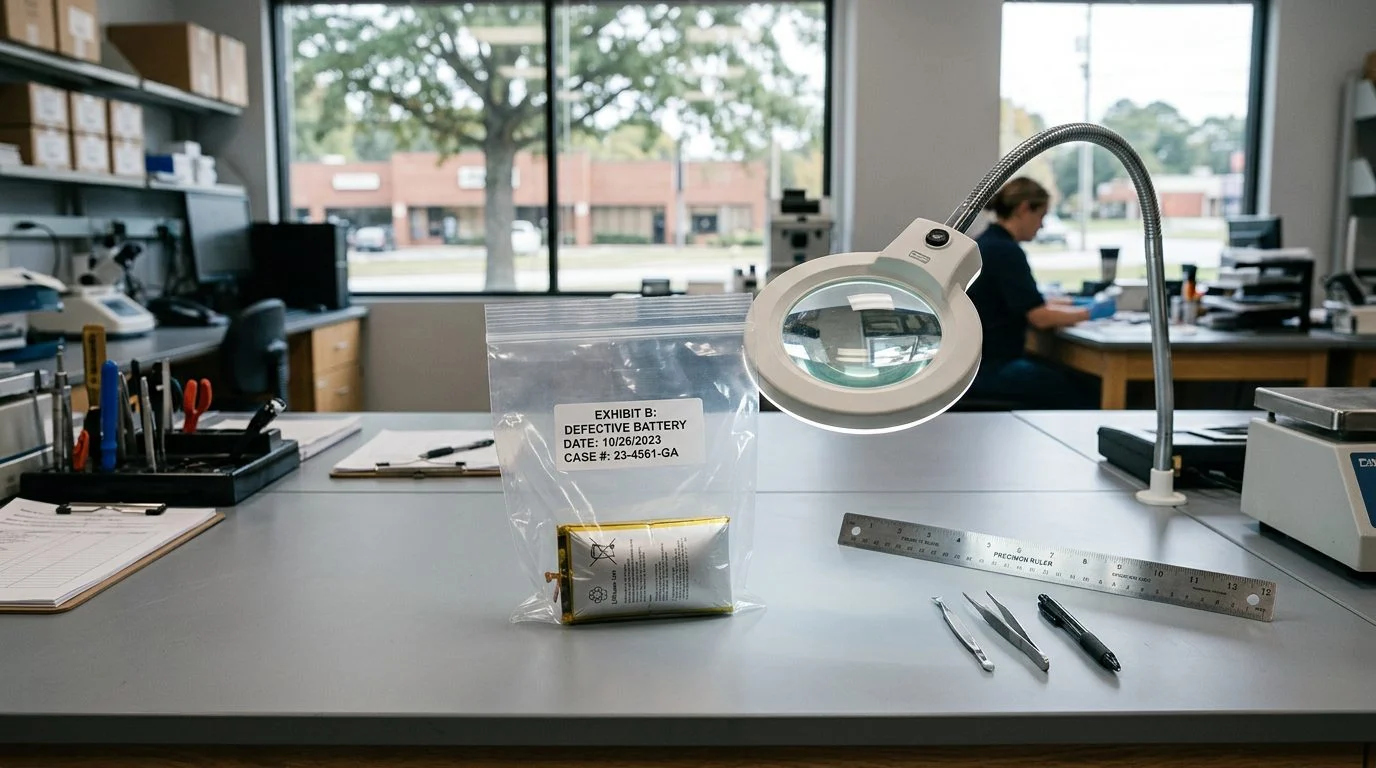
Before law school, Terance Madden trained as an electrical engineer, so he starts a case by asking what the evidence shows and how the crash happened. Before law school he trained as an electrical engineer, so he asks how the failure happened. In a battery fire, that means studying the cells, the charging circuit and the components, and where each one broke down. He also works to preserve the records and the product before they are lost.
Physical evidence tells a story. Look for:
- Burn and venting patterns, which can show where the heat started.
- Damaged or melted cells and housings.
- Serial numbers and safety markings on the pack and charger.
- The charger, cord and wiring involved.
This is origin and cause work: tracing where a fire started and what set it off. It can point to the product or to something else, and the claim depends on which. The firm has been in practice since 1999 and has offices in Jonesboro, Atlanta, Decatur, Macon and Augusta.
Not sure what your next step is?
Talk it through with our team — the first consultation is free, confidential, and carries no obligation.
How Big Insurance Responds to Product Claims, and What Protects the Injured
Big Insurance is not on the injured person’s side. Its job is to limit what it pays. Expect the same tactics again and again:
- A low first offer, made before the full harm is known.
- A recorded statement taken early, while treatment is still going on.
- Delays, or arguments that the product was misused or someone else caused the failure.
- Disputes over treatment and bills, or claims that the injury is minor or not from the product.
An insurer’s first offer is rarely what a claim is worth. The response starts with finding every coverage layer: the maker’s liability policy, the seller’s policy, any umbrella or excess policy, corporate assets, and your own uninsured or underinsured motorist coverage where a vehicle crash is part of the case.
Georgia separates general damages from special damages. General damages can be recovered without proof of a set amount. Special damages are losses that actually flow from the harm, and they must be proved. O.C.G.A. § 51-12-2 For a serious injury, the claim may need to account for future care and lost earning ability, not only bills so far.
Fees, Costs, and What to Expect Financially
A fee is what the lawyer is paid from a recovery. Costs are outside charges, such as court filing fees, records, testing and reports. Ask for the fee agreement in writing, and ask how costs are handled before you sign anything.
La consulta inicial es gratuita, confidencial y sin compromiso de continuar. In English: the first consultation is free, confidential and comes with no obligation to continue.
Frequently Asked Questions
Who can be sued in a product liability case in Georgia?
Defective-product claims often involve several companies along the supply chain, from the design to the sale, so the right defendants depend on the facts of each case. Each liable party pays only its own share of fault.
How long do I have to file?
Georgia generally gives two years to bring a claim for injuries to the person. Speak with a product lawyer soon, because claims against a maker can have a ten-year limit from the first sale, with exceptions.
Do I need to keep the product?
Yes. Keep it as it is, store it safely, and don’t repair or test it yourself.
Does it matter if the product was cheap or off-brand?
No. What matters is whether the product was defective and caused the harm.
Can a family sue after a fatal fire?
When no one else is entitled to bring a wrongful death claim, Georgia law lets the administrator or executor bring it for the next of kin. The recovery is the full value of the decedent’s life. O.C.G.A. § 51-4-5
Will I have to go to trial?
Some cases settle and some go to trial.
Talk With the Firm About Your Product Injury
If you’re trying to make sense of a fire or injury you didn’t choose, you don’t have to work out the legal steps alone. Often the person handling it is a spouse, mother or adult daughter, managing calls, bills and appointments. That role matters, and the firm will talk with you about what you need to know.
Keep the product safe until you talk, and gather the photos and paperwork you have. Then start a free case evaluation. The phone line is open around the clock if you’d rather call.