

Truck Accident Lawyer | Jonesboro, Atlanta, Decatur, Macon & Augusta
Serious Truck Crash Injuries Need a Serious Response
T. Madden & Associates, P.C. has represented Georgians injured in catastrophic truck crashes since 1999. Our team focuses on cases where the injuries are life-altering. Your first consultation is free, confidential and comes with no obligation to continue.
Why people bring their cases to us
1999
In practice since
5
Georgia offices
24/7
Phone availability
Free
First consultation, no obligation
By Terance Madden · Published November 5, 2026
What a Catastrophic Injury Truck Crash Lawyer Handles in Georgia
A catastrophic injury truck crash lawyer represents people seriously hurt in crashes with large trucks and tractor-trailers, and families of people killed in them. T. Madden & Associates, P.C. handles these claims in Georgia.
Terance Madden has practiced since 1999. The firm has offices in Jonesboro (Clayton County), Atlanta, Decatur, Macon and Augusta.
This page is for injured drivers, passengers, motorcyclists and pedestrians. It is also for surviving family members after a fatal truck crash.
Truck crashes differ from ordinary car wrecks. A tractor-trailer is far heavier than a passenger car. A trucking company, its driver and sometimes other businesses may each play a role. Federal and state trucking rules add more records to review.
Our team, including the support staff, handles intake, scheduling, records requests and client updates. Terance Madden is the responsible lawyer for this page and handles the legal work on each case.
Not sure what your next step is?
Talk it through with our team — the first consultation is free, confidential, and carries no obligation.

What Counts as a Catastrophic Injury in a Truck Crash
A catastrophic injury is a serious injury that changes how a person lives, works and cares for family. Examples include brain injuries, spinal cord injuries with paralysis, amputations, severe burns, crush injuries, and multiple fractures or internal organ damage.
These injuries often need long-term medical care, rehabilitation, assistive equipment and home changes. Many also keep a person from working for a long time.
Early medical records matter. Imaging, follow-up visits and treatment plans show how serious the injury is and what future care may be needed.
Some symptoms take weeks or months to show their full effect. Keep every appointment, and write down new symptoms as they appear.
Early legal advice helps you organize these records from the start. Our free, confidential first consultation carries no obligation to continue.
Who Can Be Held Responsible After a Georgia Truck Crash
The truck driver, the company that employed the driver, and other parties whose fault contributed to the crash can all be part of a claim. Georgia law requires the decision-maker to consider the fault of everyone who contributed to the injury, even people who were never named in the suit (O.C.G.A. § 51-12-33).
Other parties may include a company that leased or contracted the truck, and firms that maintained or repaired it.
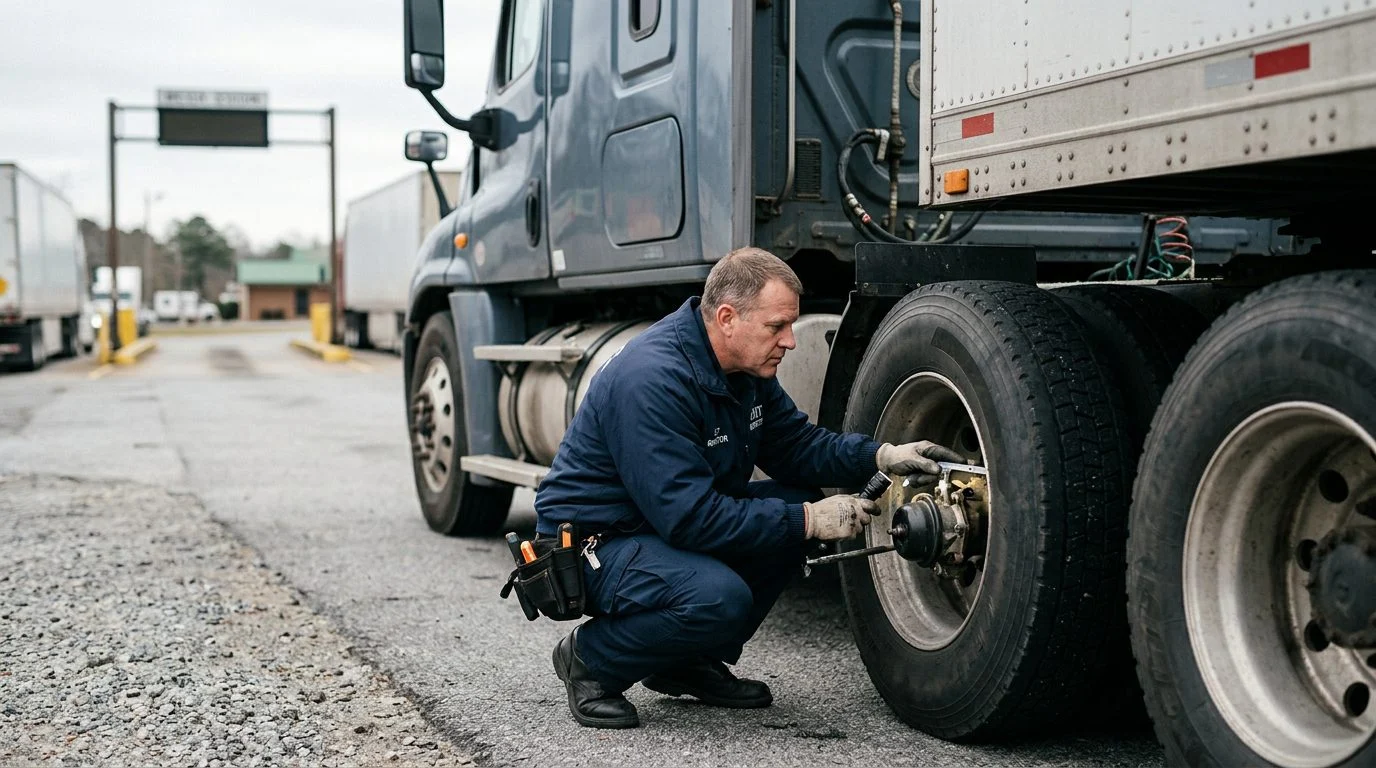
Federal rules make trucking records especially important. Drivers must record their duty status for each 24-hour period, and carriers must keep those records for at least 6 months (49 CFR 395.8).
A driver qualification file must be kept while the driver works for the carrier and for three years after (49 CFR 391.51). Maintenance records must be kept for 1 year, and for 6 months after the vehicle leaves the carrier’s control (49 CFR 396.3).
A preservation letter asks the carrier and its insurers to keep logs, footage and maintenance records. Georgia law also limits when a carrier’s insurance company can be joined in the same lawsuit, such as when the carrier is insolvent or bankrupt (O.C.G.A. § 40-1-112).
Georgia Fault Rules and Filing Deadlines
Georgia reduces your recovery by your share of fault. You cannot recover any damages if you are 50 percent or more responsible (O.C.G.A. § 51-12-33; Quynn v. Hulsey (2020)).
The judge reduces the damages in proportion to your fault (O.C.G.A. § 51-12-33). Each liable party’s share is its own, not a joint liability.
Deadlines are strict. Except as otherwise provided in this article, Georgia requires actions to be brought within two years after the right of action accrues for injuries to the person, with one year for injuries to reputation and four years for loss-of-consortium claims (O.C.G.A. § 9-3-33).
Claims against a county must be presented within 12 months after they accrue or become payable, though minors and other persons under disabilities have 12 months after the disability is removed (O.C.G.A. § 36-11-1). Claims against the state need written notice within 12 months of the date the loss was discovered or should have been discovered (O.C.G.A. § 50-21-26).
Waiting also shortens the time you have to gather records. Early review helps you keep every deadline in view.
Compensation You May Recover After a Catastrophic Truck Crash
A catastrophic injury claim can seek compensation for medical care, lost income and other losses the evidence supports.
Economic losses include past and future medical bills, rehabilitation, prescriptions, equipment, home and vehicle changes, lost wages and reduced ability to earn. Non-economic losses include pain and suffering, loss of enjoyment of life, disfigurement and emotional distress.
Georgia law lets a surviving spouse, or children if there is no spouse, recover the full value of the decedent’s life, as shown by the evidence (O.C.G.A. § 51-4-2). The surviving spouse receives no less than one-third of the recovery.
When death results from criminal or other negligence, the personal representative may recover funeral, medical and other necessary expenses (O.C.G.A. § 51-4-5).
A claim’s value depends on the facts, including the injuries, medical records and proof of fault.
We work on a no-fee-unless-we-win basis, but you may still be responsible for court costs and case expenses.
How a Catastrophic Truck Crash Case Works, Step by Step
Every case starts with a free case evaluation. Then it moves through evidence, investigation, a claim and, if needed, a lawsuit.
- Free case evaluation. You share the crash date, location, injuries, police report and any insurance letters. The review is free.
- Preservation letter. The firm asks the trucking company and insurers to keep logs, footage, maintenance records and the vehicle.
- Investigation. Our team gathers crash reports, medical records, witness statements, and scene and vehicle documents. It works with treating providers to document the injury.
- Claim presentation. The claim goes to insurers with supporting records and a demand for compensation.
- Negotiation or lawsuit. Negotiation can resolve a claim. If it doesn’t, a lawsuit may be filed before the deadline.
Timing varies with the injuries and the evidence. Terance Madden explains the expected steps at your consultation.
Not sure what your next step is?
Talk it through with our team — the first consultation is free, confidential, and carries no obligation.
Why Work With T. Madden & Associates, P.C.
T. Madden & Associates, P.C. is a Georgia personal injury firm led by attorney Terance Madden, in practice since 1999. If you are looking for a catastrophic injury truck crash lawyer Georgia families can meet in person, the firm has offices in Jonesboro (Clayton County), Atlanta, Decatur, Macon and Augusta.
The firm represents people hurt in truck wrecks, car crashes, motorcycle and e-bike crashes, and other injury cases.
Assistants and office staff handle scheduling, records requests and client updates. Terance Madden is the lawyer on each case and the responsible lawyer for this page.
You can call the firm 24/7, which matters when a serious crash has just happened. Each step is explained in plain terms so you can decide with the facts in front of you.
Frequently Asked Questions About Catastrophic Truck Crash Claims
Does Georgia reduce damages if I was partly at fault?
Yes. Under O.C.G.A. § 51-12-33, the judge reduces the damages otherwise awarded to the plaintiff in proportion to the plaintiff’s percentage of fault, and the plaintiff is not entitled to receive any damages if the plaintiff is 50 percent or more responsible for the injury or damages claimed.
Can I sue a truck driver in Georgia?
A claim can involve the driver, the trucking company and others whose fault contributed to the crash.
How long do I have to file?
Georgia generally allows two years after the right of action accrues for injuries to the person, with a one-year limit for injuries to reputation and four years for loss of consortium (O.C.G.A. § 9-3-33). Under O.C.G.A. § 9-3-33, actions for injuries to the person must be brought within two years after the right of action accrues, except as otherwise provided in this article. Claims against counties and the state are governed by separate notice rules in O.C.G.A. § 36-11-1 and § 50-21-26.
Can my family recover after a fatal truck crash?
A surviving spouse, or children if there is no spouse, may recover the full value of the decedent’s life, as shown by the evidence (O.C.G.A. § 51-4-2).
Is the first consultation free?
Yes. The first consultation is free, confidential, and carries no obligation to continue.
Can I call after hours?
Yes. You can call T. Madden & Associates, P.C. 24/7.
Talk With Terance Madden About Your Truck Crash Injury
If a tractor-trailer crash has left you or someone you love with a serious injury, the evidence and deadlines need attention now. Reach out today through our free case evaluation form, or call the firm 24/7 to set up a free, confidential first consultation.
Attorney Terance Madden is the responsible lawyer for this page. Contact T. Madden & Associates, P.C. through the contact page.
How our firm approaches truck crash cases
Early investigation
We focus on preserving the evidence that matters in a large-truck case, including records and information that can be lost quickly after a crash.
Attorneys who stay involved
Terance Madden and our lawyers work directly with clients and their families, keeping them informed at every stage of the case.
Attention to the whole person
Catastrophic injuries affect medical care, work, and daily life for years. We take the time to understand the full impact on you and your household.
No fees unless there is a recovery
You pay no attorney fees unless there is a recovery. You may still be responsible for court costs and case expenses, and we will explain these before you decide to move forward.
Before you speak with an insurance company
Trucking companies and their insurers often begin their own investigation within days of a crash. Avoid giving a recorded statement or signing any release until you have spoken with a lawyer about your injuries and your options.
Catastrophic injuries we handle in truck crash cases
Traumatic brain injuries
Head injuries that cause lasting cognitive, memory, or personality changes and require ongoing care.
Spinal cord injuries
Injuries that can lead to partial or complete paralysis and long-term medical and home-care needs.
Amputations
Loss of a limb that affects mobility, employment, and the need for prosthetics and rehabilitation.
Severe burns and multiple fractures
Serious injuries that often require surgeries, extended hospital stays, and long recovery periods.