

Truck Accident Lawyer · Georgia
Hurt in a Truck Crash? Get Clear Answers About Your Next Steps
T. Madden & Associates, P.C. has represented injured Georgians since 1999, serving Clayton County, Jonesboro, Atlanta, Decatur, Macon and Augusta. Start your free case evaluation today.
About the Firm
1999
Year the firm began practice
5
Georgia offices
24/7
Call us anytime
By Terance Madden · Published October 13, 2026
A truck accident lawyer helps people hurt in crashes with semi-trucks, 18-wheelers, and other commercial vehicles understand who may be responsible and when the filing deadline arrives. In Georgia, most injury claims must be filed within two years. Truck cases often involve several companies and insurers at once. T. Madden & Associates, P.C. has practiced in Georgia since 1999 and represents people hurt in truck, car, motorcycle, and e-bike crashes. This guide covers the first steps after a truck crash, who pays, the deadlines, the proof that matters, and how fees work. It is general information, not legal advice about your case.
What to Do in the First Hours and Days After a Truck Crash
Start with medical care, then protect the proof that can disappear. Injuries from large vehicles don’t always show up at the scene. Get checked even if you feel shaken but able to walk away, and describe every symptom, including minor ones.
Call 911 and ask for a police report. Write down the trucking company’s name, the U.S. DOT number on the cab, and the trailer plate if you can see it. If you can, photograph both vehicles, the road, skid marks, and the truck’s markings before anyone moves them.
Be careful with the trucking company’s insurer. Its adjusters work for the company’s insurer, not for you. Don’t give a recorded statement or sign a release until you understand what you’d be giving up.
Some of the most time-sensitive proof sits with the motor carrier, the trucking company. After certain truck crashes, federal rules require the employer to test surviving drivers for alcohol and drugs. After a serious truck crash, any alcohol or drug testing records may become important evidence. Controlled substance attempts stop at 32 hours. A late test requires a written record of why.
Next, figure out who can be sued. Our page on who can be sued in an 18-wheeler crash in Georgia covers that question in more detail.
Not sure what your next step is?
Talk it through with our team — the first consultation is free, confidential, and carries no obligation.
Why Injured People Bring in a Truck Accident Lawyer
People bring in a truck accident lawyer because these cases usually involve more parties, more records, and more insurance than a typical car crash. The driver, the motor carrier, the company that loaded the cargo, and a repair shop can each play a role. A crash victim usually can’t get a trucking company’s internal business and driver records alone.
A lawyer’s work often includes investigating the crash, sending letters asking the carrier to preserve evidence, gathering medical and wage records, and placing a value on the claim. The lawyer also negotiates with insurers and files a lawsuit if talks don’t resolve the claim. Those steps take time, and the injured person is often focused on recovering.
T. Madden & Associates, P.C. has practiced in Georgia since 1999. No lawyer can promise how a case will end. Every case turns on its own facts, its evidence, and the law that applies. Our car accident lawyer page covers the wider vehicle cases the firm handles.
Who Pays: Insurance Layers and Liable Parties in a Georgia Truck Crash
Insurance usually pays truck crash claims, and more than one policy may be involved. The at-fault driver’s auto policy and the motor carrier’s liability coverage are the most common sources. Other companies’ policies may also come into play, and your own policy may matter too.
Federal rules set minimum insurance levels for many commercial carriers. The federal schedule of minimum financial responsibility lists $750,000 for for-hire carriage of nonhazardous property in interstate or foreign commerce by vehicles with a gross vehicle weight rating of 10,001 or more pounds. That figure is a minimum insurance level, not the value of any particular claim.
Georgia also divides fault. Georgia’s apportionment statute, O.C.G.A. § 51-12-33 (Quynn v. Hulsey, 310 Ga. 473 (2020)), directs the trier of fact to consider the fault of each person or entity who contributed to the injury. That includes people who were never named in the lawsuit. Each liable person then pays only its own share. The loader, the maintenance vendor, and the truck or trailer owner may each have a role, so the case must account for each share.
If the at-fault driver has no coverage, your own uninsured motorist coverage may apply. Georgia insurers must offer uninsured motorist coverage with auto policies, and that coverage applies unless the insured rejected it, or selected lower limits, in writing (O.C.G.A. § 33-7-11). Review your own policy early.
Our page on suing a trucking company after a crash in Georgia covers who else may be liable.
Can I Sue a Truck Driver for Hitting Me?
Whether you have a claim against a truck driver depends on the facts of your crash. Evidence about what the driver did before and during the crash often matters a great deal.
Common examples include following too closely, speeding, distraction, and driving while fatigued. Fatigue is often tied to hours-of-service records, which show when a driver was on duty and driving. Those records belong to the carrier, so the claim usually depends on obtaining them.
Naming both the driver and the trucking company lets the case look at the whole crash. Which policies pay depends on the facts, so the full set of parties matters more than any one name. Our page on suing a truck driver who hit you in Georgia goes deeper into how these claims work.
Have questions about what happened?
Ask our team directly. The first conversation is free, confidential, and there is no obligation to continue.
Your Georgia Filing Deadline and Why It Starts Early
Most Georgia injury claims from a truck crash must be filed within two years. Georgia’s personal injury statute of limitations, O.C.G.A. § 9-3-33 (Cameron v. JMP Pizza, Inc. (2026)), requires that a claim for bodily injury be filed within two years after the right of action accrues. Loss of consortium claims have four years under the same statute. Damage to your vehicle may be handled separately from your injury claim.
Waiting on bills, insurer responses, or repairs can use up time, so it helps to reach out early. Gathering proof and building the claim take time, so the early months matter.
Government involvement changes the timing. If a state vehicle or state road is involved, notice rules can be much shorter. The Georgia Tort Claims Act, O.C.G.A. § 50-21-26, requires that notice of a claim against the State be given in writing within 12 months of when the loss was discovered or should have been discovered. A suit against the State can’t start until the claim is denied or 90 days pass without action.
Our page on how long you have to file a truck accident claim in Georgia covers these dates in more detail.
Proving Fault: Evidence Unique to Truck Cases
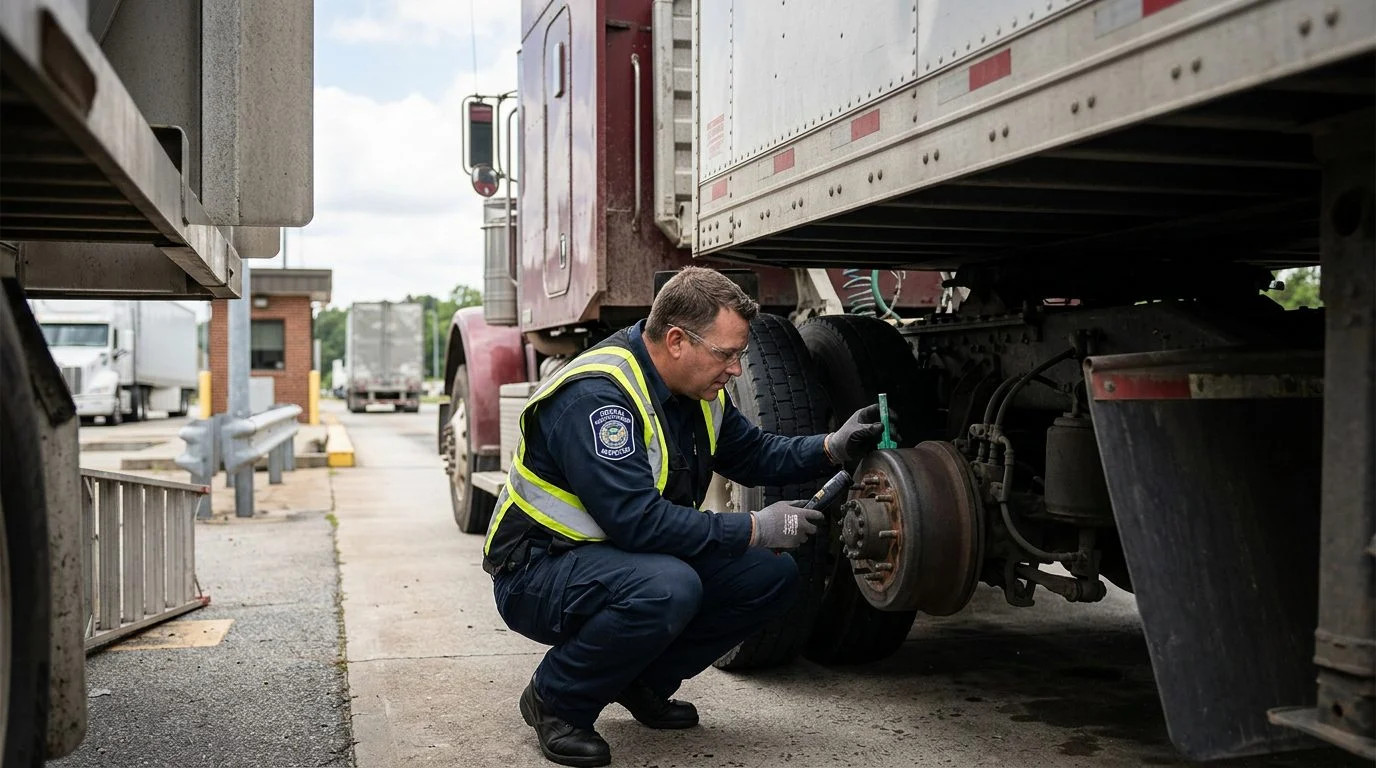
Proving fault in a truck case depends heavily on records the carrier controls. Under the federal duty-status records rule, a motor carrier shall retain records of duty status and supporting documents for each of its drivers for not less than 6 months from the date of receipt. Those records can show whether a driver was on duty longer than allowed.
Driver qualification files matter too. Under the federal driver qualification file rule, each driver’s qualification file is kept for as long as the driver is employed by that motor carrier and for three years thereafter. The file can include the driver’s application, motor vehicle records, and road test certificate.
Other key evidence includes engine control module data, which can record speed, braking, and throttle before impact. Inspection and maintenance records and cargo weight documents also help. Some data can be overwritten, so a written preservation request should go out quickly.
Georgia also reduces damages by the injured person’s share of fault. If the plaintiff is found 50 percent or more responsible for the injury, O.C.G.A. § 51-12-33 (Quynn v. Hulsey, 310 Ga. 473 (2020)) bars the recovery of damages. Keep statements at the scene short and factual. Our page on what to do when the other driver says the crash was your fault covers this in more depth.
Federal and Georgia Trucking Rules That Often Matter
Records about driver hours, truck maintenance, and driver qualifications can help show what went wrong.
Whether a broken safety rule played a part in a crash is one of the questions a lawyer may look at. Every case depends on its own facts. That is why our firm looks closely at how the crash happened and what caused the injuries.
Interstates such as I-75 and I-285 carry heavy truck traffic through the Atlanta area. Clayton County drivers share those roads too. Crashes on busy highways can involve several vehicles, which makes the sequence of events harder to rebuild without records.
Rule violations are facts a lawyer must document. A crash victim usually can’t confirm them alone. Our page on federal trucking rules that apply to a Georgia truck crash explains these rules in more detail.
Injuries, Damages, and What Drives a Truck Claim’s Value
A truck claim’s value depends on the injuries, how long their effects last, the insurance available, and how strong the proof of fault is. No formula sets the number. Truck crashes can cause traumatic brain injuries, spinal cord injuries, crush injuries, fractures, burns, and internal organ damage.
Claims usually include economic damages, such as medical bills, lost wages, and future care costs. They may also include non-economic damages, such as pain and suffering. In Georgia, O.C.G.A. § 51-12-1.1 limits recoverable medical expenses to the reasonable value of medically necessary care, with that amount determined by the trier of fact.
Permanent limits and future needs change the scope of a claim. A catastrophic injury can require proof of future medical and living needs, which takes more time and evidence to build. Our catastrophic injury lawyer page covers this in more detail.
Want to know where you stand?
Tell us what happened and our team will walk you through the options available to you, at no cost.
How a Contingency Fee Works, Including Costs You May Still Owe
T. Madden & Associates, P.C. handles personal injury cases on a no-fee-unless-we-win basis, but you may still be responsible for court costs and case expenses, as your written fee agreement explains. The fee percentage is set in that written agreement, and the agreement controls the exact terms. Read it before you sign, and ask about any cost you don’t understand.
Medical bills often shape what a client keeps. When the plaintiff is covered by health insurance, O.C.G.A. § 51-12-1.1 provides that evidence of reasonable value includes both the amounts charged and the amounts actually necessary to satisfy those charges under the insurance contract. For treatment provided under a letter of protection, the letter, itemized charges, and any referral source can be discoverable.
Those rules affect what you keep after medical bills and liens are resolved. Our pages on what percentage an accident lawyer takes and on truck crash cases in Clayton County cover fees in more detail.

What Happens at Your Free Case Evaluation with T. Madden & Associates
A free case evaluation is a conversation about your crash and your options, and it costs nothing to have. The discussion covers the crash, your injuries, your treatment, your insurance, and the deadlines that may apply.
Bring what you have. That includes the crash report number, photos, insurance cards, medical records and bills, and any letters from insurers. If something is missing, bring what you can and don’t delay for paperwork.
The firm has offices in Jonesboro (Clayton County), Atlanta, Decatur, Macon, and Augusta. The responsible lawyer is Terance Madden.
Why do I need a truck accident lawyer?
Truck cases involve several parties, federal records, and carrier insurers. Many injured people find it hard to gather proof and track deadlines while they recover.
Can I sue a truck driver for hitting me?
Yes, you can bring a claim against a truck driver whose negligence caused your injuries. The case turns on proof of the driver’s fault.
What percentage does an accident lawyer take?
The percentage is set in each written fee agreement. That agreement also states the costs you may owe.
How long do I have to file?
Most Georgia injury claims must be filed within two years of the injury. Claims against the State can require notice much sooner.
If a semi-truck struck you or someone in your family on a Georgia road, and you’re deciding whether to pursue a claim, reach out to our team for a free case evaluation.
Disclaimer: This page is general information, not legal advice. T. Madden & Associates, P.C. is responsible for this content, and Terance Madden is the responsible lawyer. The firm’s offices are in Jonesboro (Clayton County), Atlanta, Decatur, Macon, and Augusta, Georgia. Contact details are on the firm’s website. No outcome can be promised, because every case depends on its own facts.
How We Work With Truck Crash Clients
No Fee Unless There Is a Recovery
Attorney Terance Madden and the firm handle truck, car, motorcycle and e-bike cases with no attorney's fee unless there is a recovery. Clients may still be responsible for court costs and case expenses, and we explain these before you decide.
Multiple Companies, One Plan
Truck cases often involve a driver, a carrier, and several insurers. We organize the parties and the paperwork so you can focus on recovering.
Plain-Language Guidance
We explain each step in terms you can understand, from the first call through the claims process.
Reach Us Anytime
Call us 24/7 to talk about your crash and learn what options may apply to your situation.
Act Early After a Truck Crash
Key evidence from a truck crash, such as driver logs, vehicle data and scene photos, may not stay available for long. Contacting us early gives us the best chance to help preserve it.
Steps to Take After a Truck Crash
Get Medical Care
Seek treatment right away, even if your injuries seem minor. Records made early matter.
Document the Scene
Photograph vehicles, road conditions, and visible injuries. Write down the time and location.
Record the Details
Note the truck's company name, DOT number, driver information, and witness contact details.
Contact Our Firm
Let T. Madden & Associates, P.C. review your crash and explain your options at no cost to start.