

Georgia Truck Crash Claims
Hurt in a truck crash that was partly someone else's fault? Talk to us first.
Georgia's comparative fault rule can change how a claim is valued, so the details of your crash matter from the start.
T. Madden & Associates, P.C.
1999
Practicing law since 1999
5
Offices: Jonesboro, Atlanta, Decatur, Macon and Augusta
No fee
No fee unless there is a recovery. Court costs and case expenses may still apply.
By Terance Madden · Published November 17, 2026
A family member is hurt, the bills keep coming, and then the other side says the crash was partly their fault. In Georgia, that claim can lower what you recover. At 50 percent or more, the injured person recovers nothing (O.C.G.A. § 51-12-33 (Quynn v. Hulsey (2020))(g)).
How does Georgia’s comparative fault rule reduce compensation if the injured person is partly to blame for the crash?
Georgia reduces damages by the injured person’s own share of fault. At 50 percent or more, the injured person recovers nothing. O.C.G.A. § 51-12-33 applies when an action is brought against one or more persons for injury to person or property and the plaintiff is to some degree responsible for the injury or damages claimed.
Comparative fault is the share of blame a jury assigns to each person whose conduct added to the harm (O.C.G.A. § 51-12-33; Quynn v. Hulsey (2020)). The statute says the judge reduces the award in proportion to the injured person’s share. Shared blame lowers the number.
The 50 percent line is the key. Under O.C.G.A. § 51-12-33(g), a plaintiff who is 50 percent or more responsible for the injury or damages claimed cannot receive damages. Under O.C.G.A. § 51-12-33, the plaintiff shall not be entitled to receive any damages if the plaintiff is 50 percent or more responsible for the injury or damages claimed.
Here is the math, using round numbers as an example, not a result. Say a jury finds $100,000 in total damages and assigns 20 percent of the fault to the injured person. The reduction is $20,000, leaving $80,000. Raise that share to 50 percent, and the recovery is zero.
Not sure what your next step is?
Talk it through with our team — the first consultation is free, confidential, and carries no obligation.
What Is Comparative Fault, and What Must Be Proven First?
Negligence is careless conduct that falls below what the law requires. Under O.C.G.A. § 51-1-2, it is the absence of the care an ordinarily prudent person would use in the same circumstances.
Georgia law lets an injured person recover for breach of a legal duty that causes damage, under O.C.G.A. § 51-1-6. In plain terms, you must show the other driver owed you care, broke that duty, and the break caused your harm.
If the proof is thin, there is no claim to reduce.
That’s why the first work is evidence. Think of the crash scene, photos, witness names and medical records that tie the injury to the crash. Evidence fades fast after a truck crash, so start early.
How Is Fault Worked Out in a Truck Crash?
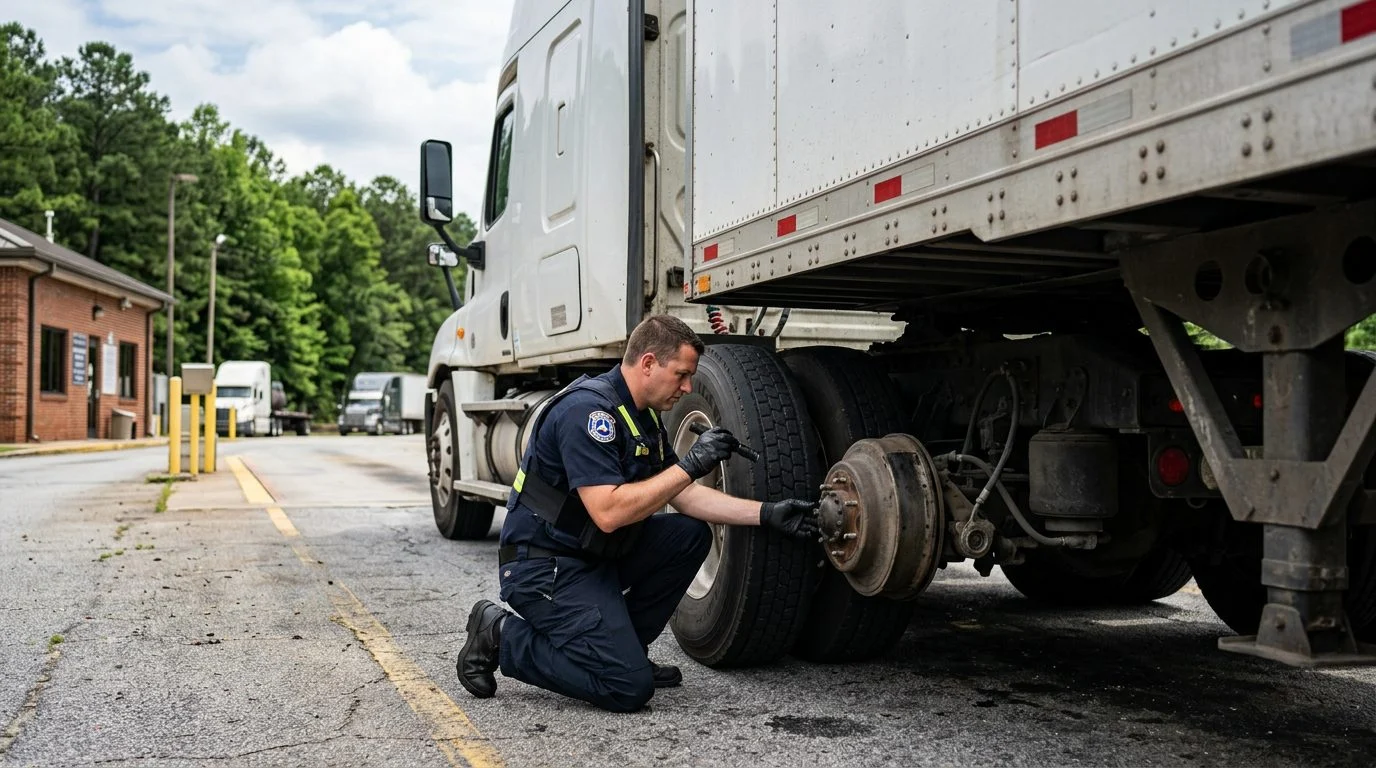
In a truck crash, the fault split often turns on records that car crashes rarely leave. If a truck has an engine control module (ECM), the module may store engine and driving data. Carriers operating commercial trucks must also require their drivers to use electronic logging devices (ELDs) to record each driver’s duty status, subject to limited exceptions for manual records, under 49 C.F.R. § 395.8.
Federal rules require a carrier to keep those records for at least six months from receipt. They also bar drivers and motor carriers from tampering with an ELD so it stops recording accurately.
Before law school, Terance Madden trained as an electrical engineer. He asks the engineer’s questions first: what the data shows about speed, braking and timing, and how the crash happened. He also asks which records exist and must be preserved before they are overwritten.
Fault can reach the trucking company too. The firm calls these claims the Negligent Five: hiring, training, entrustment, retention and supervision. In Quynn v. Hulsey, the Supreme Court of Georgia treated negligent hiring, training, supervision and retention as the employer’s own fault. Under Quynn v. Hulsey, 310 Ga. 473 (2020), claims for negligent hiring, training, supervision, and retention are based on the alleged negligent acts of the employer.
How Does Fault Get Split Among Several Defendants?
Fault can be split among more than one party.
Each party pays only its own share. Under O.C.G.A. § 51-12-33(b), each at-fault person owes only his or her own share of the damages. That share is not a joint liability, meaning no one is made to pay the whole award, and it is not subject to contribution, meaning a person who pays cannot seek repayment of part of it from another liable person. A defending party can also name a nonparty as at fault, with notice given at least 120 days before trial.
Other parties can add to the fault picture. Brake and tire makers, cargo loaders and maintenance vendors may each bear a share. Each one may also bring its own insurance into the claim. Don’t stop at the driver.
O.C.G.A. § 40-1-112 sets conditions for joining a motor carrier and its insurer in the same action. Know those conditions before you plan the case.
How Does Big Insurance Use a Partial Fault Argument Against an Injured Person?
Big Insurance is not on your side. An insurer’s first offer is rarely what a claim is worth. A partial-fault argument is one of the first tools it reaches for.
Watch for the tactics. An early claim that the injured person was mostly to blame. A recorded statement taken before the facts are known. Payment delays. Disputes over treatment. “Low impact” arguments that say the crash was too minor to cause real harm.
The response is to pursue every coverage layer. That includes liability coverage, uninsured and underinsured motorist (UM/UIM) coverage, and corporate coverage. Umbrella and excess policies are excluded from the required coverage unless affirmatively provided for in such policies or in a policy endorsement. Georgia law generally requires auto liability policies to include an endorsement covering injury caused by an uninsured motorist, unless the insured rejects that coverage in writing, under O.C.G.A. § 33-7-11.
The law separates general damages, which flow from the act, from special damages, which must be proved (O.C.G.A. § 51-12-2). Medical expenses are limited to the reasonable value of medically necessary care (O.C.G.A. § 51-12-1.1).
What to Do If Someone Says You Were Partly to Blame
If the other side says your family member shares the blame, you may be the one making the calls and holding the papers. That is a heavy load, and you don’t have to carry it alone.
Three steps help right away. Keep the crash report, photos, bills and medical records in one place. Do not give a recorded statement to Big Insurance before you get advice. Write down what happened while memory is fresh, including times and names.
The firm works on a no-fee-unless-we-win basis, but you may still be responsible for court costs and case expenses.
For the full picture of truck claims in Georgia, read our Georgia truck injury guide.
If someone is telling your family the crash was partly its fault, start a free case evaluation. The first consultation is free, confidential, and carries no obligation to continue.
Not sure what your next step is?
Talk it through with our team — the first consultation is free, confidential, and carries no obligation.
Frequently Asked Questions
What is Georgia’s comparative fault rule?
Georgia uses a modified comparative fault rule, found in O.C.G.A. § 51-12-33. If a court finds you were partly at fault for your injuries, your total damages (the money awarded for your losses) are reduced by your percentage of fault.
What happens if I was partly to blame for a crash in Georgia?
You may still have a claim, as long as your share of fault is less than 50%. Under O.C.G.A. § 51-12-33, the judge shall reduce the amount of damages otherwise awarded to the plaintiff in proportion to his or her percentage of fault.
Can I recover anything if I am 50% or more at fault in Georgia?
No. Under Georgia’s rule, an injured person who is 50% or more responsible for their own injuries cannot recover damages from the other parties.
How does the rule work when more than one person caused the crash?
A jury can assign a percentage of fault to each person whose conduct contributed to the injury, and the injured person’s award is reduced only by their own share. Each at-fault party is responsible for their assigned percentage under the statute. A lawyer can review the evidence to see how fault may be divided in a specific case.