

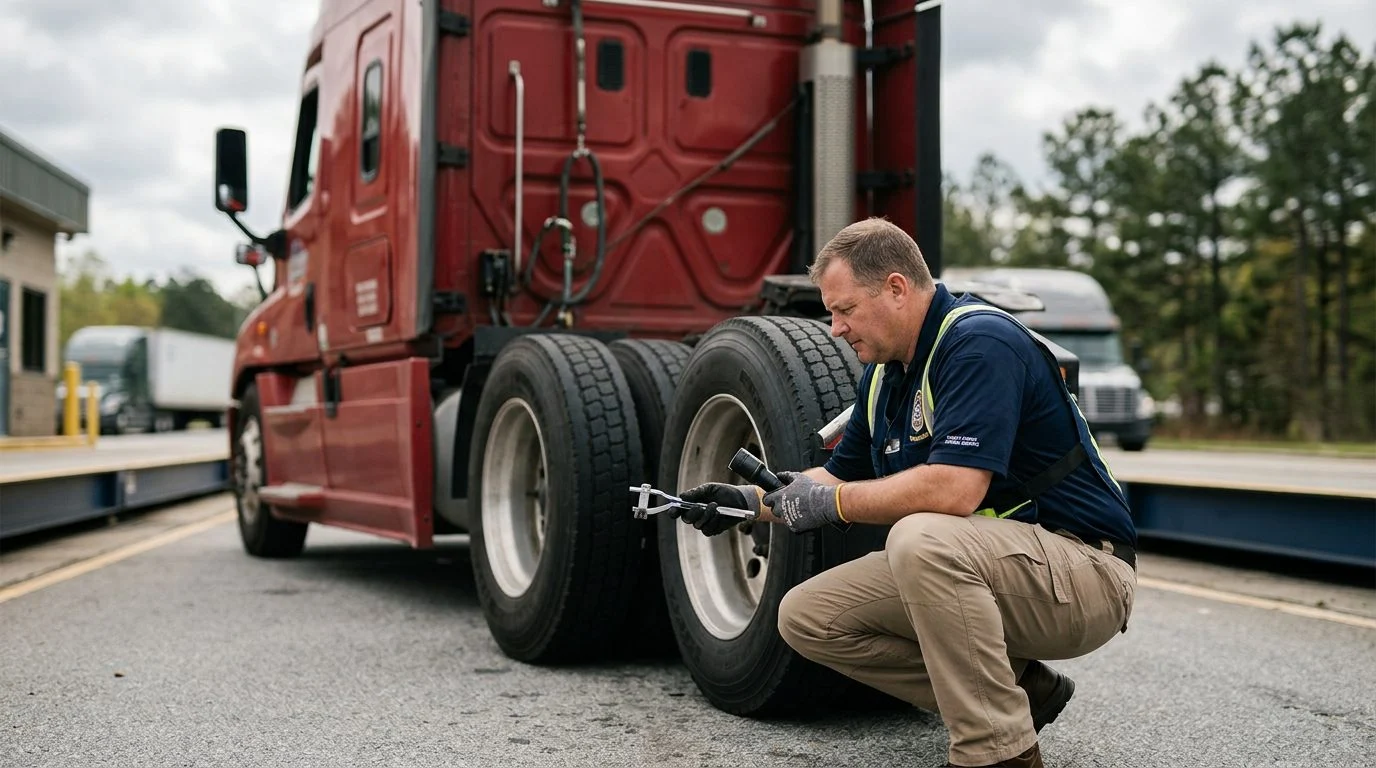
Clayton County Truck Crash Evidence
Protect the Evidence Before a Clayton County Truck Crash Record Disappears
Trucking companies keep driver logs, electronic data and maintenance files, and some of it is kept for only a limited time. T. Madden & Associates, P.C. helps injured people put those records on notice early.
About T. Madden & Associates, P.C.
1999
Year the firm began practice
5
Offices across Georgia, including Jonesboro
Free
Confidential first consultation with no obligation
By Terance Madden · Published October 23, 2026
A truck crash evidence preservation lawyer can send a written request asking the company to keep the records that show what happened. A written preservation demand asks the trucking company and its insurer to hold onto specific evidence. T. Madden & Associates, P.C. represents people hurt in truck crashes in Clayton County from its Jonesboro office.
What a Truck Crash Evidence Preservation Lawyer Does
A preservation lawyer sends a written demand asking the trucking company to keep specific records. The company should not routinely discard or overwrite them. The demand is a letter, not a lawsuit. It lists the categories of evidence you expect the company to keep.
This letter is usually sent to the carrier, the driver, and their insurer. It goes out as early as possible after the crash. Routine record cycles and vehicle repairs can move quickly, so early action matters.
The demand works alongside the injury claim. It does not replace the claim itself. It asks the company to keep the proof the claim will need.
This page is written for people hurt in a truck crash near Clayton County, Jonesboro, or the wider Atlanta area. It also speaks to families of people killed in these crashes. Terance Madden is the responsible lawyer for this page, and T. Madden & Associates, P.C. can send a demand on a client’s behalf.
If a truck crash hurt you and the company hasn't shared its logs or video yet, our team can talk through what to request before those records are gone. Talk it through with our team — the first consultation is free, confidential, and carries no obligation.

Truck Crash Evidence That Can Be Lost or Overwritten
Much of the key evidence in a truck crash sits with the trucking company, not with the injured person. These are the records that most often matter:
- Engine and braking data. The truck’s electronic control module and event data recorder can store speed, braking, and throttle information from around the time of the crash.
- Dash-cam video. Some onboard camera systems record over older footage, so the clip you need may be overwritten.
- GPS, dispatch, and messages. Telematics and fleet messages can show routes, stops, and what the driver was told.
- Hours-of-service records. Motor carriers must keep records of duty status and supporting documents for at least 6 months from the date of receipt (49 CFR 395.8). Except drivers for a private motor carrier of passengers (nonbusiness), drivers must send supporting documents to the employer within 13 days of either the 24-hour period to which the documents pertain or the day the document comes into the driver’s possession, whichever is later (49 CFR 395.11). Those documents include expense receipts, fleet messages, and payroll records.
- Inspection and repair records. The original or a copy of the inspection report must be retained by the motor carrier, intermodal equipment provider, or other responsible entity for a period of fourteen months from the date of the inspection report (49 CFR 396.21). Brake and tire work can matter as well.
- They can show hiring steps, road tests, and training.
- The truck and the load. Photos, parts removed after the wreck, bills of lading, and cargo records show what was on board.
Why Timing Matters Under Georgia Law
Timing matters because records can be discarded once federal retention periods end. Companies subject to this part shall retain records for the minimum retention periods provided in appendix A to this part, and after the required retention periods the records may be destroyed at the discretion of each company’s management, although this part shall not be construed as excusing compliance with the lawful requirements of any other governmental body prescribing longer retention periods for any category of records (49 CFR 379.3).
Destroying or losing evidence that matters to a lawsuit is called spoliation. When key evidence is lost, it can hurt the claim. The court decides how to respond to the loss.
Testing rules also set a clock. If an alcohol test isn’t given within two hours, the employer must keep a written reason. If a required post-accident alcohol test isn’t given within eight hours, the employer must stop trying and keep a record of why (49 CFR 382.303).
Federal rules also bar a motor carrier from altering or erasing original hours-of-service information (49 CFR 395.30).
Repairs and returned-to-service trucks can change what remains. Agency reports don’t settle fault, either. The National Transportation Safety Board identifies probable causes and safety recommendations but does not determine fault or liability (NTSB). The carrier’s own records often fill that gap.
How the Evidence Preservation Process Works
The process starts with a conversation. It moves to a written demand as early as possible.
- Reach out. Share the crash date, the location, the carrier’s name if you know it, and any police report number. The firm offers a free first consultation, which is confidential and carries no obligation to continue.
- Review the facts. The firm looks at what is known about the crash and which records are most likely to matter.
- Send the demand. A written preservation demand goes to the trucking company and its insurer. It lists each category of evidence to keep.
- Track the response. The firm follows up and tracks what was produced, what was withheld, and what may be gone.
- Connect the records to the claim. The evidence is reviewed alongside medical documentation and the injury claim.
Early steps matter most. Retention periods and repairs can move faster than a claim does.
Why Work With T. Madden & Associates, P.C.
T. Madden & Associates, P.C. has practiced personal injury law in Georgia since 1999. The firm has offices in Jonesboro (Clayton County), Atlanta, Decatur, Macon, and Augusta.
Terance Madden is the responsible lawyer for this page. The firm’s lawyers include Terance Madden and Shenia Madden. Our team also includes assistants and office staff.
The firm handles truck accident, car accident, wrongful death, and catastrophic injury cases. Those areas overlap with truck crash evidence work.
The firm takes cases on a no fee unless we win basis, but you may still be responsible for court costs and case expenses. Ask how those costs are handled at the start.
At the first meeting, the team reviews the crash facts, the evidence already known, and the steps the firm would take.
Frequently Asked Questions About Truck Crash Evidence
Can a preservation demand make a company keep its records?
A demand puts the company on written notice of the records you expect it to keep. It does not control what the company does next.
How long must a trucking company keep driver logs?
Under federal rules, at least 6 months from the date of receipt (49 CFR 395.8).
How long do I have to file a Georgia injury lawsuit?
Georgia’s general deadline for personal injury is two years after the right of action accrues (O.C.G.A. § 9-3-33). The statute has exceptions, so the exact date depends on the facts.
What if the company says the records are gone?
Tell the firm as soon as you hear it. The firm can look at what was lost, when, and why.
Can a family reach out after a fatal truck crash?
Yes. Under Georgia’s wrongful death statute, O.C.G.A. § 51-4-2, the surviving spouse or, if there is no surviving spouse, a child or children, either minor or sui juris, may recover for the homicide of the spouse or parent the full value of the life of the decedent, as shown by the evidence; any amount recovered is equally divided, share and share alike, among the surviving spouse and the children per capita, with the descendants of children taking per stirpes, but the surviving spouse shall receive no less than one-third of such recovery as such spouse’s share.
Not sure what your next step is?
Talk it through with our team — the first consultation is free, confidential, and carries no obligation.

Talk to a Clayton County Truck Crash Lawyer About Your Records
If a truck crash has hurt you or someone you love, and the company has not yet shared its records, time is working against you. Our team can help you sort out what to request now.
Our phone line is open 24/7. To start a free case evaluation, use the contact page.
Responsible lawyer: Terance Madden, T. Madden & Associates, P.C., Jonesboro office. Contact: tmaddenlaw.com/contact. This page is general information and does not promise any result.
What Our Team Works to Preserve
Driver logs and hours-of-service records
Logs and related files are central to showing how long a driver was on the road and whether rest requirements were followed.
Electronic and onboard data
Engine control, GPS and electronic logging data can be overwritten in normal operation, so early written notice matters.
Maintenance and inspection files
Repair orders, inspection reports and equipment histories help show the condition of the truck before the crash.
Dispatch and company communications
Messages between the driver and the carrier can reveal scheduling pressure, route changes and safety concerns.
Important: Do Not Wait
Do not give a recorded statement to the trucking company or its insurer, and do not post about the crash online, before you have spoken with a lawyer. Those words can be used later.
How We Help After a Truck Crash
1. Contact Us
Call or start your free case evaluation. Our team will listen to what happened and answer your questions.
2. Send Written Notice
We send a preservation demand to the trucking company and its insurer, asking them to keep the records connected to the crash.
3. Build the Record
We work to gather police reports, photographs, witness information and medical records while the evidence is still available.
4. Review Your Options
We explain the process in plain terms so you can decide what comes next. Fees are discussed at the start, with no fees unless there is a recovery, though you may still be responsible for court costs and case expenses.
Injured in a Truck Crash? Talk With Our Team Today. Your First Consultation Is Free, Confidential and Without Obligation.
Related practice areas
- Truck Accident Lawyer in Georgia: Who Pays, Your Deadline, and What to Do Now