

Truck Accident Lawyer | Georgia
Hurt in a Truck Crash? Find Out If a Parts Maker Can Be Part of Your Case
T. Madden & Associates, P.C. has represented people hurt in Georgia crashes since 1999. Start with a free, confidential consultation with no obligation to continue.
About the Firm
1999
Practicing law since
5
Georgia offices
Free
First consultation, no obligation
By Terance Madden · Published October 28, 2026
If you are asking whether you can sue the parts maker after a truck crash in Georgia, the short answer is sometimes. Whether that applies depends on the facts. This guide explains how Georgia law looks at these claims, who else may be named, and the deadlines that matter. T. Madden & Associates, P.C. has been in practice since 1999.
The Short Answer: Can a Truck Parts Maker Be Sued in Georgia?
The claim usually turns on two questions. Was the tire or part defective when it left the maker? Did that defect cause the crash and your injuries?
A tire that failed because it was defective is different from a tire that wore out, was underinflated, or was overloaded. Those causes can point to the driver, the trucking company, or a repair shop instead of the maker. Sorting out which cause fits takes a look at the tire, the maintenance history, and the crash facts.
Early on, the answer is rarely clear. Many people do not know whether the tire or part was the problem until the records and the physical evidence are reviewed. For a broader look at truck claims in Georgia, read our truck accident guide.
If a tire blew out or a part failed in a crash that hurt you or someone you love, our team can talk through your options with you, starting with a free first consultation. Talk it through with our team — the first consultation is free, confidential, and carries no obligation.
How Georgia Product Liability Law Applies to Truck Parts
A claim against a parts maker is a product claim. It asks how the product was made, designed, or labeled. Lawyers usually sort product problems into three groups:
Each group needs different proof. A manufacturing claim often depends on the tire or part itself. A design claim often looks at how similar parts were built. A warning claim looks at what the maker told buyers and drivers.
Federal rules give a clear standard for truck tires. No motor vehicle may be operated on a tire that has body ply or belt material exposed through the tread or sidewall. The same rule bars a tire with any tread or sidewall separation, a flat or audible leak, or a cut that exposes ply or belt material. It also sets a minimum tread depth of 4/32 of an inch for front wheels of a bus, truck, or truck tractor (federal tire safety rule). A tire that breaks these rules can point to a problem, but the crash facts still have to connect it to your injuries.
Who Else Can Be Named After a Tire Blowout or Part Failure
Several parties can be involved, not just the maker. Possible defendants include the tire or part maker, a retreader or component maker, a distributor or seller, a repair or maintenance shop, the trucking company, and the driver.
The trucking company is often a key party. Georgia law makes a person liable for torts committed by a servant in the prosecution and within the scope of his business, whether the wrong was negligent or intentional (O.C.G.A. § 51-2-2). In plain terms, a business can answer for wrongs its workers commit while doing the business’s work.
The trucking company may also face its own claims. These claims focus on what the company did or failed to do, not on how the part was designed. Fault can be shared among several of these parties, which section six explains.
Evidence That Often Matters in a Tire or Parts Claim
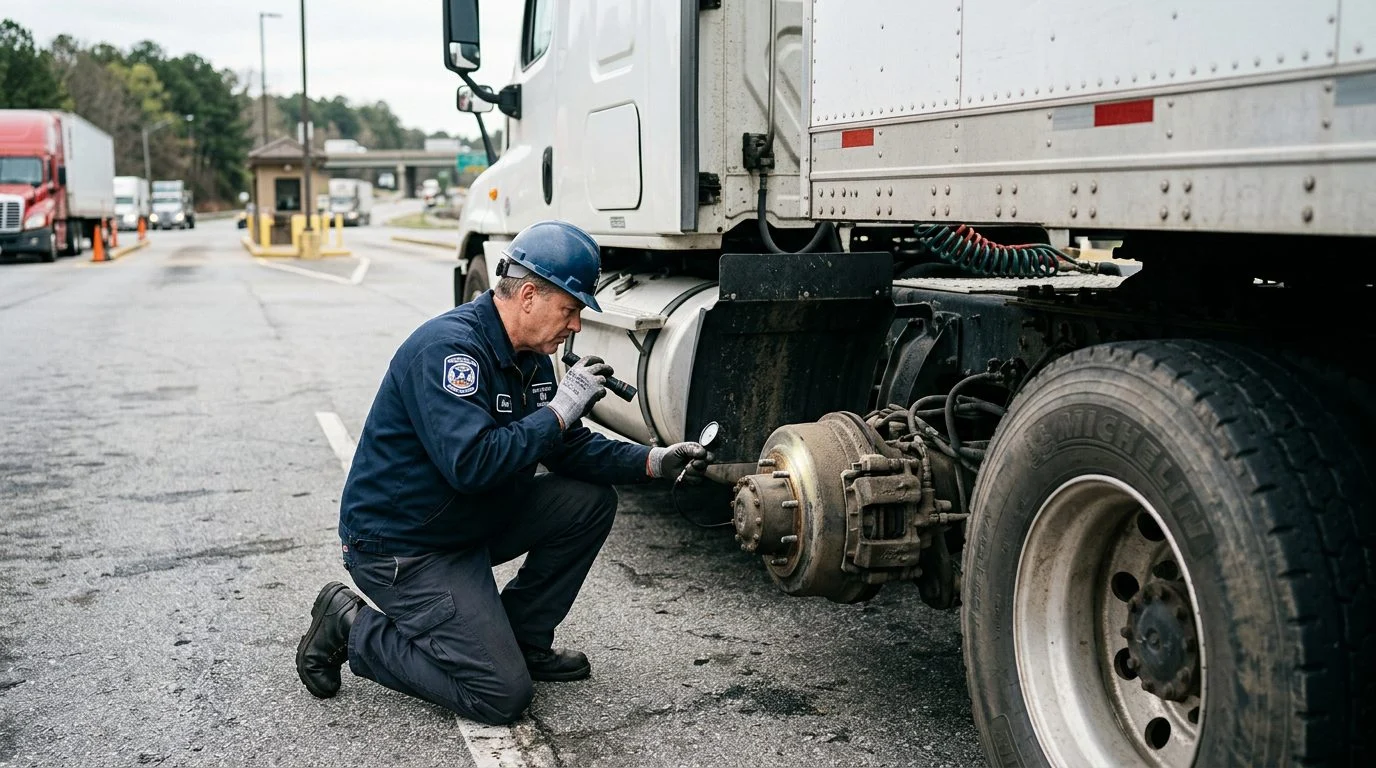
The tire, wheel, or part is usually the most important evidence. It should be kept, not thrown away or sent for scrap. Trucks are often repaired quickly after a wreck, so this step can be missed.
A lawyer can send requests to the trucking company and other parties early, asking that key items be kept. Other evidence includes:
- Maintenance and inspection records, and the truck’s inspection logs
- Repair invoices and the tire’s purchase and retread history
- The police or crash report, and photos or video from the scene
- Witness names and contact details
- Medical records that connect your injuries to the crash
Federal investigators also look at causes.
Georgia Deadlines for Suing After a Truck Crash
In most Georgia personal injury cases, the deadline to file suit is two years after the right of action accrues. “Accrues” means the date the claim starts (O.C.G.A. § 9-3-33).
The same statute sets other periods for other claims. For example, it allows four years for actions for injuries involving loss of consortium, and one year for injuries to reputation. Because the statute includes exceptions, check your timing early rather than assuming the general rule fits your case.
Waiting while a truck is repaired or evidence is discarded can make a claim harder to prove. Starting early gives a lawyer time to request records and preserve physical items before they are gone.
How Fault Is Divided and Where Compensation Can Come From
Georgia reduces an award by the injured person’s share of fault. A person who is 50 percent or more responsible cannot recover any damages (O.C.G.A. § 51-12-33; Quynn v. Hulsey (2020)).
Under O.C.G.A. § 51-12-33, the judge reduces damages in proportion to the plaintiff’s percentage of fault. The jury must consider the fault of everyone who contributed to the injury. That can include people who were never sued, but only if the plaintiff settled with them or a defending party gave notice not later than 120 days before trial that they were wholly or partially at fault (O.C.G.A. § 51-12-33(d)(1)). The statute says these shares are not joint liability and are not subject to contribution.
Coverage can come from several sources, including the trucking company’s liability insurance and, in some cases, a product liability insurer. Coverage and limits vary by case. Georgia law also limits when a motor carrier’s insurer can be added to the same lawsuit. Under O.C.G.A. § 40-1-112, that joinder is allowed only in specific situations.
Damages come in two groups. General damages are those the law presumes flow from a wrong, and they can be recovered without proof of an amount. Special damages actually flow from the wrong, and they must be proved (O.C.G.A. § 51-12-2). Medical bills and lost income are losses shown with records. When future economic losses, such as medical expenses, living expenses, or lost wages, are awarded, the trier of fact may reduce them to present value using a discount rate of 5 percent or another rate it considers appropriate (O.C.G.A. § 51-12-13).
Not sure what your next step is?
Talk it through with our team — the first consultation is free, confidential, and carries no obligation.
What a Lawyer Can Do Early in a Tire or Parts Case
Early work usually focuses on finding every responsible party and keeping evidence in place. This stage comes before any courtroom appearance.
Early steps often include identifying each party that may be responsible, sending requests to preserve the tire or part and the records, and gathering medical and wage documents. Technical questions come next. Whether a tire failed from a defect, underinflation, overloading, or wear usually takes testing and a review of the records, not a quick look at photos.
Our team reviews the facts of a specific crash and explains the options that fit it. No outcome can be promised in advance, because each claim turns on its own evidence and proof.
Fees and Costs When You Hire T. Madden & Associates
The firm offers a free first consultation, which is confidential and carries no obligation to continue. T. Madden & Associates, P.C. handles personal injury cases on a no-fee-unless-we-win basis. The client may still be responsible for court costs and case expenses.
Terance Madden is the responsible lawyer for this page. The firm has been in practice since 1999 and has offices in Jonesboro (Clayton County), Atlanta, Decatur, Macon, and Augusta. Contact details are on the firm’s contact page.

Talk With Our Team About a Tire Blowout or Parts Failure
Whether a parts maker can be sued after your crash turns on what the tire or part shows. That takes a review of the facts.
Can you sue the tire manufacturer after a truck tire blows out?
Sometimes. The claim turns on whether the tire was defective when it left the maker and whether that defect caused the crash.
Can you sue the trucking company after a maintenance-related blowout?
A claim can be brought against a trucking company. Georgia law makes a business liable for wrongs its workers commit within the scope of the business.
How long do you have to file?
In most Georgia injury cases, the general deadline is two years after the right of action accrues (O.C.G.A. § 9-3-33; Kenneth B. Cameron v. Jmp Pizza, Inc (2026)).
If a tire blew out or a part failed in a crash that hurt you or someone you love, you do not have to sort out the evidence and deadlines alone. Our team can talk through what happened with you, starting with a free first consultation.
Responsible lawyer for this page: Terance Madden, T. Madden & Associates, P.C., Jonesboro, Clayton County, Georgia. Contact: tmaddenlaw.com/contact. No result can be promised in advance.
How We Approach Truck Accident Cases
Looking Beyond the Driver
Truck crashes can involve more than one company, including the carrier, maintenance providers, and the makers of parts involved. We look at each possible source of responsibility.
No Fees Unless There Is a Recovery
Our fees are contingent: no fees unless there is a recovery. Clients may still be responsible for court costs and case expenses.
Offices Across Georgia
We have offices in Jonesboro, Atlanta, Decatur, Macon and Augusta, serving clients in Clayton County and beyond.
Plain Answers
Our team explains your options in clear language so you can make informed decisions about your case.
Act Early to Protect Evidence
Parts, the truck itself, maintenance logs, and crash records can be difficult to preserve. Contacting us sooner helps ensure that important information is not lost.
Common Questions About Parts Maker Claims
Can a parts maker be sued?
Whether it applies depends on the facts of your case.
What evidence can help?
The damaged parts, maintenance records, inspection reports and crash reports can all help show what happened.
Who else may be involved?
Trucking companies, maintenance contractors and other businesses may be part of a truck accident claim, alongside any parts maker.
What happens at a consultation?
Your first consultation is free, confidential and comes with no obligation to continue. We will listen to what happened and discuss your options.
Talk With T. Madden & Associates About Your Truck Accident
Related practice areas
- What type of lawyers deal with car accidents?
- Georgia Car Accident Lawyer for Injured Passengers