

Truck Accident Lawyer | Georgia
Put the Trucking Company on Notice to Preserve Crash Evidence
Logs, dispatch records, and vehicle data can be lost or overwritten. T. Madden & Associates, P.C. helps Georgia truck crash victims send a written evidence preservation letter as early as possible.
Why Clients Call T. Madden & Associates, P.C.
1999
Practicing personal injury law
5
Offices across Georgia
24/7
Call us anytime
By Terance Madden · Published October 20, 2026
A trucking company evidence preservation letter is a written request. It asks the company and its insurer to keep records about a truck crash so those records are not lost. In Georgia, families often send one early, because some of the most useful evidence is electronic. This guide explains what the letter does, which records it should name, and what federal rules already require carriers to keep. It is written for injured people and for the family members and friends who are helping them.
What a Preservation (Spoliation) Letter Is
A preservation letter asks another party to keep evidence it may need for a future claim. Lawyers call the loss, destruction, or change of evidence spoliation.
Families usually send the letter to the trucking company and its insurer. Sending it soon after the crash matters, because the records may still exist and may be changing through normal operations.
The letter also creates a written record of exactly what was requested and when. That record helps show the company knew which items mattered.
The letter does not create any evidence. It asks the company to keep what already exists. A letter can’t bring back a record that was already erased, but it can ask the company to stop that from happening to the rest.
If a truck crash has left you or someone you care about with questions about those records, our team is ready to talk, and you don't have to face it alone. Talk it through with our team — the first consultation is free, confidential, and carries no obligation.

Which Records a Truck Crash Letter Should Name
A useful letter names specific records, not just “all documents.” Most commercial trucks carry several record types that matter after a crash.
- Electronic control module data. Many trucks store engine and braking information in an onboard module, often called a black box. It can show speed, braking, and throttle before a crash.
- Electronic logging device (ELD) data and driver logs. These show the driver’s duty status for each 24-hour period.
- Supporting documents. Federal rules list bills of lading, dispatch and trip records, expense receipts, electronic messages, and driver pay records.
- Driver qualification file. This file holds hiring paperwork and driving records.
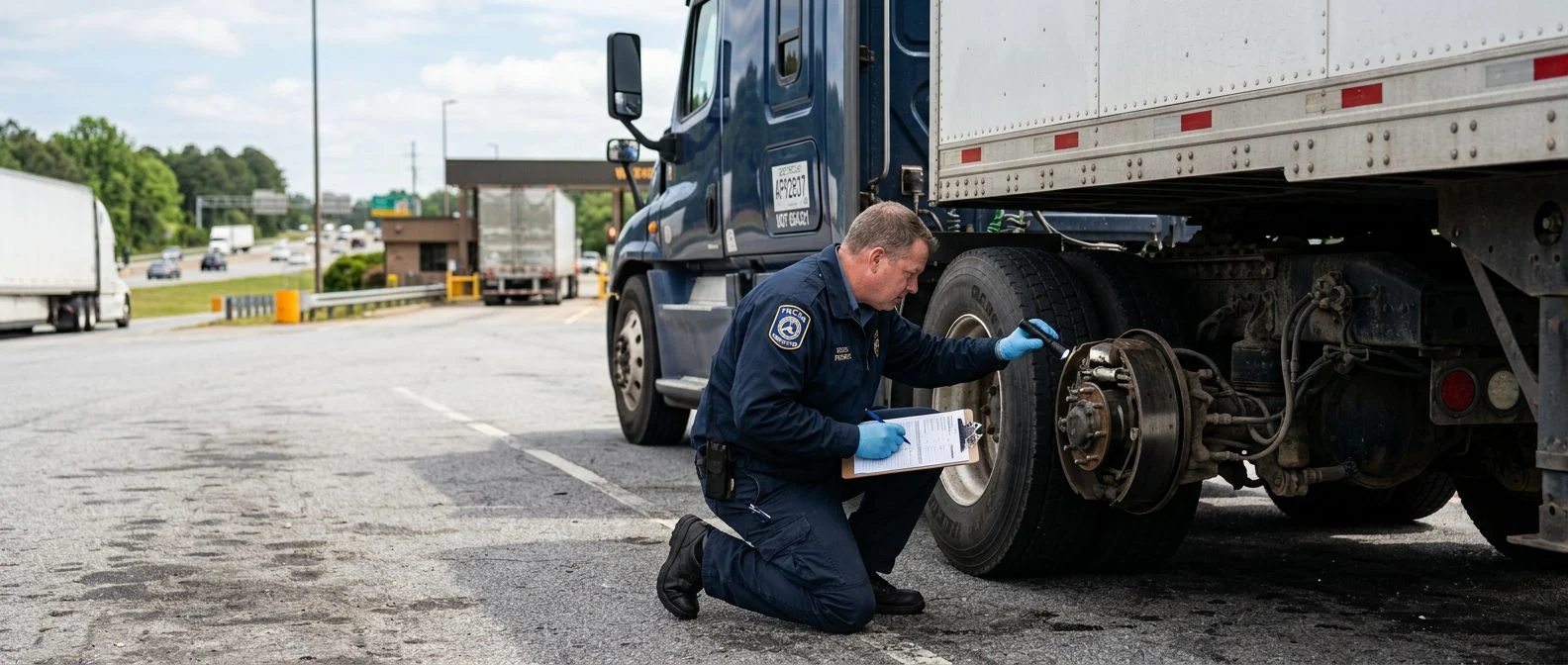
- Onboard camera footage and maintenance records. These include inspection and repair history for the truck and trailer.
- Post-crash drug and alcohol testing records. These are a separate category and should be named on their own line.
Which records matter most varies with each crash and each company’s equipment. Name the categories that fit the crash you are dealing with.
Why Timing Matters: Electronic Data Can Be Overwritten
Timing matters because electronic records can be overwritten, and routine business can remove paperwork. A letter sent early puts the company on written notice before that happens.
Many people assume the trucking company will keep everything. Federal rules set minimum retention periods, and those periods are not permanent. Some are measured in months, not years.
Post-crash testing has its own clock. After certain serious crashes, an employer must test surviving drivers for alcohol and drugs. If an alcohol test is not given within two hours, the employer must record the reason. It must stop trying after eight hours. A controlled substances test must be abandoned after 32 hours. 49 C.F.R. § 382.303
A common mistake is waiting until the claim feels serious. By then, the company may have already gone through its routine record cycle.
Federal Rules Trucking Companies Must Follow
Federal rules set minimum retention periods. A preservation letter can ask a company to keep records longer when a claim is expected.
- Records of duty status and supporting documents. 49 C.F.R. § 395.8
- 49 C.F.R. § 395.11
- 49 C.F.R. § 391.51
How Georgia Courts Handle Lost or Destroyed Evidence
A written letter makes it much easier to show.
The outcome depends on the facts of each case.
Keep the focus on what the records show. Clear, early written requests make the record of what the company knew easier to read.
Preserving Evidence Is Part of Building a Claim Against a Trucking Company
Trucking company records often bear on fault. Speed, hours driven, and driver fatigue are common examples.
Federal rules limit driving time. Under 49 C.F.R. § 395.3, a driver of a property-carrying commercial motor vehicle may drive a total of 11 hours within the 14 consecutive hours after coming on duty following 10 consecutive hours off duty. 49 C.F.R. § 392.3
Lost wages and medical bills are documented separately from these company records. A claim against a trucking company moves through the legal process, and each step takes its own time.
Not sure what your next step is?
Talk it through with our team — the first consultation is free, confidential, and carries no obligation.
What a Preservation Letter Should Include
A preservation letter should identify the crash, name the parties, list the records, and ask for written confirmation. Include these elements:
- The date, time, and location of the crash, including the nearest city and state.
- The carrier’s name, the driver’s name, and the truck or trailer identification, if known.
- A specific list of record categories, drawn from the section above.
- A statement that a claim is expected, and a request that the company keep those records.
- A request for written confirmation that the records are being kept.
Keep a copy of the letter. Send it by certified mail or a tracked delivery service, and save the proof of delivery.
A letter is one step in gathering evidence. It does not replace the rest of that process.
Talk With T. Madden & Associates, P.C. About Your Crash
Talking with a lawyer about a truck crash is a way to ask about records and your next steps. It does not commit you to anything.
Frequently asked questions
What is a trucking company evidence preservation letter?
It is a written request asking the company and its insurer to keep records about a crash, such as logs, dispatch records, and black box data.
What is spoliation?
Spoliation is the loss, destruction, or alteration of evidence.
Can a letter ask a company to keep records longer than federal rules require?
Yes. A preservation letter can ask a company to keep records beyond federal minimums when a claim is expected.
If a truck crash has left you or someone you care about with questions about those records, our team is ready to talk. You don’t have to face it alone. The initial consultation is free, confidential, and without obligation. You can start a free case evaluation with T. Madden & Associates, P.C. The firm handles personal injury cases on a no fee unless we win basis, but the client may still be responsible for court costs and case expenses.
Terance Madden is the responsible lawyer for this page. T. Madden & Associates, P.C. has been in practice since 1999 and has offices in Jonesboro, Atlanta, Decatur, Macon, and Augusta. Contact details are on the firm’s contact page. This page is general information, not legal advice.
How a Preservation Letter Helps
Protects key records
A written request asks the trucking company and its insurer to keep logs, dispatch records, and vehicle data related to the crash.
Identifies what to keep
The letter lists the categories of evidence connected to your wreck so nothing important is overlooked.
Creates a clear written record
A documented request shows the company was asked to preserve evidence, which helps address any later questions about missing records.
Handled by our team
Our team, led by attorney Terance Madden, prepares the letter and answers your questions about next steps.
Do Not Assume the Evidence Will Be Kept
Electronic data such as GPS, engine module, and black box records can be overwritten in the ordinary course of business. Do not wait for the company to volunteer that it has preserved them.
What a Preservation Letter Often Covers
Driver logs and hours of service
Electronic logging device and paper log records for the driver involved in the crash.
Dispatch and communications
Messages, calls, and dispatch notes about the trip and the route.
Vehicle and black box data
Engine control module, GPS, and telematics data recorded by the truck.
Maintenance and inspection records
Repairs, inspections, and equipment history for the tractor and trailer.