

Personal Injury | Georgia
Waited More Than 10 Days to Report Your Accident? Here's What to Know
Time passing does not mean the situation is over. Learn how a late report can affect insurance claims, proof and your options, then talk with T. Madden & Associates, P.C. about your case.
Serving Injured Georgians Since 1999
5
Georgia offices: Jonesboro, Atlanta, Decatur, Macon and Augusta
24/7
Call us anytime
By Terance Madden · Published October 30, 2026
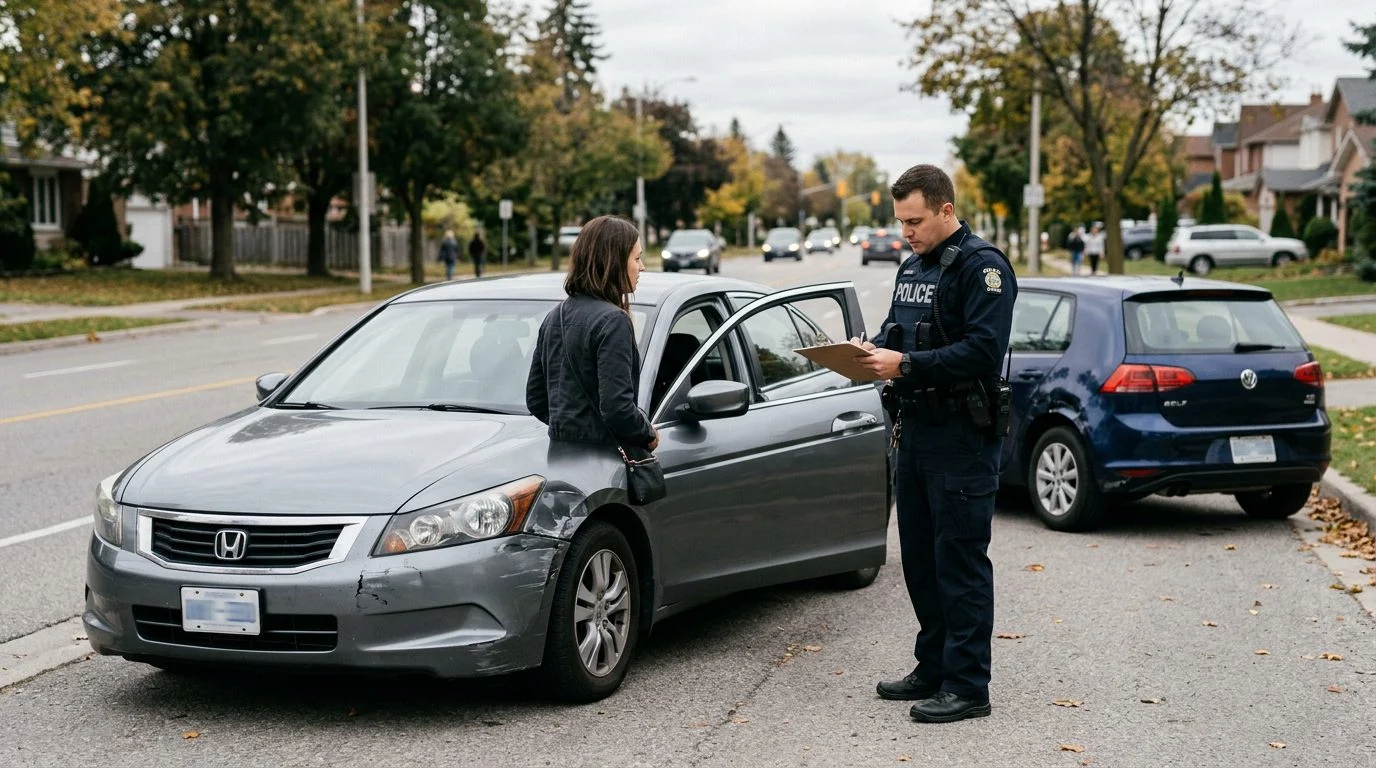
What happens if you don’t report an accident after 10 days? Passing the 10-day mark after a crash does not, by itself, end your right to bring an injury claim in Georgia. It can, however, create reporting problems, insurance disputes and gaps in proof. This page explains each issue in plain terms.
The number ten shows up often in online articles and insurance talk. It is not the deadline that controls a lawsuit. Several separate clocks run at the same time, and each one follows its own rule.
What the 10-day mark means after a crash in Georgia
Ten days does not by itself erase a claim, but it can create reporting duties and make proof harder. The reason is that different rules cover different steps. Police reporting follows its own duties. Your insurance policy sets notice terms. The lawsuit deadline comes from Georgia statute.
Which rules apply depends on the facts: who was hurt, who was driving, and whether a commercial truck was involved. A short written timeline of what happened, made while the details are fresh, helps with every clock. Write down the date, the time, the road, and the names of anyone who saw the crash.
Knowing the separate clocks helps you act in the right order. It also keeps a missed date from being treated as the end of everything. Making a report is usually a sound step, because it creates a record.
If the missed date after your crash is weighing on you, our team can talk through what it means for your situation and what options may apply. Talk it through with our team — the first consultation is free, confidential, and carries no obligation.
Georgia’s accident reporting duties
For injury claims, the Georgia Department of Transportation explains how to get police crash reports through GDOT crash reporting. A police report gives a claim an early record of the scene. It can also help confirm who was involved and when.
Reporting the accident is only one piece of a claim. Your injuries and insurance coverage are separate pieces, and each needs its own record.
Consequences of not reporting a crash on time
The most serious trouble comes when a driver leaves the scene of a crash. See the Georgia DPS traffic code handout.
Late reporting also makes proof harder. A late police report can make it harder to show what happened and who was at fault. Missing details from the first days often get harder to fill in later.
Georgia also divides fault between the people involved. Under O.C.G.A. § 51-12-33, a judge reduces an award in proportion to the injured person’s share of fault. If you are 50 percent or more responsible, you cannot receive any damages. A late report does not, on its own, decide who was at fault.
If the other driver cannot be identified, different legal provisions can apply, so the specific facts of the crash matter. Georgia law ties uninsured motorist coverage to injuries caused by an uninsured driver. See O.C.G.A. § 33-7-11. Under O.C.G.A. § 33-7-11(e), when the owner or operator of a vehicle that caused injury is known and named as a defendant but resides out of the state, has departed from the state, cannot after due diligence be found in the state, or conceals himself to avoid service of summons, and this is shown by affidavit to the satisfaction of the judge, and an affidavit or verified complaint shows that a claim exists against that owner or driver and that he is a necessary or proper party to the action, the judge may grant an order for service on that owner or driver by publication of summons. A copy of the action and all pleadings is then served on the insurance company that issued the policy as though it were actually named as a party defendant.
Notifying your insurance company after the 10 days
Notify your own insurer as soon as you can, even if ten days have passed. Your policy’s notice wording decides what counts as prompt. Late notice can lead to a dispute with your insurer, even when the crash was real. Reporting quickly lowers that risk. Keep a copy of anything you send the insurer.
Give the basic facts: the date, the place, the vehicles and the other driver’s details. Describe what you saw and did, and avoid guessing about fault or how badly you are hurt. A guess can be hard to correct later.
Some symptoms appear days or weeks later. Tell the insurer when new symptoms show up, and keep notes on them. Before you give any recorded statement, take a moment to think about what you will say.

Do insurance companies have a time limit on claims?
Insurers have their own notice rules, but the deadline for an injury lawsuit comes from Georgia statute. Under O.C.G.A. § 9-3-33, actions for injuries to the person must be brought within two years after the right of action accrues. The statute begins with “except as otherwise provided in this article,” so other rules can apply.
A criminal case can also affect the clock. Under O.C.G.A. § 9-3-99, a tort claim by the victim of an alleged crime is tolled, meaning paused, from the crime until the prosecution is final or otherwise ends. That pause cannot exceed six years, except as otherwise provided in O.C.G.A. § 9-3-33.1. Hit-and-run cases can raise this issue.
Why delay makes truck and car crash evidence harder to prove
Delay makes proof harder because physical evidence, memories and records change over time. Vehicles get repaired or scrapped. Road conditions shift. Witnesses move away, and phone numbers stop working. Each lost detail weakens the story of what happened. Photos taken at the scene are part of that record, too.
Commercial trucks add another layer. Federal rules set short testing windows after crashes in listed situations. For alcohol, testing should happen as soon as practicable, and the employer must stop trying after eight hours. See 49 C.F.R. § 382.303. For controlled substances, the cutoff is 32 hours.
Records have limits too. Federal rules let companies destroy records after set retention periods, at the discretion of company management. See 49 C.F.R. § 379.3.
Driver duty status records follow a schedule too. Under 49 C.F.R. § 395.8, a driver submits the record to the carrier within 13 days of the 24-hour period it covers.
Prompt medical care also creates a record that links your symptoms to the crash. Keep copies of every bill and visit summary.
Not sure what your next step is?
Talk it through with our team — the first consultation is free, confidential, and carries no obligation.
Talk with Terance Madden about your crash
If ten days have passed, you may feel stuck. That worry is understandable, especially when you’re handling this for a parent, spouse or friend who was hurt.
T. Madden & Associates, P.C. is a Georgia personal injury firm led by attorney Terance Madden. The firm has been in practice since 1999, with offices in Jonesboro, Atlanta, Decatur, Macon and Augusta. It represents people hurt in car and truck wrecks, motorcycle and e-bike crashes, slip and falls, and other injury cases.
The firm offers a free first consultation, which is confidential and carries no obligation to continue.
What happens if you don’t report an accident after 10 days?
Passing ten days does not by itself end an injury claim in Georgia. It can create reporting problems, insurance disputes and gaps in proof.
Does a late report mean you lose your claim?
Not automatically. A judge reduces an award by your share of fault, and you cannot receive any damages at 50 percent or more (O.C.G.A. § 51-12-33; Quynn v. Hulsey (2020)).
How long do you have to sue in Georgia?
For most injury claims, the deadline is two years under Georgia law. Exceptions exist, and a related criminal case can pause the clock.
If you’re trying to work out what a missed date means for your crash, you don’t have to sort it out alone. You can reach our team through the firm’s contact page to talk through your situation.
Disclaimer: This page is general information, not legal advice. The responsible lawyer for this page is Terance Madden of T. Madden & Associates, P.C. Contact: https://www.tmaddenlaw.com/contact/
How Our Team Can Help
Clear, Honest Answers
We explain how a late report may affect your situation and what steps can still help protect your claim.
Help Gathering Proof
Our team works to collect police reports, medical records, photos and witness details while they are still available.
Advocacy With Insurers
Our lawyers handle communication with insurance companies so you do not have to face them alone.
Support for Your Recovery
We focus on your case so you can concentrate on your health and getting back to daily life.
Don't Wait to Get Advice
Every accident is different. The sooner the facts are reviewed, the easier it is to address reporting questions, insurance disputes and gaps in evidence.
Common Concerns After a Late Report
Insurance Disputes
Insurers may question why the claim was reported later and may push back on what happened.
Gaps in Proof
Skid marks, surveillance video and witness memories can fade as time passes.
Medical Documentation
Injuries that appear later need clear records that connect them to the accident.
Shared Fault
Questions about who caused the crash or fall can become harder to answer with time.