

Truck Accident Lawyer | I-75 | Georgia
Hurt in an 18-Wheeler Crash on I-75? Save These Details First
T. Madden & Associates, P.C. has helped Georgia families hurt in car and truck wrecks since 1999. Start with a free, confidential consultation, with no obligation to continue.
Why Injured Georgians Call Our Firm
1999
Practicing in Georgia since
5
Offices: Jonesboro, Atlanta, Decatur, Macon, Augusta
Free
First consultation, confidential, no obligation
24/7
Call availability
By Terance Madden · Published October 24, 2026
Why Evidence Matters After an 18-Wheeler Crash on I-75 or I-285
Save proof of what happened, who was involved, and what the crash cost you. Those three things shape what you can prove later.
If you’re searching for what to save after 18 wheeler crash I-75 Georgia, this list is built for the first days. A crash with a tractor-trailer on a fast interstate is frightening. You may be hurt, shaken, or worried about someone you love who was in the car.
Trucks are heavy, and crashes move quickly. Skid marks fade, debris gets cleared, and traffic moves on. Memories of the minutes before impact also blur. Details lost early are hard to rebuild later.
This guide follows the order most people need. It covers the scene, the truck and its carrier, the police report, witnesses and video, hit-and-run details, and medical and financial records. Where a Georgia or federal rule makes an item matter, the guide names it and links the source.
I-75 runs through Clayton County and Jonesboro, and I-285 circles Atlanta. If you were on either road, the traffic and exits will look familiar. Every case turns on its own facts, and no checklist can predict how a claim will end.
If a tractor-trailer hit you on I-75 or I-285, you may be carrying the paperwork and the pain alone, and our team is glad to help you sort through it. Talk it through with our team — the first consultation is free, confidential, and carries no obligation.

Photograph and Record the Scene First
Photograph the scene from wide to close, before anything is moved if it is safe to do so.
Start with wide shots. Show the lanes, merge points, medians, guardrails, and the direction traffic was moving. Stand back far enough that the truck’s position relative to the road is clear.
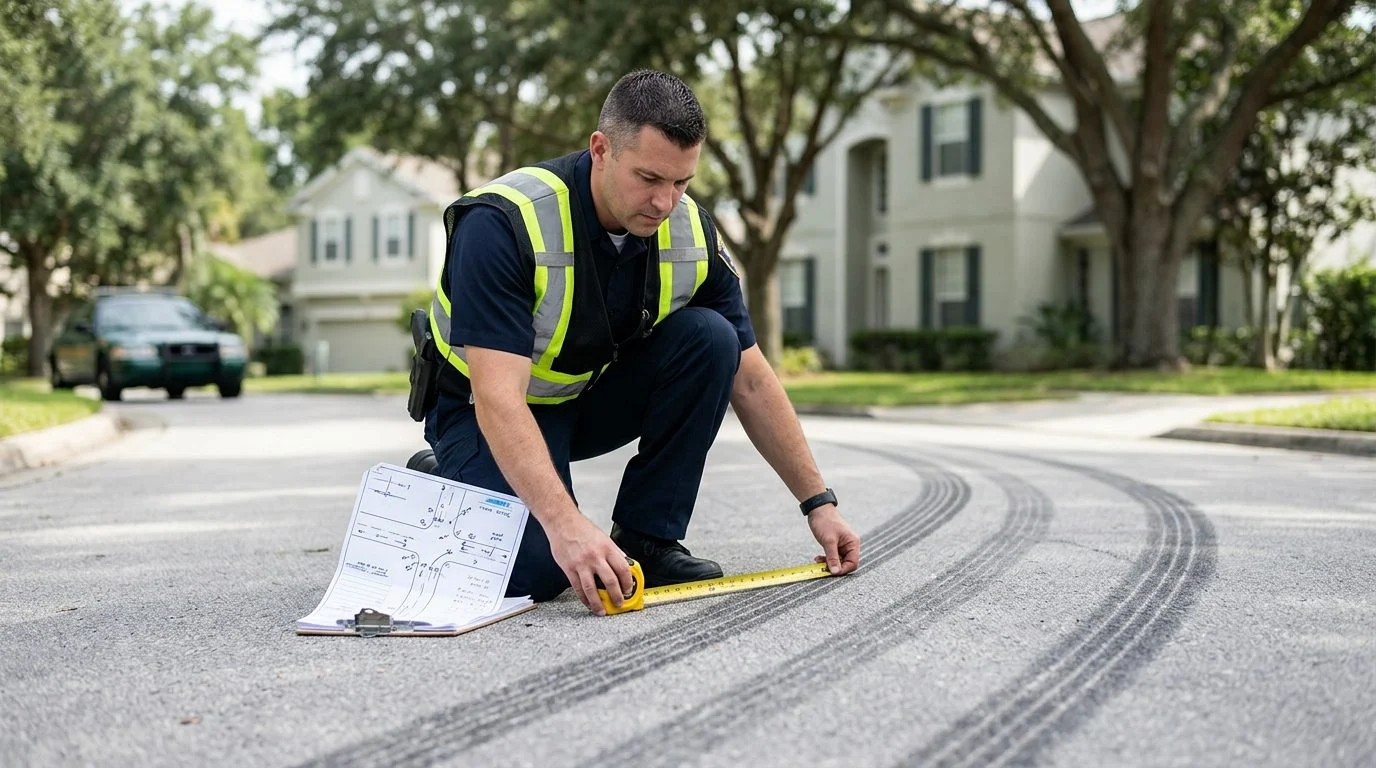
Next, photograph vehicle positions, skid marks, debris, and fluid spills. Shoot both vehicles from several angles, including the damage to the truck as well as to your own vehicle.
Record the conditions too. Note the weather, lighting, road construction, and signs or lane markings. Use your phone’s time stamp, and leave the date setting on.
Save the original files. Keep them in your phone storage or a cloud account with the time stamps intact. Sending photos in a text thread can strip details, so keep the originals separate.
Keep damaged items, too. Helmets, clothing, phones, and car parts can show how hard the impact was. If you must discard something, photograph it first and write down what it was.
Record the Truck, the Driver, and the Carrier
Write down the company name, USDOT number, and trailer details from the truck itself.
Federal rules require many commercial trucks to display the letters “USDOT” followed by the carrier’s identification number. The marking must be readable from 50 feet in daylight while the truck is stationary. See the federal truck marking rules.
If another company’s name appears on the truck, the operating carrier’s name must be preceded by the words “operated by” and followed by the required name and USDOT information. Photograph the cab doors, the trailer sides, and the rear. Those markings help identify who was operating the truck.
Next, collect the driver’s name, license number, and contact details as shared at the scene. Record the tractor and trailer plate numbers, plus the insurer’s name and policy number if you get them. Write down anything the driver said about the crash, as close to word for word as you can.
Note who gave them to you. Truck maintenance and inspection records are a separate category, covered in a separate guide on Georgia truck maintenance inspection records.
Keep the Police Crash Report and Officer Information
Ask the responding officer for the crash report number, the agency name, and the officer’s name and badge number.
A police report records the scene, the vehicles and people involved, and the officer’s observations. Ask the investigating agency how to get a copy. Expect that it may take time to become available.
When you receive it, check names, vehicle details, the time, and the location against your notes. Write down each error and the correct fact, and keep that note with the report.
See the Georgia crash duties guidance.
Keep every copy of the report in one folder, paper or digital. Ask the officer to note any injuries you reported at the scene.
Collect Witness Details, Dashcam Footage, and Traffic Video
Write down the names and phone numbers of anyone who saw the crash, including drivers who stopped.
Ask each witness to write down what they saw while it is fresh. Note where they were standing and whether they saw the truck before impact. An account written the same day is easier to rely on than a memory from months later.
Witness accounts also matter because Georgia divides fault by percentage. Under O.C.G.A. § 51-12-33, the fact-finder assigns a percentage of fault, and the judge reduces the award by the injured person’s share. A person who is 50 percent or more responsible is not entitled to receive any damages.
If your car or a nearby car had a dashcam, ask the owner to keep the original file rather than a screen recording.
Traffic and business cameras often record over old footage. Ask early whether any camera covered the crash location.
Finally, keep a short written timeline. Include the minutes before and after the crash, your lane, where the truck was when you first saw it, and what the driver did. Date it and keep it with your other notes.
If the Truck Driver Left the Scene
If the truck driver left, write down every detail about the vehicle and report the crash to police right away.
Write down the color, markings, trailer type, partial plate numbers, direction of travel, and the nearest exit or mile marker. Fill in details while you still remember them.
That is why witness names matter so much in these cases. Keep your witness list with your police report and timeline.
Coverage terms vary, so review your own policy and any claim notice you receive early.
Keep call logs, texts, and messages about the crash. They can show when you reported it and to whom.
Not sure what your next step is?
Talk it through with our team — the first consultation is free, confidential, and carries no obligation.
Document Medical Care, Bills, and Missed Work
Keep every medical record, bill, and receipt, because medical costs and lost income generally must be proved.
Georgia separates general damages from special damages. Special damages actually flow from the crash, and they must be proved. See O.C.G.A. § 51-12-2. Necessary expenses from an injury are also a legitimate item in estimating damages, under O.C.G.A. § 51-12-7.
The O.C.G.A. § 51-12-1.1 medical expense statute limits special damages for medical and healthcare expenses to the reasonable value of medically necessary care, treatment, or services. It also provides that, where the plaintiff has any form of public or private health insurance, including benefits under a governmental workers’ compensation program, the relevant evidence includes both the amounts charged and the amounts actually necessary to satisfy such charges under the insurance contract or the workers’ compensation program, regardless of whether the health insurance has been used, is used, or will be used to satisfy such charges. That is why you should keep every explanation of benefits statement.
Some providers treat patients under a letter of protection, a promise to be paid from any settlement or judgment. Keep a copy of anything you sign, along with itemized bills and any referral paperwork.
Also keep records of missed work: pay stubs, a letter from your employer about time off, and mileage to medical visits. Keep a simple daily journal of pain, sleep, and activities you could not do.
Under O.C.G.A. § 51-12-1.1, special damages for medical and healthcare expenses are recoverable only as provided in that Code section; Georgia’s general deadline for injury claims is two years from when the right of action accrues, under O.C.G.A. § 9-3-33. The statute has exceptions, so read the timing rule in O.C.G.A. § 9-3-33 carefully.

Next Step: Talk With a Truck Accident Lawyer About Your Crash
A short talk with our team can help you sort out what you’ve saved and what comes next.
You may be juggling pain, paperwork, and calls from insurers while you try to understand your options. You don’t have to sort that out alone. Bring the list above, and we’ll go through it with you.
The firm offers a free first consultation that is confidential and carries no obligation to continue. It works on a no-fee-unless-we-win basis, but you may still be responsible for court costs and case expenses.
Terance Madden is the responsible lawyer for this page. Attorney Terance Madden has been in practice since 1999, and T. Madden & Associates, P.C. has offices in Jonesboro (Clayton County), Atlanta, Decatur, Macon and Augusta. Our lawyers include Terance Madden and Shenia Madden.
To start a free case evaluation, use the firm’s contact page.
Frequently Asked Questions
What to save after 18 wheeler crash I-75 Georgia?
Save scene photos, the truck’s company name and USDOT number, the police report number, and witness names. Keep medical bills and records in one place too.
How long do I have to file an injury claim in Georgia?
Georgia’s general deadline for injury claims is two years, with exceptions in the statute (O.C.G.A. § 9-3-33). Check the timing rule early.
What if the truck driver left the scene?
Report it to police right away. Write down the vehicle’s color, markings, partial plate numbers, and direction of travel.
What to Save at the Scene and Afterward
Scene Photos and Video
Photograph the truck, vehicles, skid marks, road conditions, lane markings, and visible injuries. Take wide shots and close-ups.
Truck Company and USDOT Number
Write down the carrier's name, the trucking company's phone number, the USDOT number on the truck, and the trailer or tractor number.
Police Report Number
Get the responding agency, the officer's name, and the report number. Ask how to obtain a copy of the crash report.
Witnesses and Medical Records
Record witness names and contact details. Keep every medical bill, prescription receipt, and treatment record in one folder.
How Our Firm Can Help
Free, Confidential Consultation
Talk with our attorneys about your 18-wheeler crash at no cost and with no obligation to continue.
Focused on Injury Cases
T. Madden & Associates, P.C. focuses on car, truck, motorcycle, and other serious injury claims in Georgia.
Fees Only If There Is a Recovery
Our fees are paid only if there is a recovery. Clients may still be responsible for court costs and case expenses.
Available 24/7
Call us at any hour to start your free case evaluation and tell us what happened on I-75.
Be Careful With the Trucking Company
Do not give a recorded statement or sign papers from the trucking company or its insurer before speaking with a lawyer. Keep social media posts about the crash private or off limits.
Injured in an 18-Wheeler Crash? Call T. Madden & Associates, P.C.
Related practice areas
- Trucking Company Early Settlement Offer: Georgia Guide