

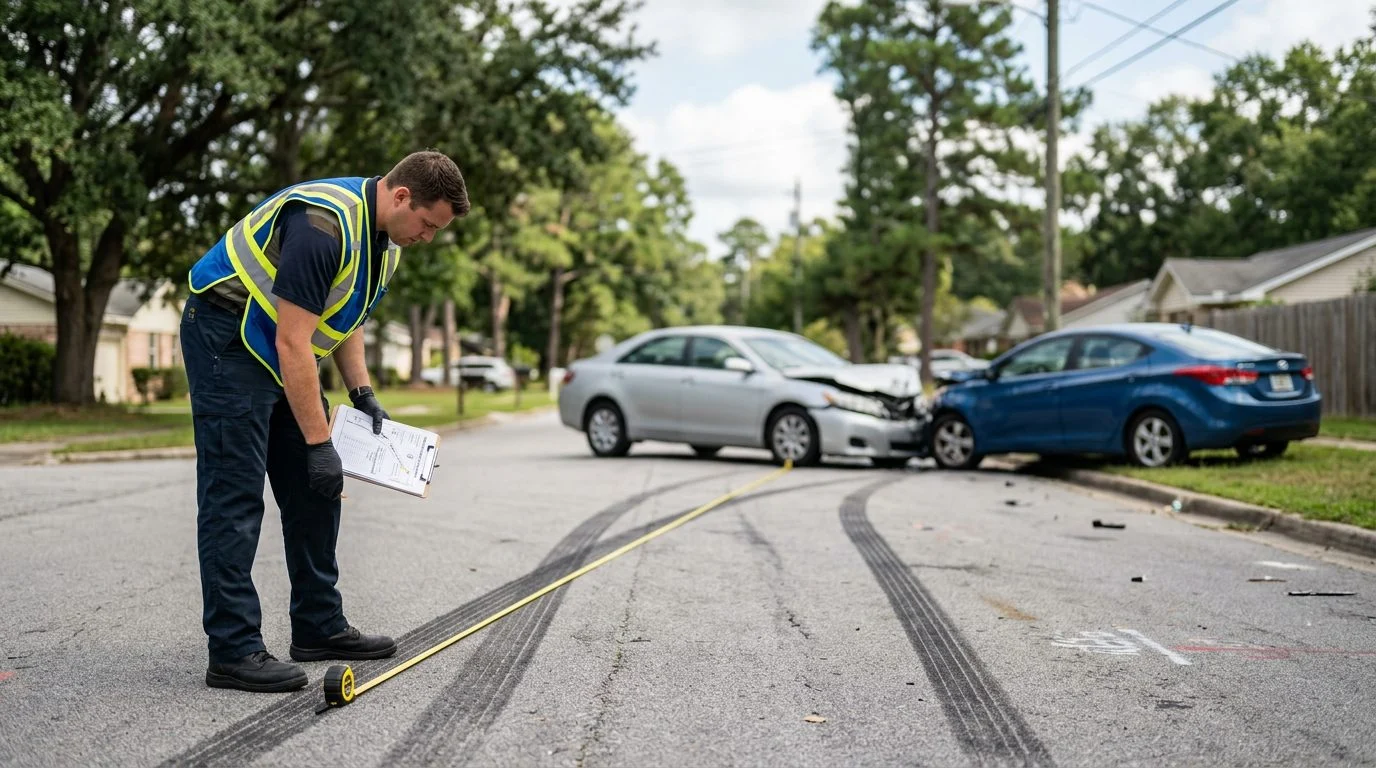
Georgia Car Accident Insurance If You're At Fault
By Terance Madden · Published October 29, 2026
Does insurance still pay out if you’re at fault? Often, yes, in part. An at-fault driver’s policy can still pay for some losses, but usually not all of them. Which coverage responds depends on your policy and the type of loss. Georgia’s fault rules also shape what you can recover from the other driver.
This page explains how coverage generally works in Georgia. For the bigger picture, see our car accident lawyer guide for Georgia.
The Short Answer: Yes, Often in Part
An at-fault crash does not automatically mean zero coverage. Some parts of your policy respond to your own losses, such as injuries sustained from the owner or operator of an uninsured motor vehicle. Other parts pay only when you owe money to someone else.
Fault matters most when you try to collect from the other driver. Georgia reduces your recovery by your share of fault. A high enough share can block recovery entirely.
Your own policy wording decides what it pays. Your declarations page lists the coverages you bought and their limits. Start there, then compare it with the sections below.
It helps to keep two groups apart. First-party coverage (your own policy paying for your losses) works differently from liability coverage (your policy paying claims made against you).

How Fault Works Under Georgia Law
Georgia uses a modified comparative fault rule. Under O.C.G.A. § 51-12-33, the trier of fact (the jury or judge who decides the facts) sets your percentage of fault. The judge then reduces your damages by that percentage.
Here is a simple example. Say your total damages are a set dollar amount, and you are found 20 percent at fault. Your award would be reduced by that 20 percent share, leaving the remaining 80 percent. This is only math, not a prediction for your case.
The rule has a hard line. If you are 50 percent or more responsible for the harm, you cannot receive any damages (O.C.G.A. § 51-12-33; Quynn v. Hulsey (2020)). The same statute says this in its subsection (g).
The fault of others counts, too.
Fault is decided from the facts of the crash. Police reports, witness statements, photos, and vehicle damage all help. A fault percentage can be disputed, so the evidence matters.
Coverage That Can Respond Regardless of Fault
Collision coverage pays to repair or replace your own vehicle after a crash, minus your deductible. It can respond whether or not you caused the crash. The Georgia Office of Commissioner of Insurance and Safety Fire explains that optional collision and comprehensive coverage can protect your vehicle.
Medical payments (MedPay) coverage, where your policy includes it, can help pay your medical bills. Its terms and limits vary, so read your policy.
Uninsured and underinsured motorist coverage can apply to your own injuries when the other driver has no insurance or not enough. Georgia law sets this up in auto policies. O.C.G.A. § 33-7-11 addresses uninsured motor vehicle coverage.
Comprehensive coverage is for other losses, such as theft, hail, or hitting an animal. It generally does not pay for a crash with another car. Don’t count on it for that kind of loss.
Liability Coverage When You Caused Harm to Others
Liability coverage pays what you are legally responsible for to other people, up to your policy limits. Bodily injury liability covers the other person’s injuries. Property damage liability covers their vehicle and other property.
The OCI auto insurance guide offers general information about auto insurance in Georgia. Those minimums can be far below the cost of a serious injury. A long hospital stay, a lost career, or a wrongful death claim can exceed them quickly.
When a claim is larger than your limits, your policy may not cover the full amount. That is one reason serious injury claims get close review.
Your limits also matter when you are the one at fault. Check them now, before you need them.
If another driver caused the crash and your car lost value, read about diminished value claims in Georgia.
Do I File a Claim, and Should I Tell My Insurer It Was My Fault?
Yes, report the crash to your own insurer, even if someone else hit you. Your insurer can explain your options. Most policies expect prompt notice of any accident. Late or incomplete reports can create problems under the policy.
Report the accident and the facts you know. Stick to what you saw and did. Don’t guess about fault. The Georgia regulator’s auto claim tips list promptly notifying police and your insurer, collecting witness information, documenting the scene, and avoiding statements about fault.
Keep copies of everything you send and receive. Write down what happened while it is fresh. Don’t sign a release or form you don’t understand.
A recorded statement is a separate step from the claim itself. You can ask questions before you agree to give one.
Deductibles, Premiums, and What Changes After a Claim
Neither a lower nor a higher deductible is better for everyone. A higher deductible usually lowers your premium, but you pay more out of pocket when a collision claim is paid. A lower deductible costs more each term but cuts what you pay after a crash. Your budget decides which trade-off fits.
The deductible usually applies to collision claims on your own vehicle.
Does your premium go up after a claim that wasn’t your fault? Rating rules vary by insurer and policy. Ask your insurer or agent how a particular claim will be treated. Don’t assume an answer until you hear it from them.
When the Other Driver’s Insurer Won’t Pay or Makes a Low Offer
When you share fault, the other insurer may dispute fault, deny part of a claim, or offer less than you expect. A first offer is not always the final figure. Our guide on insurance adjuster offers in Georgia explains how adjusters evaluate claims.
Fault percentage matters a lot here. Under the rule discussed above, a person who is 50 percent or more at fault cannot recover damages (O.C.G.A. § 51-12-33; Quynn v. Hulsey (2020)). Each percentage point can change the value of a claim.
A lawsuit has deadlines. Under O.C.G.A. § 9-3-33, actions for injuries to the person generally must be brought within two years after the right of action accrues. The statute begins with “except as otherwise provided,” so other rules can apply.
If you live in Clayton County, our guide to car accident lawsuits in Clayton County explains the process.
Talk With Terance Madden About Your Situation
You may be dealing with a damaged car, medical appointments, and insurance calls you did not expect. Some readers are helping a family member who was hurt in the crash. That is a hard place to stand.
The decisions in front of you are specific. Should you report to your own insurer now? How should you answer the other driver’s insurer? Do your share of fault and your injuries call for a closer look?
Quick Answers
Does insurance still pay out if you’re at fault?
Often in part. Collision and medical payments may respond, depending on your policy.
Is a lower or higher deductible better?
Neither is better for everyone. Your budget decides it.
Does insurance go up after a claim that isn’t your fault?
It depends on your insurer’s rules. Ask your insurer directly.
Can I recover if I was partly at fault?
Yes, if you are less than 50 percent at fault. Your award still drops by your share under O.C.G.A. § 51-12-33.
If you were hurt or your car was damaged in a crash, you may have a claim, and our team can talk it through with you. T. Madden & Associates, P.C. offers a free first consultation, which is confidential and without obligation. The firm works on a no-fee-unless-we-win basis, but you may still be responsible for court costs and case expenses. Contact the firm to start a free case evaluation.
This page is general information, not legal advice. Terance Madden is the responsible lawyer for this page at T. Madden & Associates, P.C., with offices in Jonesboro, Atlanta, Decatur, Macon, and Augusta.