

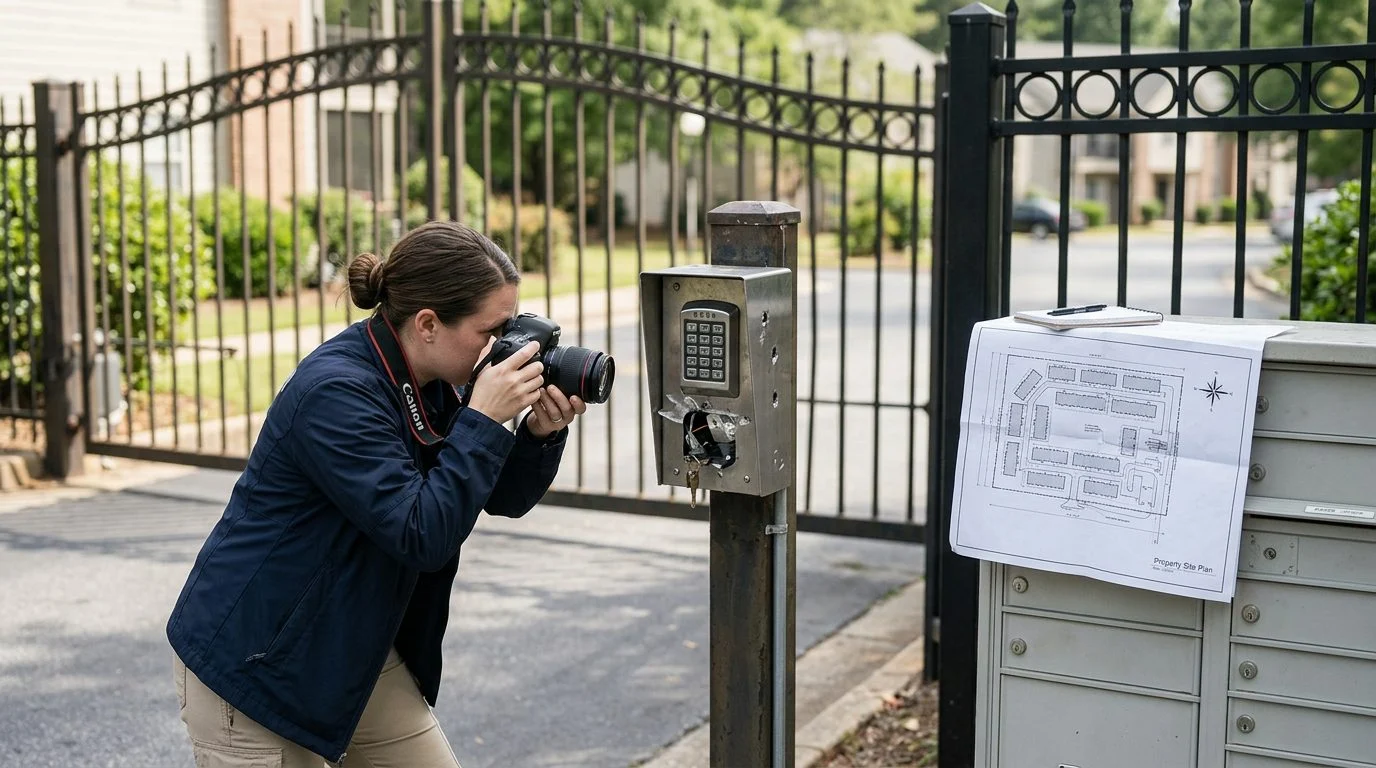
Premises Liability | Georgia
Hurt on Someone Else's Property? Find Out Who May Be Responsible
T. Madden & Associates, P.C. has represented injured Georgians since 1999. Terance Madden and our team help people hurt in slip and falls and negligent security incidents in Jonesboro, Atlanta, Decatur, Macon and Augusta.
About T. Madden & Associates, P.C.
5
Georgia offices
Free
First consultation, confidential
By Terance Madden · Published October 26, 2026
Who is liable for injury on private property? In Georgia, the owner or occupier of the property can be held liable if a visitor is hurt because it failed to use ordinary care to keep the area safe. Who counts as the owner or occupier depends on who controls the property. How much each party pays depends on the law and on your own share of fault. This guide explains these rules in plain English. It is written for people hurt on property they don’t own, and for family members looking into a claim for someone else.
Who Can Be Held Liable When Someone Is Hurt on Private Property?
The owner or occupier of the property can be held liable when an unsafe condition causes an injury.
Under O.C.G.A. § 51-3-1, an owner or occupier who invites or leads others onto the premises for a lawful purpose is liable for injuries caused by a failure to use ordinary care. That care covers keeping the premises and approaches safe.
Under O.C.G.A. § 51-3-1 (Kristina Holston v. Aboebarensi, Inc (2026)), liability can fall on an owner or occupier of the premises.
Injuries from a third person’s crime, such as an assault in a parking lot, follow a different set of rules. Negligent security claims are covered separately. For broader background on injury claims in Georgia, read our Georgia car accident guide.
If you were hurt on property you don't own, you don't have to sort out who is responsible alone. Talk it through with our team. Talk it through with our team — the first consultation is free, confidential, and carries no obligation.
How the Injured Person’s Status Changes the Duty Owed
Your reason for being on the property changes the duty the owner owes you. Georgia law sorts visitors into groups, and the group matters.
An invitee is a customer or visitor brought onto the property for a lawful purpose. The owner owes an invitee the ordinary care described in O.C.G.A. § 51-3-1. Picture a shopper who slips on a wet floor in a store aisle. No warning sign is posted. The shopper came to buy something, so the ordinary care rule applies to that store.
A licensee is different. Under O.C.G.A. § 51-3-2, a licensee is neither a customer, a servant, nor a trespasser. A licensee has no contract with the owner and is allowed on the property merely for their own interests, convenience, or gratification. A friend who visits socially is one example. The owner is liable to a licensee only for willful or wanton injury. That is a much narrower duty.
What You Must Show in a Premises Liability Claim
You must show the owner was responsible for a hazard that caused your injury.
Duty means the owner owed you care based on your status on the land. Breach means the owner failed to use that care. Georgia defines the standard this way. Under O.C.G.A. § 51-1-2, ordinary diligence is the care an ordinarily prudent person takes under similar circumstances. The absence of that care is ordinary negligence.
Causation means the hazard actually caused your fall or injury. Damages means you suffered real losses, such as medical bills and lost pay.
Evidence often centers on what the owner knew or should have known. Did the owner create the hazard? Did it exist long enough that a reasonable inspection would have found it? Useful proof often includes:
- Incident reports and photos taken soon after the fall
- Maintenance and inspection logs
- Names and phone numbers of witnesses
- Surveillance video, if it still exists
If the hazard was in plain view, the owner may argue you should have seen it. That argument ties into the defenses covered next.
Common Defenses Property Owners Raise
Owners often argue they did not know about the hazard, or that you were partly to blame. Knowing these arguments helps you prepare.
The lack-of-notice defense says the owner did not create the hazard, had no actual knowledge of it, and had no reasonable time to find and fix it. The open-and-obvious argument says the hazard was so visible that you should have avoided it. How those arguments play out turns on the details of each case.
Georgia also reduces damages by your share of fault. Under O.C.G.A. § 51-12-33, the judge reduces the damages in proportion to the plaintiff’s percentage of fault. The same section says a plaintiff who is 50 percent or more responsible is not entitled to receive any damages.
Each liable party pays only its own share of the award. The law does not make them jointly liable for one another’s share.
Insurance adjusters may dispute fault, cause, or how serious your injuries are. Keep a written record of every call, letter, and request for a recorded statement. Write down dates and names while the details are fresh.
Damages and How Premises Claims Are Resolved
A premises claim is resolved by settlement or by a lawsuit. Under O.C.G.A. § 51-12-2, general damages are those the law presumes to flow from any tortious act and may be recovered without proof of any amount, while special damages are those that actually flow from a tortious act and must be proved in order to be recovered.
Special damages actually flow from the act and must be proved. Medical bills and lost wages are common examples of losses.
Medical records are central to documenting both groups of losses. Keep copies of bills, receipts, and any letters from the owner or insurer.
Some claims settle through talks with the owner’s insurer. Others go on to a lawsuit if talks don’t resolve them. A claim for damaged property is separate from a claim for bodily injury, and each is handled on its own terms. Timing varies by case, and medical treatment often sets the pace.
Time Limits and Steps to Take After an Injury
Under O.C.G.A. § 9-3-33, which begins “except as otherwise provided,” an action for injuries to the person must usually be brought within two years after the right of action accrues, but other deadlines may apply depending on the facts of a case. Under O.C.G.A. § 9-3-33, except as otherwise provided in this article, actions for injuries to the person shall be brought within two years after the right of action accrues. Actions involving loss of consortium have four years under the same statute. The statute begins with “except as otherwise provided,” so other rules can apply in some situations.
Because the clock runs from when the right of action accrues, track the date of injury from day one. Early steps matter:
- Get medical care and keep every record.
- Report the incident to the owner or manager, and ask that it be written down.
- Photograph the scene and the hazard, if you can do so safely.
- Write down the names and phone numbers of witnesses.
- Keep copies of bills and any correspondence.
Early evidence matters because conditions change quickly. Spills get cleaned, steps get repaired, and video can be overwritten.
Not sure what your next step is?
Talk it through with our team — the first consultation is free, confidential, and carries no obligation.
Is It Worth Pursuing a Claim for an Injury on Private Property?
Whether a claim is worth pursuing depends on the facts of your situation. Several factors usually shape that question. They include how serious the injury is, the medical costs, lost income, the strength of the evidence on notice and fault, and the deadline.
Ask yourself a few questions to start:
- How did the injury happen, and where on the property?
- Who controlled that area of the property?
- Did you need treatment, and is that care documented?
- Is there any written report, photo, or witness?
- Was a warning sign posted, and were you invited, a guest, or on the land without permission?
Can a landlord be liable for a tenant’s negligence?
The landlord can still be responsible for defective construction or for failing to make repairs.
Can I recover damages if I was partly at fault?
Georgia reduces damages by your percentage of fault (O.C.G.A. § 51-12-33; Quynn v. Hulsey (2020)). If you are 50 percent or more responsible, you cannot recover damages.
How long do I have to file?
Under Georgia’s general rule, injury actions must be brought within two years after the right of action accrues.
Is a social guest owed the same care as a shopper?
Whether a social guest is a licensee depends on the facts under O.C.G.A. § 51-3-2, and a licensee generally can recover only for willful or wanton injury; a guest invited for a lawful purpose may instead fall under O.C.G.A. § 51-3-1.
Talk Through Your Situation With Our Team
If you were hurt on property you don’t own, you can talk through what happened with T. Madden & Associates, P.C. You may be dealing with pain, missed work, and an insurance adjuster who keeps calling. You may also be deciding what to do for a family member whose recovery is uncertain. Those decisions are hard to make alone.
Request a free case evaluation to describe what happened on the property. The firm has practiced since 1999, with offices in Jonesboro (Clayton County), Atlanta, Decatur, Macon, and Augusta. The first consultation is free, confidential, and carries no obligation to continue.
The firm works on a no-fee-unless-we-win basis, but you may still be responsible for court costs and case expenses.
Terance Madden is the responsible lawyer for this page. Contact information for T. Madden & Associates, P.C. appears in the page disclaimer.
Common Property Injury Situations We Handle
Slip and Fall
Injuries from wet floors, uneven walkways, poor lighting and other hazards at stores, restaurants, offices and homes.
Negligent Security
Assaults and other crimes at apartments, parking lots, hotels and businesses where security may have been inadequate.
Catastrophic Injury
Serious, long-term injuries from property accidents that affect work, daily life and future medical needs.
Wrongful Death
Families grieving a loss caused by a dangerous property condition or inadequate security can seek answers through our firm.
Protect Your Claim Early
Get medical care right away, even if your injuries seem minor. Photograph the hazard and the scene, keep the shoes and clothing you wore, and write down the names of any witnesses while the details are fresh.
Why Start With a Free Consultation
Free and Confidential
Your first consultation is free, confidential and comes with no obligation to continue.
No Fee Unless There Is a Recovery
Our fee is contingent. You pay no attorney fee unless there is a recovery, but you may still be responsible for court costs and case expenses.
Available 24/7
Call us any time to discuss a recent fall or incident on someone else's property.
Attorneys Who Listen
Our lawyers, including Terance Madden and Shenia Madden, and our support staff take time to explain your options in plain language.
Talk With Terance Madden About Your Property Injury
Related practice areas
- What is the definition of personal injury?
- Lane Change Accident Lawyer in Jonesboro, GA | Free Case Evaluation
- Car Accident Lawyer in Clayton County