

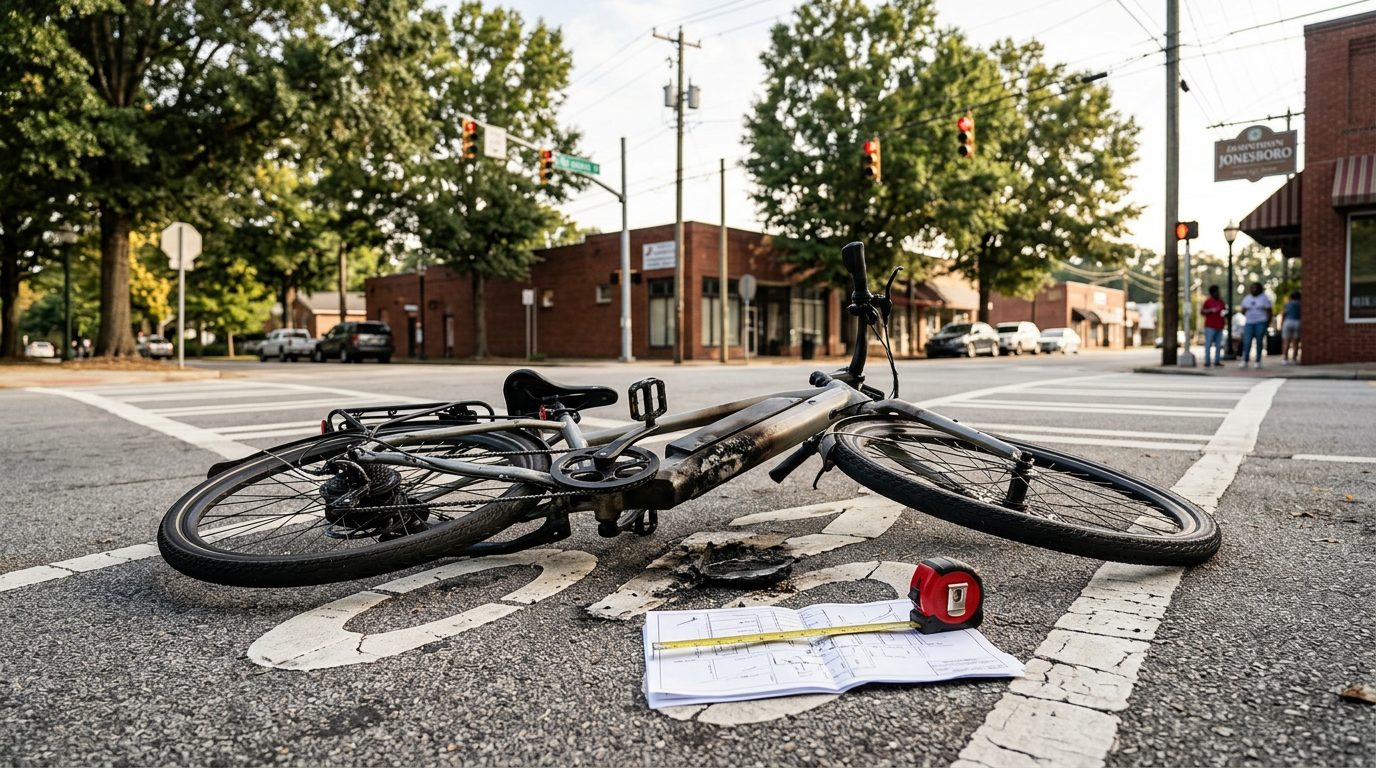
A Burned E-Bike Battery Can Be the Key Evidence in Your Case
Terance Madden trained as an electrical engineer, so he starts by asking what the battery shows about how the fire began.
T. Madden & Associates, P.C.
1999
Year the firm began practicing law
5
Georgia offices: Jonesboro, Atlanta, Decatur, Macon and Augusta
By Terance Madden · Published November 20, 2026
Someone in your family was burned, or your home was damaged, when an e-bike battery caught fire. Now you’re the one making calls, tracking bills and wondering what the battery can prove.
Here’s the direct answer: yes, a burned e-bike battery can be strong evidence of a defect. The fire alone doesn’t prove why it started. Proof comes from keeping the battery intact, documenting the scene, and having the failure traced to its source.
Short Answer: Yes, a Burned Battery Can Be Strong Evidence
A burned battery can help show a defect, but the fire by itself does not prove the cause. A defect is a flaw in a product’s design, its manufacturing, or its warnings that makes it unsafe in normal use. The battery is physical proof. Its damage, its markings and its history tell a story about how it failed.
Georgia law gives injured people a path against the maker of a product sold as new. Under O.C.G.A. § 51-1-11, a manufacturer can be liable to a natural person who uses, consumes, or is reasonably affected by a product and is injured because the product was not merchantable (fit for its ordinary use) and reasonably suited to the use intended when sold, and the product’s condition at the time of sale is the proximate cause of the injury, meaning the direct cause the law recognizes as bringing about the harm. You don’t need a direct contract with the maker to bring that claim.
The evidence in each case decides whether a particular battery was defective. What the battery looks like after a fire, and what records exist, shape the answer. The steps below show how that proof gets built. For the wider picture, read the e-bike injury guide for Georgia.
If a burned battery has your family juggling bills, calls and hard decisions, you don't have to work out the next step alone. Start a free case evaluation with T. Madden & Associates, P.C. Talk it through with our team — the first consultation is free, confidential, and carries no obligation.
Two Myths About Battery Fires and Claims
A fire does not decide who is responsible, and it does not decide what is covered. Two myths cause families to stop too early.
Myth one: “Any fire is automatically covered.” It isn’t. Coverage depends on the policy, the cause of the fire, and who is legally responsible. A homeowners policy and a product injury claim follow different paths, and each one needs checking.
Myth two: “It was a crash, so none of the details matter.” The details decide the claim. The brand, the cells inside the pack, the charger used, how the battery was stored, and whether it was modified all matter. A fire with no clear explanation still has a cause, and that cause can often be traced.
Treat the cause as a question the evidence must answer. Don’t accept an assumption as the answer, whether it comes from a seller, an insurer or a neighbor.
What Proof Looks Like After an E-Bike Battery Fire
Proof starts with the physical pieces and the records that go with them. Keep every item, and write down where each one came from:
- The battery pack and its cells
- The charger
- The bike itself
- Photos of the scene, taken before cleanup
- Any fire report
- Purchase records, receipts, online listings and the seller’s name
- Manuals and warning labels
Investigators look for where the fire started and what the damage pattern shows. A burn pattern can point to the area where heat first built up. That is why scene photos taken before cleanup matter so much.
Certification marks on the battery and charger show whether a testing lab reviewed the product. When a battery has no marks, or carries an off-brand label, the maker’s testing and design records become key evidence.
Why Preserving the Battery Comes First
Keep the battery as it is. Don’t charge it, repair it, open it or throw it away. Store a damaged battery outside living space, in a safe spot away from anything that can burn, until someone can examine it.
Chain of custody means a written record of who held the battery and when. It shows the battery was not changed after the fire. Without that record, the other side can argue the evidence was altered.
The other side may ask for the battery. Call the firm before you hand it to anyone else, so the evidence stays protected.
Time limits matter too. Georgia generally allows two years to file a personal injury lawsuit under O.C.G.A. § 9-3-33. A contract claim for breach of warranty must be commenced within four years under O.C.G.A. § 11-2-725, although the parties may reduce that period by their original agreement to not less than one year. Claims against a manufacturer also face a ten-year limit from the first sale under O.C.G.A. § 51-1-11, and that limit applies to negligence claims except an action seeking to recover for injuries or damages arising out of the negligence of the manufacturer in manufacturing products which cause a disease or birth defect, or arising out of conduct which manifests a willful, reckless, or wanton disregard for life or property. Nothing in that subsection relieves a manufacturer from the duty to warn of a danger arising from use of a product once that danger becomes known to the manufacturer.
Medical bills often follow a burn injury. The hospital liens after an e-bike crash guide covers those questions.
How Engineering Evidence Shows a Defect
Engineering evidence shows whether the battery failed on its own or was pushed to fail. Thermal runaway is the chain reaction in which one cell overheats, the heat spreads to the next cell, and the pack burns. The question is what started that chain.
It could be a manufacturing flaw inside a cell, a design that let heat build, a charger that pushed too much current, or damage from a drop or impact. The battery management system is the electronics that watch voltage and temperature. Its stored data and the charger’s behavior can show whether the system should have stopped the problem.
Terance Madden trained as an electrical engineer before law school. He starts a battery case by asking what the evidence shows and how the failure began.
Georgia also divides fault. The jury considers everyone who contributed to the harm, named in the suit or not, under O.C.G.A. § 51-12-33. Each liable party pays only its own share. A plaintiff who is 50 percent or more responsible recovers no damages.
What Big Insurance Looks For After a Battery Fire
Big Insurance is not on your family’s side, and a first offer is rarely what a claim is worth.
Expect the tactics. An early low offer may arrive before the full cost is known. You may be asked for a recorded statement before the evidence is in. Claims can drag on for months. Treatment may be disputed. The argument may be that the battery was aftermarket or modified, or that the fire is simply unexplained.
The response is to pursue every layer of coverage. Check the homeowners or renters policy for property loss. Look at the at-fault party’s liability coverage, the maker’s and seller’s liability coverage, the retailer’s coverage, any umbrella or excess policy, and corporate coverage.
Think about the full cost, not just the first bills. Under O.C.G.A. § 51-12-2, general damages are presumed to flow from a wrongful act and need no set amount of proof. Special damages, such as bills and lost wages, must be proved. Medical expenses are limited to the reasonable value of medically necessary care under O.C.G.A. § 51-12-1.1.
Future losses can be reduced to present value (today’s dollar amount for money paid in the future), using a 5 percent discount rate or another rate the trier of fact (the judge or jury) deems appropriate, under O.C.G.A. § 51-12-13.
Not sure what your next step is?
Talk it through with our team — the first consultation is free, confidential, and carries no obligation.
What the Family Managing the Recovery Should Do Now
Start with a written timeline and one folder for every bill, letter and receipt.
If you’re the spouse, parent, or adult daughter or son handling the calls and appointments, you’re carrying a lot. These steps help most:
- Write down what happened, in your own words, while you still remember it.
- Keep every bill, letter and insurance statement in one place.
- Photograph injuries as they heal, and date each photo.
- Keep the battery and its paperwork safe and unchanged.
If a child was hurt, a parent’s role in a child’s claim is covered in its own guide.
T. Madden & Associates, P.C. has been in practice since 1999, with offices in Jonesboro, Atlanta, Decatur, Macon and Augusta.
If a burned battery has your family juggling bills, calls and decisions, you don’t have to work out the next step alone. Start a free case evaluation with the firm. The first consultation is free, confidential, and carries no obligation to continue.
Frequently Asked Questions
What do you have to prove to show an e-bike battery defect caused a fire in Georgia?
A “defect” is a flaw in design, manufacturing, or warnings that makes the battery unsafe when used as intended.
What evidence should you keep after an e-bike battery fire?
Keep the battery, charger, and any burned parts exactly as they are, and do not repair, clean, or throw them away. Take photos, save the fire report, and gather receipts, model and serial numbers, and medical records. Contact the firm early so the evidence can be preserved properly.
Does a battery from an off-brand or unknown seller still support a claim?
Yes, a battery from an off-brand or lesser-known seller can still support a claim if the evidence shows a defect. Brand name alone does not decide the case; what matters is what the battery’s condition and records show.
Why does an engineer’s training matter when proving the cause of an e-bike battery fire?
Terance Madden trained as an electrical engineer before law school, so he looks at how the cells, wiring, charger, and battery management system, the circuit that controls charging, may have failed. He asks what the physical damage shows and how the fire started, which helps build the case on the cause.