

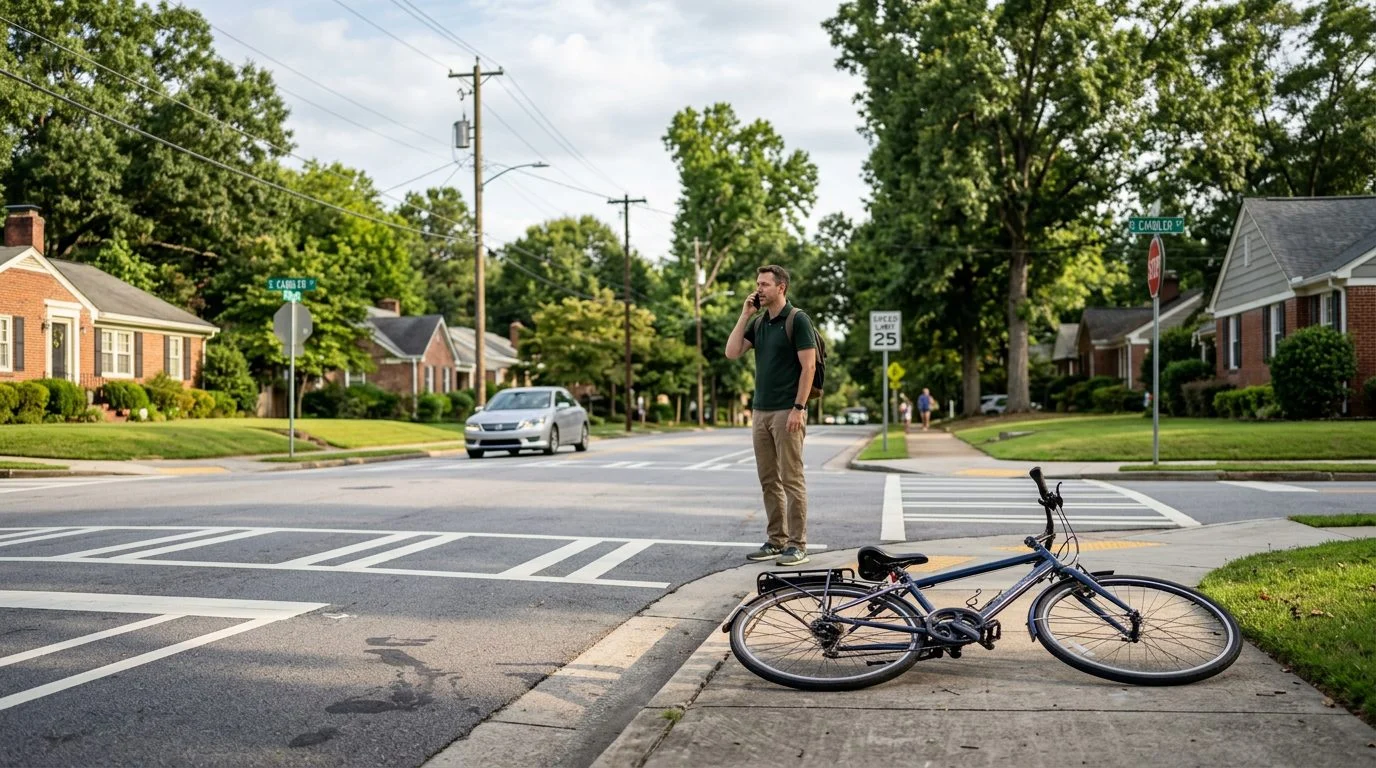
Hit by a Cyclist in Georgia? Find Out Where You Stand
A cyclist can be responsible for a crash, just like a driver. The facts of your crash decide what happens next.
Why people call T. Madden & Associates, P.C.
1999
Year the firm began practice
24/7
Phone line open around the clock
Free
First consultation, confidential and with no obligation to continue
By Terance Madden · Published November 17, 2026
Someone on a bike hit you, or hit someone you love, and now the bills, appointments and insurance calls keep piling up. The short answer is yes. You can sue a cyclist in Georgia if the rider’s careless choice caused your injuries. The rest of this page explains what you must prove, how Georgia’s fault rules can cut or end a claim, and why the real question is usually who pays.
Yes, You Can Sue a Cyclist Who Hits You in Georgia
A cyclist can be sued when negligence causes harm. Negligence means failing to use reasonable care. Georgia defines ordinary negligence as the absence of the care that ordinarily prudent people use under the same or similar circumstances, under O.C.G.A. § 51-1-2. A careless choice that hurts someone can create liability, which is legal responsibility to pay for the harm.
The real question is what the rider chose to do in that moment. Did they run a red light, swerve across a lane, or ride into a crosswalk without looking? Those choices get judged, the same way a driver’s choices do.
If a cyclist's careless choice hurt you or someone you love, you don't have to work out the insurance questions alone. Talk it through with our team — the first consultation is free, confidential, and carries no obligation.
What a Cyclist Owes You on the Road or Path
Every person on a road, bike lane, sidewalk or trail owes others reasonable care. That includes the rider.
Claims usually turn on a few facts. Speed matters. So do visibility, whether the bike had working lights at night, and whether the rider changed lanes without checking. Phone use is a common issue, too.
Location matters. A rider on a sidewalk, a bike lane, a trail or a busy traffic lane faces different expectations. The firm looks at the scene and the timing first, because those details often show who was careless.
The core question stays the same in every version. A cyclist hits a pedestrian? A cyclist strikes a parked car or a car door? In each case, the question is who acted unreasonably, and what that choice did to you.
What You Must Prove in a Claim Against a Cyclist
Duty means the rider owed you care. Breach means the rider failed that care. Damages means the losses the crash caused, such as medical bills, lost pay and pain.
Georgia splits damages into two types. General damages are harms the law presumes from a wrongful act, like pain and the way an injury changes daily life. They can be recovered without proof of an exact dollar amount. Special damages are actual costs, like medical bills and lost wages, and they must be proved, under O.C.G.A. § 51-12-2. Medical bills are limited to the reasonable value of medically necessary care, under O.C.G.A. § 51-12-1.1. That’s why your records matter.
Useful evidence includes witness names, video from nearby businesses or phones, photos of the scene, and the bike itself. On an e-bike claim, the battery, its charger and the speed at impact can matter.
Before law school, Terance Madden trained as an electrical engineer. He starts a case by asking what the evidence shows and how the impact happened. On an e-bike claim, that means checking whether the battery or charging equipment played a part. It also means identifying records that must be preserved before they disappear.
How Georgia Fault Rules Can Reduce or Bar What You Recover
Georgia cuts your damages by your share of fault. If you are 50 percent or more at fault, you recover nothing (O.C.G.A. § 51-12-33; Quynn v. Hulsey (2020)).
Under O.C.G.A. § 51-12-33, the jury decides your percentage of fault. The judge then reduces your damages in proportion to that share. The same statute bars recovery entirely when the plaintiff is 50 percent or more responsible.
The Georgia Supreme Court applied that bar in Quynn v. Hulsey. The case involved a truck, but the fault rule applies to any defendant.
Expect the other side to hunt for any act of yours they can point to. How fast you were going, whether you looked, and where you stood can all become arguments. So gather the facts early. No one can tell you the fault split before the facts are in, and the firm won’t promise one.
Why the Cyclist’s Insurance Decides Whether a Claim Gets Paid
A valid claim can still stall if the rider has no money or insurance to pay it.
Collectability means whether the person who owes you can actually pay. Many riders have little personal money. So the real question becomes which insurance policy responds. Possible sources include a homeowner’s or renter’s liability policy, an umbrella policy, or a household member’s policy. Whether any of them applies turns on the policy wording and the facts.
Your own coverage matters too. Uninsured motorist (UM) coverage is protection in your own policy when the at-fault party has no insurance. Underinsured motorist (UIM) coverage generally applies when the at-fault party’s limits fall short of your losses. Whether either one reaches a crash with a rider turns on the policy language.
The firm checks every coverage layer that may apply to a claim.
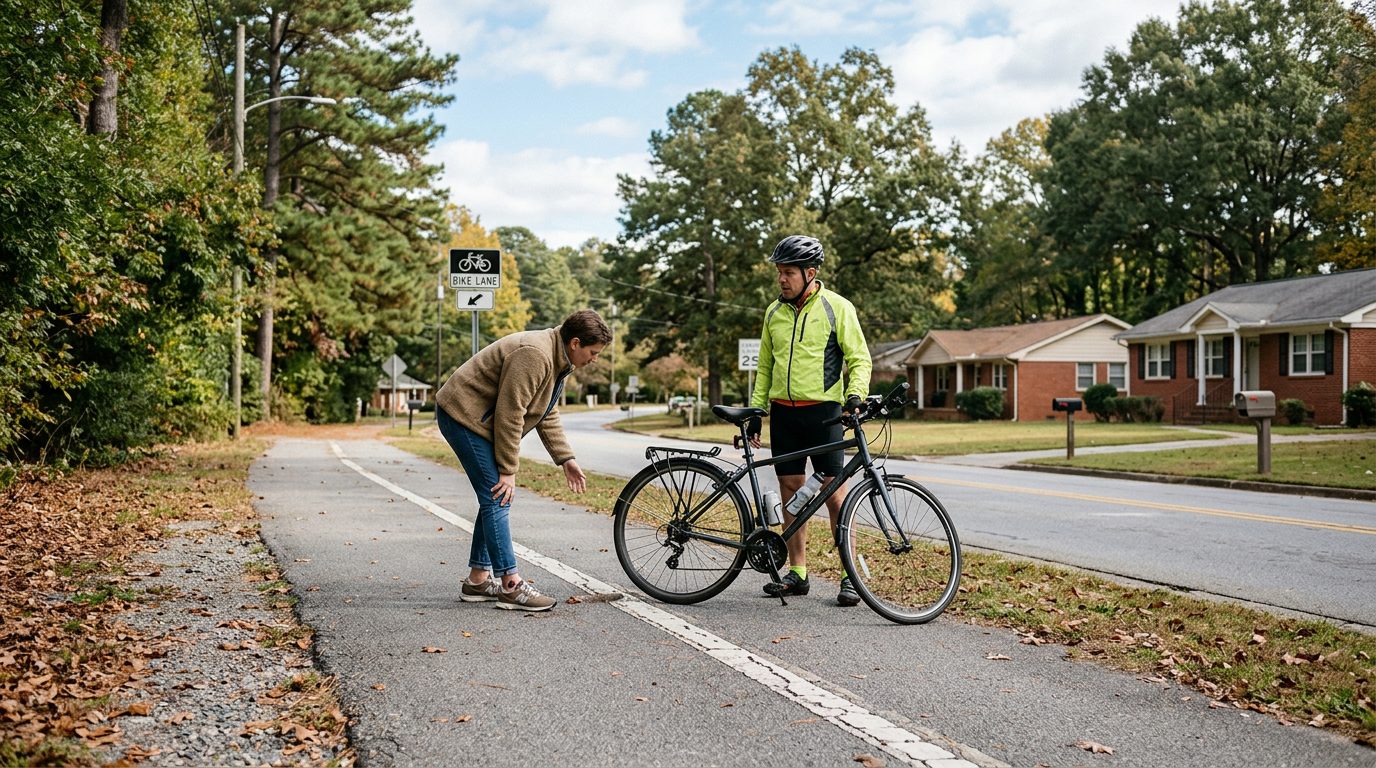
How Big Insurance Responds When a Cyclist Hits You
The insurer is not on your side, and its first offer is rarely what your claim is worth.
Big Insurance often moves fast. Expect a friendly call asking for a recorded statement, which is your account on tape that can be used later. Expect a low first offer, often made before anyone knows the full medical picture. Expect delays while records are requested again and again. Expect your treatment to be disputed, the crash called “low impact,” or the rider blamed for something you didn’t cause. Each tactic aims to shrink the claim.
The response is to keep every coverage layer in view. That means liability, UM and UIM, umbrella, and any household or corporate coverage that applies. It means documenting lifetime damages, not just the bills so far. And it means preparing the claim as if it will go to trial, because a claim built for trial is built to be pursued in full.
Speak with a lawyer before you give a recorded statement or sign any release. A release can close the claim for good.
Not sure what your next step is?
Talk it through with our team — the first consultation is free, confidential, and carries no obligation.
If the Cyclist Left the Scene or Cannot Be Found
Leaving the scene does not end your options, but the clock keeps running.
Georgia’s hit-and-run statute requires the driver of a vehicle involved in a crash that causes injury to stop at the scene. The driver must give their name, address and registration number, and render reasonable assistance to an injured person. Under O.C.G.A. § 40-6-270, the driver of a vehicle involved in a crash that injures or kills someone, or that damages a vehicle which is driven or attended by any person, must immediately stop at the scene or as close to it as possible, return to the scene, and give reasonable help to an injured person, including transport to a physician, surgeon, or hospital when treatment is apparent or the injured person asks for it; if the injured person is unconscious, appears deceased, or is otherwise unable to communicate, the driver must make every reasonable effort to ensure that emergency medical services and local law enforcement are contacted, and must remain at the scene until those duties are done.
Your own uninsured motorist coverage may matter when the rider can’t be identified. The policy wording decides that.
Georgia generally gives you two years from the crash to sue for injuries to your person, under O.C.G.A. § 9-3-33. Claims for loss of consortium, which is a spouse’s loss of companionship and support, have four years. Some claims carry different timing, so waiting is the real risk.
Value comes from medical bills, lost work, future care and how the injury affects daily life. The amount depends on the facts of each case.
What to Do Now and How to Reach the Firm
Start with medical care, then build a paper trail. Follow the treatment plan, and keep every bill and record. Photograph the scene and your injuries, and collect witness names. Save the bike and helmet, and write down what happened while it’s fresh.
If Medicare has paid for your care, it may have made conditional payments. Those payments must be repaid from a settlement, judgment or other payment, and federal law takes precedence over state laws and private contracts, according to CMS. Tell whoever tracks the bills.
You may be the one who got hit. You may also be the spouse, parent or adult child keeping track of appointments, bills and phone calls. Either way, you are carrying a lot right now.
If a cyclist’s careless choice hurt you or someone you love, you don’t have to work out the insurance questions alone. The first consultation with T. Madden & Associates, P.C. is free, confidential and comes with no obligation to continue. Call us 24/7 or start a free case evaluation.
Frequently Asked Questions
Can you sue a cyclist for hitting you?
Yes. A cyclist can be liable for injuries caused by negligence, which means failing to use reasonable care, the same as any driver. Whether you have a claim depends on how the crash happened.
Do traffic laws apply to people riding bicycles in Georgia?
A rider who runs a stop sign, rides against traffic, or swerves without warning may be found negligent.
What if the cyclist swerved into my lane and I was hurt?
A sudden move can still create liability if it was careless. Georgia also reduces your compensation by your share of fault, and it bars recovery if you are 50 percent or more at fault, so the full facts matter.
Hurt in a crash that was someone else’s fault? What should I do next?
Get medical care first, then talk to a lawyer early, because Georgia generally gives you two years from the date of the crash to file a personal injury claim. The firm offers a free, confidential first consultation, with no obligation to continue.