

E-Bike Crashes | Georgia Families
Caring for someone hurt in an e-bike crash? You don't have to sort it out alone.
Medical visits, bills, the bike itself and daily care often land on one person. Here is how to keep it organized from the start.
About T. Madden & Associates, P.C.
1999
Representing Georgia clients since 1999
5
Offices in Jonesboro, Atlanta, Decatur, Macon and Augusta
Free
First consultation, confidential, with no obligation to continue
By Terance Madden · Published November 19, 2026
If you’re the family caregiver for someone hurt in an e-bike crash in Georgia, you’re also the record keeper and the go-between. The short answer: keep the bike and its battery, start one organized file, and don’t rush into recorded statements or signed papers with Big Insurance. Georgia generally gives two years to file an injury lawsuit, so the clock matters from day one (O.C.G.A. § 9-3-33; Kenneth B. Cameron v. Jmp Pizza, Inc (2026)).
Who Is Managing the Recovery After an E-Bike Crash
The family manager runs the recovery day to day. Often that person is a spouse, a mother or an adult daughter.
They book appointments and pick up prescriptions. They keep the calendar, take the calls and update relatives. Much of the case detail ends up in their phone and their head.
That’s why this page starts with you. The work includes therapy rides, insurance calls, bills, time off from work and questions from family who want to help but don’t know how.
T. Madden & Associates, P.C. has offices in Jonesboro, Atlanta, Decatur, Macon and Augusta. Its Jonesboro office is in Clayton County. Terance Madden is the responsible lawyer for this page.
If your loved one is still healing from an e-bike crash and you're holding the bike, the bills and the calls, reach out to T. Madden & Associates, P.C. to talk through what comes next. Talk it through with our team — the first consultation is free, confidential, and carries no obligation.

Preserve the E-Bike and the Scene Before They Are Gone
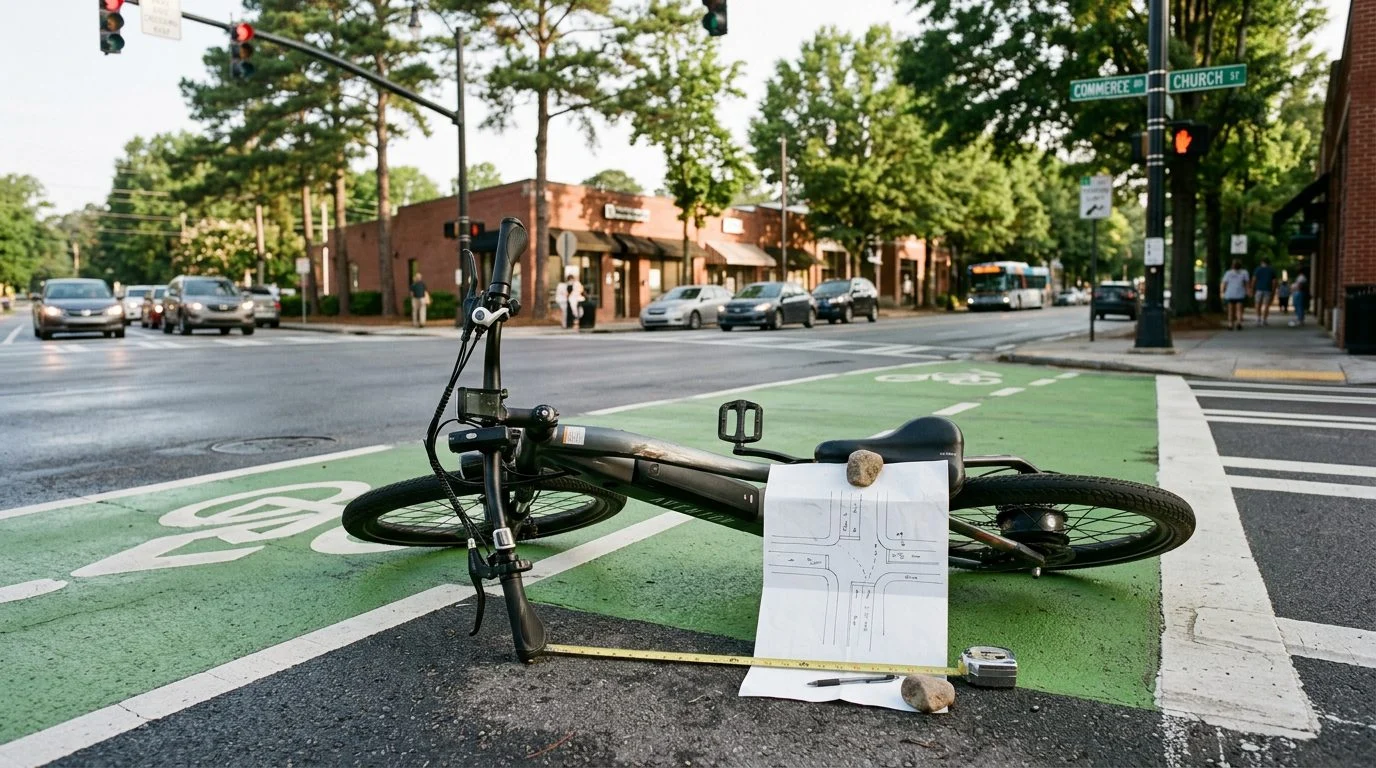
Keep the e-bike, the battery, the charger, the controller and any helmet or clothing the rider wore. Don’t repair, sell, scrap or throw them away.
These parts are physical records. A battery and charger show how the power system behaved. A controller shows how the bike was set to run. A helmet shows where the impact landed. Once someone repairs or recycles them, that proof may be gone.
Before law school, Terance Madden trained as an electrical engineer, so he starts a case by asking what the evidence shows and how the crash happened. He starts a case by asking what the evidence shows and how the crash happened. For an e-bike, that means looking at battery cells, charging circuits and the path from battery to motor. It also means asking which records exist and must be kept.
Take photos and video of the bike from every side. Photograph the scene, any skid or debris marks, traffic signs and nearby cameras. Note the date and time on each one. Camera footage can be overwritten, so ask about it early.
Write down the names and phone numbers of anyone who saw the crash. Write down how and where the bike was charged. Ask family not to post about the crash online, because posts can be used against the claim.
Keep the Medical, Work and Caregiving Records in One Place
Keep one binder or folder, paper or digital, for every bill, discharge paper, test result, pharmacy receipt and appointment note. File them in date order.
“Damages” are the money a person can claim because of an injury. Under O.C.G.A. § 51-12-2, general damages are presumed to flow from an injury. Special damages, such as bills and lost pay, must be proved.
Georgia limits medical bill claims to the reasonable value of medically necessary care. See O.C.G.A. § 51-12-1.1.
Log your own caregiving. Write down the dates you drove to appointments, the miles, the special-diet meals and the costs you paid because of the injury. Under O.C.G.A. § 51-12-7, necessary expenses from an injury are a legitimate part of the damages estimate.
Can a family manager get the medical records?
Often, yes, if you hold legal authority for the patient. Under O.C.G.A. § 31-33-2, a provider must send a requested record within 30 days, unless the provider reasonably determines that disclosure to the patient will be detrimental to the patient’s physical or mental health, in which case the provider may refuse to furnish the record to the patient; however, upon written request by the patient, the record must be furnished to any other provider designated by the patient. The request needs a HIPAA authorization and a signed written authorization.
If your loved one has died, the request can come from the estate’s executor, administrator or temporary administrator, if one has been appointed. If none was appointed, the surviving spouse can make it, then a surviving child, then a parent.
What if your loved one has Medicare?
Medicare may pay bills first and want repayment later. CMS explains that when liability insurance is involved, that insurance pays first for accident-related care, and Medicare pays second. See CMS Coordination of Benefits.
If the insurer doesn’t pay promptly, usually within 120 days, a provider may bill Medicare. Medicare may then make a conditional payment, meaning a payment that must be repaid from a settlement. See Medicare.gov coordination.
When Big Insurance Calls: Recorded Statements, Early Offers and Delays
Big Insurance is not on the injured person’s side. Its first offer is rarely what a claim is worth.
Expect these tactics:
- A recorded statement, which is a conversation the insurer records and can use later, asked for before anyone knows the full injury.
- A low first offer, made before treatment ends.
- Delays in paying bills or answering letters.
- Disputes over whether the treatment was needed.
- A “low impact” argument that the bike was moving too slowly to cause real harm.
Don’t accept a first offer or sign papers until the full picture is clear.
The response is to look at every layer of coverage that may apply. That can include the at-fault party’s liability coverage. It can include the injured person’s own uninsured motorist coverage, which Georgia requires motor vehicle liability policies to include, under O.C.G.A. § 33-7-11.
It also looks at the full cost of the injury over time, not only the first bill.
Georgia’s Time Limit and Who Can Bring a Claim
Georgia generally requires an injury lawsuit to be brought within two years after the right of action accrues, except for injuries to the reputation, which must be brought within one year after the right of action accrues, and actions for injuries to the person involving loss of consortium, which must be brought within four years after the right of action accrues. That is the general rule under O.C.G.A. § 9-3-33. That is the general rule under O.C.G.A. § 9-3-33.
A “statute of limitations” is the legal deadline for filing a lawsuit. Missing it can end a case, so the date matters from the start. When the clock starts depends on the facts of the case, which is one more reason to review it early.
What if the rider shares the blame?
Georgia calls this comparative fault, or shared fault. Damages are reduced by the injured person’s percentage of fault. Under O.C.G.A. § 51-12-33, a person who is 50 percent or more responsible recovers nothing.
Each at-fault party also pays only its own share. The law says that share is not joint liability.
If a loved one dies?
A wrongful death claim is a lawsuit a family brings after a person dies from another’s wrongful conduct. If there is no surviving spouse, a child or children may bring the claim.
Protect the Caregiver Too: Work, Money and Burnout
Protecting your own health and income is part of protecting the claim. You can’t carry the whole case on empty.
- Cutting hours, using leave or giving up pay is common. Tell your employer early and keep written notes of every change.
- Set a weekly schedule with other relatives. Assign rides, meals, bill calls and overnight shifts. Real breaks matter.
- Keep a short daily note on pain, sleep, mood and medication. Those notes help doctors and show how the injury changes daily life.
- Tell doctors about every symptom, even small ones. Ask for copies of visit notes and file them in your binder.
- Track what you spend and what you give up for care. The firm will need that record to tell the full story.
Your family has been looking after each other for years. This is the same job, with more paperwork.
Not sure what your next step is?
Talk it through with our team — the first consultation is free, confidential, and carries no obligation.
What to Do This Week and Why a Free Talk Helps
This week, protect the bike, start the file, write down the witnesses and log every insurance call. Those four steps protect the claim while you keep caring for your loved one.
- Store the bike, battery, charger and controller where no one will work on them.
- Photograph the bike and the scene, and keep the photos dated.
- Start the records binder.
- Write down witnesses’ names and phone numbers.
- Log every call from an insurer: the date, the caller’s name, and what was asked and said.
You don’t need every answer first. Bring what you have and tell the firm what you’re unsure about.
If your loved one is still healing from an e-bike crash, and you’re holding the bike, the bills and the calls, contact T. Madden & Associates, P.C. to talk through the bike, the records and the deadline. The first consultation is free, confidential, and comes with no obligation to continue.
Frequently Asked Questions
What should a family caregiver do first after an e-bike crash in Georgia?
Get the injured person checked by a doctor right away, even if they feel fine. Then keep the bike and battery, take photos, and save every bill, appointment note and message about the crash.
How long does a family have to file a claim after an e-bike crash in Georgia?
Georgia generally gives two years from the date of the injury to file a personal injury lawsuit, under O.C.G.A. § 9-3-33. Deadlines can change depending on the facts, so don’t wait to get the case reviewed.
Can a caregiver handle the claim for an injured family member?
A caregiver can help track medical records, appointments and calls, but the injured person owns the claim. Confirm who has legal authority to act for them, such as a power of attorney, before signing anything or speaking for them.
What if the e-bike battery or a part failed during the crash?
A battery or part that fails can point to a defective product, and that can mean claims against the manufacturer, seller or other companies in the supply chain. Terance Madden trained as an electrical engineer, so he looks at what the battery and crash evidence show. The initial consultation with the firm is free, confidential and with no obligation to continue.