

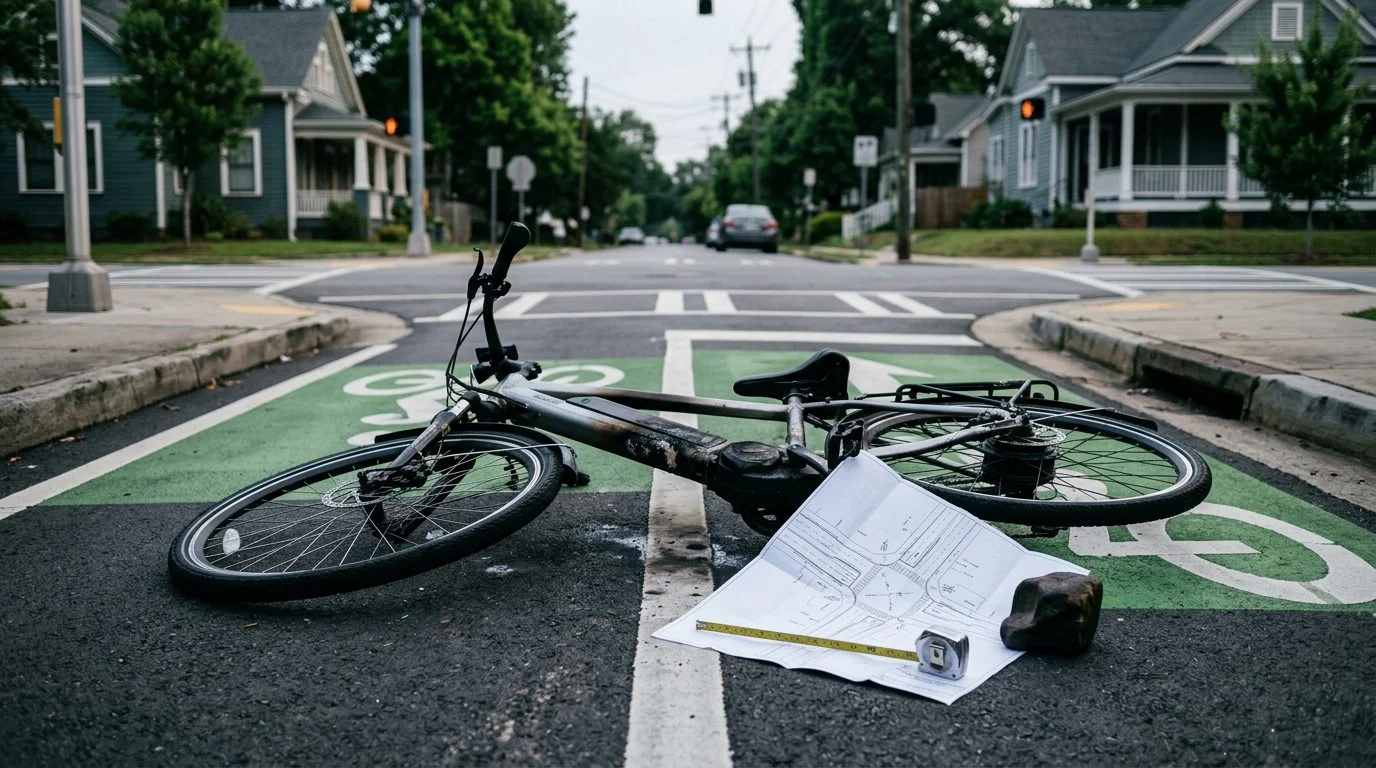
E-bike battery fire claims in Georgia
Offered Money After an E-Bike Battery Fire? Don't Sign Yet.
Insurers often make a quick offer before you know the full cost of your burns, property loss, or medical care. Here is how to size up that offer and what to do next.
T. Madden & Associates, P.C.
1999
In practice since
5
Georgia offices: Jonesboro, Atlanta, Decatur, Macon, Augusta
By Terance Madden · Published November 15, 2026
Your family member is hurt, the e-bike is a burned mess, and now an insurance letter has a number on it. Here is the short answer: an insurer’s first settlement offer after an e-bike battery fire is rarely what the claim is worth. Read any first settlement offer carefully before you respond to it.
Why the First E-Bike Fire Settlement Offer Is Rarely the Final Number
The first offer usually arrives before anyone knows the full cost of the injuries. Burns can need surgery and long care. Smoke can damage the lungs in ways that show up weeks later. Hard-to-see harm takes time to surface.
If you are the spouse, mother, or adult daughter reading this letter, you are probably doing it at the kitchen table with bills on one side and a phone in your hand. That is a lot to carry. The offer is not a final verdict on what your loved one lost.
Georgia law splits losses into two groups. General damages are losses the law presumes, such as pain and suffering. They can be recovered without proof of an exact dollar amount. Special damages are losses that actually happened, such as medical bills and lost pay. They must be proved. A first offer often leaves out the general side entirely.
If your family member was hurt in an e-bike battery fire and an insurance offer is already in your hands, you don't have to answer it alone. Talk it through with our team — the first consultation is free, confidential, and carries no obligation.
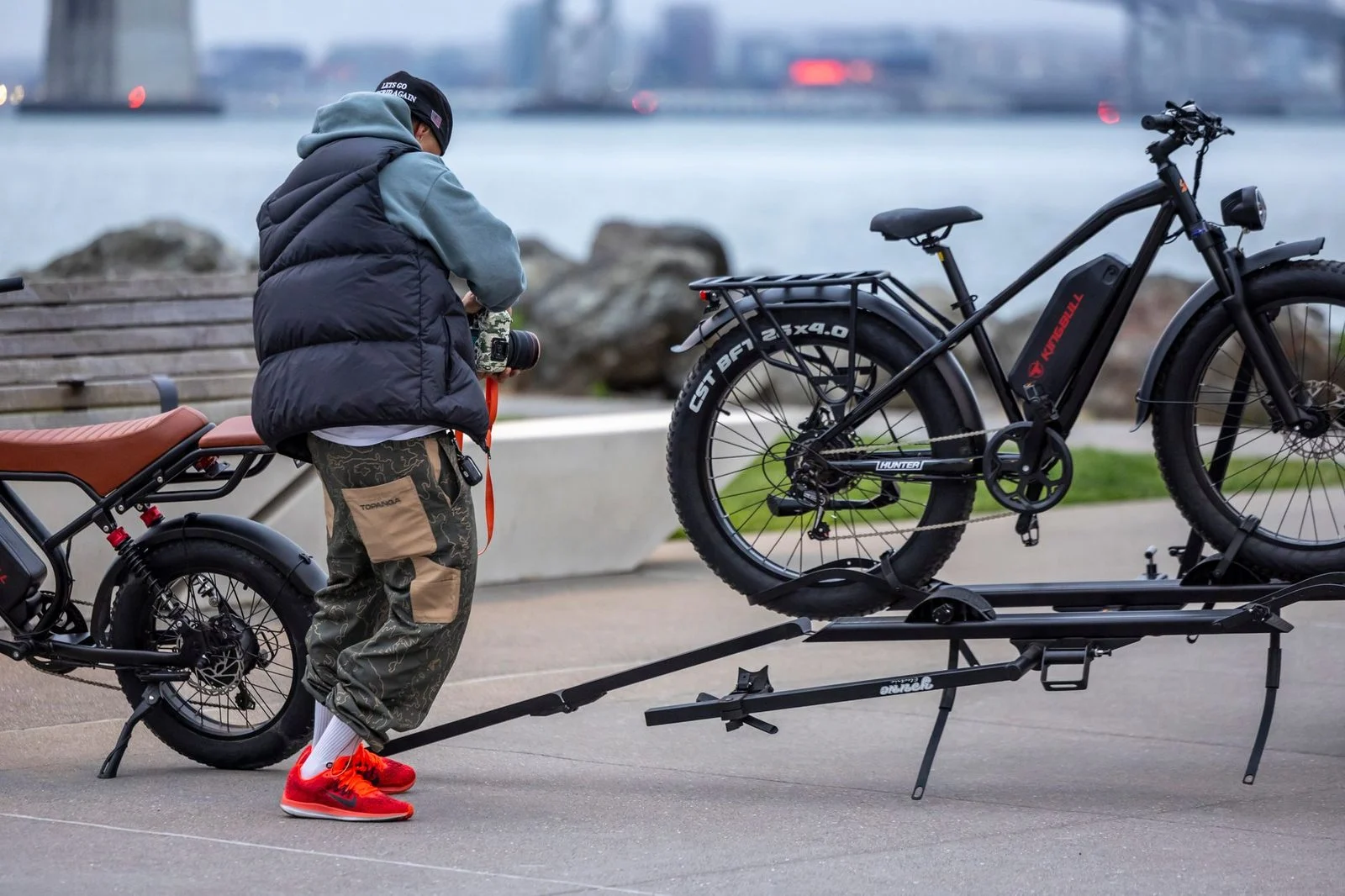
Are E-Bike Batteries a Fire Risk?
Yes. A lithium-ion battery is a rechargeable battery that packs energy into many small cells. Those cells can overheat, short-circuit, or catch fire. A defective battery or charger raises that risk. A defective product has a flaw in how it was designed or built, or it was sold without the warnings it needed.
The fire can hurt the rider, people nearby, and a home. Each injury can support its own claim.
Merchantable goods must be at least such as pass without objection in the trade under the contract description, are fit for the ordinary purposes for which such goods are used, are adequately contained, packaged, and labeled as the agreement may require, and conform to the promises or affirmations of fact made on the container or label, among other requirements. The merchantability list appears in O.C.G.A. § 11-2-314. Under O.C.G.A. § 51-1-11, the manufacturer of personal property sold as new can be held liable to any natural person who may use, consume, or reasonably be affected by the property and who is hurt, or whose property is damaged, because the product was not merchantable and reasonably suited to the use intended when the manufacturer sold it. The product’s condition at the time of sale must also be the proximate cause of the injury, meaning the legal cause.
Timing matters. Georgia generally gives two years to bring an action for injuries to the person after the right of action accrues, though injuries to reputation have one year and loss-of-consortium claims have four years (O.C.G.A. § 9-3-33; Kenneth B. Cameron v. Jmp Pizza, Inc (2026)). Mark the two-year date now.
The Tactics Big Insurance Uses After an E-Bike Battery Fire
Big Insurance often opens with a low offer, asks for a recorded statement early, and slows the file down. Watch for these moves:
- The early low offer. It comes before the full medical picture is known.
- The recorded statement. Your answers go on tape and can be used later, sometimes out of context. Talk with a lawyer before giving one.
- Delays and disputed treatment. The file sits, then the insurer questions whether care was needed.
- “It was the owner’s fault” or “the battery was fine.” Georgia cuts damages by the injured person’s share of fault. Under O.C.G.A. § 51-12-33, a person who is 50 percent or more responsible recovers nothing. The physical evidence answers these claims.
Signing a release, a document that ends your right to more money, can close the claim for good.
How the Firm Looks at the Battery, the Charger, and the Fire Scene
The firm starts with the physical evidence. The battery, the charger, and the fire scene show how the fire began. Responsibility can reach beyond the brand on the box.
A product can pass through many businesses before it reaches the buyer. A product seller is a person who, in the course of a business, sells or distributes, installs, repairs, or otherwise puts the product into commerce, and a product seller is not treated as a manufacturer for strict liability. See O.C.G.A. § 51-1-11.1. A repair shop, a charger maker, or a seller of an off-brand pack may each play a role, and each may carry its own insurance.
Terance Madden holds a B.S. in Electrical Engineering and trained as an engineer before law school. In a battery fire, he looks at the cells, the charging circuit, any certification marks, and the investigation that traces where the fire started. He asks what the evidence shows and which records must be kept. That approach shapes how he builds the case.
Keep the battery, the charger, and any pieces of the scene. Don’t throw them away or alter them without talking to a lawyer first.
Every Insurance Layer and the Case Built for Trial
A serious injury claim may reach more than one insurance policy. The firm checks every layer that applies, because a first offer may cover only one.
- Liability coverage: the policy of the person or business found responsible.
- UM/UIM: uninsured and underinsured motorist coverage, which sits in your own policy when the at-fault party has too little or no insurance. It applies only where the facts fit.
- Umbrella policy: extra coverage that sits above other policies.
- Excess coverage: more coverage above a lower limit.
- Corporate coverage: the insurance of a responsible company.
Losses reach beyond the first bills. Future medical care, lost earning power, and daily life changes for the family all count.
The firm prepares each case as if it may go to trial. A file built that way gives a family more choices. Settlement is a decision the family makes with full information.
Before You Respond to the Offer on the Table
Don’t sign a release or give a recorded statement until you understand the injuries and the offer. Start with paper. Keep every letter, bill, receipt, and photo. Write down the dates of treatment and what each provider said.
If Medicare paid for any care, tell your lawyer early. Federal law lets a claimant notify Medicare 120 days before an expected settlement, so timing matters.
The Georgia Office of the Commissioner of Insurance and Safety Fire says a claimant should not rush to accept an offer and may negotiate for a fair settlement. Read its claim tips for the basics.
If you are the one making the calls and keeping the folder, you are carrying a lot. You don’t have to sort out the offer alone. T. Madden & Associates, P.C. has been in practice since 1999, with offices in Jonesboro, Atlanta, Decatur, Macon, and Augusta. The first consultation is free, confidential, and comes with no obligation to continue. Reach out for a free case evaluation.
Not sure what your next step is?
Talk it through with our team — the first consultation is free, confidential, and carries no obligation.
Frequently Asked Questions
Is the first settlement offer for an e-bike battery fire the final number?
No. An insurer’s first offer is rarely what a claim is worth, and Big Insurance often opens low before the full cost of your injuries and losses is known. Do not accept or sign anything until a lawyer has reviewed it.
Should I give a recorded statement to the insurance company about the fire?
Talk to a lawyer before you give a recorded statement or sign a release. Big Insurance may use these steps to lock in a low number before you know how serious your harm is.
Who can be held responsible when a lithium-ion e-bike battery catches fire?
Depending on the facts, the battery maker, the e-bike manufacturer, the seller, or a company that repaired or supplied the battery or charger may share responsibility, and each may carry its own insurance. Terance Madden trained as an electrical engineer, so he starts by asking what the evidence shows about how the battery failed.
What happens when I call T. Madden & Associates about an e-bike battery fire?
The firm’s initial consultation is free, confidential, and comes with no obligation to continue. You can start a free case evaluation or call the firm, which is available 24/7.