

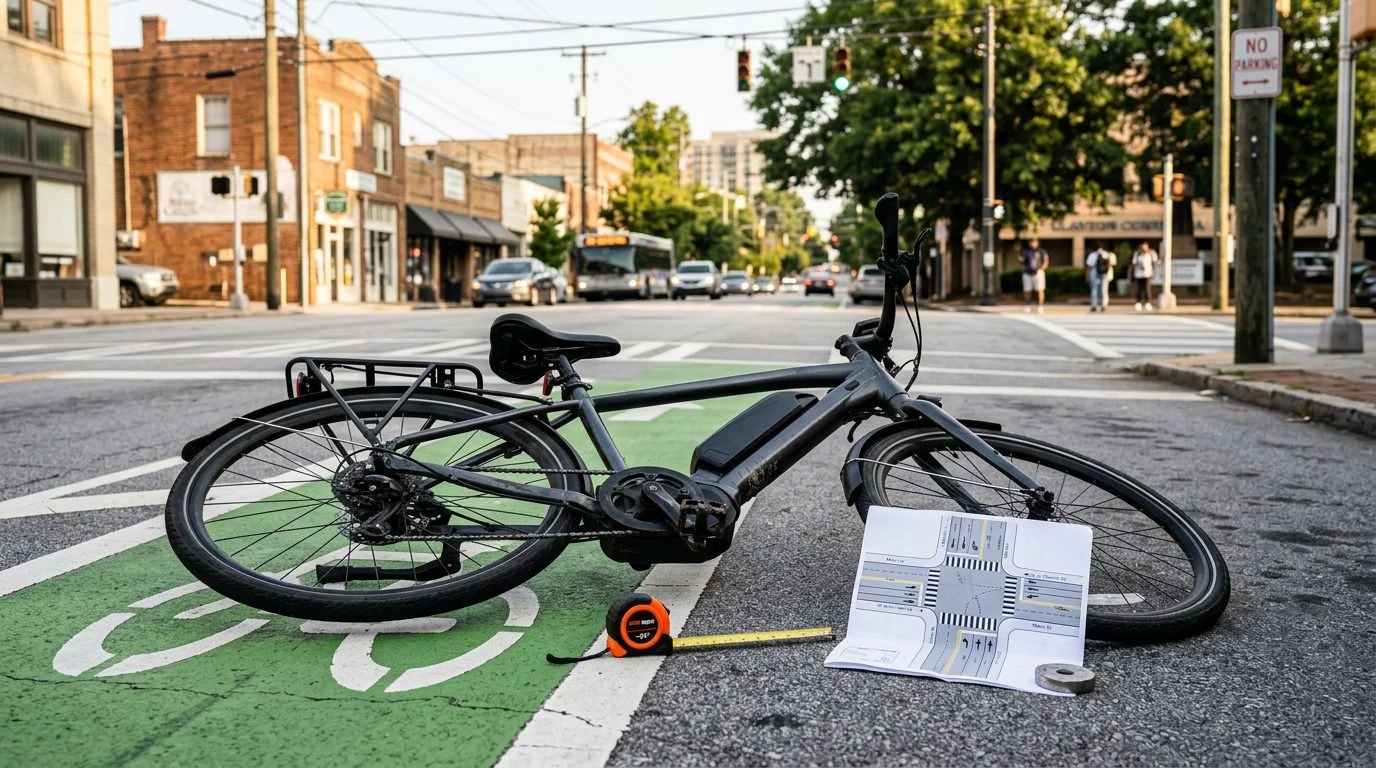
E-Bike and Lithium Battery Claims in Georgia
Hurt by a Defective E-Bike Battery? Start With a Free Case Evaluation
Batteries that overheat, catch fire or fail can change a family's life in seconds. Here is how we look at the battery, the seller and the paper trail.
T. Madden & Associates, P.C.
1999
Serving Georgia injury clients since
5
Georgia offices: Jonesboro, Atlanta, Decatur, Macon and Augusta
24/7
Call us any time
By Terance Madden · Published November 16, 2026
If your e-bike battery was recalled and then burned you or someone in your home, you want to know whether the recall changes anything. It helps. It does not decide the claim on its own.
A claim that a product was defective and caused harm is called a product liability claim. When a product has been recalled, our team still looks closely at the burned device, the scene and the timeline to understand how the fire started.
A Recall Notice Does Not End Your Claim. It Can Strengthen It.
A recall is the maker’s public notice that a model may be unsafe, and that notice is strong evidence for your claim. The product must have been not merchantable and reasonably suited to its intended use when sold, and that condition must be the proximate cause (the direct cause) of the injury.
The recall is not the whole case. The other side will argue the fire had another cause, such as a bad charger, water damage, or a repair by someone else. You need evidence that ties the defect to your fire or injury.
This page is for the rider who was hurt. It is also for the spouse, mother, or adult daughter managing recovery at home, who often keeps the records and makes the calls.
If a recalled e-bike battery burned you or someone you love, you don't have to sort out the recall alone. Our team can talk through your options in a free, confidential consultation. Talk it through with our team — the first consultation is free, confidential, and carries no obligation.
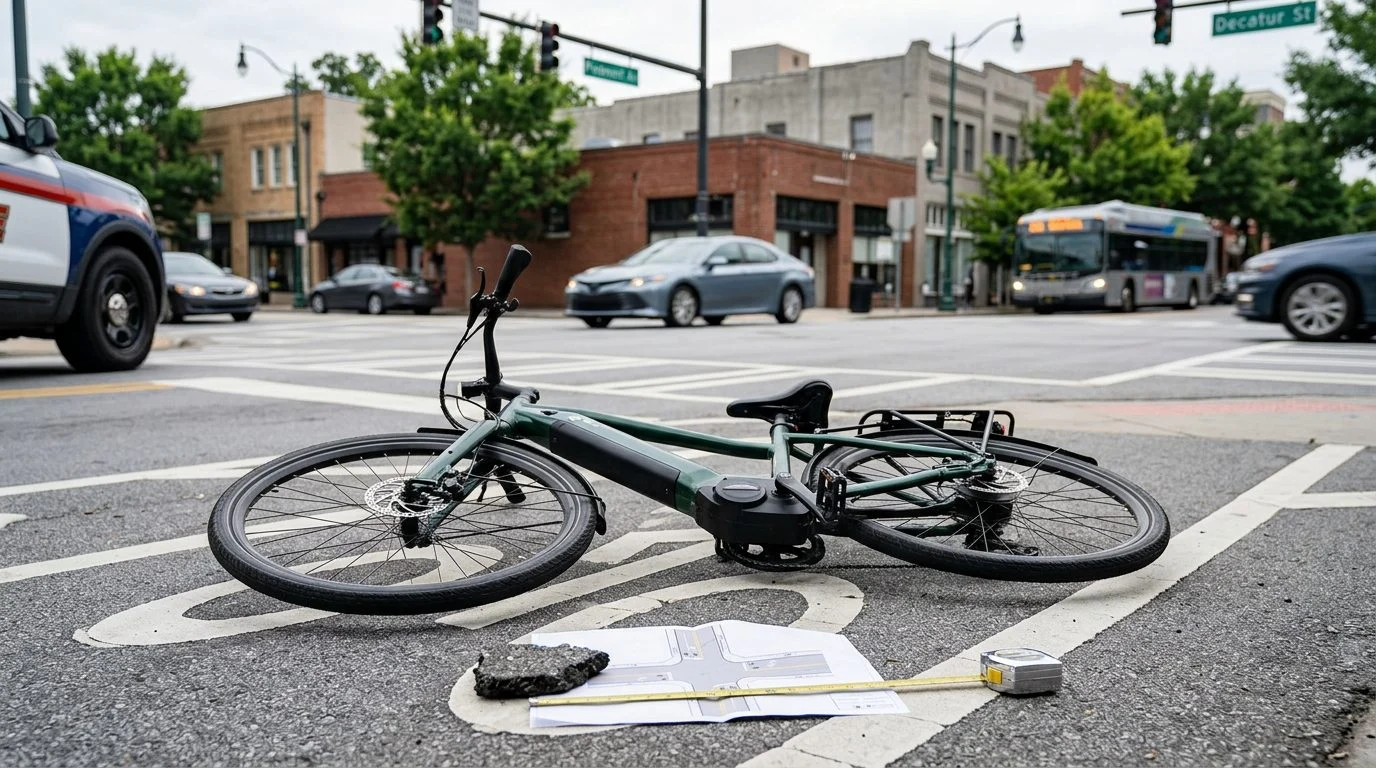
How to Check the Recall Database and What to Save
Start by matching the battery’s brand, model number, and serial or lot number against recall listings from the U.S. Consumer Product Safety Commission (CPSC). The CPSC posts recall notices in a public database. Search by the battery brand as well as the bike brand, because many batteries are made by a different company.
Write down what you find, along with the date the recall was posted. Then record the details on the battery and bike: brand, model number, serial or lot number, date code, and clear photos of every label.
Save the physical evidence before anyone repairs, cleans, or throws anything away. That includes the damaged battery, the charger, the packaging, receipts, order emails, and photos of the scene. Keep the battery away from living spaces, and don’t charge it or open it. Don’t repair or dispose of it on your own.
Keep a dated log of symptoms, doctor visits, and days missed from work. A log made at the time is far stronger than memory months later.
Why the Recall Date and the Purchase Date Matter
The dates show what the maker knew and when it knew it, so write each one down. Build a simple timeline with four dates: when you bought the battery, when the defect was first reported, when the recall was announced, and when the fire or injury happened.
A sale after the defect was known, or a slow recall, raises hard questions for the maker and the sellers. That is what a failure-to-warn claim is about. It says the maker did not give enough notice of a danger it knew about. In Chrysler Corp. v. Batten, the Georgia Supreme Court held that failure-to-warn claims fall outside the ten-year statute of repose, a hard cutoff counted from the product’s first sale.
Battery age matters for that reason. Write down when the battery was bought and when it was first charged. Also note how it was charged and stored, such as overnight or indoors. The other side will ask about those habits, so record them now while you still remember.
What Battery Testing Records Show When an Engineer Reads Them
Battery testing records show whether a battery was tested against a safety standard, and what those tests did not measure. UL 2849 is a safety standard for the electrical systems in e-bikes. Testing records should show whether the battery was tested to it, when, and on which sample.
Before law school, Terance Madden trained as an electrical engineer. He starts a case by asking what the evidence shows. That includes the battery cells, the charging circuit, the certification marks, and where the fire started. He also asks which records exist and which must be preserved before they disappear.
Thermal runaway is what happens when one cell overheats and sends heat into the cells beside it. The damage pattern can show where that started. An engineer asks whether the tested sample matched the battery that was sold, whether the lot numbers line up, and whether the design changed after testing. If the recalled model was tested one way and the battery that caught fire was built another way, that gap matters.
Who Else May Be Liable Besides the Battery Maker
More than one company can be responsible for a battery fire, depending on who built, sold, or serviced the battery or bike. Possible companies include the battery maker, the pack assembler, the bike brand, the importer, the seller, the charger maker, and any repair shop. Each may carry its own insurance, so more responsible companies can mean more coverage.
Georgia treats a product seller differently from a manufacturer. Under O.C.G.A. § 51-1-11.1, a product seller is not treated as a manufacturer for strict liability (liability without proof of carelessness). In Alltrade, Inc. v. McDonald, the court held that a company that, in the course of a business conducted for the purpose of selling or distributing products, labels a product is a product seller when it does so pursuant to a manufacturer’s plan, intention, design, specifications, or formulation.
Georgia also divides fault. Your award is reduced by your own share. You recover nothing if you are 50 percent or more responsible (O.C.G.A. § 51-12-33; Quynn v. Hulsey (2020)).
When Big Insurance Calls, Expect Tactics and Know the Response
Big Insurance is not on your side. A first offer is rarely what your claim is worth. Since 1999, the firm has represented people hurt in Georgia, including in crashes, falls and other injuries.
Expect a quick, low offer before your medical picture is clear. Expect requests for a recorded statement, slow document requests, and disputes over treatment and its cost. Expect the claim that the damage was minor or that the fire was “not the product’s fault.” Don’t give a recorded statement before you talk with the firm.
The response is to look at every coverage layer. That can include the liability policies of each responsible company, your own uninsured and underinsured motorist coverage where it applies to the crash, any umbrella or excess policy, and corporate coverage. The firm prepares every case as if it may go to trial.
Your claim is more than the first bills. Georgia separates general damages, which the law presumes and which need no exact amount, from special damages, which must be proved (O.C.G.A. § 51-12-2). A jury may also discount future costs to present value, using a 5 percent rate or another rate it finds appropriate (O.C.G.A. § 51-12-13). If Medicare paid for care, its Medicare secondary payer overview says that payment may be a conditional payment that must be repaid from a settlement.
Not sure what your next step is?
Talk it through with our team — the first consultation is free, confidential, and carries no obligation.
Georgia Filing Deadlines and What the Family Should Do First
Under O.C.G.A. § 9-3-33, actions for injuries to the person must generally be brought within two years after the right of action accrues, but actions for injuries to the person involving loss of consortium must be brought within four years after the right of action accrues. The exact start date depends on the facts.
Don’t hold off because a recall investigation is still open. Talk to the firm early so the deadline is tracked from the start. Wrongful death claims follow separate rules in Georgia, so families should ask about them early.
If you are the spouse, mother, or daughter running the household, keep the battery, bills, medical records, photos, and a calendar of appointments in one folder. Send insurer calls and letters to the firm before you answer questions.
Common Questions About E-Bike Battery Recall Claims in Georgia
Here are short answers to the questions families ask most after a recalled battery fire.
Can I still have a claim if I kept riding after the recall?
It depends on the facts, including what the recall notice said and what you knew. Write the timeline down for the firm.
Can I sue if the battery was bought used or online?
The seller, importer, and maker may each have a role. The purchase record matters.
What if my bike was not part of a recall?
A battery can be defective without a recall. Testing records and failure evidence still matter.
Hurt by a Recalled Battery? Know Your Options Before the Next Call
A recalled battery that burned or hurt you may be part of a claim, and talking it through early is a smart next step.
If the fire hit your home, your bike, or someone you love, you may be facing bills, missed work, and calls from an insurer. Bring the battery photos, the recall notice, the receipt, and the medical records to the conversation.
The first consultation is free, confidential, and carries no obligation to continue. The firm works on a no-fee-unless-we-win basis, but you may still owe court costs and case expenses.
Start a free case evaluation and let the firm review your timeline with you.