


Lithium battery fire lawyer | Georgia
Was your e-bike battery UL 2849 listed?
A missing safety mark can be an important clue after a fire. Here is what it can and cannot tell you, and how we look at it.
T. Madden & Associates, P.C.
1999
Handling Georgia injury cases since
24/7
Call us any time
5
Georgia offices, including Jonesboro and Atlanta
By Terance Madden · Published November 16, 2026
You’re probably asking this because an e-bike battery burned, swelled or quit, and someone you love got hurt. Here’s the short answer. A UL 2849 mark means an independent testing group checked the bike’s electrical system against that safety standard. A missing, copied or doubtful mark is evidence, but it isn’t proof by itself.
This guide explains what the mark does and doesn’t tell you, and what to keep while you sort it out.
What UL 2849 Is, in Plain Words
UL 2849 is a safety standard for e-bikes. A standard is a written set of tests and rules a product must meet. This one covers the bike’s electrical system, including the battery, charger, motor and controls.
A certification is the result of that testing. An independent lab checks the product against the standard. If it passes, the product may carry a mark saying so. The seller’s own claim is not the same thing.
A certification is not a promise the product will never fail. It is a claim about testing, on a certain product, at a certain time. Think of it like a receipt for testing. It shows a check happened, not every detail of what was checked.
That difference matters in a claim. A battery can fail a safety test. Or it can reach your home with no testing record at all. Each answer raises different questions, and each question leads to different records.
Not sure what your next step is?
Talk it through with our team — the first consultation is free, confidential, and carries no obligation.
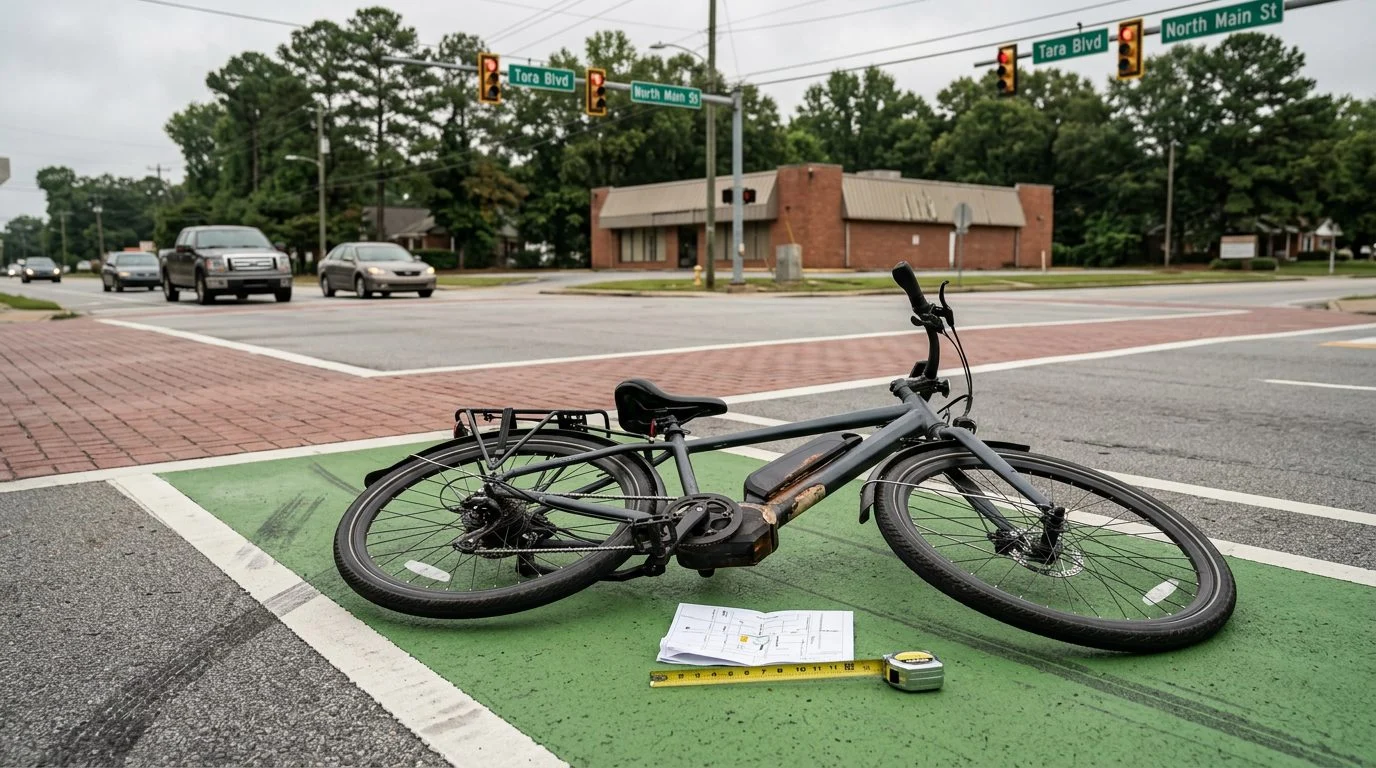
What the Battery Label and Markings Can and Cannot Tell You
A label is a claim, not the test report. Treat it that way from day one.
Look for the mark on the battery pack itself, not only on the box or in an online listing. A bike may be sold with one battery and later fitted with a pack from another seller. Those packs can carry different markings.
Write down the model number, serial number and any date code you can find on the battery and charger. Photograph every label, even the faded ones. These details tell an investigator exactly which product to trace.
A matching mark still doesn’t settle the question. A copied or look-alike mark can sit on a battery that was never tested. What counts is the paperwork behind the mark: the test report, the file number and the maker’s records. Save the box and the listing too. They show what the seller claimed and when.
Why a Missing or Fake Certification Matters as Evidence
A missing, mismatched or copied mark can point to a gap in testing or quality control. That gap tells a lawyer where to ask for records.
Under O.C.G.A. § 51-1-11, a manufacturer of personal property sold as new can be liable, irrespective of privity, to any natural person who may use, consume, or reasonably be affected by the property and who is injured because the property, when sold by the manufacturer, was not merchantable and reasonably suited to the use intended, and that condition caused the injury.
When a merchant sells goods of that kind, Georgia implies a warranty that the goods shall be merchantable, unless excluded or modified (Code Section 11-2-316), under O.C.G.A. § 11-2-314. A seller can be part of the picture, too. Under O.C.G.A. § 51-1-11.1, a product seller is a business that, in the course of its business, sells, distributes, installs, prepares, blends, packages, labels, markets, assembles, repairs, or maintains a product, or otherwise is involved in placing a product in the stream of commerce. For strict liability claims (claims that don’t turn on proof of fault), a product seller is not treated as the manufacturer. Who made, imported, labeled and sold the battery matters.
Time limits matter. Under O.C.G.A. § 51-1-11, no action under the manufacturer strict liability provision can be commenced for an injury more than ten years after the product was first sold for use, and the same ten-year limit applies to most negligence claims against a manufacturer, except claims for injuries from products causing a disease or birth defect and claims arising out of conduct showing willful, reckless, or wanton disregard for life or property. In Chrysler Corp. v. Batten, the court addressed the ten-year limit, and the statute itself provides that nothing in it relieves a manufacturer from the duty to warn of a danger arising from use of a product once that danger becomes known to the manufacturer.
How an Engineer Reads Cell Markings and Failure
An engineer asks how the battery failed, not just whether a mark is present.
Before law school, Terance Madden trained as an electrical engineer. Before he became a lawyer, Terance Madden trained as an electrical engineer. He starts a battery case by asking what the evidence shows and where the fire or failure began.
Cell markings, pack construction, venting, scorch patterns and melted wiring each tell part of the story. An origin-and-cause investigation traces where a fire started and how it spread. The charger, the storage spot and the battery’s age and history add context. A battery charged on an unmarked charger tells a different story than one charged on its original unit.
Keep the battery, charger and any melted parts so they can be examined later. Evidence that is repaired or thrown out can’t be tested. Terance Madden’s engineering training shapes how he weighs that evidence and builds the case.
How Big Insurance Uses Certification Gaps Against Injured Families
Big Insurance is not on your side, and a first offer is rarely what a claim is worth.
Expect the argument that the battery was misused, poorly charged or modified. That moves the blame from the product to the owner. The same argument may be used to say your family shares the fault.
Georgia’s fault-sharing rule cuts damages by the injured person’s share of fault. Under O.C.G.A. § 51-12-33, a plaintiff who is 50 percent or more responsible for the harm cannot recover damages. That’s why fault is often the first fight.
Other tactics include a quick, low first offer, recorded statements taken before the facts are known, slow production of records, and disputes over the cause of the fire.
The response is to pursue every coverage layer that may apply: liability, umbrella, excess, corporate coverage and UM/UIM (uninsured and underinsured motorist coverage) when a vehicle is involved. Medical bills are special damages, which must be proved, under O.C.G.A. § 51-12-2. The full lifetime cost of an injury belongs in the claim, not just the first bills. The firm prepares every case as if it may go to trial.
Questions to Ask About the Battery and the Crash
Start with these questions, and write down the answers as you go. Note the date of every call with the seller.
- Who sold the bike or battery, and where was it bought?
- Did the seller or listing name a standard or certification mark?
- Was the battery bought separately, replaced or modified?
- How and where was it charged, and with what charger?
- Was the fire or failure documented in a police or fire report, or in photos or video?
Keep the battery, charger, packaging and receipts. Don’t repair or throw them away before you talk with a lawyer.
Not sure what your next step is?
Talk it through with our team — the first consultation is free, confidential, and carries no obligation.
Frequently Asked Questions About UL 2849 and E-Bike Battery Claims
Does a missing UL 2849 mark prove the battery caused the fire?
No. The mark is one piece of evidence, and the cause depends on the facts and on testing the battery itself.
Can I still bring a claim if the battery was bought secondhand?
It may be possible. Who sold it, how it was used and what failed all matter.
Who can bring a claim after a fatal e-bike battery fire in Georgia?
Under O.C.G.A. § 51-4-5, a personal representative (the person appointed to handle the estate) can bring a wrongful death claim for the next of kin when no one else is entitled to bring it. The firm can explain how that applies to your family.
Talk to the Firm About Your Battery and Your Family’s Next Step
If the battery is still sitting in a box or a garage, the decision in front of you is what to keep and what to do next.
Whoever is handling the paperwork, whether that’s you, a spouse, a parent or an adult child, can start with a free look at the facts. The first consultation is free, confidential, and comes with no obligation to continue.
T. Madden & Associates, P.C. has practiced since 1999, with offices in Jonesboro (Clayton County), Atlanta, Decatur, Macon and Augusta. Terance Madden is this page’s responsible lawyer.
For more on e-bike claims, read the e-bike claims guide for Georgia.
Hurt by a battery that burned or failed? Start a free case evaluation and we’ll walk through what to keep and what comes next.