

Lithium-ion battery fire lawyer | Georgia
Your E-Bike Battery Holds Evidence. Get It Read Before It Is Lost.
Battery management data can show how a battery was charged, how hot it ran and when it started to fail. Here is what it can reveal and what to do now.
T. Madden & Associates, P.C.
1999
Year the firm began practice
5
Georgia offices: Jonesboro, Atlanta, Decatur, Macon and Augusta
24/7
Call us any time
By Terance Madden · Published November 23, 2026
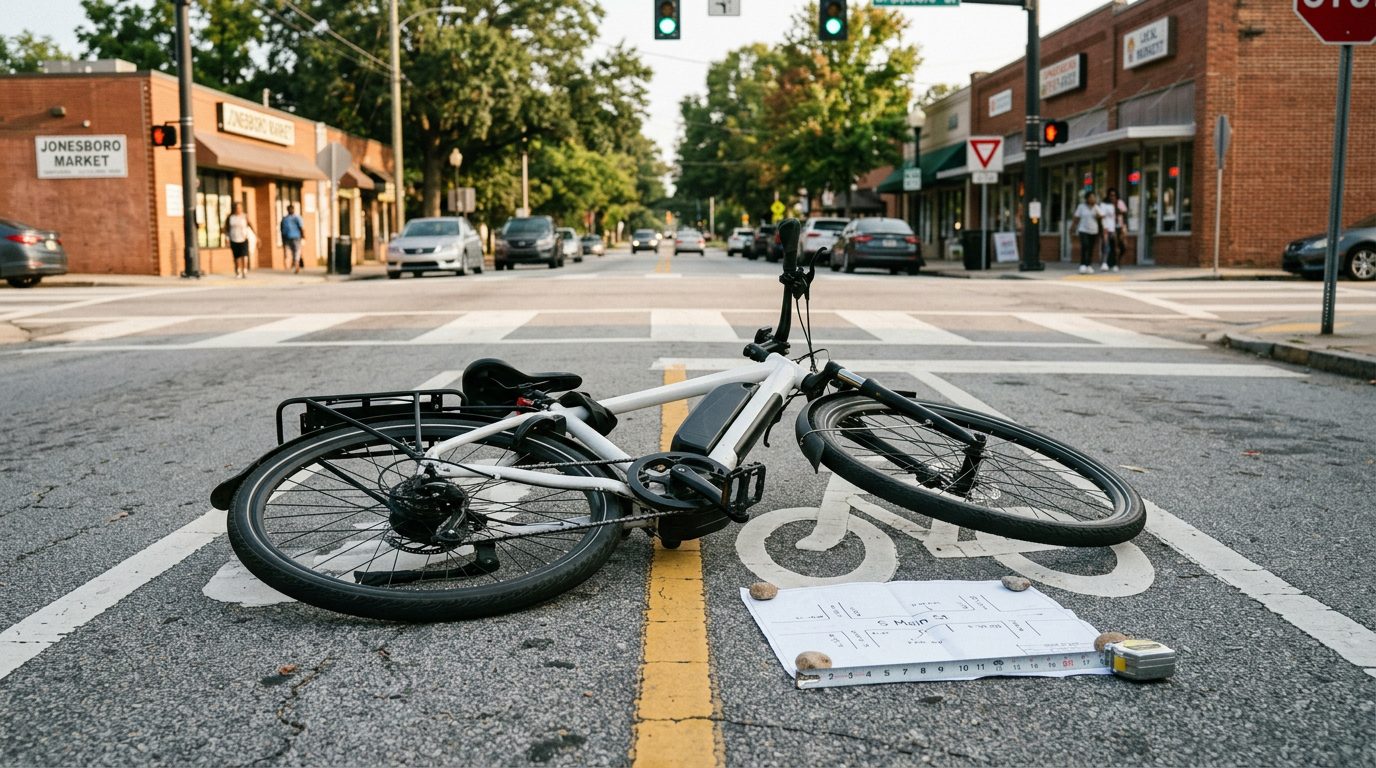
A crash or battery fire can leave a family with a hurt rider, a damaged bike and a pile of hard questions. The battery may hold some of the answers.
Many lithium-ion e-bike batteries include a battery management system (BMS). Some keep a record of how the battery was used, and that record can show whether the battery was failing before the crash or fire.
What Is a Battery Management System, and Who Is This Page For?
A battery management system is the circuit board that watches over the battery. It controls how the battery charges and discharges.
It tracks the voltage and temperature of the cells and the current moving in and out. It can cut power when something looks wrong. Some systems also save a log of those readings and events.
This page is written for two kinds of readers. The first is the rider who was hurt. The second is the spouse, parent or adult child now handling the medical bills, the insurance calls and the questions. If that’s you, you’re not the only one carrying this.
If a battery fire or crash left your family with a hurt loved one and a battery that may hold key evidence, you do not have to face it alone. Talk it through with our team — the first consultation is free, confidential, and carries no obligation.

What Can BMS Data Show After a Georgia E-Bike Crash?
BMS data can show how the battery behaved in the hours, days or months before a crash or fire. Here is what it may hold:
- Voltage and temperature readings. A steady rise in temperature before a fire can point to a cell failing inside the pack.
- Charge and discharge history. Charging patterns can show whether the battery was run on the wrong voltage or the wrong charger.
- Cell imbalance. When one cell drains or charges faster than the others, that can point to a manufacturing or design problem.
- Stored fault codes. A protection fault logged before the crash shows the circuit caught a problem.
An engineer reads these records as a timeline. The core question is simple. Did the battery fail on its own, or was it pushed past its limits by how it was built, sold or charged?
The data matters most when it lines up with the rest of the story. That includes the time of the crash, the rider’s phone photos and any fire department report.
How Does BMS Data Help Prove Who Is Responsible?
The data helps show whether a defect caused the harm. It also helps show which company in the chain should answer for it.
Product liability cases often look at how a product was designed, made or sold when it hurt someone. Georgia law can hold a manufacturer liable to a person hurt by a product that was not reasonably suited to its intended use when sold, even without a direct contract with the maker (Georgia product liability statute). Georgia’s warranty law can also extend to a family member in the buyer’s household who is hurt by a breach of warranty (Georgia warranty statute).
Other companies may share responsibility. The battery maker, the charger maker, the seller, the pack assembler and a repair shop can each play a part. Georgia treats a business that sells, assembles or repairs a product differently from the maker, so the records help show who built the defect (product seller statute).
Time matters too. Georgia generally bars a product injury claim filed more than ten years after the first sale. A failure-to-warn claim can survive that limit under Chrysler Corp. v. Batten.
Fault is shared under Georgia’s fault statute. An injured rider’s recovery is reduced by their share of fault. A rider who is 50 percent or more at fault recovers nothing. Each liable company pays only its own share.
If a battery fire caused the death of a spouse or parent, Georgia’s wrongful death statute lets the surviving spouse bring the claim; if there is no surviving spouse, the child or children may bring it and recover the full value of the life of the person who died (O.C.G.A. § 51-4-2). The full value of the decedent’s life is the measure of recovery (wrongful death statute).
Before law school, Terance Madden trained as an electrical engineer. He starts a battery case by asking what the evidence shows and how the failure happened. For a fire, that means looking at the cells, the charging circuit, the certification marks on the pack and charger, and the origin-and-cause investigation that traces where the fire began. He also asks which records exist and must be preserved.
Why Can BMS Data Be Lost, and What Should You Do Now?
Battery data can be lost when a battery burns, takes on water, or is charged and handled the wrong way. Start protecting it now.
- Keep the battery, charger, cables and photos together, in one place.
- Store the battery away from heat and out of living areas. Do not charge it.
- Do not open, repair or test the battery yourself. Damage to the pack can damage the evidence inside.
- Write down the date, time, place and names of anyone who handled the battery.
A preservation letter is a written demand that the people holding the battery and bike keep them. The firm can send one, so those holding the evidence know they must keep it.
For crashes on public roads, the Georgia Department of Transportation crash reporting system holds crash records. Those records can be checked against the battery’s timeline.
How Does a Claim With Battery Data Move Forward?
A claim with battery data moves in five steps. It starts with a free consultation and ends with a case built for trial.
- Free consultation. You talk through the crash or fire, the injuries or loss, and what evidence exists.
- Evidence protection. The firm sends a preservation letter and secures the battery and charger, with a written chain of custody (a record of who held the evidence and when).
- Technical review. The firm reviews the BMS data and the physical battery. That includes what the readings show and what they do not show.
- Every liable party and insurance layer. The firm identifies each company that may be responsible and each policy that may pay. That includes liability, uninsured and underinsured motorist (UM/UIM), umbrella, excess and corporate coverage.
- Trial preparation. The firm builds the case as if it will go to trial and keeps the family informed at each step.
The timeline depends on the facts and the evidence. The firm explains the likely steps in plain English, with no black holes in communication.
How Does Big Insurance Use Battery Arguments?
Big Insurance often argues the rider caused the failure, long before the battery data is reviewed. Watch for these tactics:
- Misuse claims. The claim is that the rider charged the battery wrong or used a cheap charger.
- Early recorded statements. Big Insurance may ask for a recorded statement before anyone knows what the data shows. Wait until the battery has been reviewed.
- Delay. A claim can stall while the battery sits unexamined.
- Low first offers. An insurer’s first offer is rarely what a claim is worth.
- Disputed treatment. Adjusters may question whether care was needed. Georgia limits medical expenses to the reasonable value of medically necessary care (medical expenses statute).
Big Insurance is not on your side. The response is to pursue every coverage layer, review the data before answering battery questions, and prepare for trial. General damages are presumed to flow from the wrong and need no proof of amount. Special damages, like medical bills, must be proved (damages statute).
Not sure what your next step is?
Talk it through with our team — the first consultation is free, confidential, and carries no obligation.
Common Questions About E-Bike Battery Data After a Crash
Yes, some data may survive, and a technical review shows what is still readable.
Can BMS data show what happened if the battery burned?
Some data may survive a fire, depending on the battery’s design and how much damage it took. A technical review shows what is still readable.
Do I need to do anything with the battery right now?
Keep it somewhere safe, away from heat. Do not charge, open or repair it, and ask the firm about a preservation letter.
What is the deadline to file?
For most injury claims in Georgia, the deadline is two years after the right of action accrues (§ 9-3-33). Call early, because the clock is running.
Does the firm charge a fee?
The firm works on a no-fee-unless-we-win basis, but the client may still be responsible for court costs and case expenses. The initial consultation is free, confidential, and carries no obligation to continue.
Can a family member start this for me?
Yes. A spouse, parent or adult child can reach out for the injured person, and the firm will talk with that person as well.
Does Georgia reduce compensation if the rider was partly at fault?
Yes. The award is reduced by the rider’s percentage of fault, and a rider 50 percent or more at fault recovers nothing (§ 51-12-33).
Why T. Madden & Associates for Battery and E-Bike Crash Cases?
T. Madden & Associates, P.C. has been in practice since 1999. The firm has offices in Jonesboro (Clayton County), Atlanta, Decatur, Macon and Augusta.
Terance Madden is the responsible lawyer for this page. Before law school, Terance Madden trained as an electrical engineer, and he uses that training to read the evidence in each case. Shenia Madden is also a lawyer at the firm.
The firm handles lithium battery fire, product liability and e-bike crash cases. It also handles car and truck crashes, motorcycle crashes, slip and falls, medical malpractice, nursing home abuse, wrongful death, catastrophic injury and negligent security claims. The Terance Madden Foundation also does community work in the places the firm serves.
If a battery fire or crash left your family with a hurt loved one and a battery that may hold key evidence, you do not have to face it alone. Start a free case evaluation, or call the firm, which is available 24/7.