

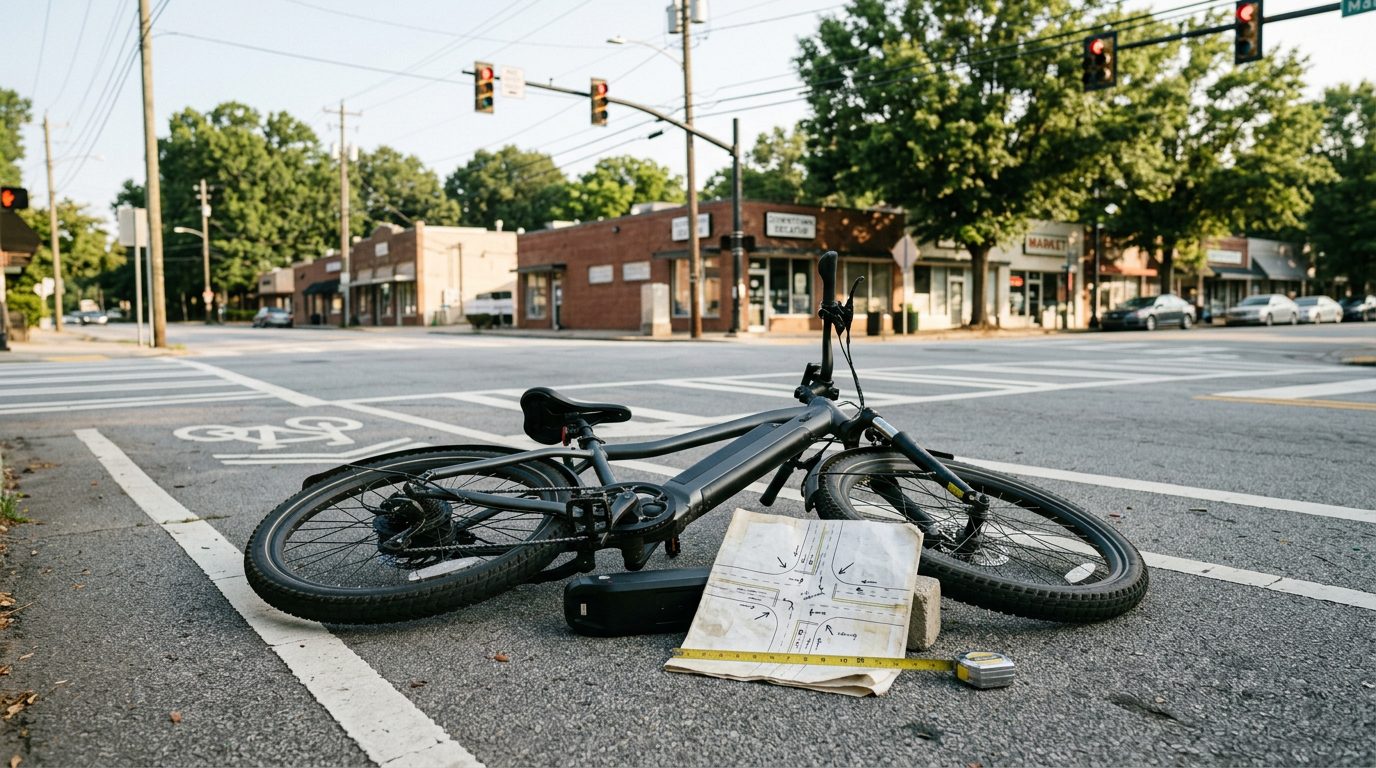
E-Bike Injury Lawyer in Georgia
Hurt on an E-Bike With Failed Brakes?
Brakes and batteries are built, sold and serviced by different companies. Tracing the failure to the right one starts with the bike itself.
Serving Georgia Riders Since 1999
1999
Practicing personal injury law since
5 Cities
Offices in Jonesboro, Atlanta, Decatur, Macon and Augusta
By Terance Madden · Published November 13, 2026
You’re hurt, and the brakes or battery on your e-bike failed.
If the brakes on an e-bike were defective, a Georgia lawsuit can reach the companies that made, sold, or serviced the bike. This page gives general information about who else may share responsibility for an e-bike crash, what kinds of evidence often matter, and the general steps a claim can follow. It’s written for the rider and for the family member handling the bills, calls, and paperwork.
When a Brake or Battery Defect Caused Your E-Bike Crash
If a defect caused your e-bike crash, the fault may lie with the bike or its parts, not with you.
Lawyers often call this a product liability claim. Product liability means a legal claim against a company that made, sold, or serviced a product that was defective or unreasonably dangerous.
Common failures include:
- Brake pads or cables that wear out or snap under normal use.
- Brake parts installed wrong or never built to hold up.
- A battery that overheats, swells, or catches fire.
- A controller or wiring fault that cuts power or braking without warning.
The harm goes beyond the crash itself. Medical bills, lost wages, and pain and suffering all count. Georgia law says necessary expenses from an injury are a legitimate item in the damages estimate (O.C.G.A. § 51-12-7). The firm handles catastrophic injury claims as well as smaller ones.
If a brake or battery failure hurt someone you love, someone else may be responsible, and you may have a claim. Our team can talk it through with you. Talk it through with our team — the first consultation is free, confidential, and carries no obligation.

Who Else Can Be Liable Besides the Rider
Often, more than one company shares responsibility for a defective e-bike.
Parties who may share responsibility include:
- The maker of the bike or the brake system.
- The maker of the battery, charger, or controller.
- The distributor that moved the bike into the market.
- The retailer that sold it.
- A repair shop or modifier whose work created the failure.
Georgia’s fault rules decide how each share counts. Under O.C.G.A. § 51-12-33, a nonparty’s share of fault is considered only if the injured person settled with that nonparty, or if a defending party gave notice at least 120 days before trial that the nonparty was at fault. Each liable person pays its own share, and those shares are not joint liability.
Your own share counts too. Damages drop in proportion to your fault. A plaintiff who is 50 percent or more responsible may receive no damages under the same statute (O.C.G.A. § 51-12-33; Quynn v. Hulsey (2020)).
If a car or truck was part of the crash, your own auto policy may matter. Under O.C.G.A. § 33-7-11, a Georgia auto liability policy must contain an endorsement that pays the insured for injuries caused by an uninsured motor vehicle, within limits the insured chooses, unless an insured named in the policy rejects that coverage in writing. If an insured named in the policy rejects the coverage in writing, it does not apply. The firm traces the chain of sale, service, and assembly early, because each link may carry its own insurance.
What the Bike and Battery Can Show
The parts themselves are often the strongest proof.
Keep these items in view: brake pads, rotors, cables, brake levers, the battery pack, the charger, and the controller. Each one can tell part of the story.
An engineer reads these parts closely. A brake pad worn to its backing, a cable frayed at the end, or a bolt that was never tightened shows how the brake failed. A battery with a swollen cell, a cracked case, or heat damage shows how the pack was damaged, modified, or charged.
Terance Madden holds a B.S. in Electrical Engineering and trained as an electrical engineer before law school. He starts a case by asking what the evidence shows and how the failure happened. He then looks for the records and data that must be kept.
Keep the parts as they are. Don’t repair, sell, or throw them away until the firm reviews them. Georgia courts have said the duty to preserve evidence can start before a lawsuit, once litigation is reasonably foreseeable to the party controlling the evidence (Phillips v. Harmon). Recall notices and safety reports for the same model can add support.
First Steps That Protect the Claim
Get medical care, keep every record, and protect the evidence. Those three steps matter most in the first days.
- Get medical care and keep every bill, visit summary, and receipt.
- Photograph the bike, the scene, and the damaged parts before anything is moved or fixed.
- Keep the purchase receipt, repair invoices, and any rental costs.
- Request the police crash report from the agency that responded.
Family members often carry this load. Start one folder for bills, insurance letters, work-loss records, and appointment notes. Write down what each provider and insurer says, and the date they said it.
Some providers treat patients under a letter of protection, a promise to be paid from any settlement or judgment. Georgia makes that letter and the itemized charges relevant evidence in the claim (O.C.G.A. § 51-12-1.1). A hospital or provider may also assert a lien, a claim to be paid from a settlement for unpaid care. Ask about liens early.
Don’t give a recorded statement to any insurer before you speak with a lawyer. Your words can be pulled out of context and used to shrink the claim.
How a Defect Claim Moves, Step by Step
A defect claim moves through five stages, from the first call to a lawsuit if one is needed.
- Free first consultation. The call is confidential and carries no obligation to continue. The firm reviews the crash facts, the bike, and your injuries. The firm has offices in Jonesboro, Atlanta, Decatur, Macon, and Augusta.
- Investigation. The firm inspects the bike, requests records, and identifies each liable party and its insurer.
- Demand. The firm sends a written claim to the responsible parties. It lays out liability, injuries, and full losses.
- Negotiation. The firm tracks every offer against the evidence and the injury’s full effect over time.
- Lawsuit, if needed. Georgia generally requires a personal injury lawsuit to be brought within two years after the claim accrues (O.C.G.A. § 9-3-33). Some exceptions apply, so don’t wait.
The firm prepares each case as if it will go to trial, starting at the first meeting. Trial preparation runs alongside negotiation.
How Big Insurance Responds, and What the Firm Does About It
Big Insurance is not on your side, and a first offer is rarely what your claim is worth. The firm knows how to pursue what is owed.
Expect these tactics:
- A fast, low first offer, made before the full injury is known.
- A recorded statement requested early.
- Delays in answering or paying.
- Disputes over whether a treatment was needed.
- “Low impact” arguments that call a serious injury minor.
The response is to pursue every layer of coverage. That includes the liability insurance of the manufacturer, battery maker, distributor, and seller. It also includes any umbrella or excess policy, corporate coverage, and your own uninsured motorist coverage where it applies.
Lifetime damages matter. A serious injury can need future care, lost earning power, and daily help at home. Georgia lets a jury reduce future economic losses to present value, using a 5 percent rate or another rate it picks (O.C.G.A. § 51-12-13).
Against a “low impact” argument, the firm uses the bike and battery evidence. It answers with facts, not guesses.
Not sure what your next step is?
Talk it through with our team — the first consultation is free, confidential, and carries no obligation.
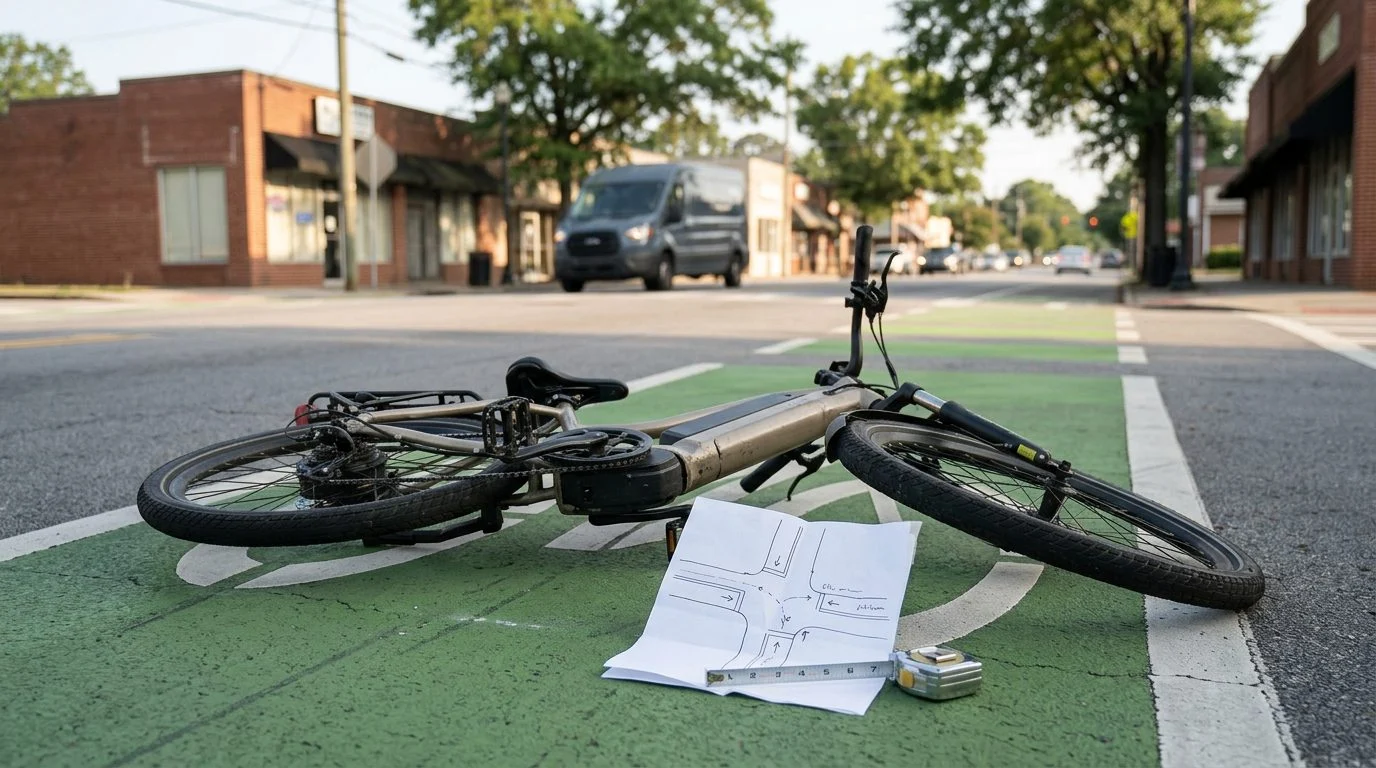
Common Questions About Defective E-Bike Brake and Battery Claims
Most families ask about cost, evidence, and court first. Here are short answers.
Do I need to keep the broken brake or battery?
Yes. Keep it unrepaired and unsold until the firm reviews it.
Can I bring a claim if I bought the bike used?
It depends on the facts. The firm reviews who sold, serviced, and assembled the bike.
Does the claim have to go to court?
Some claims settle and some go to trial. The firm prepares every case as if it will go to trial.
If you’re now handling the bills, the bike, and the phone calls for someone hurt when an e-bike’s brakes or battery failed, you don’t have to sort it out alone. Call the firm any time, day or night, or request a free case evaluation to talk through the bike, the crash, and what comes next.