

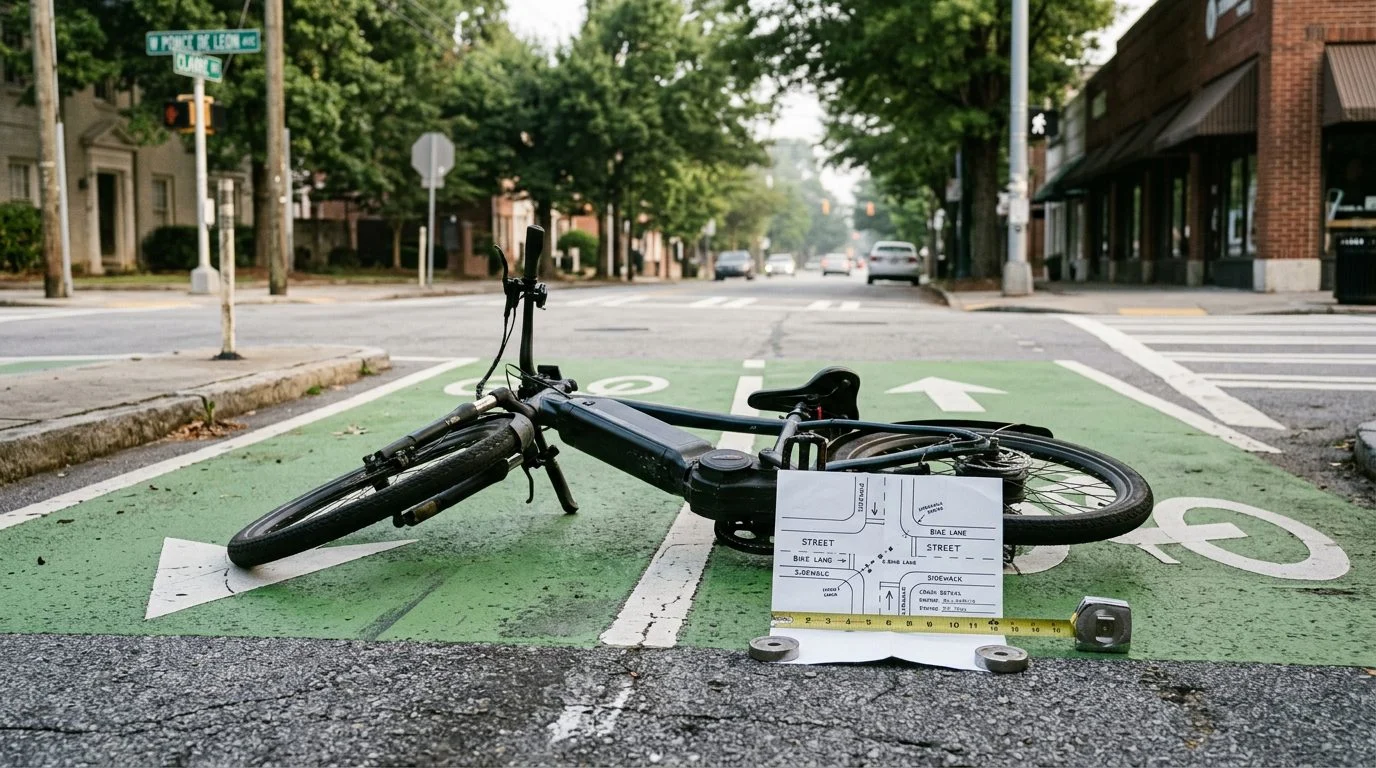
E-bike crashes in Georgia
Hurt on an e-bike in Georgia? Here is what your family handles first.
Medical care, the bike and its battery, and the first calls from an insurer each need attention, and the order matters. You do not have to sort it out alone.
T. Madden & Associates, P.C.
1999
Year the firm began practice
5
Offices across Georgia
24/7
Call line for injured clients
By Terance Madden · Published November 24, 2026
If someone you love was hurt on an e-bike in Georgia, you are probably the one making the calls, tracking the bills, and keeping the appointments. That job is heavy, and the first few weeks shape the claim.
Getting medical care first, keeping the e-bike and battery as they are, and identifying every party who may be responsible are common first steps after an e-bike or battery fire. T. Madden & Associates, P.C. represents people hurt in e-bike crashes and the families of people killed in them.
Who This Page Is For and What the Family Manages First
This page is for the family member running the recovery after an e-bike crash. That may be a spouse, a mother or father, an adult daughter or son, or a caregiver.
Families often split the work. One person talks to the doctors. Another tracks the bills. Someone keeps the paperwork straight. Your family has always looked out for each other, and this is no different.
The order matters. Start with medical care. Then protect the evidence on the bike and battery. Then handle insurer calls. Last, sort out who is liable. Liability means the legal responsibility a person or company has for harm it causes.
Families who lost someone in an e-bike crash can also contact the firm about a wrongful death claim.
If an e-bike crash left your loved one injured or gone, you don't have to face Big Insurance alone. Call us and we'll talk through what happened. Talk it through with our team — the first consultation is free, confidential, and carries no obligation.
Get Medical Care and Keep the Paper Trail
Get your loved one checked by a doctor right away, even if they say they feel fine. Some head, spine, and internal injuries do not show up until later.
Keep every record in one place:
- ER and hospital records, plus imaging results
- prescriptions and receipts for medical equipment
- medical bills and insurance statements
- mileage and rides to appointments
- notes from the employer about missed work
Medical records are the chart doctors and hospitals keep. They are the base evidence of what the injury is and how it was treated. Ask for copies as you go.
Start a simple daily journal. Write down pain, sleep, tasks your loved one can’t do, and who helped. A journal shows the real impact of an injury that a bill never will.
Share the full medical history with every treating doctor. Complete records keep the picture accurate.
Georgia limits how medical costs are counted. Special damages (losses that must be proved, such as bills and lost pay) for medical care cover only the reasonable value of medically necessary care, treatment, or services (O.C.G.A. § 51-12-1.1). Keep every bill.
Preserve the E-Bike, Battery, and App Data Before Anyone Changes Them
Keep the e-bike, battery, charger, and helmet as they are. Do not repair, sell, scrap, or throw them away until the family has had advice on preserving them.
Take photos of the bike, battery, charger, and crash scene. Save texts, photos, and videos from the ride and the day of the crash.
Many e-bikes store data. The controller (the computer that runs the motor) and the phone app may log speed, power, and ride history. That data can show what the bike was doing before the crash. Get the phone and app data saved, and don’t let anyone delete it.
Crash causes usually fall into three groups:
- Human error: a rider’s or driver’s choice, such as speed or a turn made without looking.
- Mechanical error: brakes, tires, or parts that failed.
- Electrical malfunction: a battery, charger, or controller that was defective.
Before law school, Terance Madden trained as an electrical engineer. He starts a case by asking what the evidence shows and how the crash happened. For a battery fire, that means looking at the cells, the charging circuits, any certification marks, and the fire investigation that pinpoints where the fire started and what caused it. Those records must be preserved before they change.
How Big Insurance Handles E-Bike Claims and How to Respond
Big Insurance is not on your family’s side. A first offer is rarely what a claim is worth. The firm has represented injured people in Georgia since 1999.
Expect these tactics:
- An early, low offer made before the full injury is known.
- A request for a recorded statement (an audio record of your answers) before your family understands the injuries.
- Delays in paying bills or processing the claim.
- Disputes over whether a treatment was needed.
- “Low impact” arguments that say a slow crash could not cause serious harm.
Give no recorded statement. Route insurer calls to the firm. Don’t guess about the cause, and don’t downplay the injury on the phone. Terance Madden’s engineering training helps him read the speed and force data behind “low impact” claims.
The response is to check every coverage layer:
- the at-fault driver’s liability insurance, which covers harm the driver causes
- your family’s uninsured or underinsured motorist coverage (UM/UIM), which can pay when the at-fault party has too little or no insurance
- an umbrella policy or excess coverage (extra insurance that pays after the main policy’s limit is used up)
- corporate coverage, when a business is responsible
A serious injury affects work, care, and daily life for years. The claim must count lifetime damages, meaning future losses as well as today’s bills.
If the injured rider is on Medicare, that coverage works differently. Medicare may also need repayment from a settlement (Medicare Secondary Payer rules).
Who May Be Liable and Which Insurance Layers to Check
Liability can reach more than one party in an e-bike crash. Look at a driver who turned into the rider, a property owner with a dangerous road, and the maker of the battery, charger, or controller. A parts maker, repair shop, or seller can also be involved.
Product liability is a maker’s legal responsibility for a defective product. For many product claims, Georgia also sets a ten-year limit from the first sale, with exceptions. The bike’s age matters.
Georgia also uses comparative fault (shared fault). A recovery is reduced by the injured person’s share of fault. A person who is 50 percent or more responsible recovers no damages (O.C.G.A. § 51-12-33). The facts decide how that rule applies.
Timing matters too. Georgia law generally requires that a personal injury lawsuit be brought within two years after the right of action accrues (O.C.G.A. § 9-3-33). Some claims follow different timing, so act early.
Hit by a drunk driver? You may have a claim against that driver. The firm can review the facts with you.
How the Firm Works, Step by Step, and What It Brings to the Case
The firm starts with a free call. Then it works the evidence, the insurers, and the damages, in that order.
- Call and describe the crash. Tell us what happened, the rider’s injuries, and the e-bike.
- Review the evidence. The firm looks at the bike, battery, controller data, medical records, and any crash report.
- Handle the insurers. The firm deals with insurer contact and finds every coverage layer and liable party.
- Build the damages picture. That includes medical costs, lost income, and future care needs.
- Negotiate, then sue if needed. If a fair resolution is not offered, the firm files suit and prepares for trial. How long each stage takes depends on the facts and the insurers involved.
The initial consultation is free, confidential, and carries no obligation to continue.
T. Madden & Associates, P.C. has practiced since 1999. Terance Madden leads the firm, with offices in Jonesboro, Atlanta, Decatur, Macon, and Augusta. The firm also supports the Terance Madden Foundation’s community work.
Not sure what your next step is?
Talk it through with our team — the first consultation is free, confidential, and carries no obligation.
Questions Families Ask About an E-Bike Crash Claim
Do we have to hire a lawyer right away?
No. You can talk with the firm first, and the decision stays with your family.
Can we talk to the insurance company ourselves?
You can, but route calls through the firm before giving any recorded statement.
What if the rider was partly at fault?
Georgia reduces recovery by the rider’s share of fault. A rider who is 50 percent or more responsible for the injury is not entitled to any damages (O.C.G.A. § 51-12-33 (Quynn v. Hulsey (2020))(g)).
What if the battery caught fire?
A battery fire can point to a product claim. Keep the battery and charger as they are, and don’t try to repair them.
How long do we have to file?
Georgia generally allows two years from the injury. Other claims can differ, so ask early.
Does Medicare get paid back?
It can. Medicare may need repayment from a settlement, so keep track of every payment.
If your loved one was hurt on an e-bike in Georgia, or your family lost someone in one, reach out while the bike, battery, and phone data are still intact. Start your free case evaluation with T. Madden & Associates, P.C.